
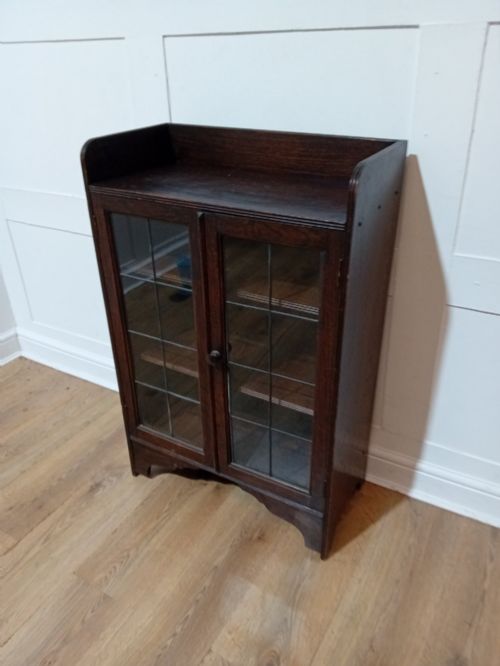
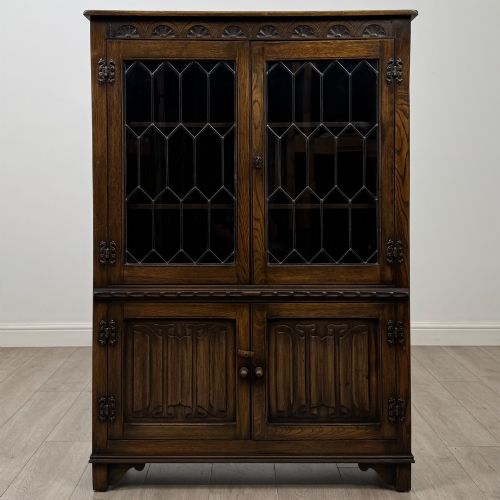
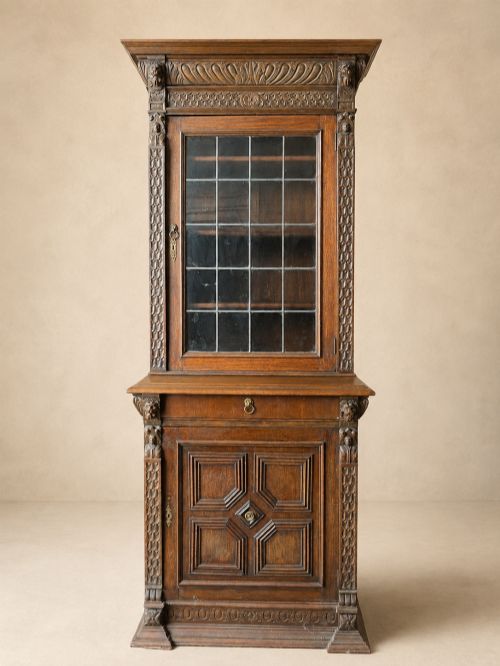
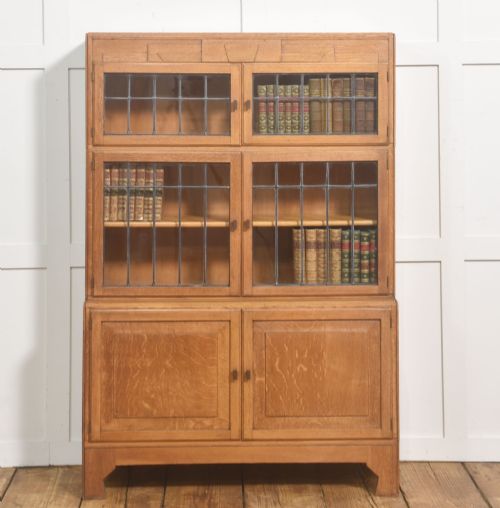
Leaded Oak Cabinet
A leaded oak cabinet brings tactile timber and individual glass cames together for domestic display.
Leaded Oak Cabinet
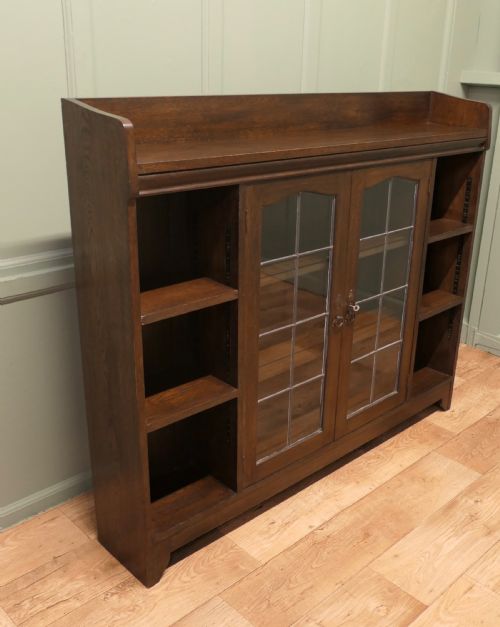
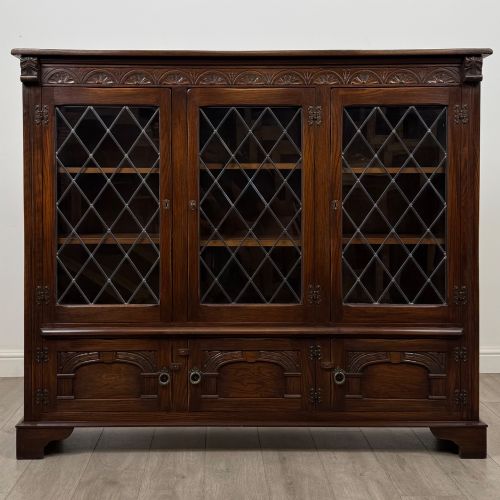
A leaded oak cabinet combines sturdy domestic timber with small panes of glass held in place by soft metal strips called cames. These pieces serve primarily to hold books, china or display items while protecting them behind glazed doors.
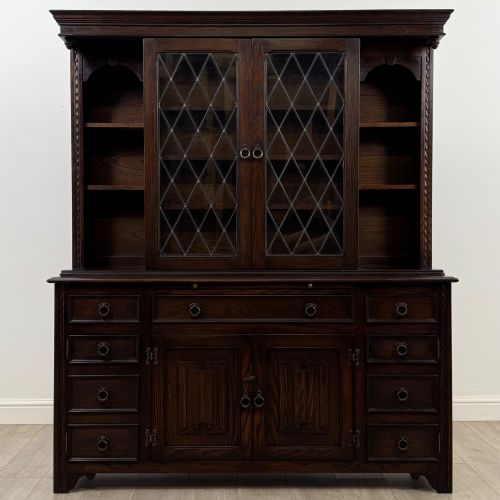
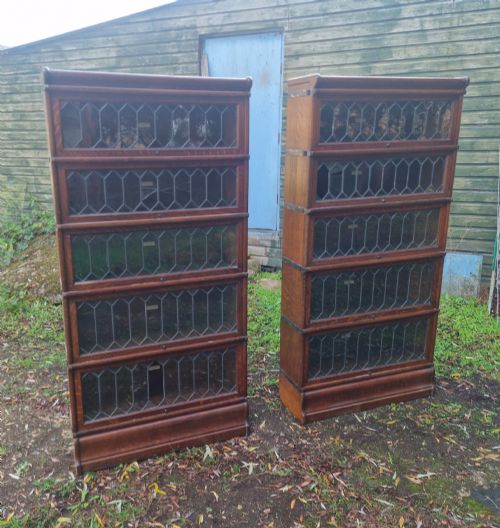
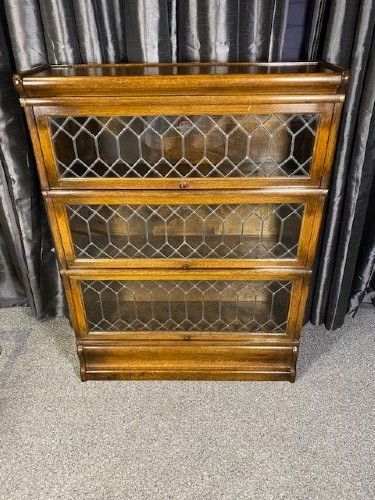
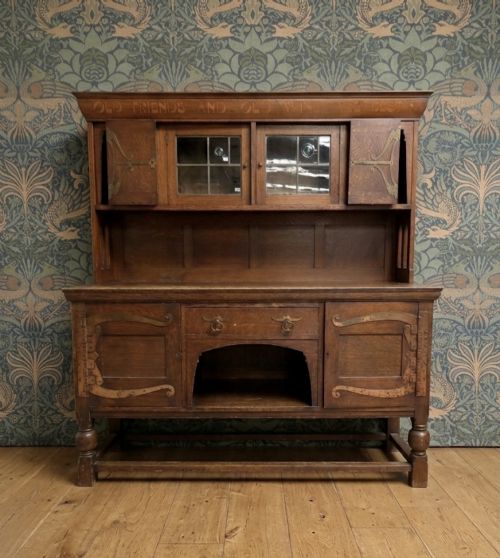
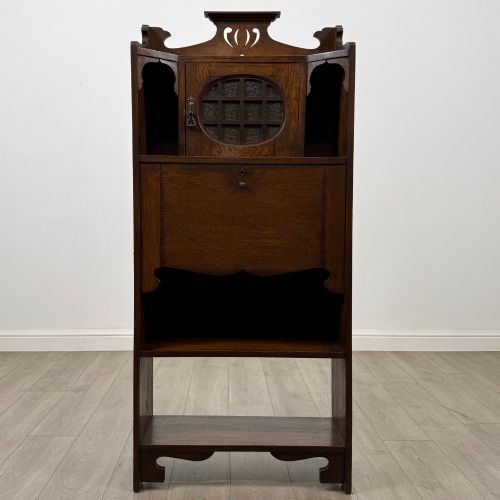
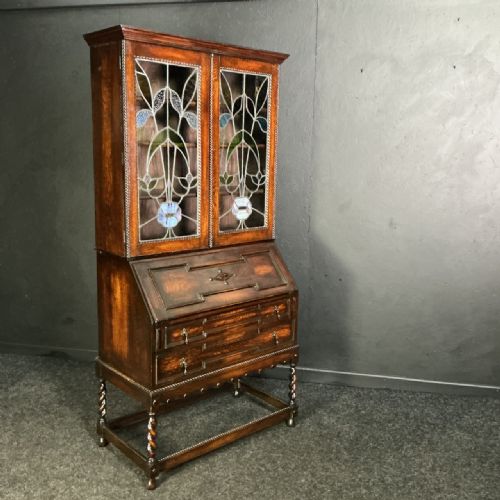
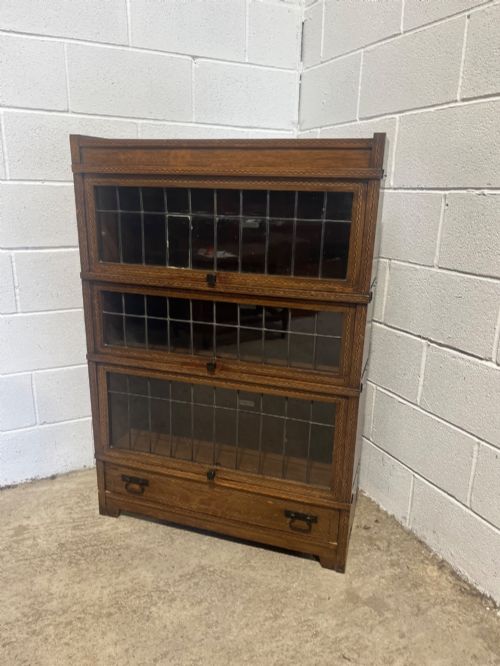
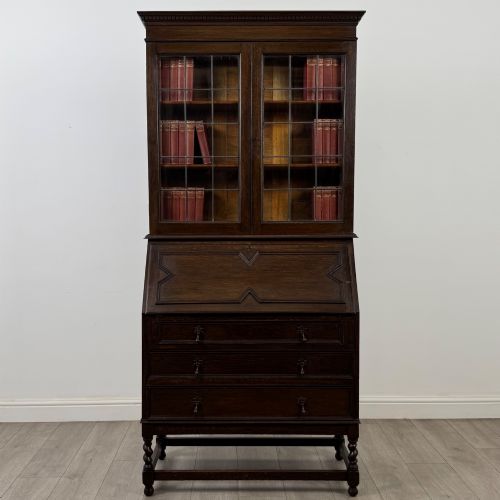
Most examples found here date from the Victorian, Edwardian and later periods up to the 1930s. Forms range from modular stacking bookcases to tall display cabinets, sideboards and bureau bookcases.
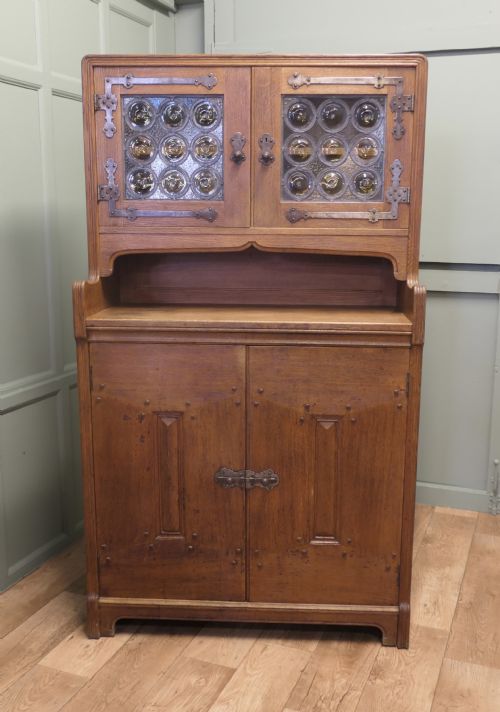
Stylistic influences lean heavily towards the Arts and Crafts movement alongside revivalist periods like Jacobean and Tudor. This means buyers encounter everything from plain rectilinear utilitarian cupboards to heavily carved vernacular forms.
Materials and construction methods
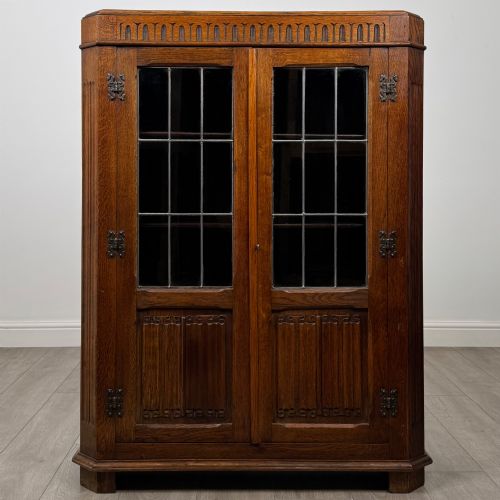
Makers relied on solid oak, often quarter-sawn to show off distinct medullary rays in the grain, coupled with iron or brass hardware for hinges and handles. The timber provides a robust structural carcass that takes carving and linenfold panelling well.
Window construction utilised glass panes joined by lead cames soldered at the joints to form geometric or plain rectangular patterns. These leaded lights require careful internal bracing to prevent the soft metal from sagging over time under the weight of the glass.
Listings feature oak combined with lead, brass, iron and glass across Edwardian, Victorian and 1920s periods.
Assessing build quality and design
Quality rests on the integrity of the timber selection and the precision of the joinery rather than surface ornamentation alone. Superior pieces use quarter-sawn oak with stable internal construction that prevents warping in the doors and panels.
The execution of the leaded glass work marks a clear distinction between standard production items and finer workshops. Clean solder joints, tight glass fitment and thoughtful came patterns elevate a utilitarian piece into a deliberate design statement.
Ambrose Heal for Heal & Son·Liberty & Co.·Minty
The Leaded Oak Cabinet Glossary
- Came
- The narrow strip of lead, cast with a grooved channel, used to hold individual panes of glass together in a leaded window or door. These strips bend easily and require solder at every intersection to maintain structural rigidity.
- Globe Wernicke
- A proprietary brand name for modular stacking barrister bookcases that became a popular generic style. Each section lifts and slides inward to reveal the books stored inside.
- Quarter-sawn
- A method of milling timber where the log is cut radially, producing a straight grain pattern with prominent flecks. This technique yields boards that shrink and swell less with humidity changes.
- Linenfold
- A style of relief carving on wooden panels that mimics folded fabric or linen. It appears frequently on the doors and panels of domestic furniture from revivalist periods.
- Stained glass
- Coloured or painted glass incorporated into window panels or cabinet doors. It adds decorative colour when light passes through the glazed panels.
Leaded Oak Cabinet: Frequently Asked Questions
Where should I place my cabinet?
Position your cabinet away from direct sunlight and strong heat sources to protect the oak timber from drying out and splitting over time.
Ensure the floor is level so that the glazed doors hang properly and open without catching on the frame.
How do I clean leaded glass?
Use a soft microfibre cloth and a mild, ammonia-free glass cleaner sprayed onto the cloth rather than directly onto the door. This prevents liquid from seeping behind the lead cames and corroding the solder joints.
Press gently when wiping to avoid putting undue strain on the soft metal and small glass panes.
Are stacking bookcases stable?
Stacking modular bookcases use interlocking pins or gravity to keep the individual tiers aligned securely. They stand safely on flat floors when loaded evenly with books.
Avoid overloading the top sections to maintain a low centre of gravity.
How do I date an oak cabinet?
Examine the hardware, construction marks and overall style to determine the period of manufacture. Edwardian and Arts and Crafts pieces often feature simpler lines and hammered brass fittings, while Victorian items show heavier carved detailing.
Look at the backboards and drawer linings for tool marks that indicate machine or hand production methods.