
Edwardian Oak Credenza
An Edwardian oak credenza brings substantial timber storage and the distinctive hand-worked character of the Arts and Crafts movement straight into your room.
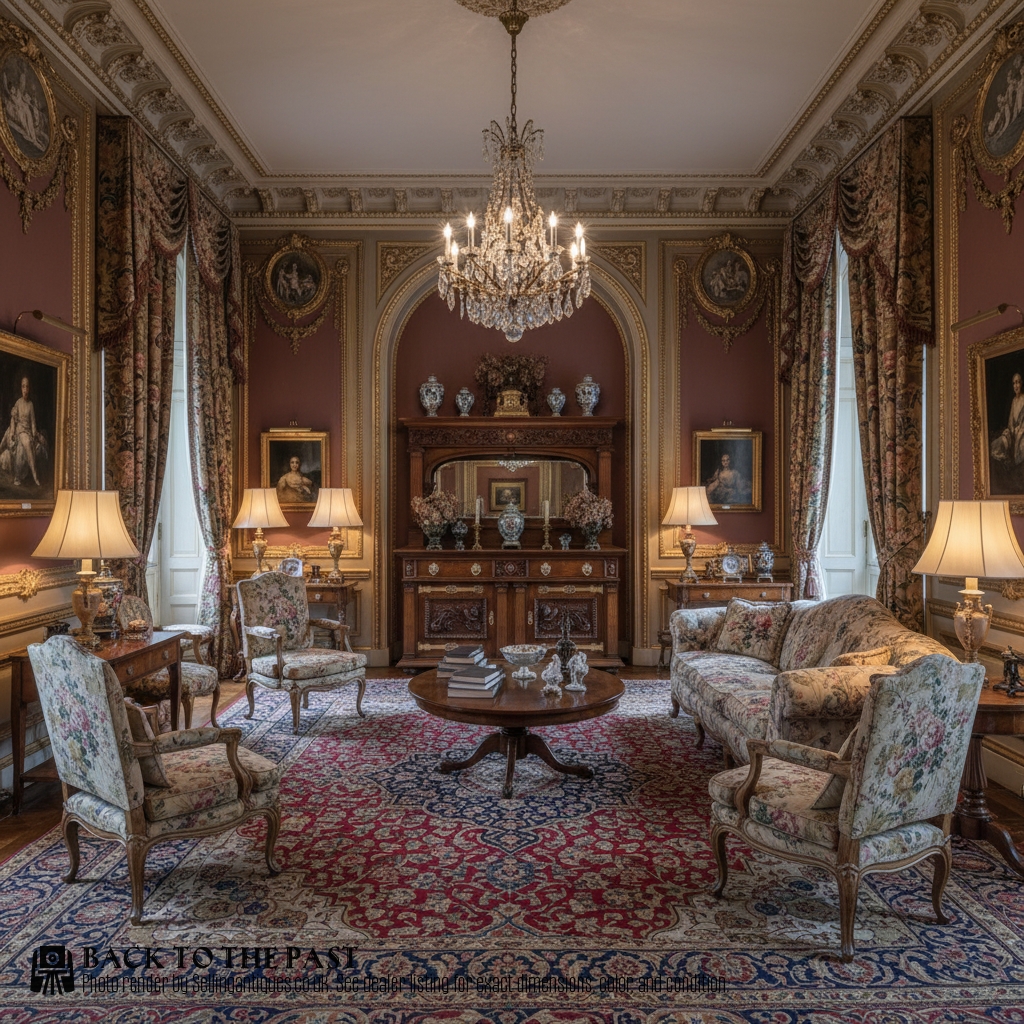
What an edwardian oak credenza is
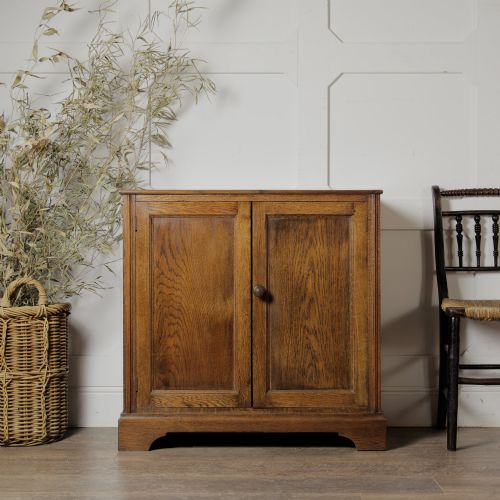
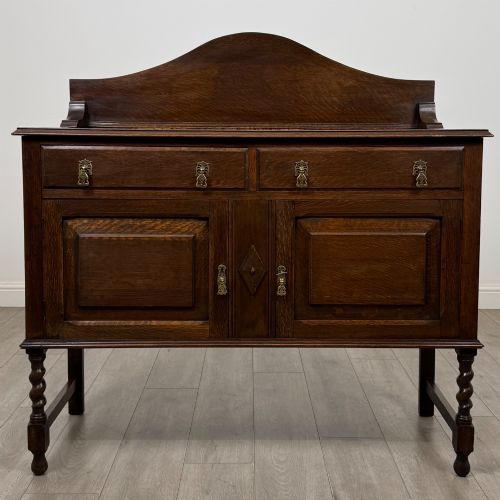
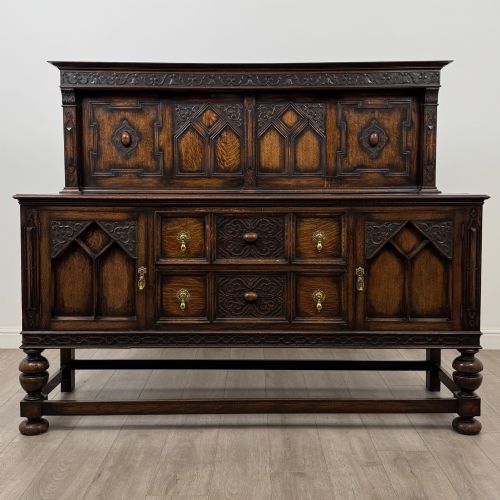
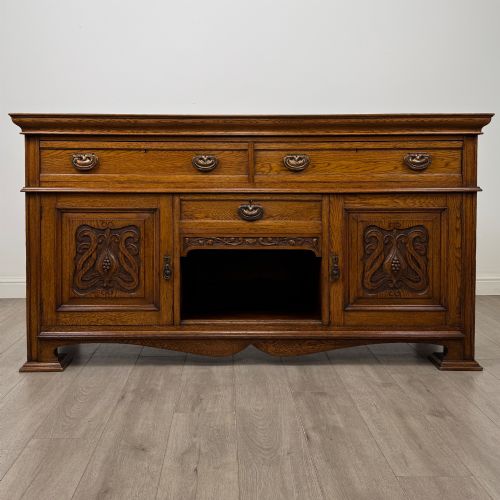
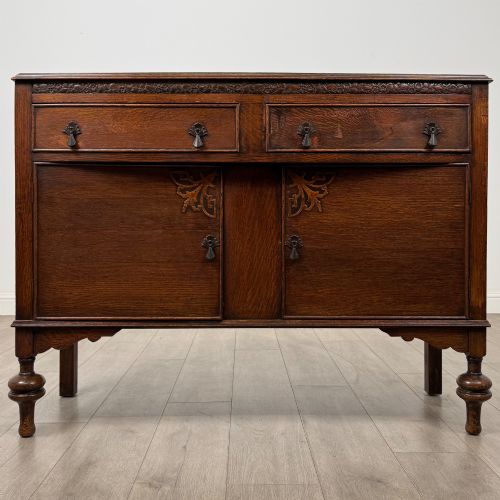
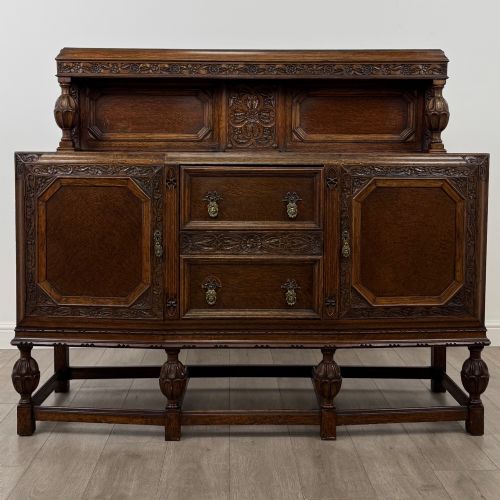
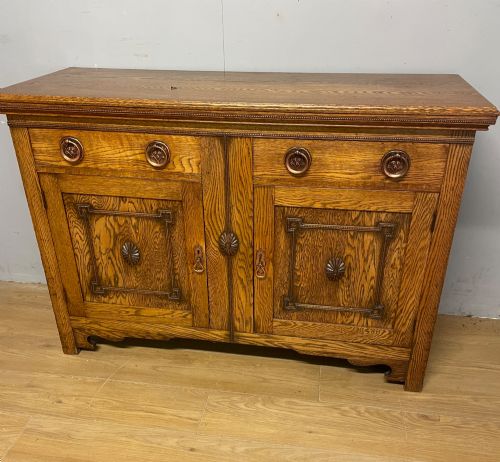
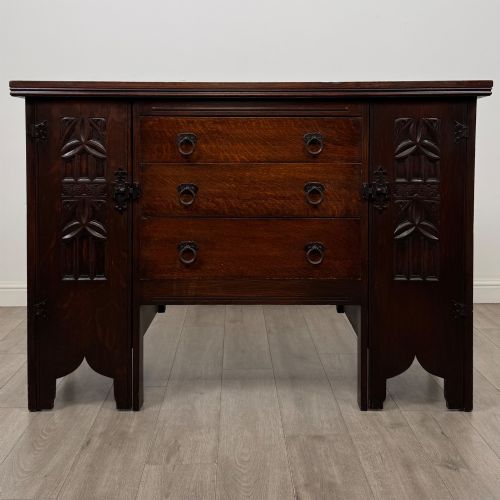
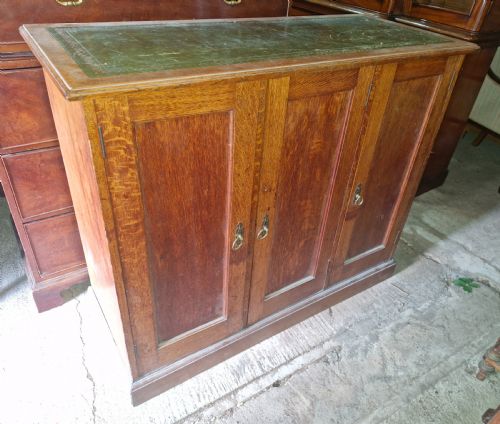
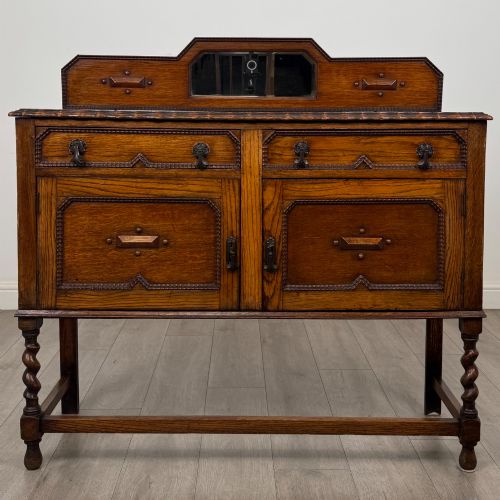
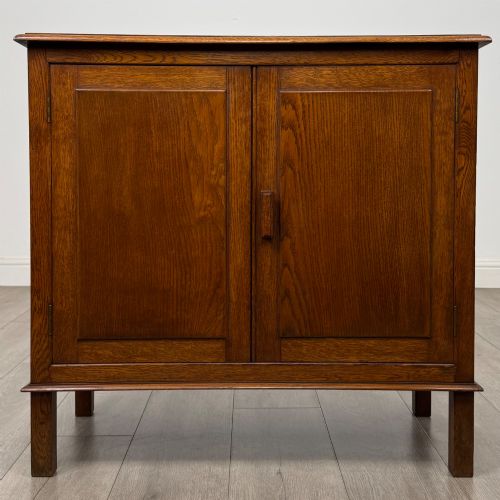
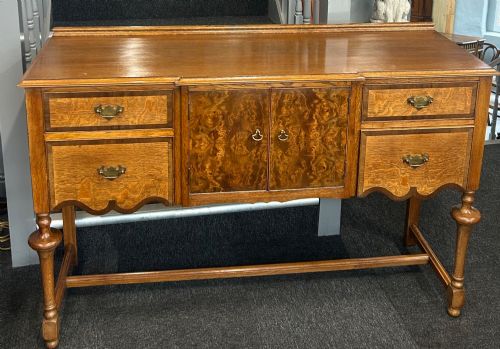
An edwardian oak credenza is a heavy storage piece taking the form of a sideboard, side cabinet, or dresser, built predominantly around the turn of the twentieth century. These items typically emerge from the Edwardian period or late Victorian era, often bearing the strong geometric lines and functional honesty associated with the Arts and Crafts style.
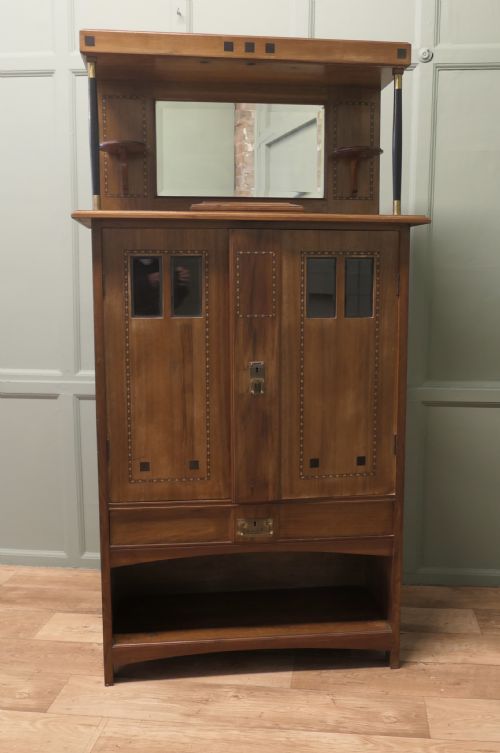
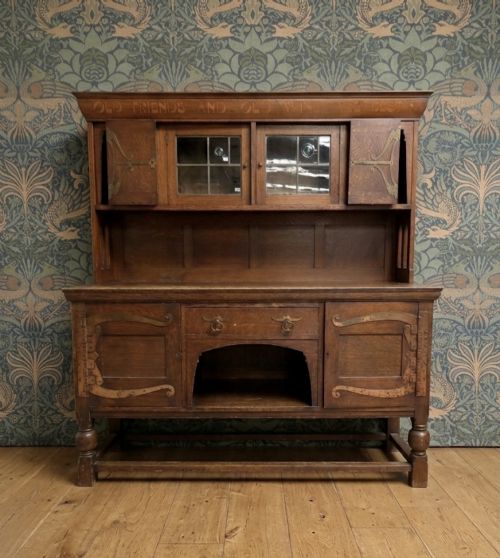
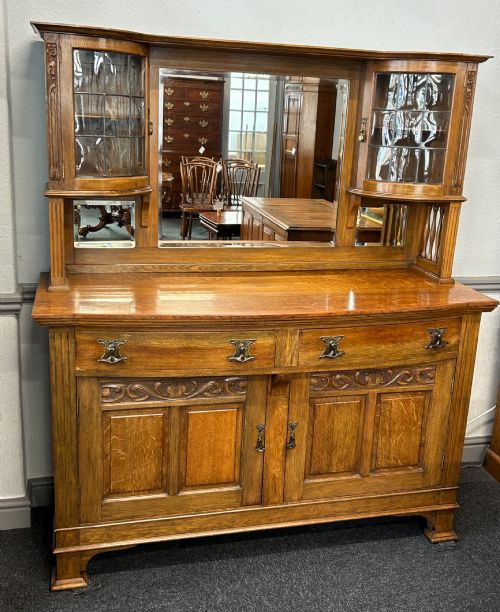
You are most likely to encounter sideboards and side cabinets built from solid oak, sometimes featuring mirrorbacks, glass panels, or integrated brass and copper hardware. The design vocabulary relies on the natural grain of the timber rather than extravagant surface ornamentation, making these pieces both practical for modern storage and visually grounded.
How they were made
Maker construction methods rely heavily on solid oak boards, selected for durability and pronounced medullary rays. Workshops utilised traditional joinery alongside applied wood inlay to create sturdy frames capable of supporting heavy top surfaces and internal shelving.
Metal elements such as brass and copper appear frequently as structural hinges, decorative strapwork, and handles, often hand-hammered in the Arts and Crafts manner. Mirrorback variants incorporate bevelled glass plates secured within heavy wooden frames, whilst glass-fronted doors utilise simple timber glazing bars.
Retail Price Guide 2026
Typical UK retail prices for edwardian oak credenza, calculated from the Sellingantiques database of over a million retail prices indexed since 2003. This retail price guide relies exclusively on Sellingantiques data; no external sources or auction records are used, so the figures do not describe the wider market.
Some makers installed mirrors just high enough to catch the flicker of dinner candles.
What varies in quality
Quality separates standard commercial production from ambitious workshop output through the selection of timber and the ambition of the joinery. Superior examples display carefully matched oak grain across the principal facades, along with substantial thickness in the structural carcase.
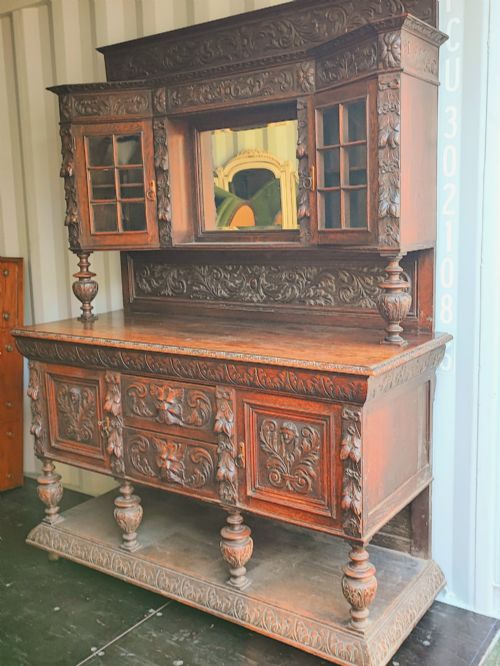
The degree of hand-finishing defines the upper tier of these pieces, particularly in the execution of wood inlay, copper hardware, and carved details. Simpler factory-produced sideboards use thinner timber sections and rely on applied mouldings rather than integrated structural joinery.
T Simpson and Son
The Edwardian Oak Credenza Glossary
- Credenza
- A sideboard or side cabinet used primarily for storage and serving, adapted in this era into heavy domestic furniture. It provides low-level cupboard space beneath a flat top surface.
- Arts and Crafts
- A design movement valuing handcraftsmanship, simple utility, and traditional materials over mass industrial production. This style influences the structural honesty seen in the joinery of these pieces.
- Mirrorback
- A tall wooden superstructure incorporating a mirror plate, attached to the rear of a sideboard. It reflects light and displays ceramic or metal objects placed on the ledge below.
- Wood Inlay
- The technique of inserting contrasting pieces of wood into recesses within a solid timber surface to form decorative patterns. It adds subtle visual variety to flat cabinet doors and drawer fronts.
Frequently Asked Questions
What is an edwardian oak credenza?
An edwardian oak credenza is a heavy timber storage unit, typically catalogued as a sideboard or side cabinet, dating from the late nineteenth or early twentieth century. These pieces combine practical cupboard and drawer space with the distinct stylistic influence of the Arts and Crafts movement.
Built primarily from oak, they frequently incorporate copper or brass hardware and sometimes feature integrated mirrorbacks. Their robust construction makes them enduring items for contemporary domestic use.
Where should I place one?
These substantial storage items suit dining rooms, large hallways, or living spaces where their heavy oak presence can anchor the room. The flat top surface provides ample area for lamps, decorative ceramics, or serving food during gatherings.
Ensure the floor space can accommodate both the footprint and the clearance required for opening heavy cupboard doors or drawers. Positioning them away from direct heat sources protects the solid timber and prevents the wood from drying out.
How do I care for the wood?
Maintenance involves regular dusting with a soft, dry cloth to prevent particulate accumulation on the oak grain and hardware. Applying appropriate beeswax occasionally helps nourish the timber and preserves the natural lustre of the finish.
Avoid using silicone-based polishes or household chemical sprays that can damage the historical surface. Keeping the room at a stable humidity level also prevents the oak from warping or cracking over time.