
Oak Dining Room Buffet
An oak dining room buffet provides substantial storage and serving space, bringing robust character to a traditional dining interior.
Oak Dining Room Buffet
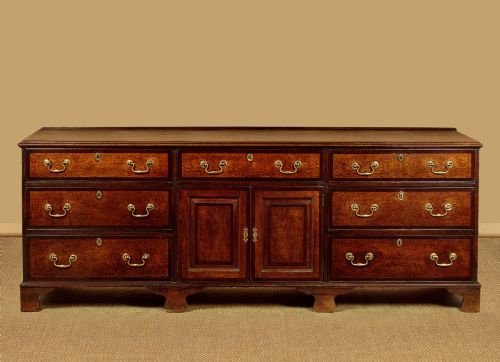
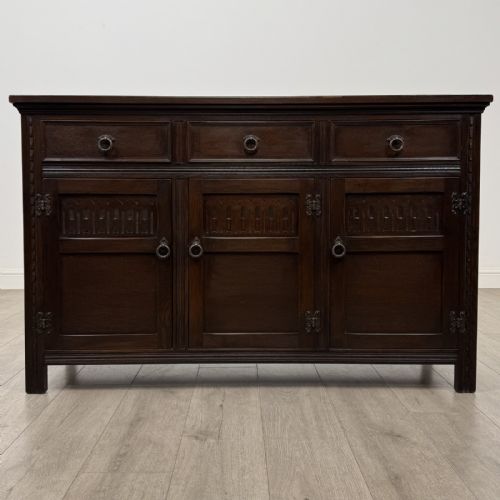
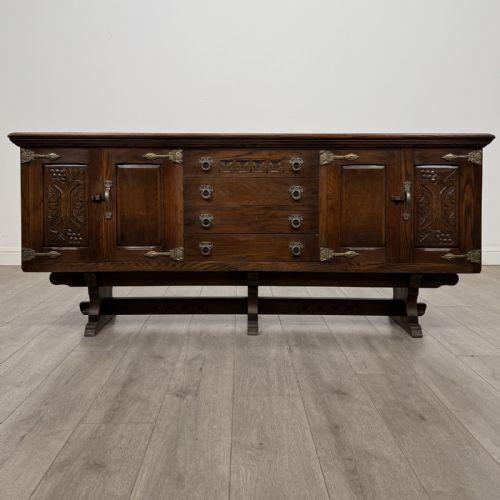
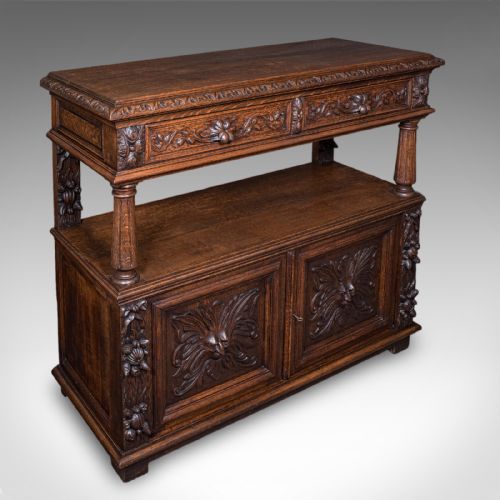
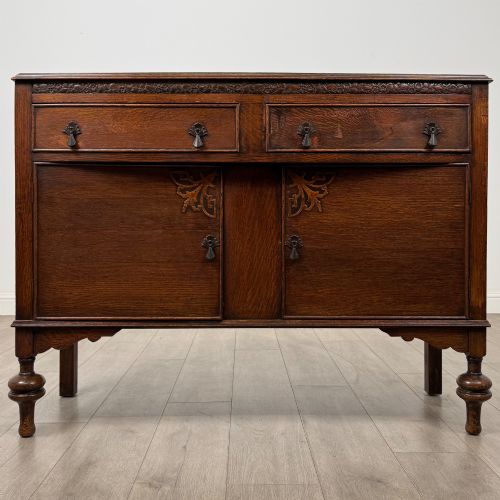
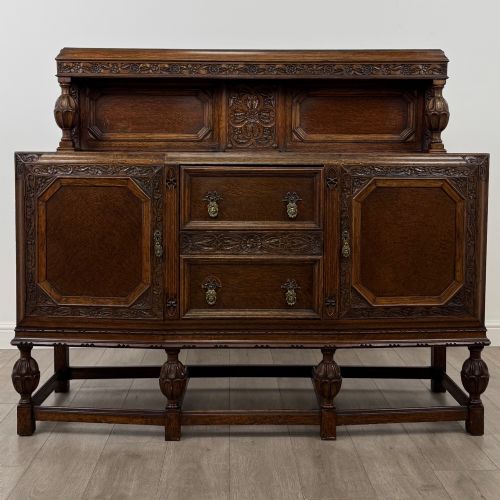
An oak dining room buffet encompasses heavy sideboards, serving tables, dumbwaiters, and court cupboards spanning the Victorian, Edwardian, and twentieth-century periods. These substantial dining room pieces originate primarily from British workshops, alongside continental European examples executed in the Gothic Revival, Arts and Crafts, and Jacobean revival styles.
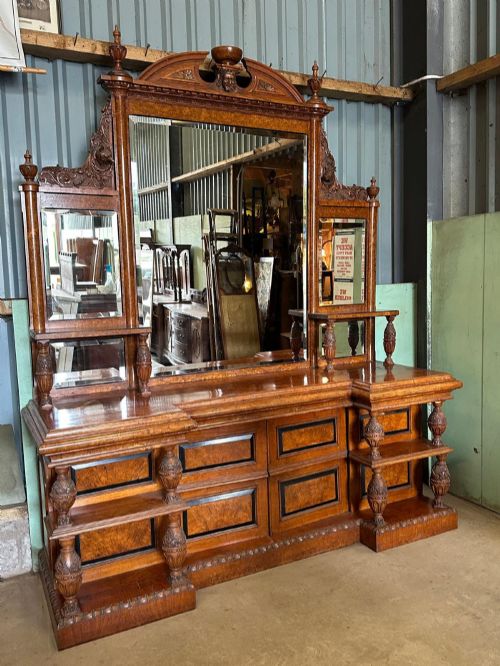
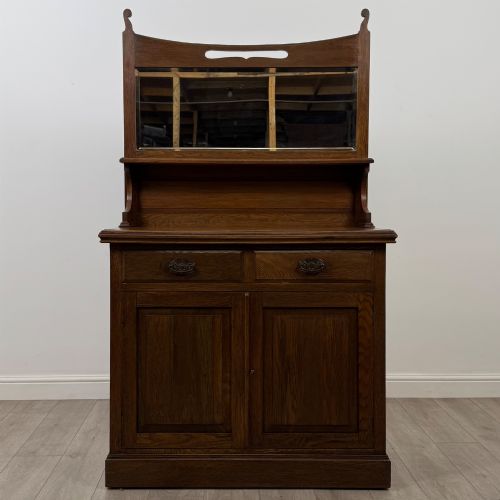
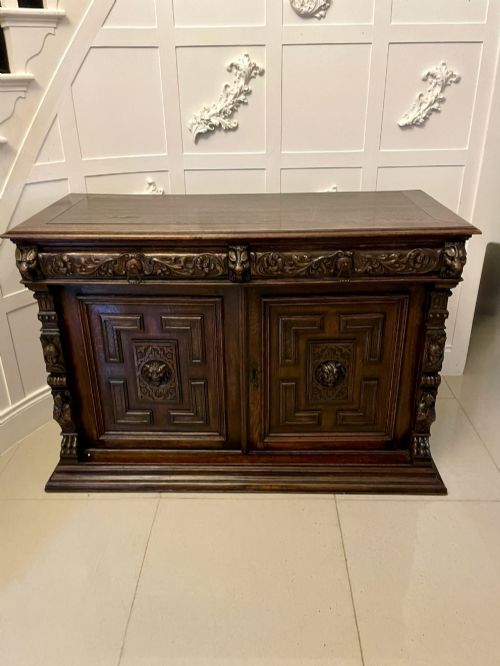
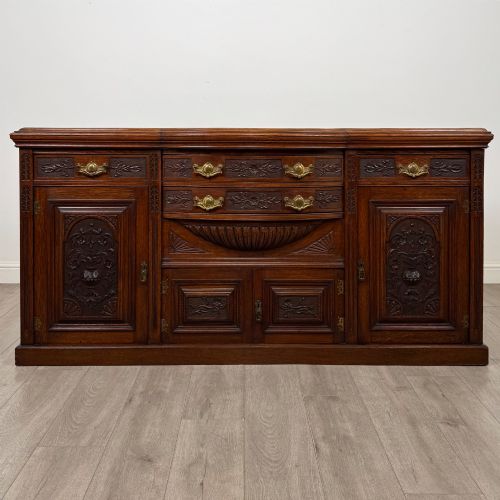
The version most commonly met on this page is the carved oak sideboard or mirror-back buffet dating from the late nineteenth century through to the nineteen-thirties. Buyers encounter various utilitarian formats ranging from large pedestals and dresser bases to low serving units equipped with brass hardware and glass cabinets.
Materials and Technique
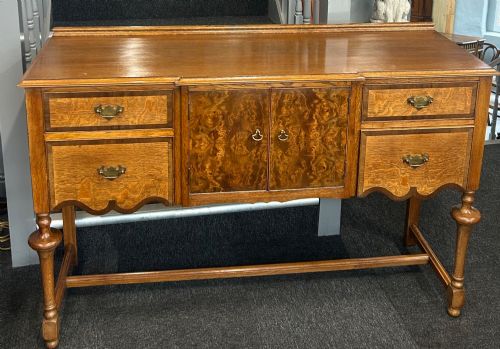
Makers utilised solid oak, often enhanced by decorative veneers such as pollard oak and burr walnut to create rich surface movement on drawer fronts and doors. Iron and brass hardware, including drop handles and key escutcheons, secure the structural elements while providing functional contrast to the timber.
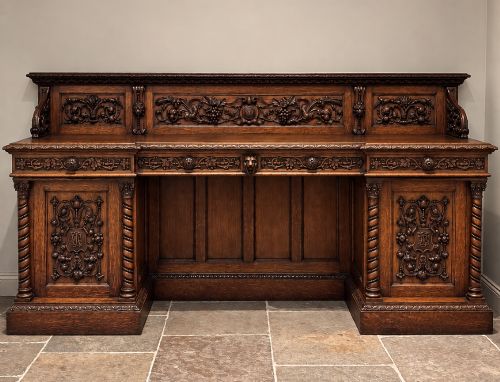
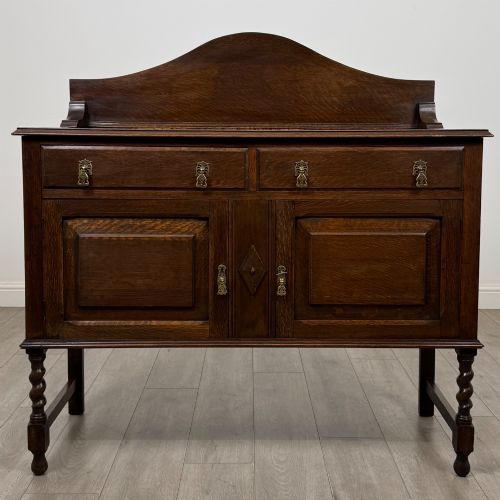
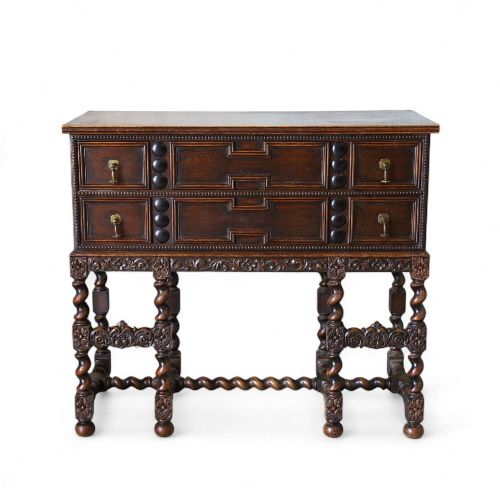
Construction relies heavily on traditional joinery, integrating turned supports like barley-twist legs and heavily carved panels characteristic of revival movements. Certain examples incorporate mirror-back superstructures and parquetry tops, demonstrating precise cabinet-making techniques across diverse regional workshops.
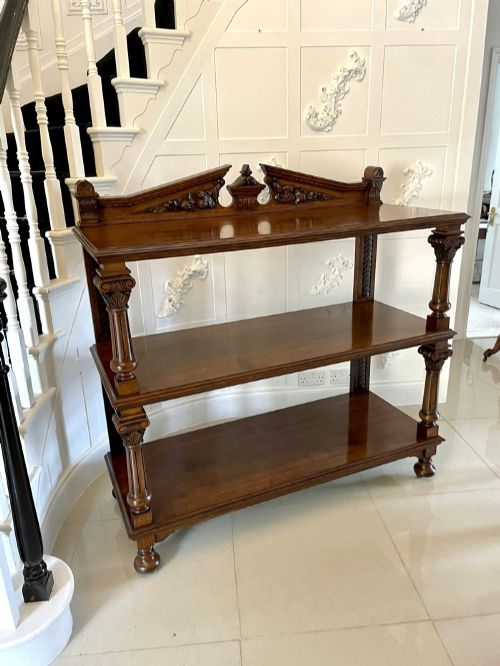
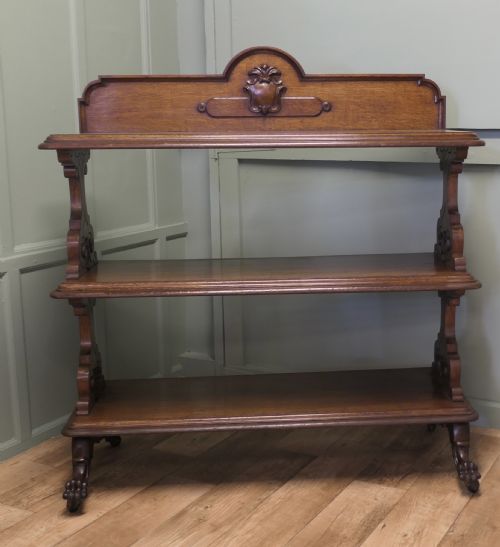
Victorian diners relied on dumbwaiters to hold extra courses quietly out of earshot, allowing discreet service without servants hovering.
Distinctions in Execution
The depth and crispness of hand-carved ornamentation separate standard utility furniture from pieces produced by notable cabinet makers. Finely executed strapwork, balanced proportions, and the selection of highly figured pollard oak or burr walnut indicate superior workshop output.
Structural integrity depends on the weight of the timber and the retention of original brass and iron fittings without modern replacement. Pieces displaying integrated architectural details, such as mirror frames and barley-twist supports, demonstrate a higher tier of period craftsmanship.
Maple and Co·T Simpson and Son
The Oak Dining Room Buffet Glossary
- Pollard Oak
- Timber taken from trees that have been pollarded, producing a dense, knotty grain pattern with rich figuring. This decorative wood was frequently selected for prominent drawer fronts on Victorian sideboards.
- Barley-Twist
- A spiral-turned wooden column resembling twisted barley sugar. Makers utilised this decorative support extensively on legs and gallery posts during the Victorian and Edwardian eras.
- Dumbwaiter
- A tiered serving table or stand utilised in dining rooms for holding dishes and bottles without servant attendance. Early nineteenth-century examples often feature graduating circular or rectangular shelves.
- Court Cupboard
- An enclosed piece of furniture featuring an upper cabinet recessed above a lower section. These heavy oak pieces provide traditional storage within dining spaces.
- Parquetry
- Geometric mosaic woodwork used for decorative surface patterns, particularly on table tops. French provincial examples frequently display this technique in oak.
Oak Dining Room Buffet: Frequently Asked Questions
What is the difference between a buffet and a sideboard?
A sideboard traditionally serves a broader storage function with cupboards and drawers for dining linen and silver. A buffet specifically focuses on food presentation and serving surfaces during meals.
Many listings combine these terms because nineteenth-century cabinet makers produced multipurpose furniture that bridged both functions for the dining room.
How do I date an oak sideboard?
Dating relies on observing stylistic markers such as heavy Victorian Renaissance carving, Edwardian barley-twist supports, or the clean lines of Arts and Crafts design. Material accents like pollard oak veneers and mirror-back additions also point to specific decades between eighteen-eighty and nineteen-thirty.
Hardware and construction methods provide further confirmation, as machine-sawn timber and stamped brass fittings typically indicate later twentieth-century production.
Where should I place a large buffet?
These substantial pieces require adequate wall space in a dining room, hallway, or spacious living area to accommodate their depth and height. Mirror-back versions need clearance from overhead architectural obstructions.
Positioning them away from direct heat sources prevents the solid oak and decorative burr veneers from drying out or splitting.
How do I care for antique oak furniture?
Maintain the timber by applying traditional beeswax periodically to nourish the grain and protect the polished surface. Avoid synthetic silicone sprays that build up and attract dust over time.
Keep the brass and iron hardware clean with a dry cloth, ensuring moisture does not linger on the metal or penetrate the wood joints.