

Edwardian Marquetry Furniture
Edwardian marquetry furniture brings light timbers and precise floral inlays into the home, offering both practicality and refined surface ornament.
Edwardian Marquetry Furniture
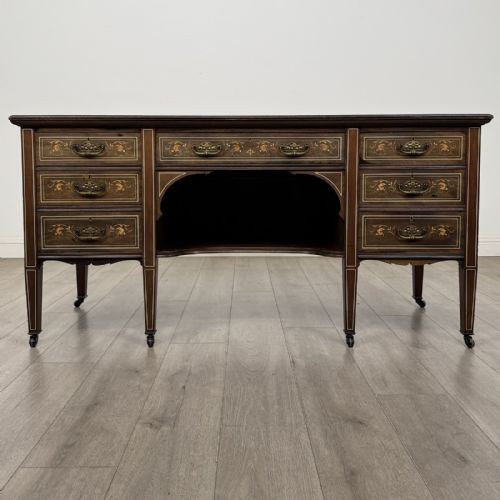
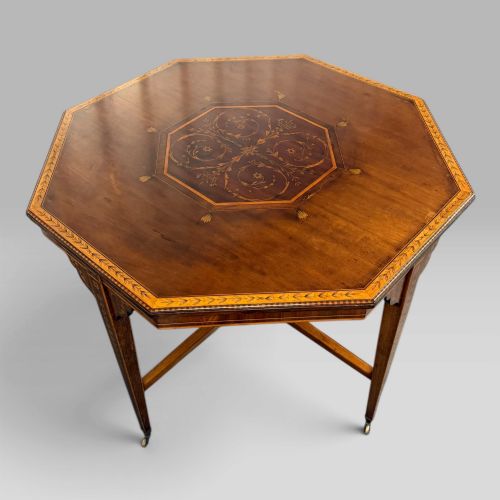
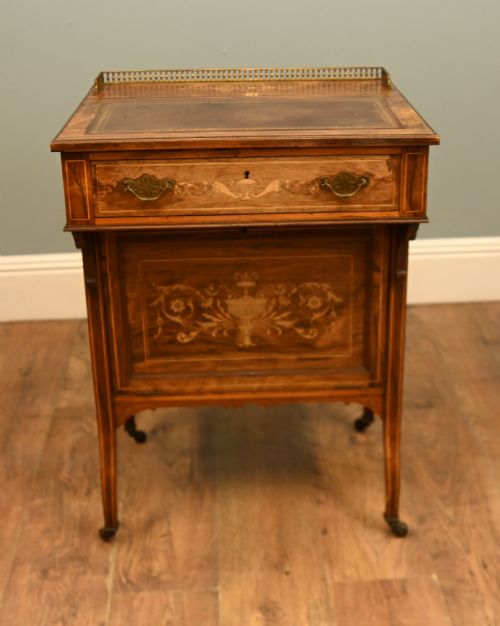
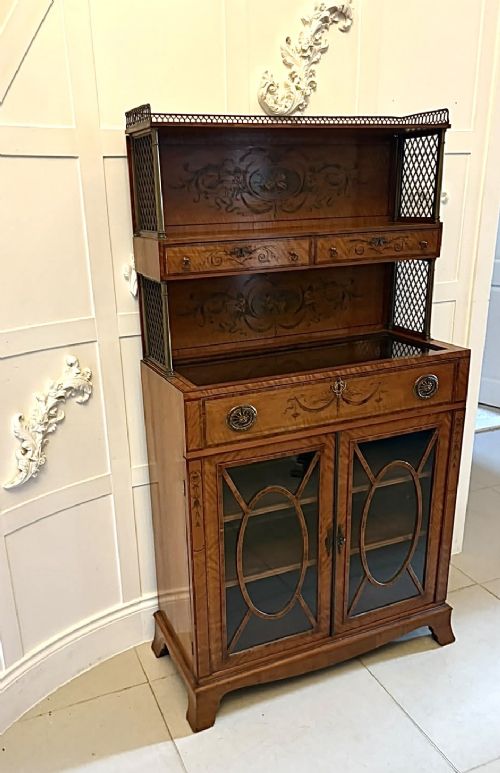
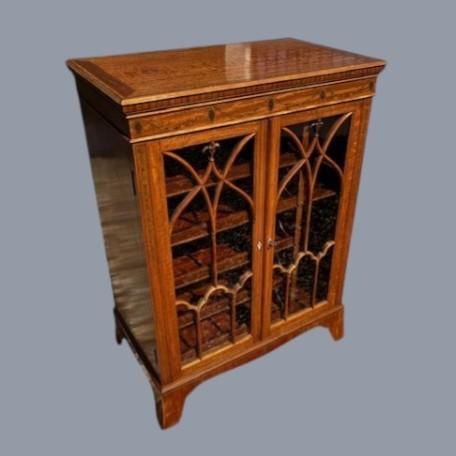
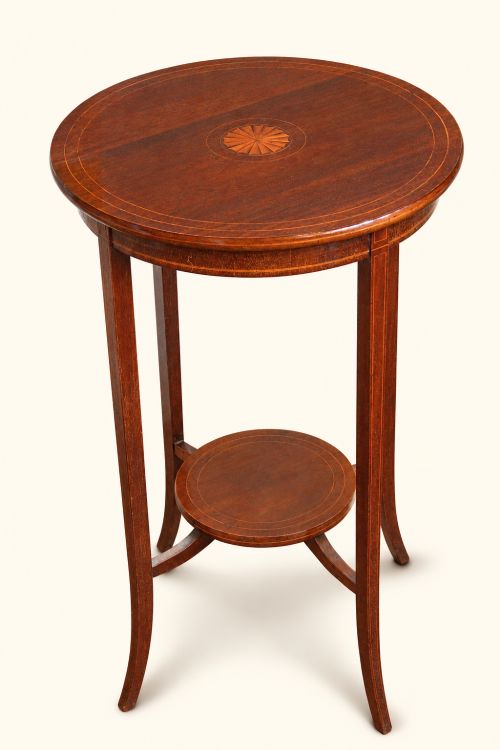
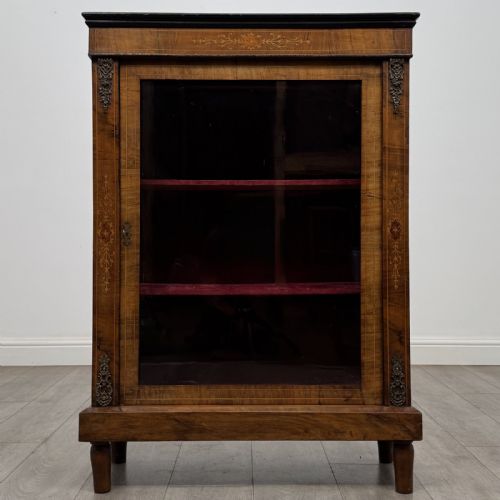
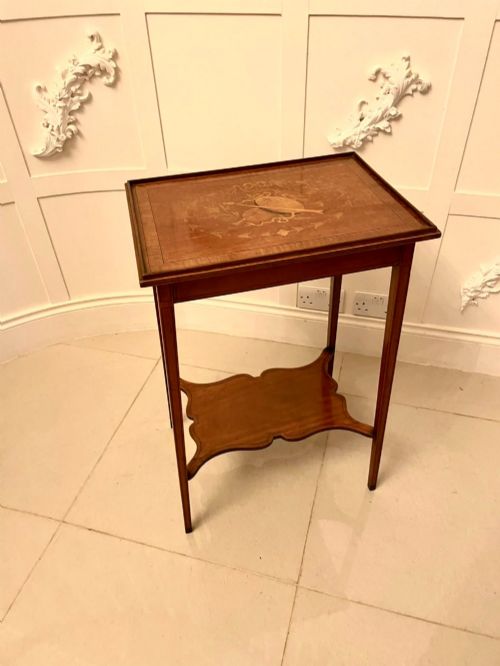
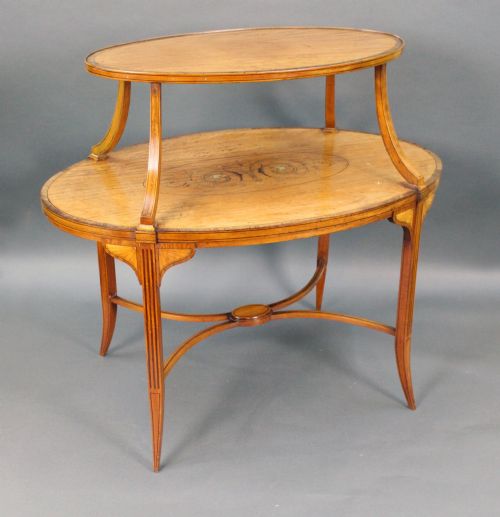
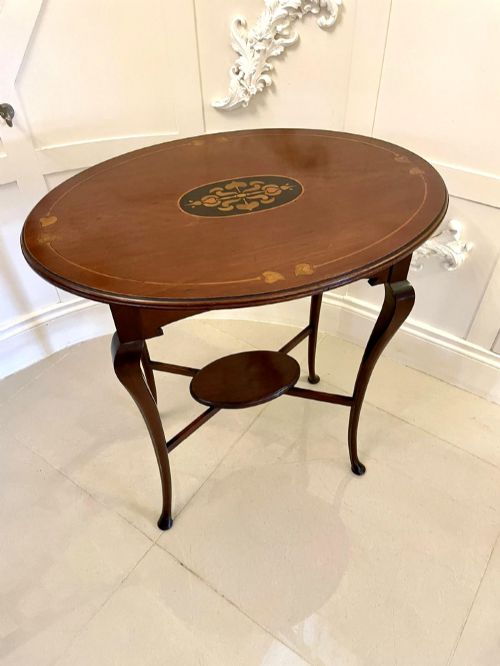
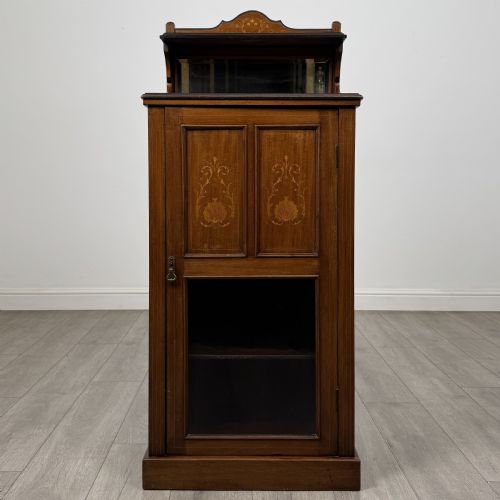
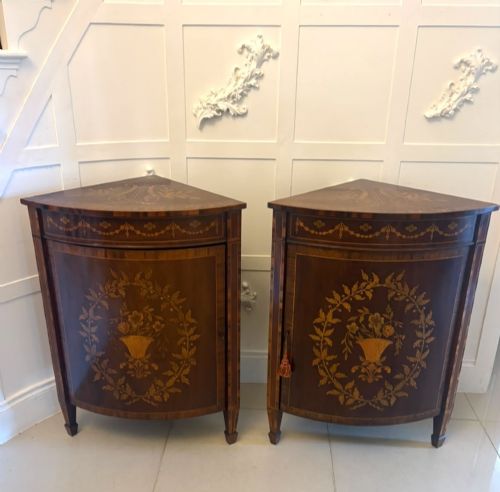
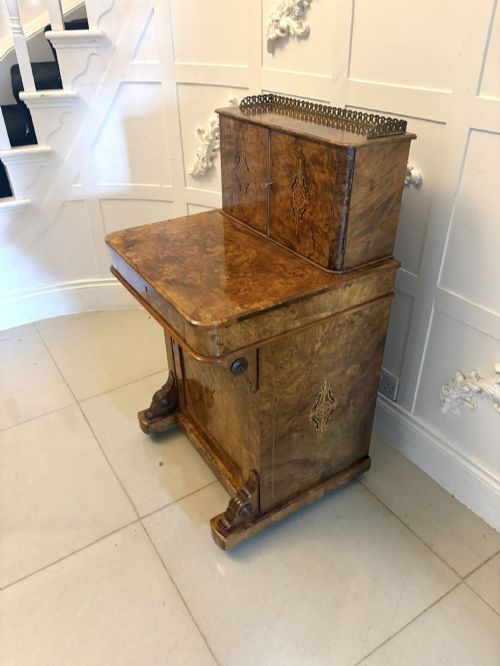
Edwardian marquetry furniture primarily encompasses occasional tables, display cabinets, and writing desks produced around the turn of the twentieth century. These pieces frequently draw upon Sheraton Revival designs, blending structural lightness with decorative wood veneers.
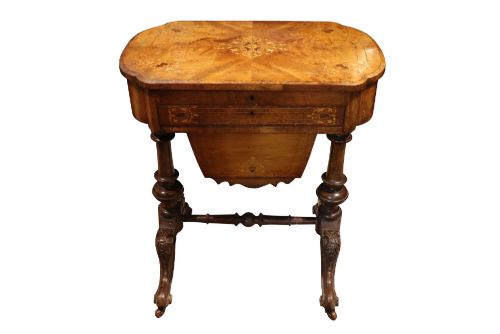
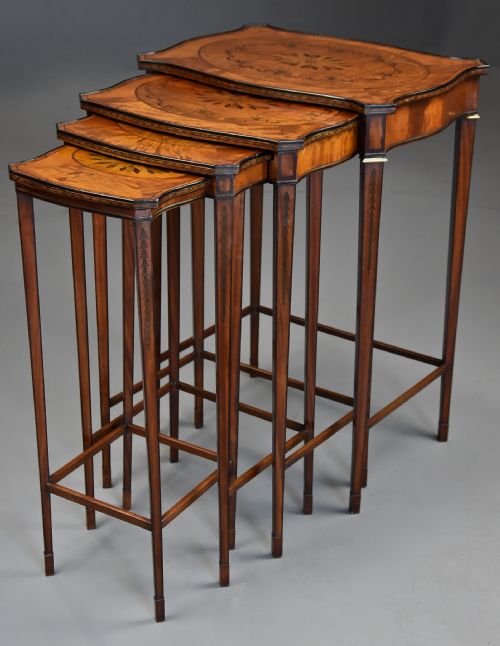
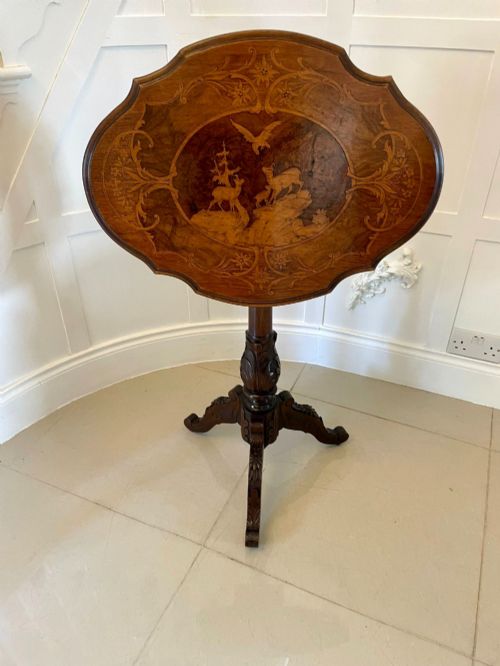
Makers of the era also adapted earlier Victorian forms, applying complex foliate marquetry and contrasting stringing to mahogany, satinwood, and walnut carcasses. Buyers encounter everything from compact lamp tables to large sideboards and nests of quartetto tables.
The aesthetic prioritises graceful proportions and botanical motifs, making these items versatile additions to both period interiors and contemporary spaces. Surviving examples demonstrate a distinct shift away from heavy Victorian gloom toward brighter domestic interiors.
Materials and Construction
Craftsmen built these items using a foundation of solid mahogany, walnut, or oak, then applied decorative veneers of satinwood, rosewood, and kingwood to the visible surfaces. Burr walnut and figured timbers provided rich background movement for cabinet doors and tabletops.
Marquetry decoration relied on fine hand-cut pieces of boxwood and various stained veneers, assembled like jigsaws to form delicate floral scrolls and urns. Brass hardware, mirrored glass panels, and occasional ormolu mounts completed the construction.
Edwardian Marquetry Furniture Retail Price Guide 2026
Typical asking prices for edwardian marquetry furniture among the pieces listed under this phrase on Sellingantiques today, from the lower quarter to the upper quarter. They describe what is for sale here now, not the wider market.
The listings demonstrate a strong preference for satinwood and mahogany structures enhanced by boxwood inlay and complex foliate marquetry.
Evaluating Quality and Execution
Quality rests heavily on the crispness of the inlay work and the selection of the underlying timbers. Superior pieces display seamless integration between the contrasting wood veneers and the main structural body.
Finer examples utilise dense satinwood or figured mahogany with meticulously detailed foliate marquetry, whereas simpler pieces rely on painted lines or sparse boxwood inlay. The integrity of the internal joinery and secondary woods also distinguishes standard production from exceptional workshop output.
Shapland & Petter·Hewetsons London·J Shoolbred·James Shoolbred & Co
The Edwardian Marquetry Furniture Glossary
- Marquetry
- Decorative veneer work forming pictures or patterns on a wooden surface. Craftsmen cut contrasting pieces of wood and fitted them together into a paper-thin sheet before gluing it to the carcass.
- Satinwood
- A hard, durable timber with a natural golden sheen and satin-like texture. It served as a primary ground for high-status Edwardian and Sheraton Revival cabinets and tables.
- Sheraton Revival
- A late nineteenth and early twentieth century design movement that reinterpreted the neoclassical styles of Thomas Sheraton. Pieces are characterised by tapered legs, delicate proportions, and restrained inlay.
- Carcass
- The main structural body or frame of a piece of furniture before drawers, doors, and surface veneers are applied. It provides the foundational strength for cabinets and desks.
- Stringing
- Thin strips of contrasting wood inlaid into grooves on table tops and drawer fronts. It creates crisp linear borders that frame the main panels of marquetry.
Edwardian Marquetry Furniture: Frequently Asked Questions
What is Edwardian marquetry furniture?
Edwardian marquetry furniture consists of tables, cabinets, and desks produced in the early twentieth century featuring detailed wood-in-wood pictorial designs. These items frequently incorporate lighter timbers like satinwood alongside traditional mahogany.
The style leans heavily on eighteenth-century revivals, resulting in elegant proportions paired with intricate floral or classical motifs. Such pieces were designed to brighten domestic rooms with decorative surfaces.
How do I care for marquetry surfaces?
Marquetry surfaces require gentle maintenance using traditional wax polishes to nourish the vintage timbers. Avoid placing these items in direct sunlight or near heat sources to prevent veneer shrinkage.
Regular dusting with a soft, dry cloth protects the delicate boxwood and satinwood inlays from abrasive particles. Moisture should be kept away from joints and veneered edges at all times.
Where were these pieces used?
Original owners placed these items in drawing rooms, parlours, and bedrooms as functional display and writing furniture. Occasional tables and nests sat beside seating areas for books and tea.
Cabinets and bookcases housed prized collections behind glazed doors while adding decorative warmth to room perimeters. Desks provided designated writing spaces within domestic studies.
How do I distinguish Edwardian from Victorian furniture?
Edwardian pieces generally feature lighter framing, brighter satinwood veneers, and a more delicate overall scale compared to earlier Victorian production. The marquetry tends toward crisp floral swags and neoclassical urns rather than heavy, dark, highly carved timber.
Victorian items often employ deeper, denser walnut or rosewood carcasses with heavier proportions. Examining the secondary woods and interior construction helps confirm the specific period of manufacture.