







Octagonal Satinwood Table
An octagonal satinwood table brings geometric elegance and luminous timber into a room, offering a distinct alternative to standard rectangular or round furniture.
Octagonal Satinwood Table
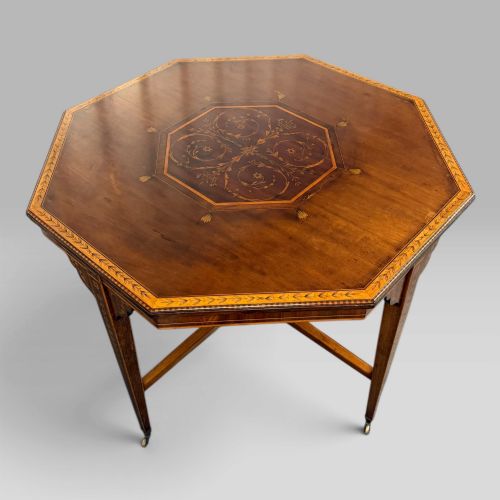
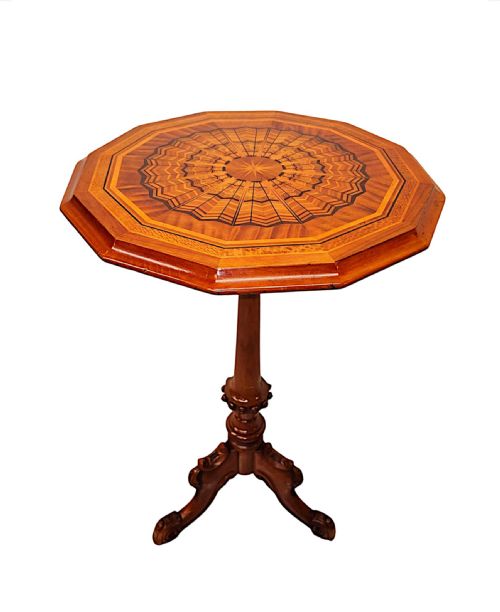
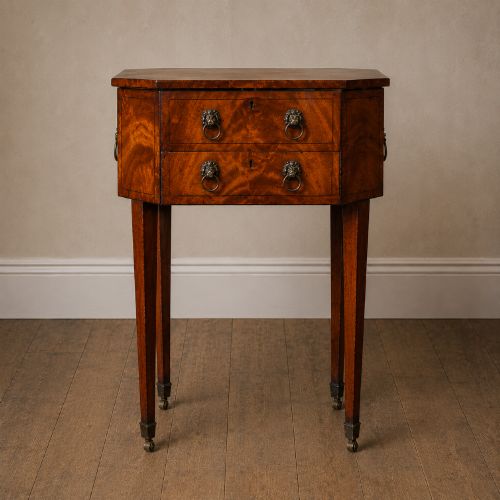
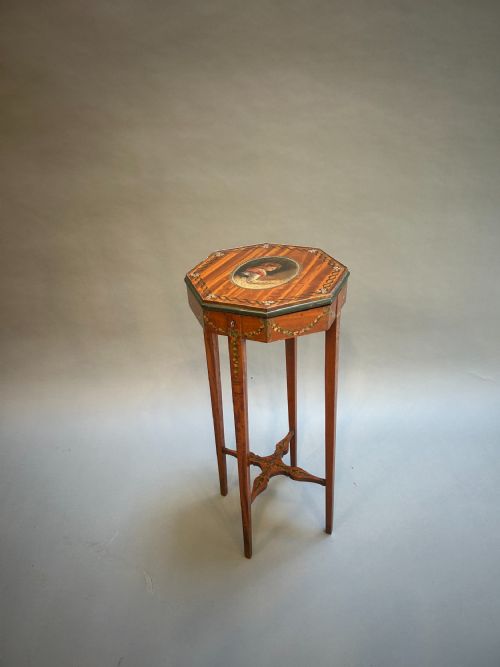
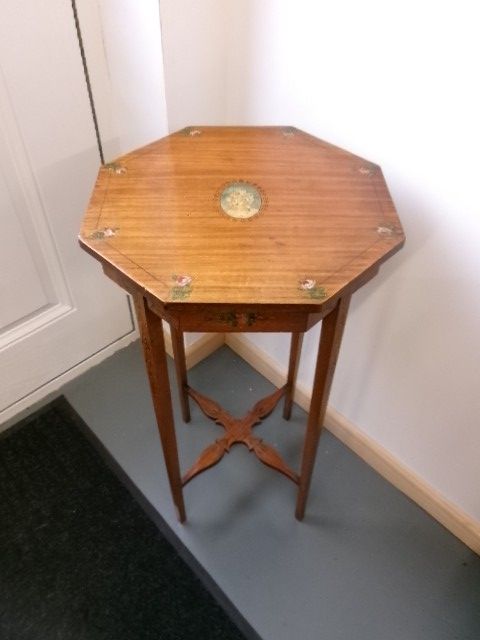
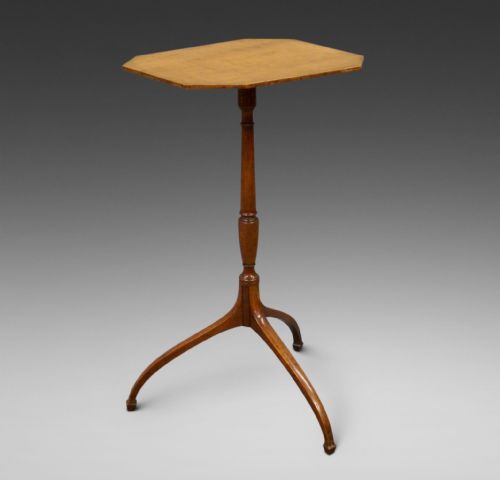
An octagonal satinwood table is a specialised form of antique furniture that spans multiple periods, including the Georgian, Regency, Victorian, and Edwardian eras. These pieces frequently manifest as work tables, occasional tables, centre tables, and bijouterie or display tables. Buyers searching for an octagonal satinwood table will encounter variations ranging from plain geometric designs to heavily inlaid Sheraton Revival interpretations.
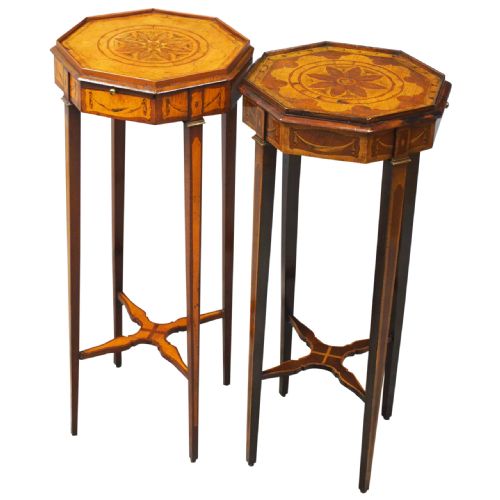
The material itself defines the visual character of these objects, utilising the blonde, chatoyant grain of satinwood often contrasted with darker woods like rosewood, mahogany, or ebony. Many examples incorporate intricate marquetry or hand-painted decorative motifs on the top surface. The eight-sided format provides a balanced silhouette that sits comfortably in both central room placements and corner positions.
Construction and materials
Cabinetmakers constructed these tables using a solid or veneered timber carcase, applying figured satinwood veneers to achieve the characteristic shimmering surface. Supporting structures frequently incorporate secondary hardwoods such as mahogany or rosewood for stability, particularly in turned pedestals and legs.
Surface ornamentation relied on meticulous hand craftsmanship, including contrasting wood inlay, marquetry, and delicate painted details. Metal elements such as brass handles and mounts appear on functional pieces like work tables and sewing cabinets.
Octagonal Satinwood Table Retail Price Guide 2026
Typical asking prices for octagonal satinwood table among the pieces listed under this phrase on Sellingantiques today, from the lower quarter to the upper quarter. They describe what is for sale here now, not the wider market.
Current listings and archives demonstrate that octagonal satinwood tables span the Georgian, Regency, Victorian, and Edwardian periods.
Evaluating quality and execution
The distinction between standard examples and superior pieces rests on the choice of timber and the precision of the marquetry or inlay. Finer specimens display a high degree of figure in the satinwood, maintaining rich colour and careful grain matching across the eight-sided top.
Structural refinement also separates the tiers of quality, seen in the crispness of turned pedestal bases, the integration of specialised functions like revolving shelves or fitted sewing interiors, and the overall harmony of painted or inlaid decoration.
Gillows
The Octagonal Satinwood Table Glossary
- Satinwood
- A dense, durable tropical timber known for its yellowish-blonde colour and natural lustre. It takes a high polish and serves as the primary surface veneer for decorative tables.
- Marquetry
- The art of applying pieces of veneer to a structure to form decorative patterns and pictures. Craftsmen utilise contrasting woods to create detailed floral or geometric motifs.
- Bijouterie table
- A glass-topped display table designed for showcasing small valuable items, medals, or curiosities. These often feature hinged octagonal lids lined with fabric.
- Sheraton Revival
- A late nineteenth and early twentieth-century design movement inspired by the neoclassical furniture of George III designer Thomas Sheraton. Pieces from this revival typically display light proportions and satinwood with painted decoration.
- Work table
- A small functional table equipped with drawers, compartments, or hanging bags for sewing and needlework supplies. They frequently feature octagonal tops with fitted interiors.
Octagonal Satinwood Table: Frequently Asked Questions
What rooms suit an octagonal satinwood table?
These pieces function effectively as centre tables in drawing rooms or as lamp and side tables beside seating. Their compact proportions allow them to fit easily into corners or smaller reception spaces.
The geometric eight-sided top breaks up the rigid lines created by standard square or rectangular furniture. Luminous satinwood finishes also help to brighten darker corners of a room.
How do I care for satinwood furniture?
Satinwood requires protection from direct sunlight to preserve its pale, golden colour and prevent the timber from darkening excessively. Regular dusting with a soft, dry cloth maintains the polished surface without the need for heavy waxes.
Avoid placing damp items or unprotecting lighting directly on antique veneers. Stable indoor humidity levels prevent the wood and delicate inlays from warping or cracking over time.
How can I tell Georgian pieces from Edwardian ones?
Georgian tables from the late eighteenth or early nineteenth century typically exhibit understated proportions, crisp structural joinery, and simpler classical lines. Their timber patination often shows deeper warmth acquired over centuries.
Edwardian pieces, particularly those in the Sheraton Revival style, frequently feature lighter construction, more exuberant painted decoration, and brighter, highly figured veneers. They reflect a deliberate revival of eighteenth-century aesthetics using turn-of-the-century manufacturing methods.
Were octagonal tables used for dining?
Standard octagonal tables of this scale were not intended for main meals, functioning instead as occasional, work, or display furniture. Their surface areas and heights suit reading, needlework, or holding decorative objects rather than serving food.
Larger versions sometimes operated as centre tables in libraries or entrance halls. Their distinctive shape allowed easy circulation around the room compared to sharp-cornered tables.