
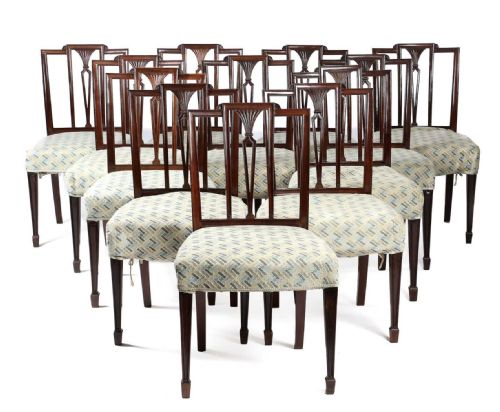
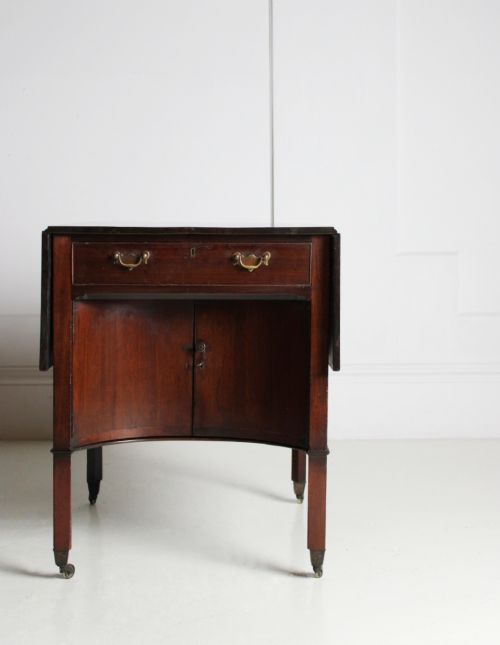


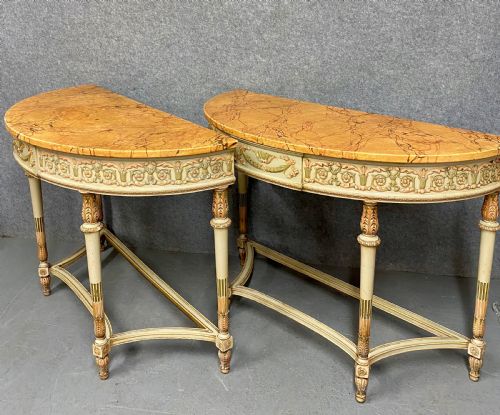

Carved Tapered Leg Table
These carved tapered leg table pieces offer elegant proportions and refined timberwork, bringing classic form and practical surface area to any interior.
Carved Tapered Leg Table
A carved tapered leg table appears across several distinct periods, most frequently as a console, side table, or writing desk. The selection encompasses Georgian, Regency, and Edwardian examples alongside later painted Swedish and Neoclassical interpretations.
Buyers encounter forms ranging from narrow demi-lune hall tables to serpentine sideboards and occasional tables. Mahogany and walnut dominate the timber choices, often accompanied by painted pine surfaces.
The defining characteristic across these varied forms is the tapering lower support, frequently detailed with carving, inlay, or classical motifs. Such pieces bridge the gap between decorative console furniture and functional writing surfaces.
How they were made
Cabinetmakers utilised dense timbers such as mahogany and walnut, building structural frames that supported detailed boxwood inlay and marquetry work. Brass fittings and fabric elements occasionally complemented the primary woodwork.
Surface treatments varied from polished timber finishes to painted pine schemes influenced by Gustavian and Neoclassical tastes. The tapered legs required precise woodworking to achieve correct balance and proportion.
Even a humble pine board sometimes harbours grand ambitions when dressed in Swedish paint.
What varies in quality
The standard of execution in the carved details and inlay work dictates the distinction between ordinary and superior examples. Crisp lines on tapered legs and refined proportions elevate the status of a console or writing table.
Material selection plays a significant role, with figured burr walnut and dense mahogany commanding greater appreciation than basic pine, though applied paint finishes require their own distinct preservation.
The Carved Tapered Leg Table Glossary
- Demi-lune
- Half-moon shaped furniture designed to sit flush against a wall. These tables function well in narrow hallways and entrance spaces.
- Marquetry
- Decorative veneer patterns applied to furniture surfaces using various wood types. This technique creates complex pictorial or geometric designs.
- Serpentine
- A curved shape featuring a convex centre flanked by concave ends. It adds dynamic movement to the front profile of sideboards and tables.
- Neoclassical
- A style drawing inspiration from classical antiquity, featuring restrained ornamentation and symmetrical lines. It heavily influences the decorative motifs on these supports.
- Taper
- A gradual decrease in the thickness of a leg towards the base. This shaping lightens the visual weight of heavy timber furniture.
Carved Tapered Leg Table: Frequently Asked Questions
Where should I place a console table?
These items suit entrance halls, narrow corridors, or living rooms where floor space is limited. Their shallow depth allows them to sit against walls without obstructing movement.
They provide a convenient surface for lamps, mirrors, or decorative objects while adding architectural interest to empty wall spaces.
How do I care for antique mahogany?
Maintain timber surfaces by dusting regularly with a soft, dry cloth and avoiding direct sunlight. Excessive heat and moisture can damage antique polishes.
Apply high-quality beeswax sparingly when the wood appears dry, buffing gently to restore the natural lustre of the grain.
What is the difference between George III and Regency styles?
George III pieces often display intricate carving and classical proportions influenced by prevailing architectural trends. The materials tend towards rich mahogany and detailed inlay.
Regency design shifts towards bolder archaeological references from Roman and Greek precedents. Brass mounts and distinct saber or tapered supports become more prominent.
Can these tables be used for writing?
Certain examples designated as writing desks or side tables offer appropriate height and surface area for casual correspondence. They combine decorative appeal with practical utility.
Check the kneehole clearance and drawer depth to ensure comfort if you plan to sit at the piece regularly.