

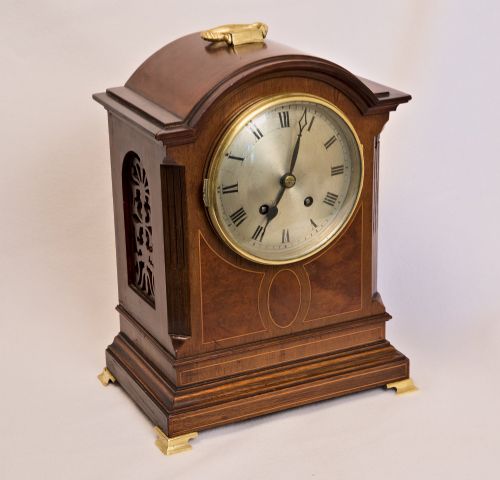


Edwardian Mantelpiece Clock
An edwardian mantelpiece clock sits proudly on a shelf or sideboard, bringing period character and reliable timekeeping to a room.

Edwardian Mantelpiece Clock
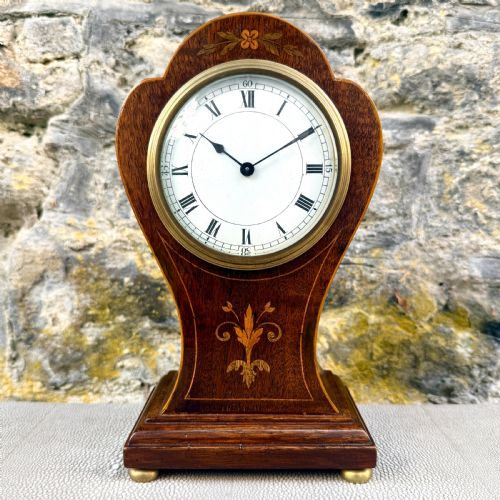
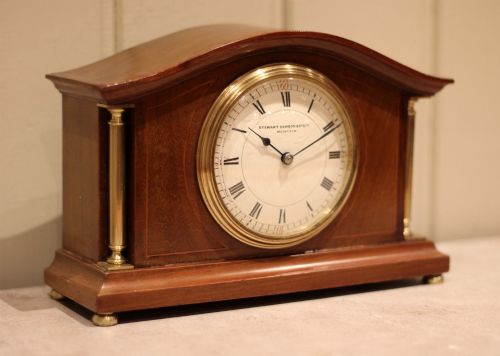
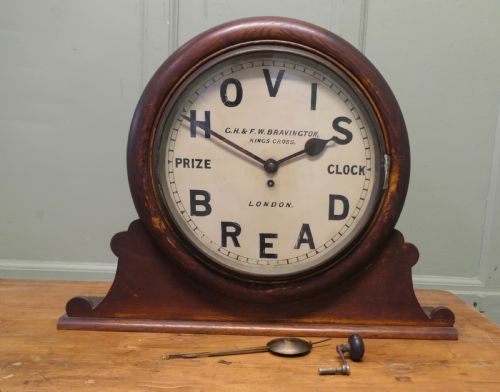
An edwardian mantelpiece clock is a domestic timekeeper designed to stand on a fireplace mantel or a prominent piece of furniture. These clocks span the late nineteenth century and the early decades of the twentieth century, bridging Victorian solemnity and later decorative movements.
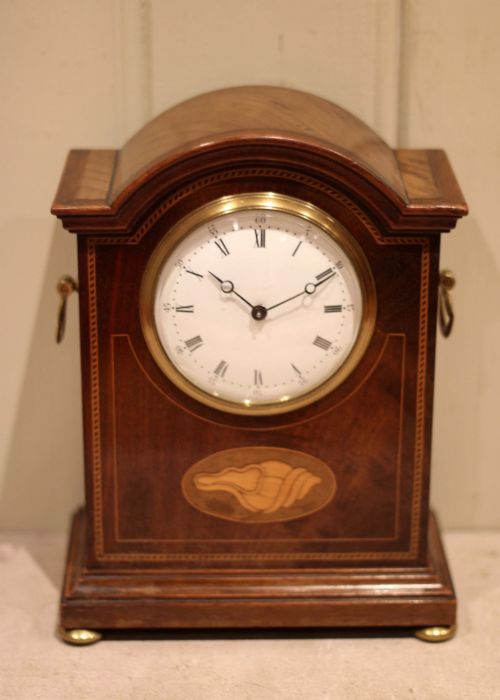
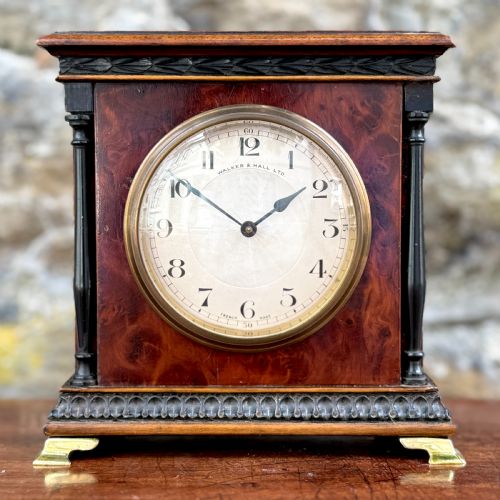
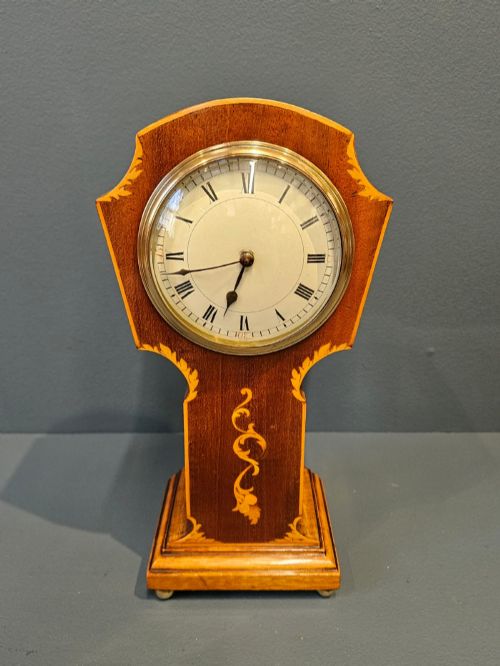
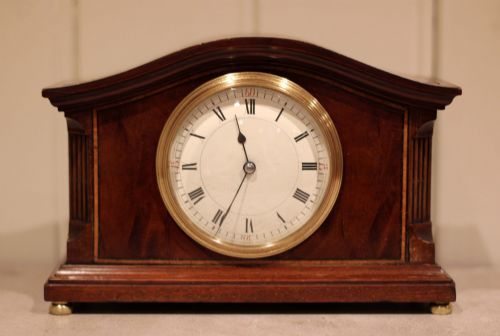
The version most commonly met on this page is housed in a wooden case, with mahogany forming the most frequent choice alongside oak, walnut, and satinwood. Many examples feature delicate wood inlays, brass mounts, or glass panels that reveal the movement within.
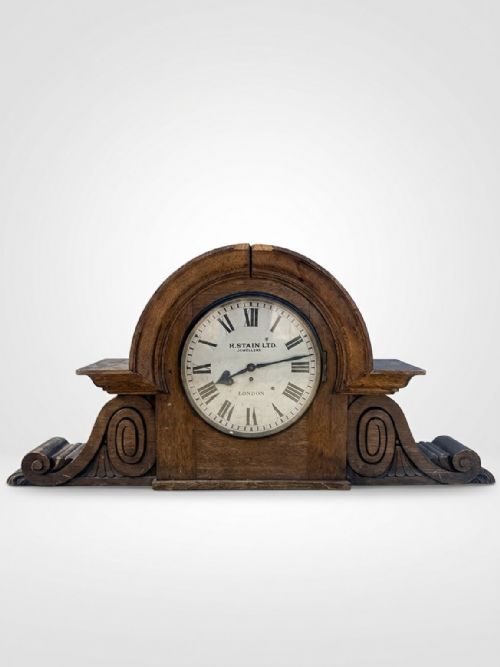
Beyond standard wooden mantel clocks, the selection includes architectural bracket clocks, arched lancet shapes, and occasional silver-fronted or gilded brass designs. Styles range from restrained Edwardian classical forms to flowing Art Nouveau curves and revivalist motifs.
How they were made
Cabinetmakers constructed the wooden cases from solid timbers and veneers such as mahogany, walnut, satinwood, and oak, frequently employing contrasting stringing and geometric or floral inlays to decorate the surfaces. Brass and silver components, including bezels, feet, dials, and pierced filigree mounts, added metallic contrast to the polished timber.
Mechanical movements inside these cases were engineered by specialist horologists and housed behind glass-covered enamel dials. Makers utilised precise gear trains, spring-driven or fusee mechanisms, and sometimes striking or chiming arrangements to mark the hours.
What varies in quality
The standard of timber selection and cabinetmaking sets the foundation, distinguishing plain utilitarian boxes from finely figured mahogany and satinwood cases with intricate, precise inlay work. The crispness of cast brass ornaments, the legibility and condition of the enamel dial, and the presence of silver cladding or gilded bronze detailing elevate certain pieces.
Horological refinement further divides the range, where robust, high-grade movements by established makers or retailers offer superior mechanical longevity compared to standard mass-produced timepieces. The integration of specialised escapements, fusee drives, or chiming functions indicates a higher grade of original manufacture.
Walker and Hall·W. Burton·Winterhalder and Hofmeier·Maple of London·Asprey of London
The Edwardian Mantelpiece Clock Glossary
- Timepiece
- A clock that tells the time without striking or chiming on the hour. These simpler movements were common in domestic settings.
- Fusee
- A conical pulley connected to the mainspring by a cord or chain that ensures even power delivery as the spring unwinds. This mechanism improves timekeeping accuracy.
- Bracket clock
- A portable clock originally designed to sit on a wall bracket or table. Many later Edwardian examples retained the name while functioning as large mantel clocks.
- Lancet top
- A clock case featuring a pointed, Gothic-arch silhouette at the peak. This architectural outline is typical of Edwardian mantel clocks.
- Ting-tang
- A type of striking mechanism that sounds two different notes on quarter hours before striking the full hour on a gong or bell.
Edwardian Mantelpiece Clock: Frequently Asked Questions
How do I wind an Edwardian mantel clock?
Most Edwardian clocks use a key inserted into winding holes on the dial face to tension the internal springs. Care must be taken not to overwind the mechanism, stopping as soon as resistance is felt.
For clocks with pendulum regulation, the pendulum must be secured or unhooked before moving the clock to prevent damage to the delicate suspension spring.
Where should I place a mantel clock?
These clocks are designed for stable, level surfaces such as mantelpieces, sideboards, or desks where they can be viewed easily. Placing them away from direct heat sources and damp walls protects the wooden veneers and delicate internal metals.
A level surface is particularly important for pendulum-controlled movements to ensure the tick remains even and the clock does not stop.
How do I tell an Edwardian clock from a Victorian one?
Edwardian clock cases generally favour lighter woods like satinwood and brighter mahogany, often with restrained inlay or Art Nouveau influences. Victorian examples tend to be heavier, utilising darker carved oak, dense marble, or ornate classical revival motifs.
Examining the dial typography, brass mounts, and overall silhouette helps place the piece within its stylistic era.
Did these clocks always chime?
Many Edwardian mantel clocks are simple timepieces that only indicate the time without striking bells or gongs. Others feature sophisticated striking trains or ting-tang mechanisms to mark the hours and quarters.
The presence of multiple winding holes on the dial usually indicates a clock with striking or chiming functions.