

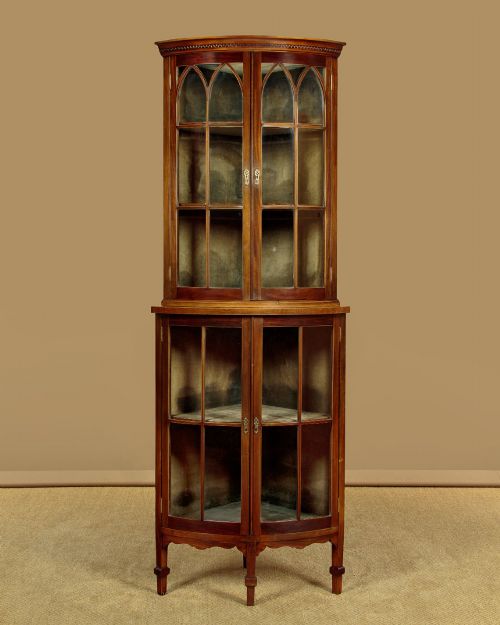


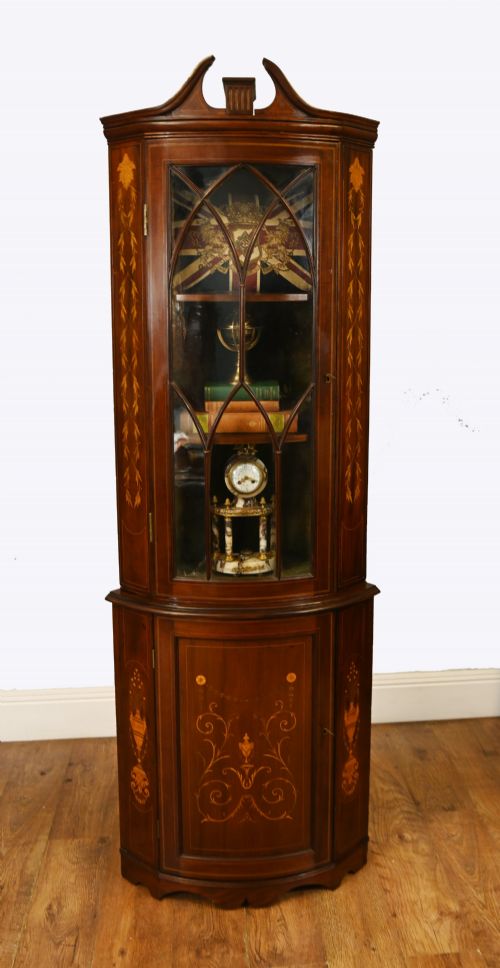


Edwardian Mahogany Corner Cupboard
An edwardian mahogany corner cupboard turns neglected room angles into display space with rich timber grain and subtle satinwood inlay.
Edwardian Mahogany Corner Cupboard
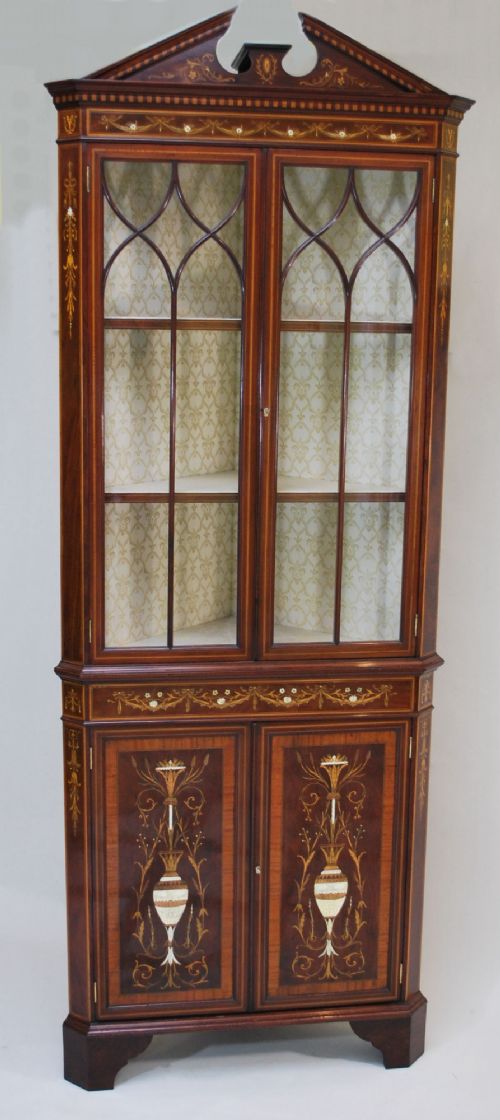
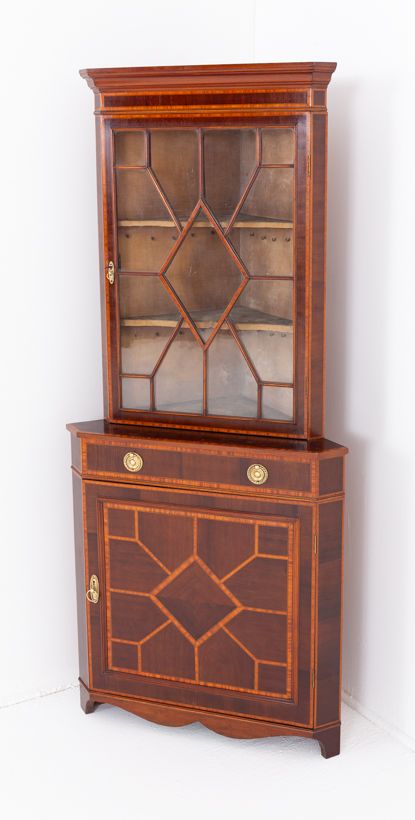
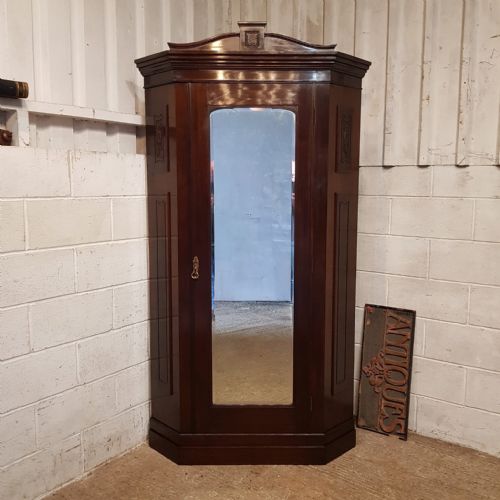
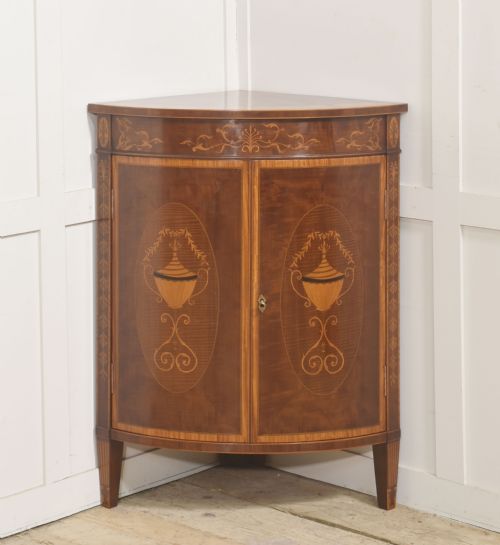
An edwardian mahogany corner cupboard is primarily designed to utilise awkward room angles, coming in both wall-hanging and floor-standing formats. The pieces on this page lean heavily towards the Edwardian period, supplemented by Victorian and Georgian examples.
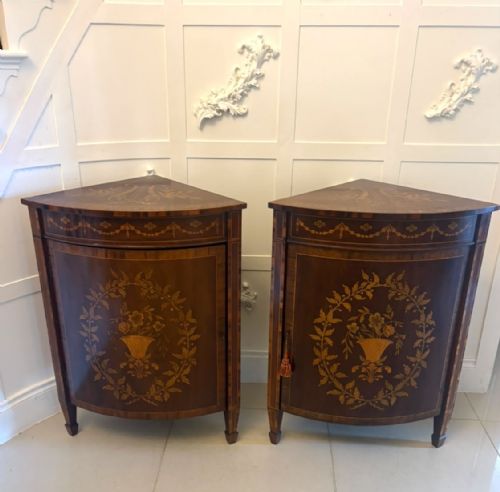
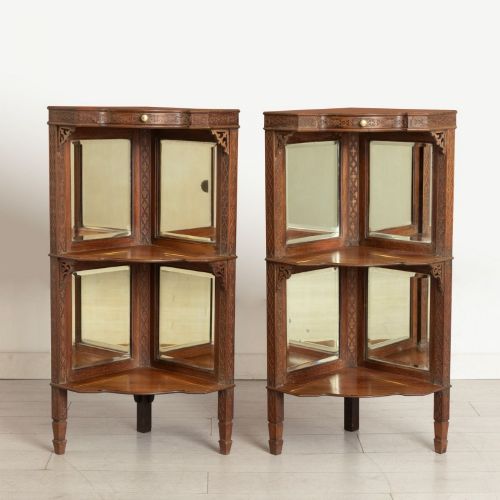
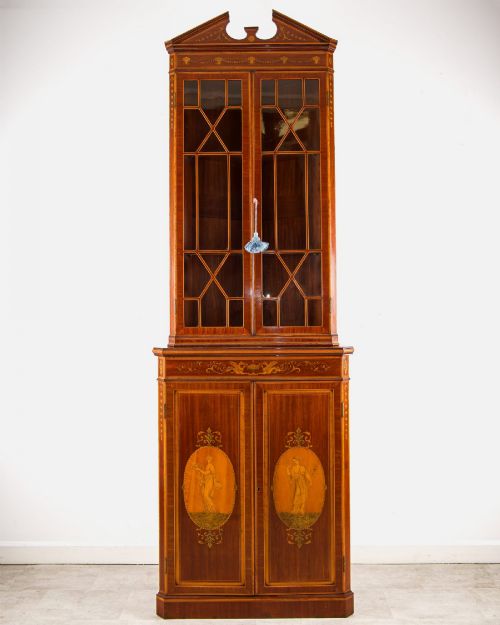
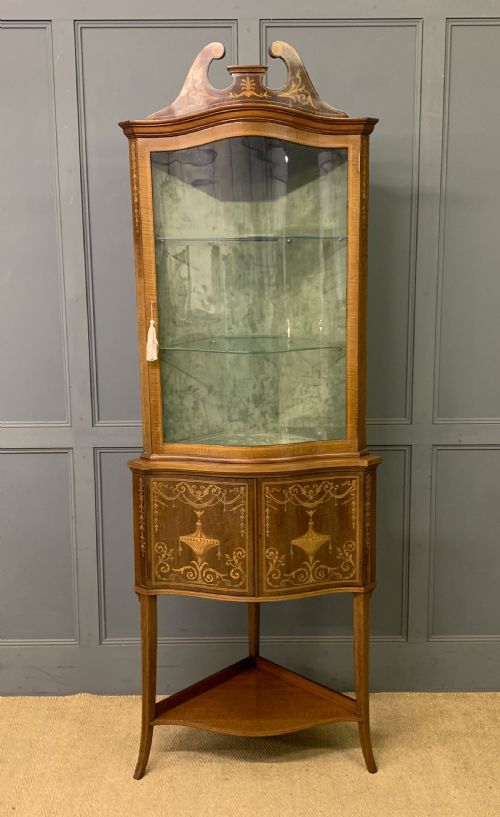
Buyers will encounter single-door wall cabinets, tall double-height standing units, and bow-fronted or serpentine-shaped variations. Many feature glazed doors for showing china, while others offer solid wooden doors to conceal storage.
Materials and Technique
Makers built these cabinets using solid mahogany carcasses, often enriched with contrasting stringing and banding in satinwood, boxwood, and other pale timbers. Marquetry motifs frequently adorn the panels.
Glazing takes the form of timber astragal bars dividing the glass panes, while brass hardware such as hinges and escutcheons secures and finishes the doors.
Materials across the inventory include mahogany, satinwood, boxwood, brass, and mirrored glass.
Assessing Craftsmanship
Quality rests on the depth of the mahogany grain and the precision of the contrasting inlay work rather than plain timber surfaces. Crisp astragal glazing bars and well-fitted doors distinguish finer pieces.
Proportion and scale dictate the visual weight of the furniture, with taller double-height standing cabinets requiring balanced construction to sit squarely in a room corner.
Edwards & Roberts·Goodhall, Lamb and Heighway
The Edwardian Mahogany Corner Cupboard Glossary
- Astragal glazing
- Wooden bars holding small panes of glass within a door frame. These delicate frameworks define the front of many display cabinets.
- Marquetry
- Decorative patterns created by fitting thin pieces of veneer into a timber ground. It often adds floral or classical motifs to cabinet doors.
- Stringing
- Thin lines of contrasting wood inlaid into the main timber surface. This technique borders panels and drawers on Edwardian furniture.
- Serpentine
- A curved shape featuring a convex centre flanked by concave sides. It adds fluid movement to the front profile of a cabinet.
- Bow front
- A gently rounded convex front panel that projects forward. This curved form softens the sharp angles of a room corner.
Edwardian Mahogany Corner Cupboard: Frequently Asked Questions
How do I hang a wall cabinet safely?
Wall-hanging corner cupboards require sturdy fixings screwed directly into solid masonry or internal wall studs. Given the weight of dense mahogany and glass, professional installation ensures the piece remains secure.
Position the cabinet at eye level so the internal shelves function comfortably for everyday use and display.
Where should I place a corner cupboard?
These cabinets fit neatly into unused right-angled junctions in dining rooms, hallways, or living spaces. They draw the eye upward without obstructing floor movement.
Pairing a standing unit with a low side table or placing a hanging model above a corner desk balances the vertical lines.
How do I clean mahogany wood?
Dust the polished surfaces regularly with a soft, dry cloth to prevent grime buildup. Avoid silicone sprays that leave residues and dull the timber finish over time.
Apply a quality beeswax occasionally to nourish the mahogany and preserve the warm reddish-brown tone.
How do I spot an Edwardian piece?
Edwardian cabinets generally display lighter mahogany tones, refined satinwood stringing, and delicate inlay work influenced by Sheraton revivals. The internal construction often reveals machine-sawn backing boards alongside traditional hand dovetailing.
Examining the hinges, locks, and glass clarity helps distinguish turn-of-the-century manufacturing methods from older Georgian originals.