
Edwardian Lounge Chair
An edwardian lounge chair offers deep upholstery and generous proportions built for comfort, making it a sought-after seating choice for traditional living spaces.
Edwardian Lounge Chair
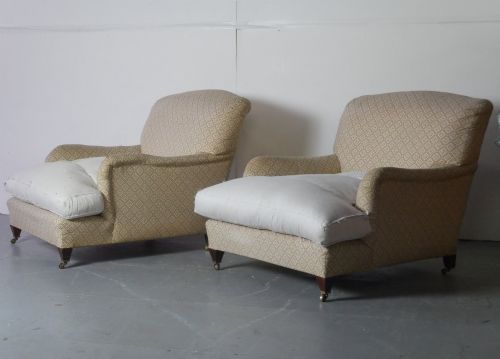
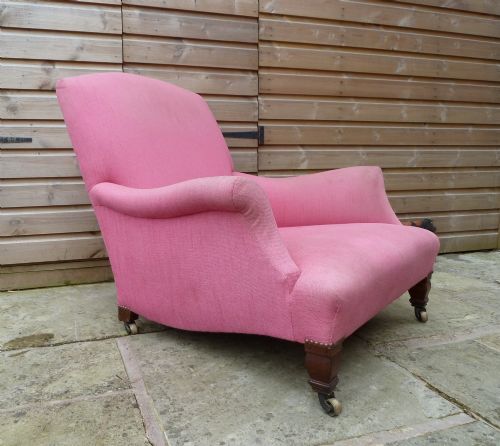
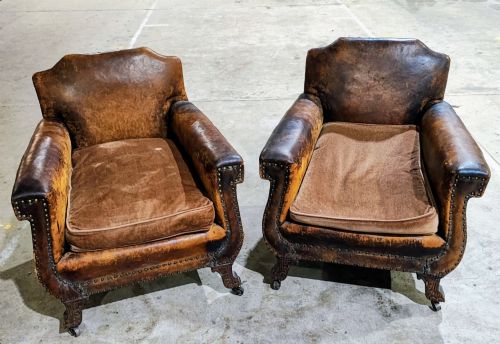
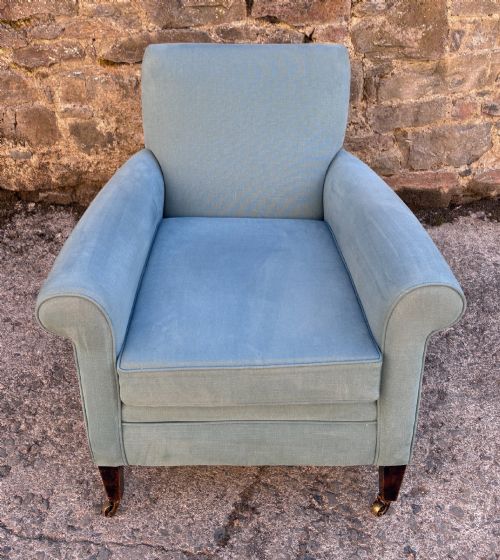
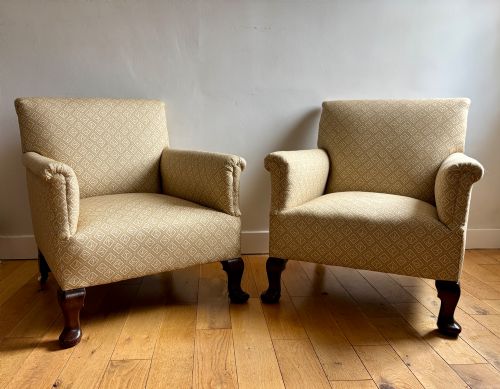
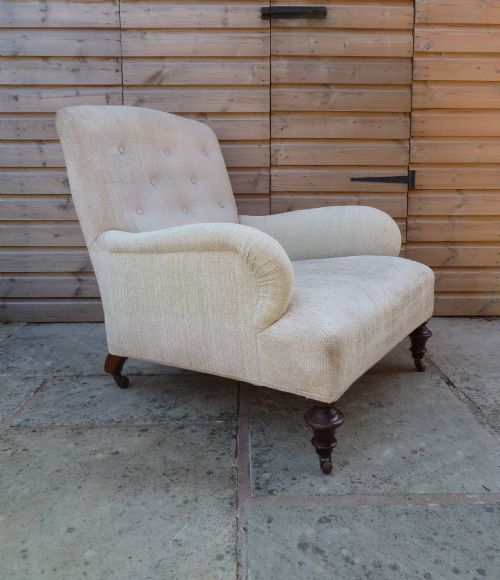
An edwardian lounge chair encompasses low, deep-seated armchairs, club chairs, and easy chairs originating primarily around the turn of the twentieth century. These pieces focus heavily on comfortable ergonomics, often featuring sprung seats and padded arms designed for long periods of relaxation.
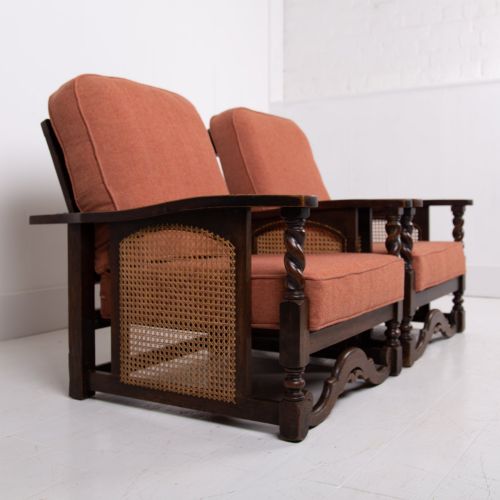
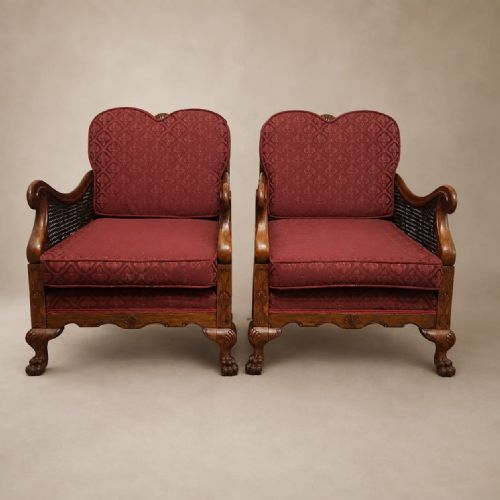
The selections available range from sturdy oak and mahogany frames with traditional fabric upholstery to low-slung leather club chairs and cane-backed bergères. Makers of the period drew on diverse aesthetic influences, producing everything from simple Arts and Crafts models to ornate Satinwood and Chinoiserie framed suites.
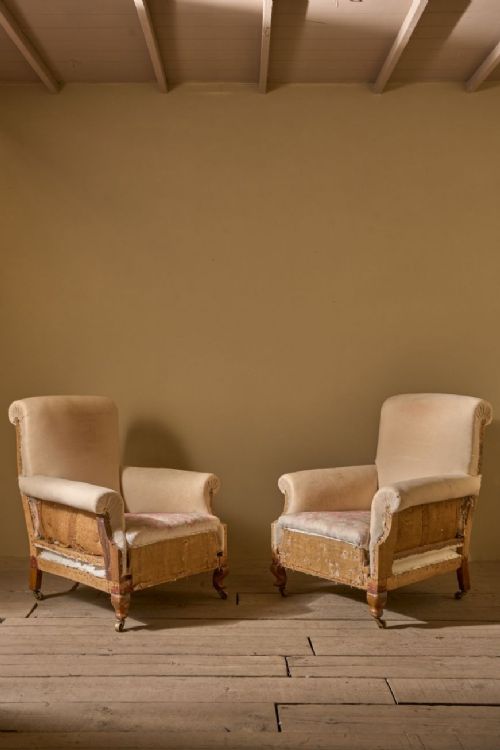
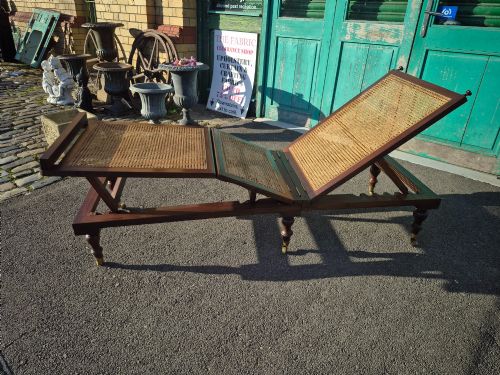
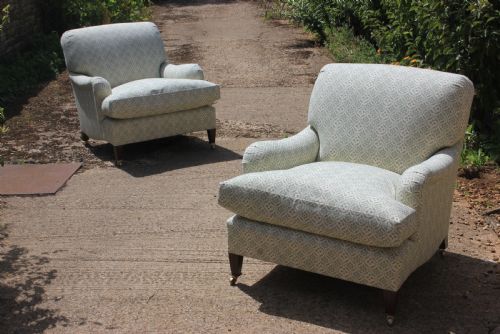
Buyers will encounter both single statement chairs and matched pairs, alongside occasional daybeds and larger three-piece suites. The overarching characteristic across these forms is a sturdiness of build paired with an informal, domestic comfort that defines the era's seating.
How they were made
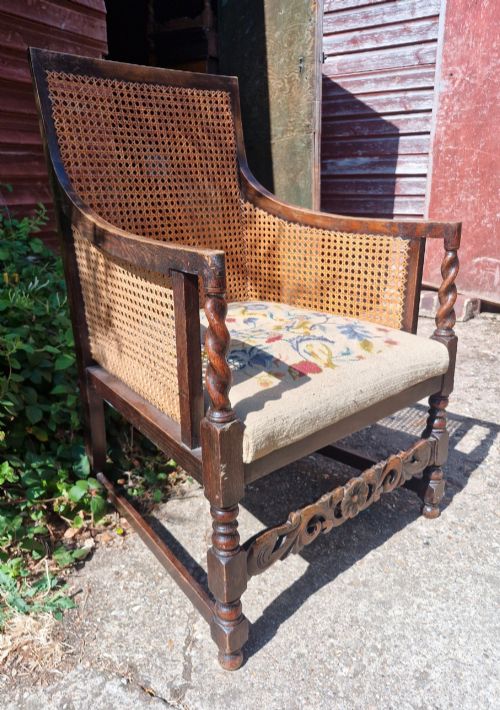
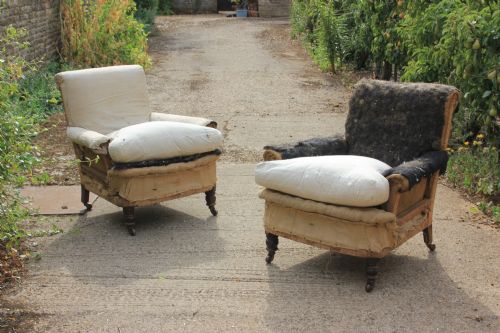
Frames rely on dense hardwoods such as mahogany, walnut, oak, and satinwood, frequently joined with traditional mortise and tenon techniques to withstand heavy daily use. Turn-of-the-century makers utilised cane inserts for lightweight backrests, particularly on bergère models.
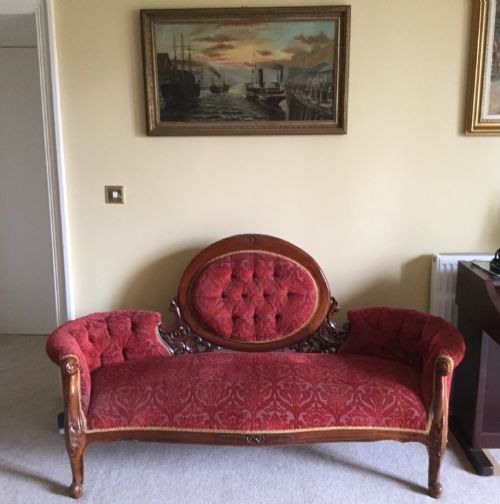
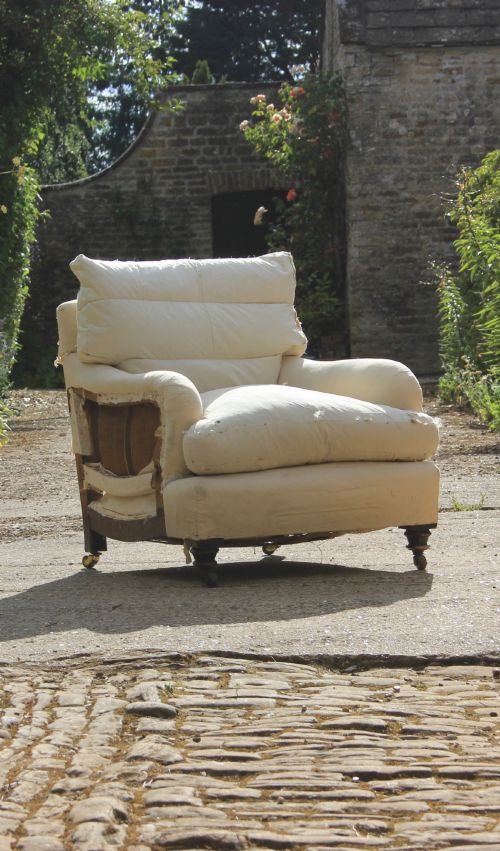
Upholstery techniques of the period involved complex internal springing systems combined with horsehair or deep pile padding, finished in leather, velvet, or heavy brocade. Decorative detailing often included hand-carved woodwork, delicate inlay work, and button-backed cushioning.
Listings feature woods including mahogany, walnut, oak, satinwood, and hardwood alongside brass accents and cane work.
What varies in quality
The integrity of the internal wooden frame and the resilience of the original sprung base determine the structural longevity of the piece. Frames that remain firm without wobble indicate superior initial joinery and careful subsequent handling.
Material selection and execution of decorative details set finer examples apart from standard production. Superior chairs display crisply carved woodwork, high-grade durable leather or deep pile fabrics, and precise upholstery stitching that retains its supportive tension.
Howard and Sons·Whytock and Reid·Hindley and Sons·Gillows·Hampton and Sons
The Edwardian Lounge Chair Glossary
- Bergère
- An enclosed armchair with cane or wicker side panels and a wooden frame. This French-inspired design became popular in lighter drawing rooms.
- Club Chair
- A heavily upholstered, deep-seated armchair traditionally covered in leather. It prioritises maximum physical comfort over formal posture.
- Arts and Crafts
- A design movement favouring honest construction, simple geometric forms, and visible natural wood grains. It rejected excessive industrial ornamentation.
- Satinwood
- A lustrous, yellowish timber native to India and Ceylon used for fine cabinet work and inlay. It frequently appeared on refined parlour and occasional seating.
- Chinoiserie
- European decorative art imitating Chinese stylistic motifs, often applied through lacquer or painted frame details. It reflects an enduring taste for exotic ornamentation in late-period suites.
Edwardian Lounge Chair: Frequently Asked Questions
What defines an edwardian lounge chair?
These seats are characterised by generous, deep proportions and a focus on domestic relaxation. They typically feature sprung bases and upholstered frames tailored for comfort.
They bridge the heavier aesthetic of Victorian furniture and the lighter, cleaner lines of the twentieth century, utilising woods like mahogany and walnut alongside diverse textile coverings.
How do I care for leather upholstery?
Leather-upholstered club chairs benefit from regular dusting and occasional treatment with appropriate conditioning creams to prevent drying and cracking. Keeping them away from direct sunlight preserves the natural tone of the hide.
Avoid placing these chairs near strong direct heat sources, which can cause the underlying wooden frame to warp and the leather to stiffen over time.
Can I use these chairs daily?
These pieces were built for everyday domestic use using durable hardwoods and robust internal springing. Many survive precisely because their sturdy construction suited active household environments.
Routine maintenance of the springs and webbing ensures they remain supportive and comfortable for modern daily seating requirements.
How do I identify the period?
Dating relies on examining the timber species, upholstery style, and construction methods. The era favoured specific revivals alongside clean Edwardian interpretations of earlier classical designs.
Structural details such as turned wooden legs, cane work patterns, and specific decorative inlay help distinguish pieces made around nineteen hundred from later reproductions.