

Edwardian Leather Desk
An Edwardian leather desk provides a writing surface inset with hide, bringing early twentieth-century utility to a study.

Forms and Origins
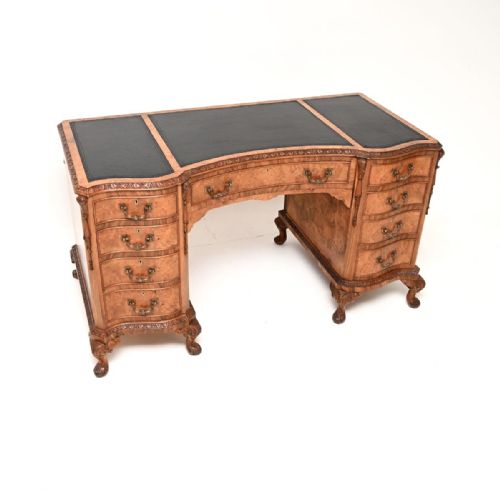
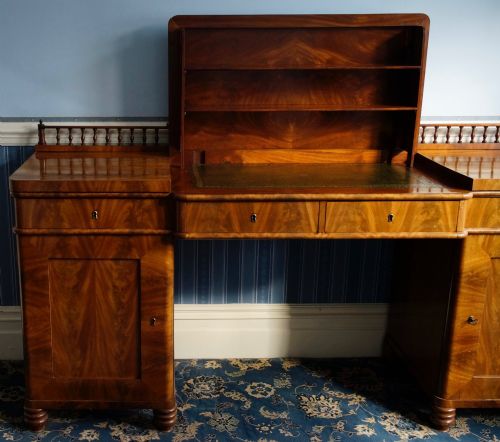
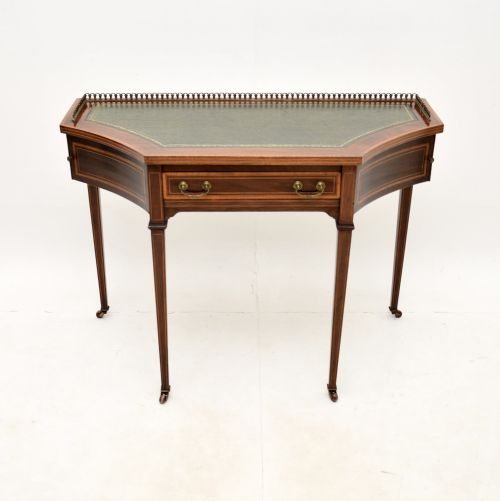
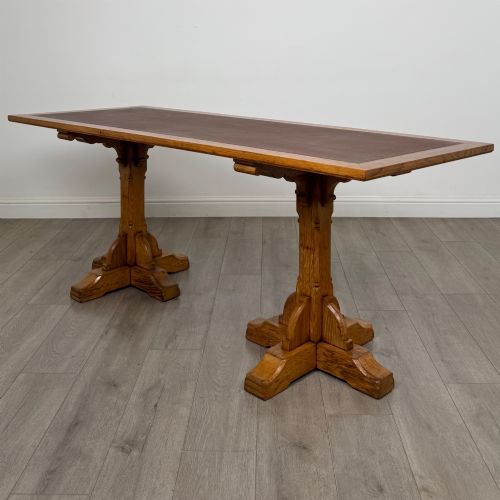
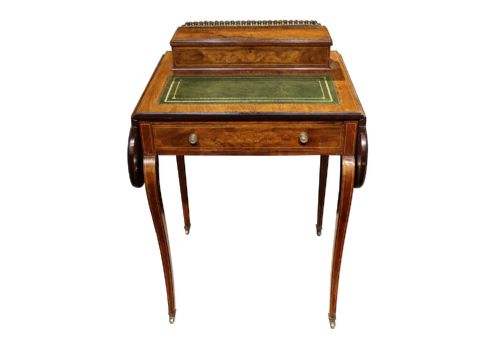
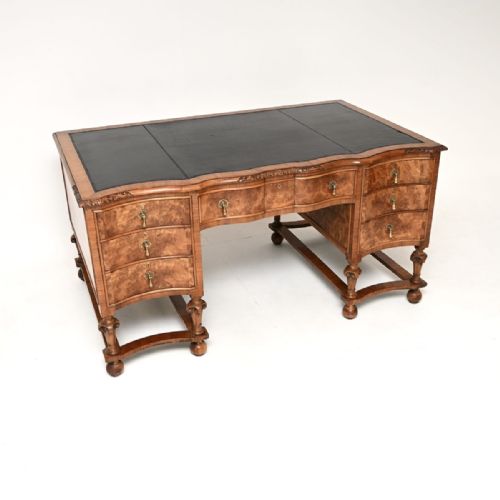
The edwardian leather desk appears primarily as a writing table, writing desk, or pedestal desk intended for correspondence and study. These pieces originate mainly from the Edwardian period, alongside examples spanning from late Victorian years to nineteen hundred.
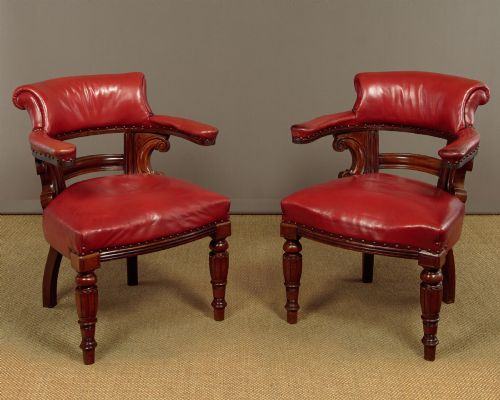
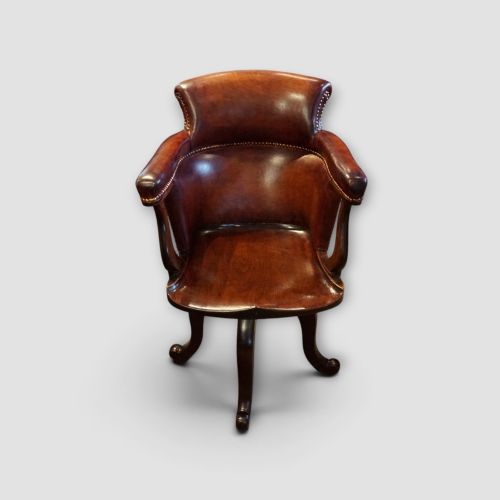
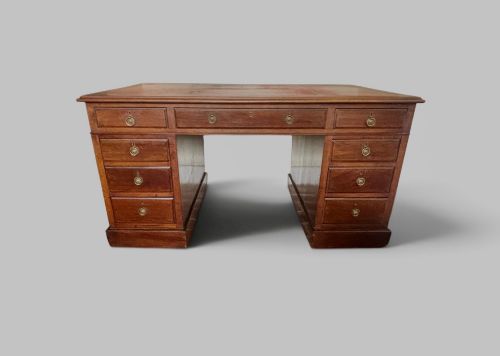
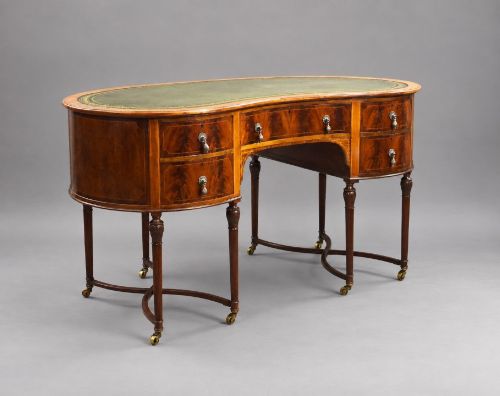
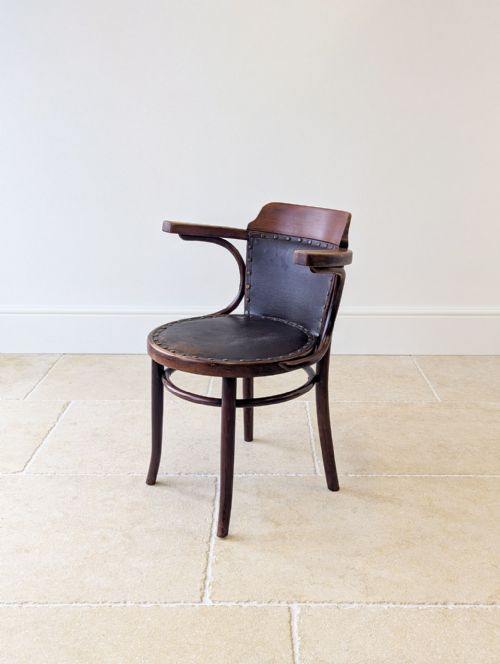
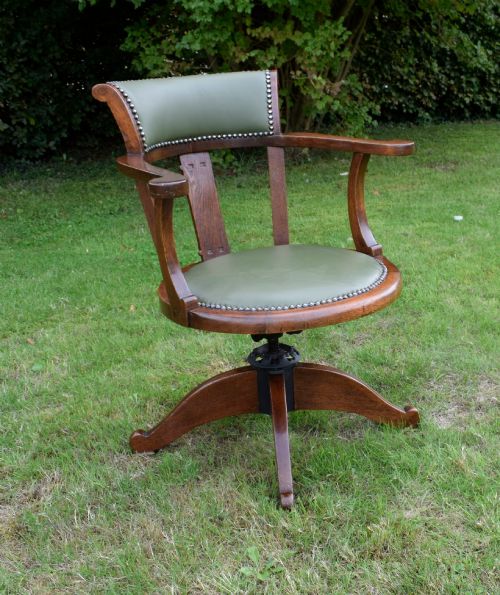
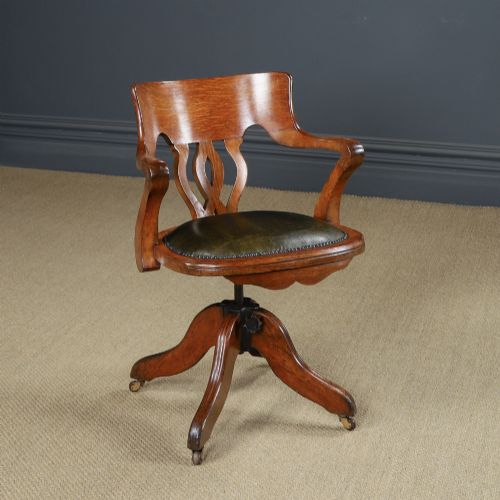
Forms range from kidney-shaped writing tables and inlaid mahogany writing desks to larger oak pedestal formats. Alongside tables, swivel office desk chairs upholstered in leather frequently accompany these writing surfaces.
Makers and regional workshops in England, Scotland, and America produced these pieces using timbers like mahogany, oak, walnut, and satinwood. The primary surface modification consists of a tooled leather insert in red, burgundy, or green shades.
Materials and Technique
Carpenters constructed these desks using solid and veneered timbers including mahogany, oak, walnut, burr walnut, beech, and satinwood. Brass hardware often supports handles, locks, and revolving mechanisms on chairs.
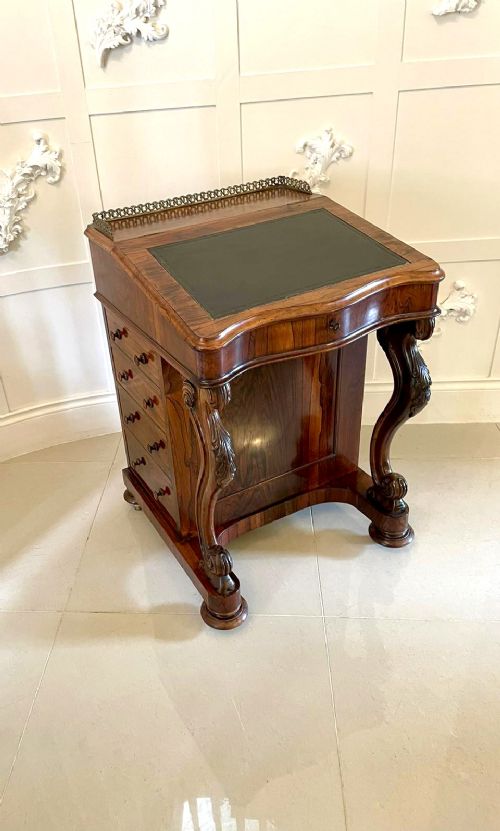
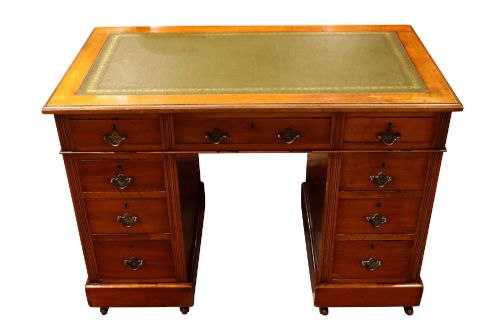
The writing surfaces integrate leather inserts decorated with gilt tooling. Inlaid details in contrasting woods adorn mahogany frames on select writing tables and metamorphic desks.
Retail Price Guide 2026
Typical UK retail prices for edwardian leather desk, calculated from the Sellingantiques database of over a million retail prices indexed since 2003. This retail price guide relies exclusively on Sellingantiques data; no external sources or auction records are used, so the figures do not describe the wider market.
Sheriff oak desks ensure that even paperwork feels like an administrative western.
Distinctions in Standard
The choice of timber underpins the hierarchy of these desks, distinguishing simple beech or oak office chairs from finely figured mahogany and satinwood writing tables with marquetry inlay. The crispness of the gilt tooling on the leather surface also marks the distinction between standard utilitarian pieces and finer examples.
Construction methods determine durability, separating simpler single-pedestal writing desks from substantial three-part pedestal formats with numerous drawers. The integration of specialised mechanics, such as metamorphic actions or revolving swivel bases, adds complexity that separates basic writing tables from elaborately engineered pieces.
Shapland and Petter·William Birchcraft·Cooke s of Finsbury London
The Edwardian Leather Desk Glossary
- Pedestal desk
- A heavy writing desk supported by two banks of drawers beneath the work surface. These freestanding pieces often feature nine drawers and a tooled leather top.
- Kidney shaped
- A curved desk design resembling a kidney bean. This asymmetric form allows the user to sit closer to the centre of the writing surface.
- Metamorphic
- Describing furniture designed to transform or serve multiple functions. These desks incorporate hidden mechanisms that alter the configuration of compartments or writing surfaces.
- Gilt tooling
- The application of gold leaf into impressed patterns on leather. This decorative technique frames the perimeter of the writing surface.
- Revolving desk chair
- An office chair fitted with a swivel mechanism and castors. These seats commonly feature green or red leather upholstery paired with oak or beech frames.
Frequently Asked Questions
What is an Edwardian leather desk?
An Edwardian leather desk is a wooden writing table or pedestal desk featuring an inset leather writing surface, produced around the start of the twentieth century.
These pieces served domestic studies and offices, combining timber frames in mahogany or oak with tooled leather inserts.
How do I identify an Edwardian desk?
Identification relies on material choices, construction methods, and stylistic cues characteristic of the period between eighteen eighty and nineteen ten. Look for mahogany, oak, or walnut timbers paired with gilt-tooled leather surfaces and period brass hardware.
Compare the piece against standard forms such as twin pedestal desks, kidney-shaped writing tables, and revolving desk chairs.
Are these desks suitable for daily work?
These desks accommodate daily writing and study tasks, offering sturdy wooden construction and practical drawer storage. The inset leather surface provides a smooth plane for writing.
Pairing a writing table with a revolving desk chair recreates a traditional study setup suitable for contemporary use.
What timber was used for Edwardian desks?
Cabinetmakers utilised a range of woods including mahogany, oak, walnut, burr walnut, satinwood, and beech. Mahogany and oak appear most frequently across pedestal desks and writing tables.
Inlays in contrasting woods and decorative veneers like satinwood frequently accent the primary timber structure.