


Edwardian Ladies Table
When searching for an edwardian ladies table, one uncovers compact writing desks and refined writing tables designed for personal correspondence.
Edwardian Ladies Table
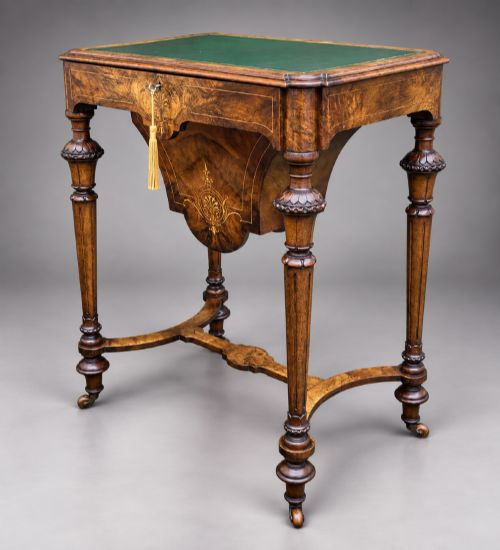
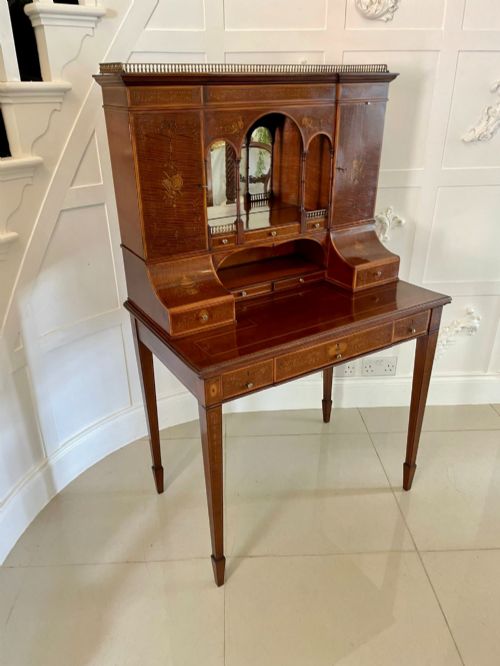
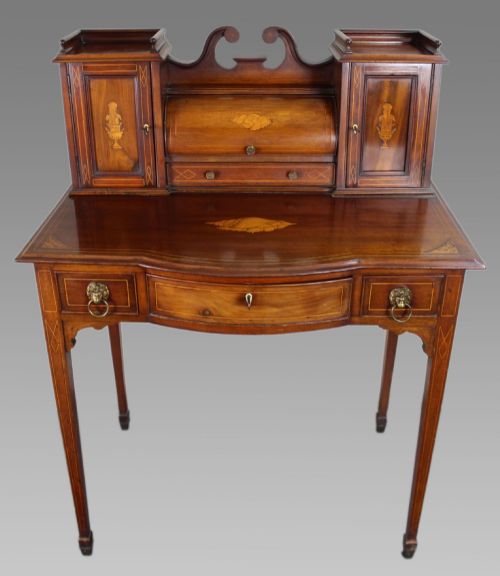
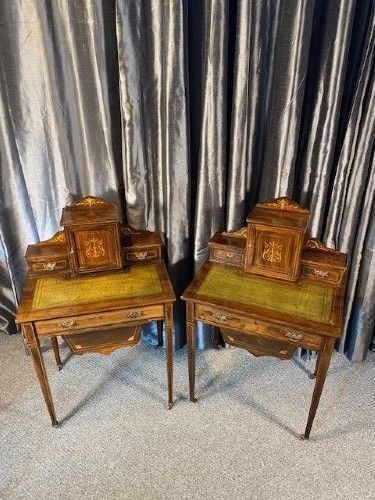
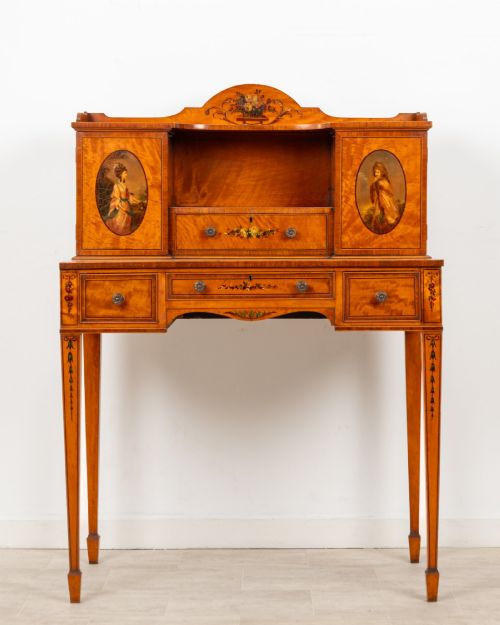
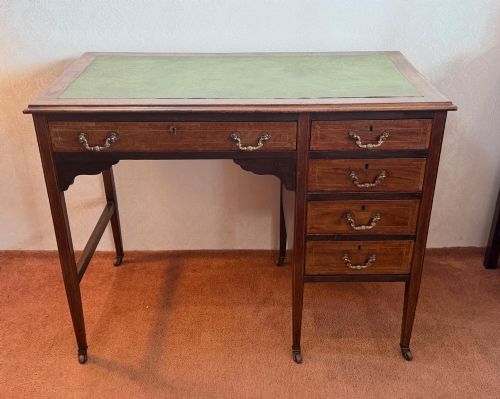
The edwardian ladies table typically manifests as a compact writing desk, a fitted bonheur du jour, or a delicate writing table designed for domestic correspondence. These pieces date predominantly from the Edwardian period and the late nineteenth century, though Victorian examples also appear frequently.
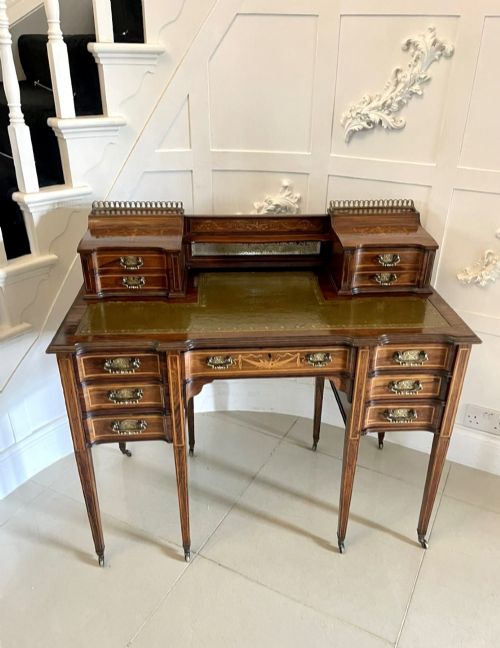
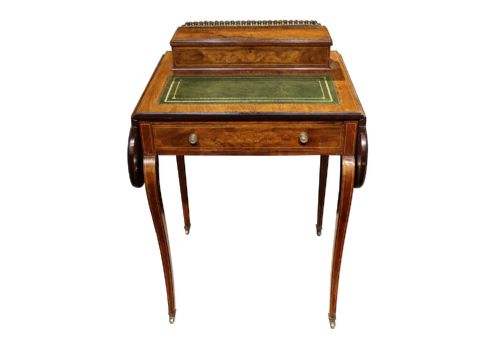
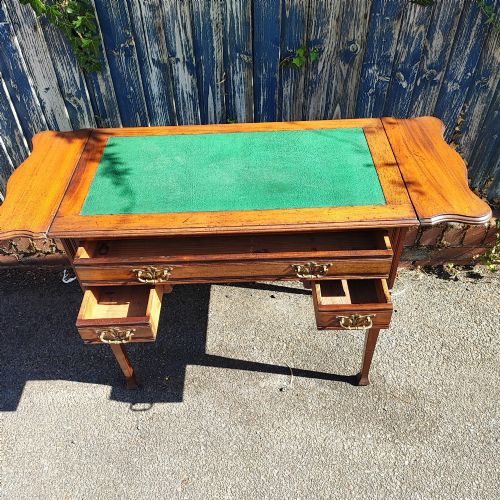
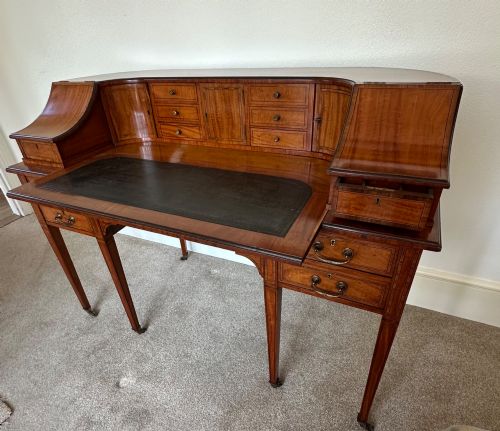
Makers utilised various specialised forms, including kidney-shaped desks, Carlton House desks with fitted superstructures, and bow-fronted writing tables. Many incorporate leather writing surfaces, small drawers, and drop-side flaps for versatile use in boudoirs or private reception rooms.
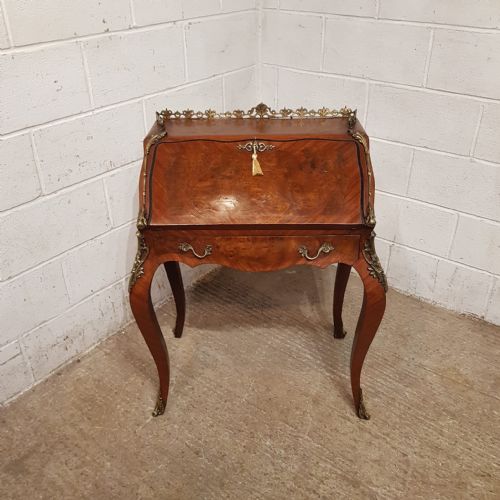
The pieces on this page bridge late nineteenth-century Victorian opulence and early twentieth-century elegance, often reflecting Sheraton Revival or Louis XV Revival design influences. They were originally built for personal correspondence, containing fitted interiors for stationery and inkwells.
Materials and Construction
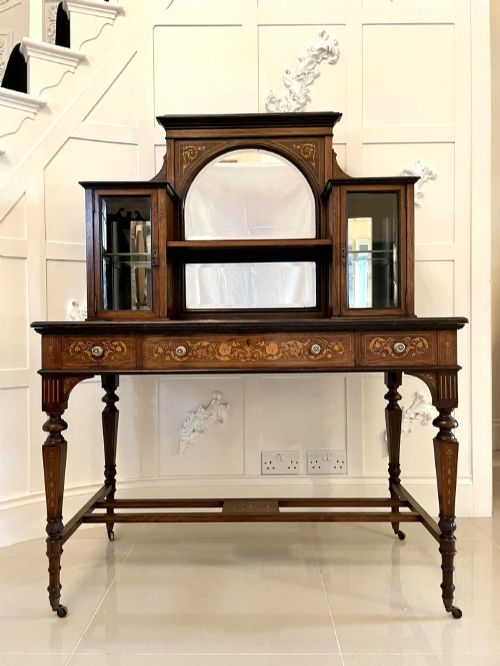
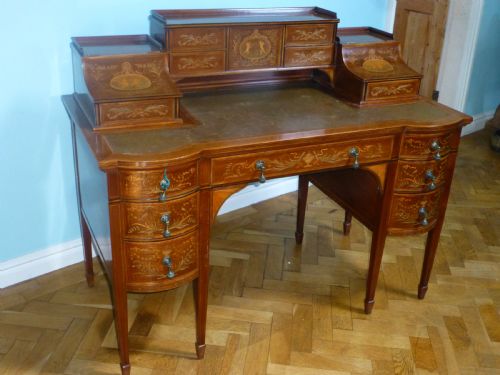
Cabinetmakers constructed these tables using a foundation of solid mahogany, walnut, or rosewood, frequently enhanced by decorative veneers of satinwood and amboyna. Inlays of boxwood and marquetry provide intricate floral or geometric borders across the drawer fronts and tabletops.
Surface ornamentation often includes hand-painted details, brass gallery rails, and finely tooled leather inserts for writing surfaces. Structural integrity relies on traditional joinery, with small drawers fitted with dovetail joints and brass pulls.
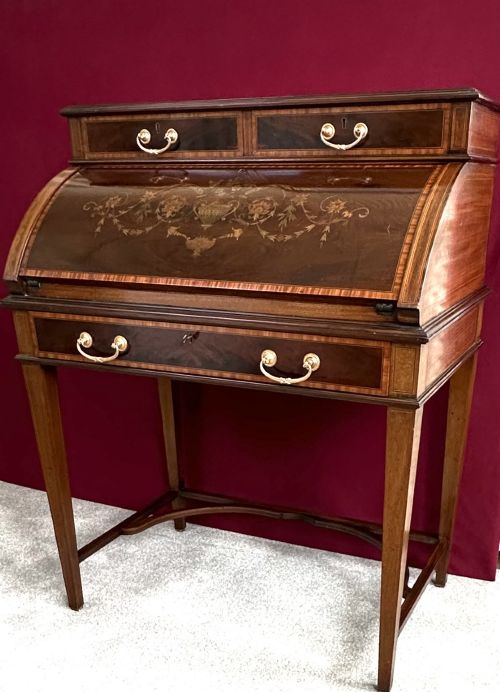
The inventory encompasses specialised forms such as kidney-shaped tables, cylinder top desks, and drop-side writing surfaces.
Craftsmanship and Detail
Quality separates pieces through the precision of the marquetry inlay and the choice of timbers, where highly figured satinwood or rosewood elevates a piece above standard mahogany models. The presence of hand-painted decorative panels or elaborate brass mounts indicates higher workshop output.
Interior fittings dictate functional superiority, with comprehensive fitted stationery compartments and original hardware marking the upper tier of production. The structural integration of superstructures, such as those on Carlton House desks, demands advanced cabinetmaking skill.
Maple and Co·Edwards and Roberts·S and H Jewell·Ray and Miles
The Edwardian Ladies Table Glossary
- Bonheur du jour
- A light day-desk featuring a small writing surface with a tiered superstructure of drawers and shelves above. This form became highly popular during the late nineteenth and Edwardian periods.
- Carlton House desk
- A form of writing desk featuring a fitted, curved superstructure that wraps around the back and sides of the writing surface, incorporating small drawers and pigeonholes.
- Marquetry
- The art of applying decorative pieces of veneer to a structure to form intricate pictorial or geometric patterns. Makers utilised contrasting timbers like boxwood and satinwood to create these designs.
- Superstructure
- An upper framework of small drawers, compartments, or shelves mounted onto the back of a desk or table. This feature maximises storage on compact writing surfaces.
- Serpentine front
- A furniture front characterised by a wavy contour, curving outward in the centre and inward at the sides. This technique requires expert shaping of solid timber or veneer.
Edwardian Ladies Table: Frequently Asked Questions
What is a ladies writing table?
A ladies writing table is a smaller, lighter desk produced during the nineteenth and early twentieth centuries for domestic correspondence rather than heavy administrative work.
These pieces typically feature delicate tapered legs, integrated drawers for stationery, and sometimes leather-lined writing surfaces set into mahogany or rosewood frames.
How do I identify an Edwardian desk?
Edwardian desks are generally characterised by lighter timbers, refined proportions, and a revival of eighteenth-century styles such as Sheraton or Louis XV. They frequently display satinwood inlay and delicate painted details rather than the heavy carvings seen in earlier Victorian furniture.
Most examples date between eighteen-ninety and nineteen-ten, reflecting the decorative tastes of the Edwardian era through graceful lines and compact footprints.
Where were these tables used?
These tables were designed primarily for private residential spaces such as bedrooms, boudoirs, or drawing rooms. Their compact dimensions allowed them to sit comfortably against a wall or freestanding in a domestic interior.
Owners utilised them for writing letters, managing household accounts, and storing personal stationery within fitted interior compartments.