





Wooden Sewing Table Castors
Wooden sewing table castors support the legs of nineteenth-century work tables, letting delicate mahogany and walnut furniture glide smoothly across the carpet.
Wooden Sewing Table Castors
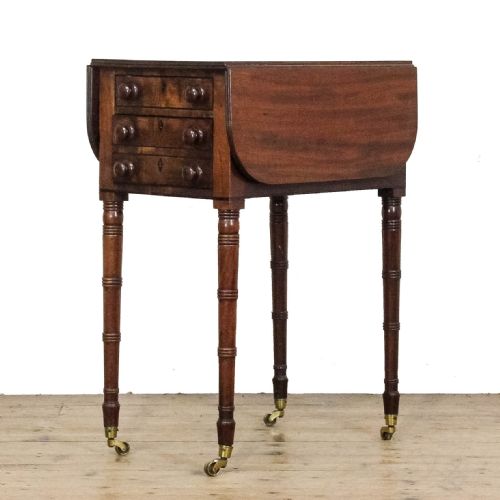
Wooden sewing table castors are small, functional wheel assemblies fitted to the feet of nineteenth-century work tables and occasional side tables. When you search for wooden sewing table castors, you are looking at the foundational hardware that enabled heavy mahogany and walnut sewing furniture to move without damaging the floor. These components sit beneath pieces spanning the Georgian, Regency, William IV, Victorian, and Edwardian eras, quietly supporting drop-leaf worktables and pedestal designs.
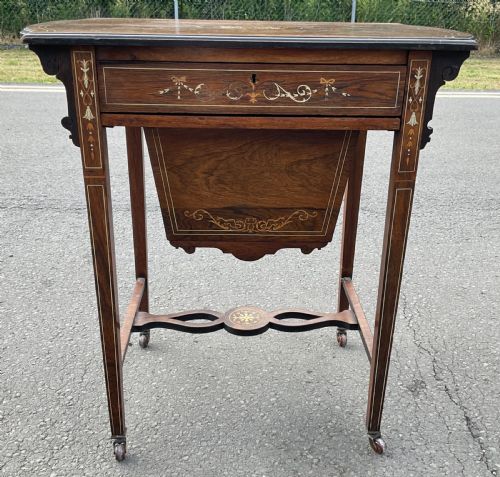
On this page, the pieces you meet most often are mahogany work tables from the nineteenth century, ranging from simple drop-leaf Pembroke tables to sophisticated two-drawer designs. Makers integrated these castors to make multi-purpose ladies' work tables easily portable for needlework and writing by the window or the fireplace. Each castor connects directly to legs fashioned from mahogany, satinwood, boxwood, walnut, or burr walnut.
The objects themselves served domestic utility in wealthy homes, housing sewing materials, fabric, and bone tools within their compartments. While the tables vary from plain occasional pieces to intricately inlaid Edwardian examples, the castors remain the critical point of contact between the antique frame and the floor. They represent a specific intersection of furniture design and practical room-to-room mobility from the 1800s onward.
Materials and construction
The physical evidence on this page shows furniture constructed primarily from rich timbers like mahogany and walnut, occasionally embellished with satinwood and boxwood stringing or bone details. These woods were turned, carved, and polished by hand to create the drop-flap tables, pedestal Pembroke work tables, and side lamps tables listed here.
Hardware elements such as brass paired with wood to form the rolling mechanisms that attached securely to the base of each tapered or turned leg. Cabinetmakers balanced heavy solid timber frames with functional castors to ensure structural stability despite the hinged drop-leaves and internal storage compartments characteristic of work tables.
Current listings demonstrate the dominance of nineteenth-century mahogany work tables, alongside select walnut and Edwardian inlaid examples.
Distinctions in craftsmanship
Quality in these pieces rests upon the selection of timber and the precision of the cabinetwork, distinguishing standard utility pieces from finer examples. Superior work tables feature figured mahogany, burr walnut, or delicate inlaid stringing in satinwood and boxwood that demonstrates advanced woodworking skill.
The integration of the castor assembly into the foot of the table also marks the grade of the piece, with better examples showing seamless metal and wood joinery. Well-executed pieces maintain rigid stability in their drop leaves and drawers while retaining the mobility demanded by the original design.
The Wooden Sewing Table Castors Glossary
- Castor
- A small wheel fixed to the bottom of an object such as a table to allow it to be moved easily. These fittings often combine brass housings with wooden wheels or mounts.
- Pembroke table
- A small, versatile table featuring two hinged drop leaves on opposing sides. Originating in the eighteenth century, these tables frequently served as writing or sewing desks.
- Work table
- A specialised piece of furniture designed for needlework and domestic crafts, usually featuring internal compartments or drawers. They became particularly popular throughout the nineteenth century.
- Stringing
- A narrow strip of contrasting wood inlaid into the surface of a piece of furniture as decoration. Cabinetmakers often utilised satinwood or boxwood for this delicate linear detail.
- Drop leaf
- A hinged flap on a table top that can be raised to extend the surface area or lowered when space is required. This mechanism allowed nineteenth-century tables to adapt quickly to different rooms.
Wooden Sewing Table Castors: Frequently Asked Questions
What is a sewing table?
A sewing table is a small nineteenth-century occasional table designed specifically to hold needlework, fabric, and threads. These pieces usually include fitted drawers or hanging fabric bags beneath the top.
They allowed ladies to keep their sewing implements organised and portable within the drawing room or parlour. The addition of castors ensured the table could be moved effortlessly to the best light.
How do I identify a Regency work table?
Regency work tables typically display the classical restraint, architectural lines, and dark mahogany timbers characteristic of the early nineteenth century. Look for pedestal bases and sabre legs often finished with brass and wood castors.
Unlike later Victorian versions, Regency pieces lean towards bolder architectural forms with minimal surface carving. The focus remained on clean proportion and the natural grain of the timber.
Were castors original to these tables?
Castors were standard functional additions fitted by cabinetmakers to nineteenth-century work tables to provide necessary mobility. They allowed heavy timber tables to glide across carpets without straining the joints.
Because castors endure heavy friction and weight, matching the wood and brass patina to the table's legs helps confirm authenticity. Period examples show appropriate wear consistent with nineteenth-century floor surfaces.
How should I care for a mahogany work table?
Keep nineteenth-century mahogany furniture away from direct sunlight and strong heat sources to prevent the timber from drying and cracking. Regular dusting with a soft, dry cloth preserves the polished finish.
Avoid chemical polishes that build up residue over time, opting instead for traditional beeswax applied sparingly. Check the castor mountings periodically to ensure the wood around the fittings remains secure.