



Edwardian Kidney Desk
An edwardian kidney desk curves gently to fit the body, offering a graceful writing surface born from the refined tastes of the early twentieth century.
Edwardian Kidney Desk
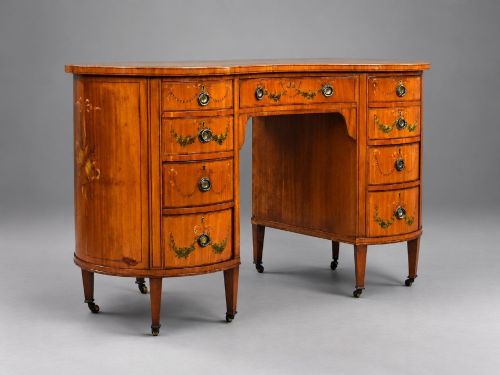
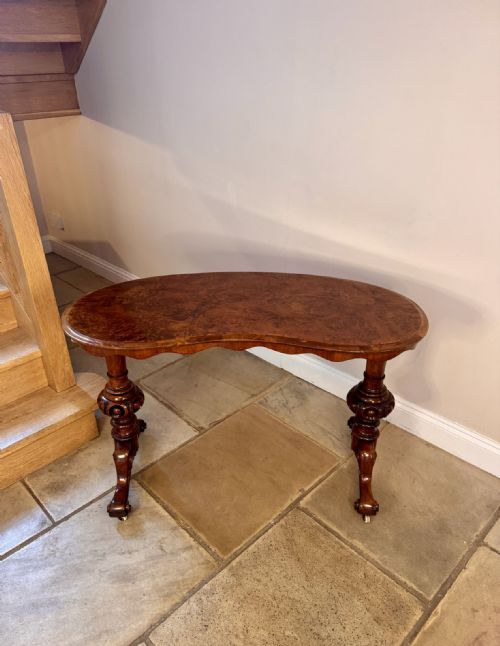
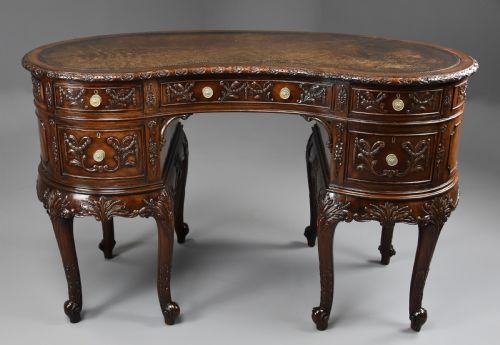
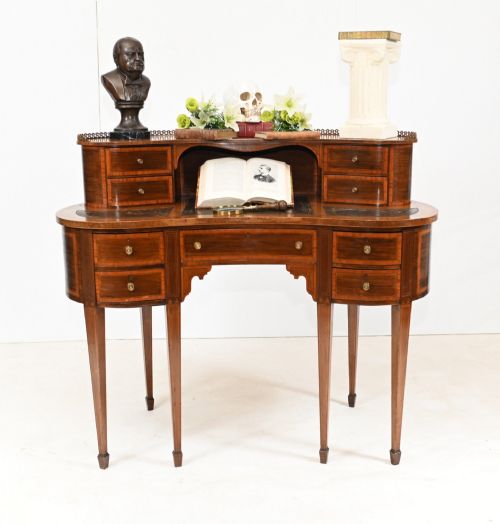
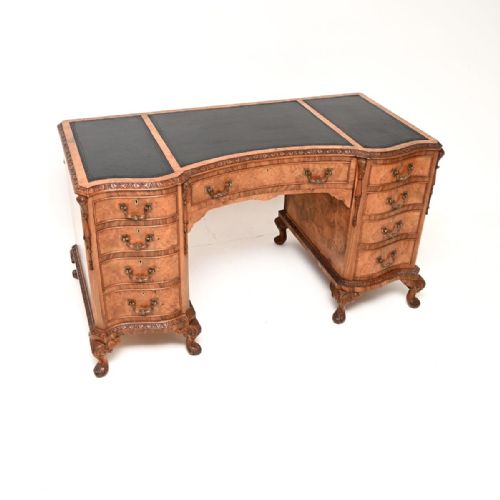
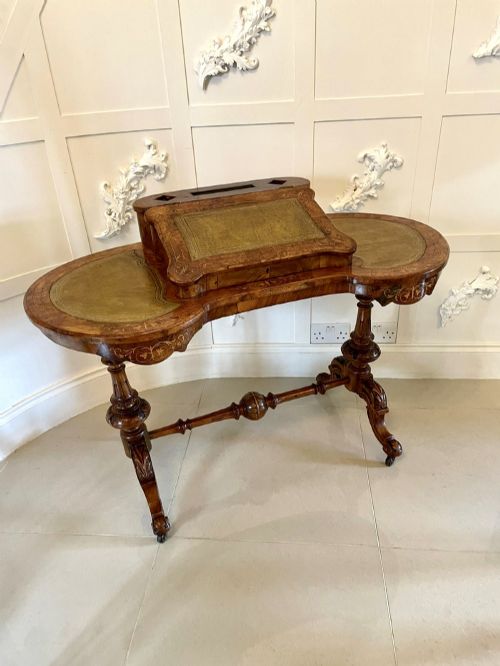
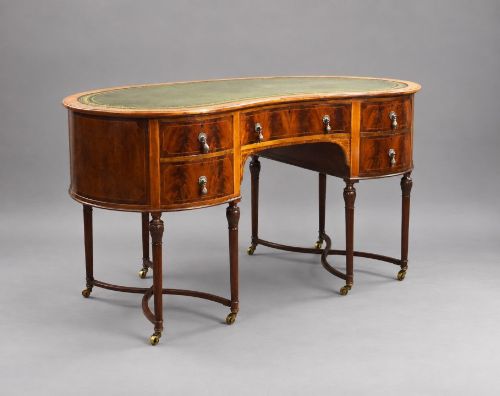
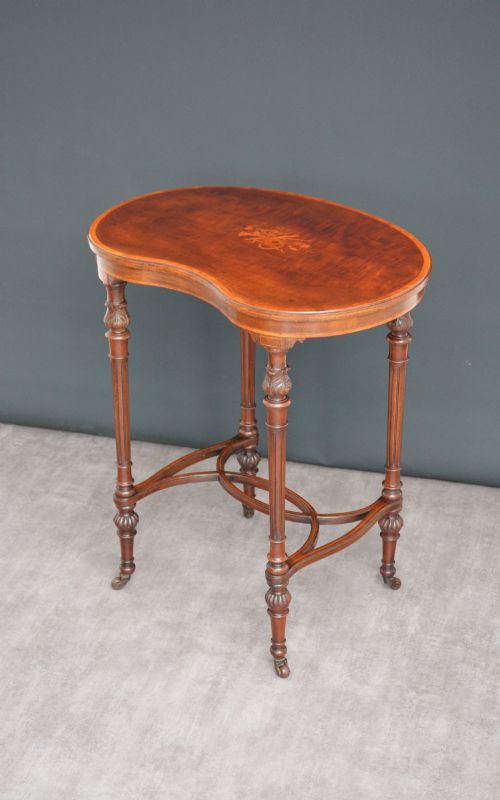
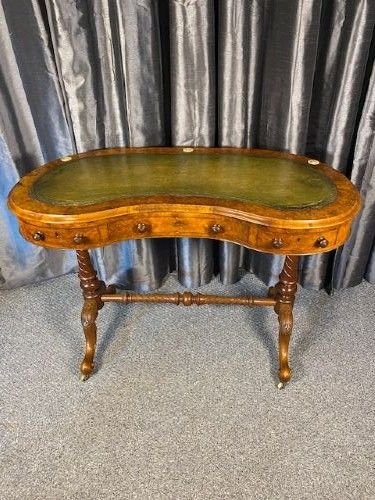
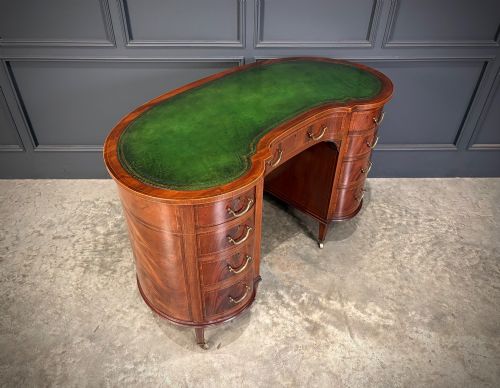
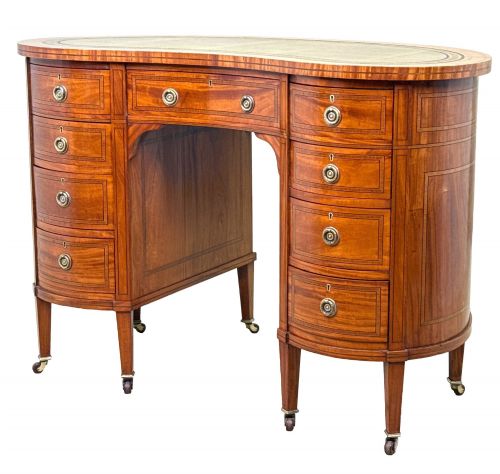
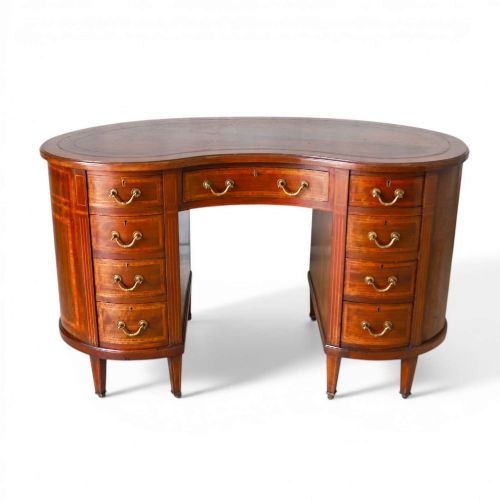
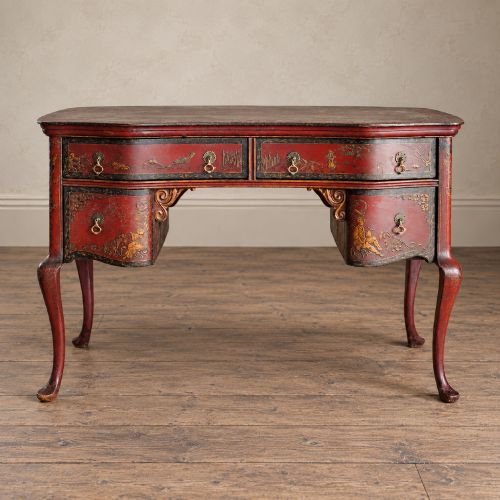
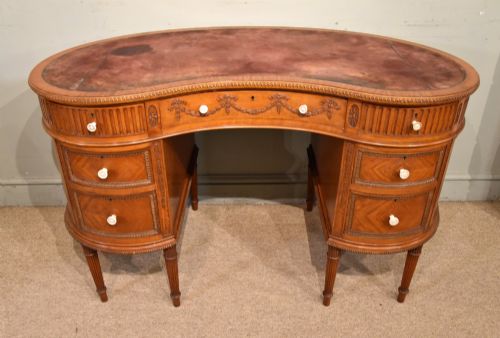
The edwardian kidney desk presents a distinctive, concave curved front designed to wrap around the seated writer. Most pieces encountered on this page date from the Edwardian period or the late nineteenth century, frequently constructed from mahogany with delicate inlay.
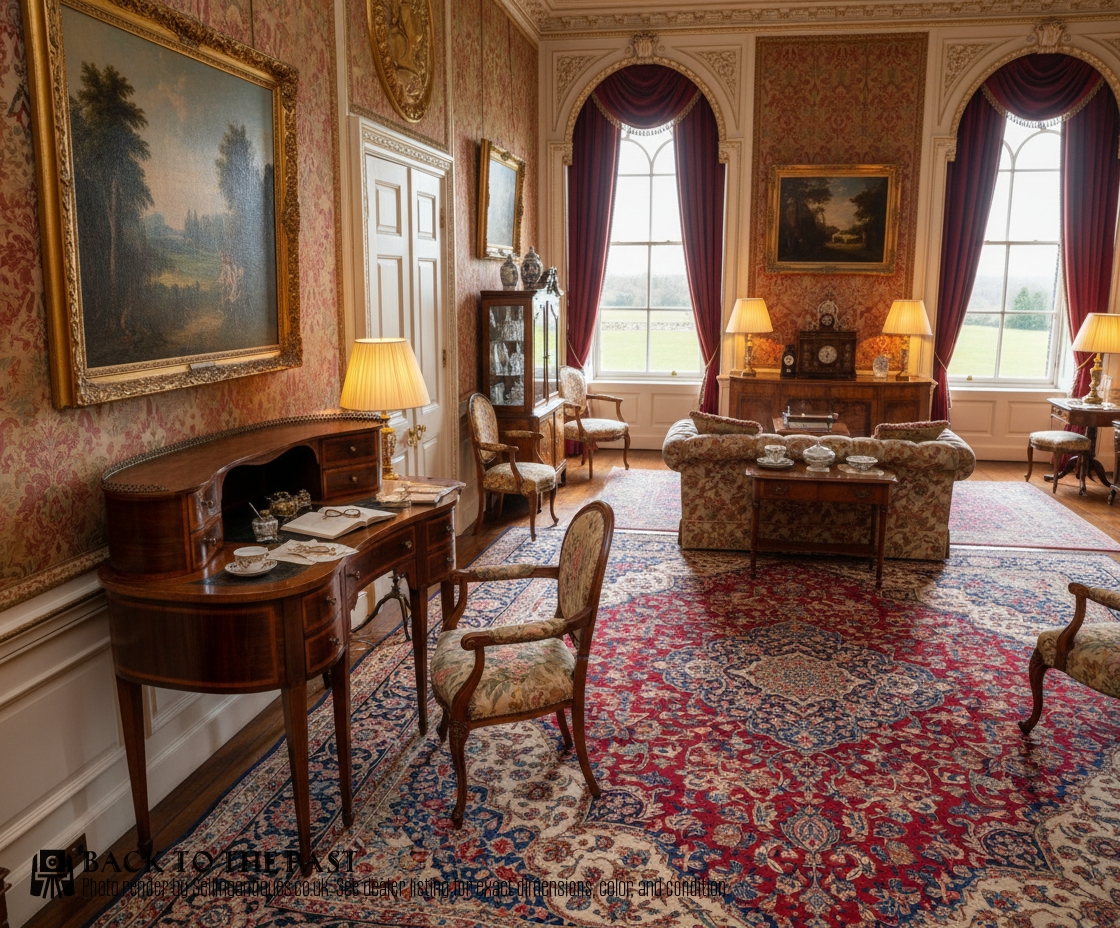
Makers shaped these writing tables to serve as freestanding pieces rather than standard furniture pushed against a wall. Their finished backs allow them to sit proudly in the centre of a room.
The form bridges practical writing utility with decorative elegance, drawing heavily on Sheraton Revival and occasionally Edwardian Art Nouveau design idioms.
Materials and Construction
Cabinet makers utilised solid and veneered mahogany, alongside lighter timbers like satinwood and exotic burl walnut, to achieve contrasting surface patterns. Finer examples incorporate elaborate marquetry and satinwood inlay across the curved drawer fronts and top surfaces.
Writing surfaces were typically inset with tooled leather, bordered by blind or gilt tooling. Brass handles, escutcheons, and sabots frequently accent the structural woodwork.
Edwardian Kidney Desk Retail Price Guide 2026
Typical asking prices for edwardian kidney desk among the pieces listed under this phrase on Sellingantiques today, from the lower quarter to the upper quarter. They describe what is for sale here now, not the wider market.
Listings feature mahogany, satinwood, burr walnut, and rosewood, spanning periods from the Victorian era into early 1900 Edwardian production.
Assessing Quality and Distinction
Quality rests primarily on the crispness of the timber marquetry and the architectural proportion of the curved pedestal or leg arrangement. Pieces bearing stamps or signatures from prominent makers command distinct appreciation for their documented workshop origins.

Maple & Co·Edwards & Roberts·Wolfe & Hollander·Shapland & Petter·Gillows
The Edwardian Kidney Desk Glossary
- Kidney desk
- A writing table shaped with a concave curve on the user side resembling a kidney bean. This form became popular during the late Victorian and Edwardian eras.
- Marquetry
- Decorative patterns formed by fitting together thin slices of wood veneer of different colours and grains. It adorns many Edwardian writing surfaces.
- Pedestal desk
- A heavy writing table supported by two columns of drawers resting on the floor. Some versions adopt the curved kidney silhouette.
- Sheraton Revival
- A late nineteenth and early twentieth century design movement that reinterpreted the lighter, neoclassical styles of George Sheraton. It heavily influenced inlaid mahogany furniture.
- Satinwood
- A pale, hard wood with a natural sheen, frequently utilised for banding and detailed inlay on darker mahogany desks.
Edwardian Kidney Desk: Frequently Asked Questions
Where were they placed in a home?
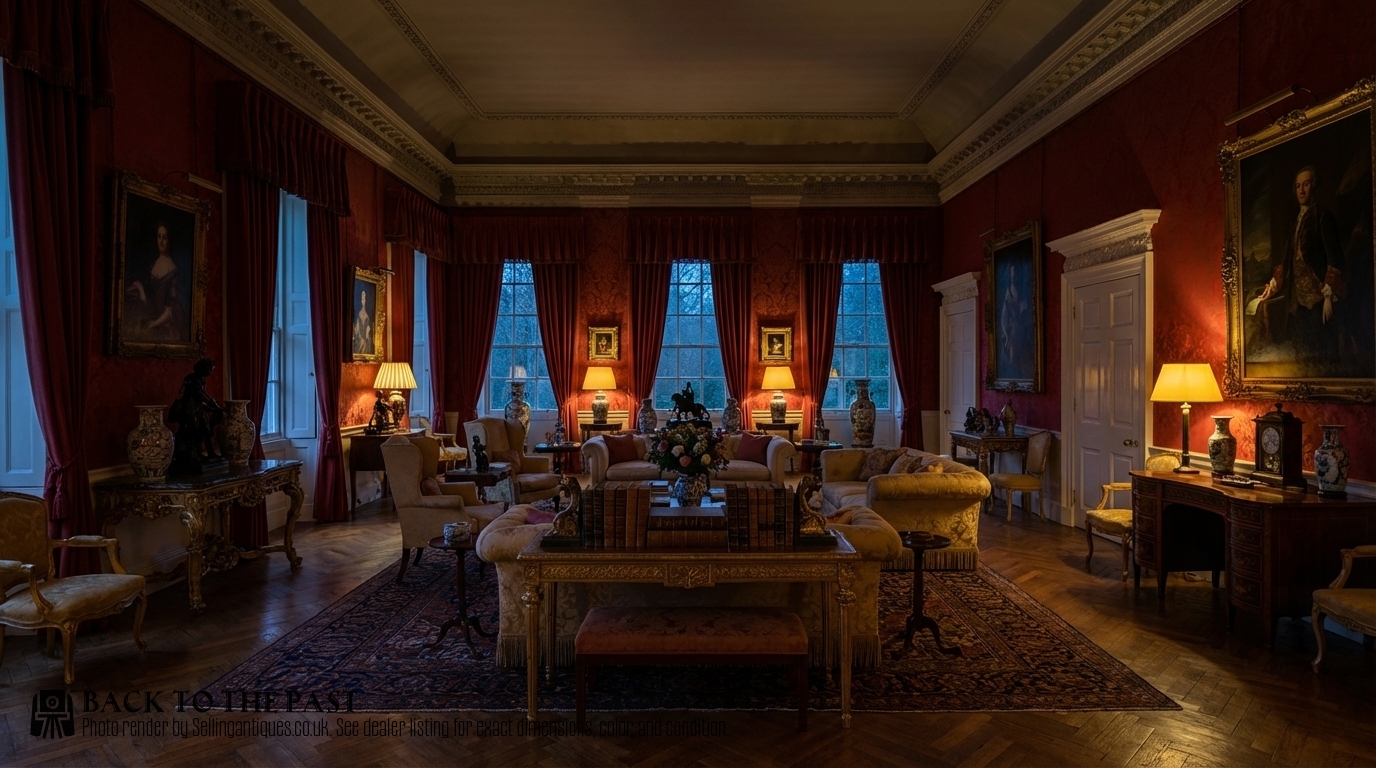
Because the back of an edwardian kidney desk is finished with the same care as the front, original placement was often in the middle of a study, drawing room, or boudoir. They served as writing tables for correspondence rather than heavy administrative desks.
Their finished presentation allowed owners to display them away from walls without exposing unfinished structural elements.
How do I care for the leather top?
The inset leather writing surface benefits from occasional cleaning with a slightly damp cloth followed by neutral leather wax or conditioner. Avoid harsh chemical cleaners that can strip the original gilt tooling.
Keeping the room humidity stable prevents the underlying wood and leather from warping or cracking over decades of use.
How do I distinguish Edwardian from Victorian examples?
Edwardian versions often display lighter satinwood inlays, brighter mahogany tones, and occasionally delicate Edwardian Art Nouveau floral motifs. Victorian predecessors tend to utilise heavier rosewood or darker mahogany with denser, more sombre proportions.
Construction techniques also shift subtly, with Edwardian pieces occasionally showing machine assistance alongside traditional hand joinery.