


Edwardian Insect Brooch
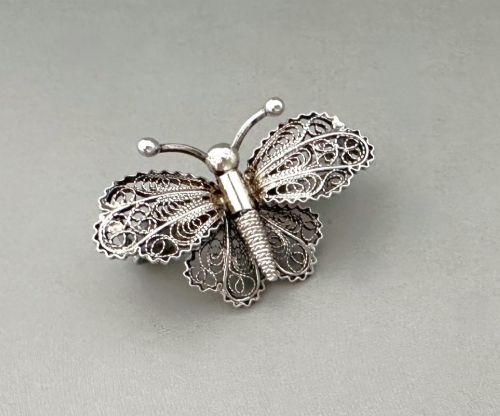
These edwardian insect brooch pieces bring glittering silver, gold and gemstones together in delicate winged forms to pin to a lapel.
Edwardian Insect Brooch
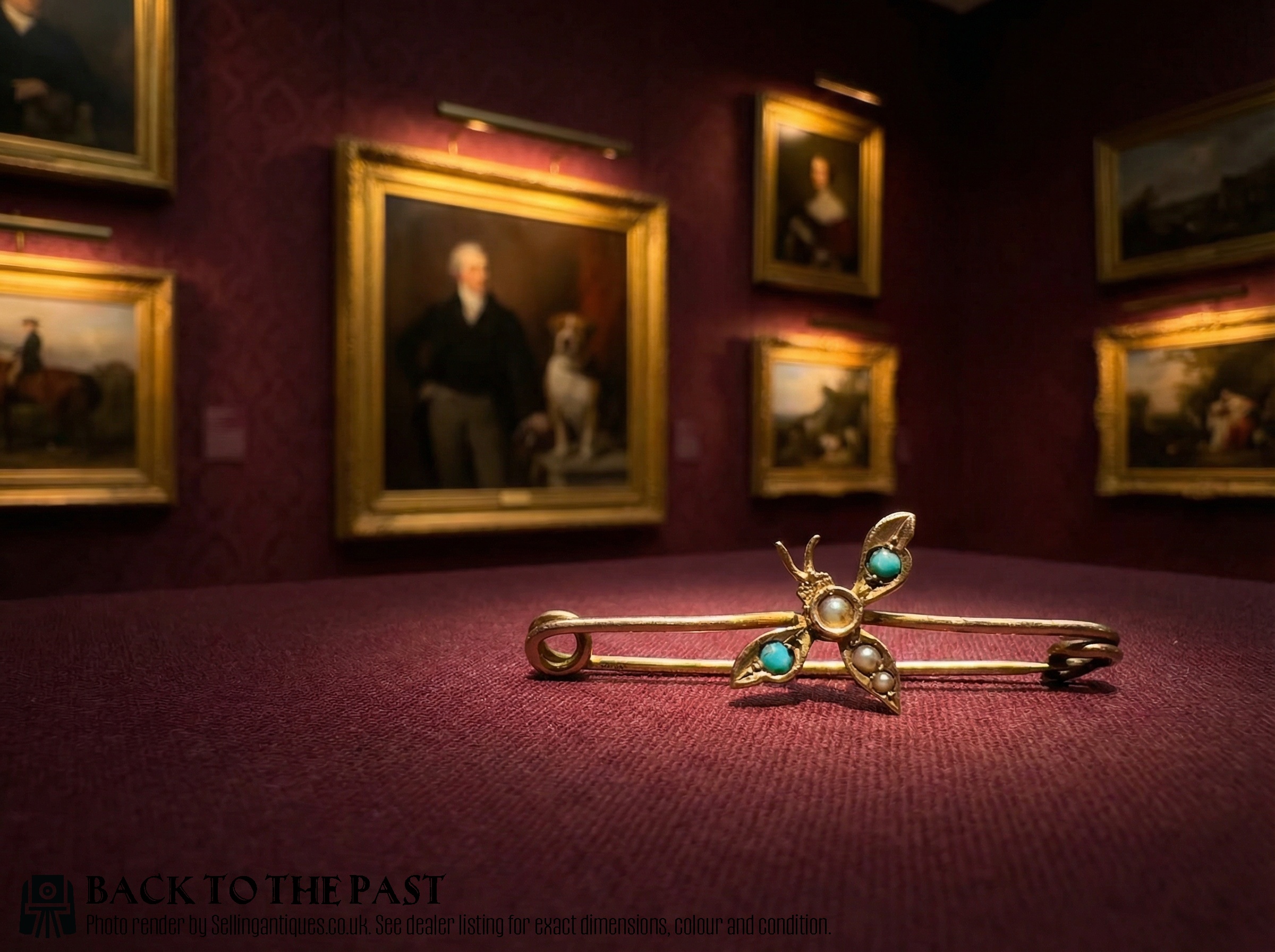
An edwardian insect brooch takes the form of butterflies, dragonflies, flies, bees, scorpions and scarabs, rendered in precious metals and set with gems. You will find pieces crossing several eras here, from Victorian golds to Art Nouveau pewter, Art Deco silver and 1930s enamel work.
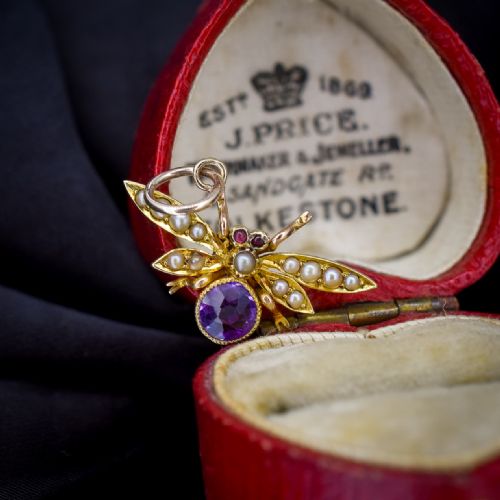
The butterflies and dragonflies dominate the selection, appearing as bar brooches, pendants and hatpins alongside rarer scorpion and fly designs. Many incorporate pearls, rubies, sapphires, emeralds and diamonds into their bodies and wings to catch the light.
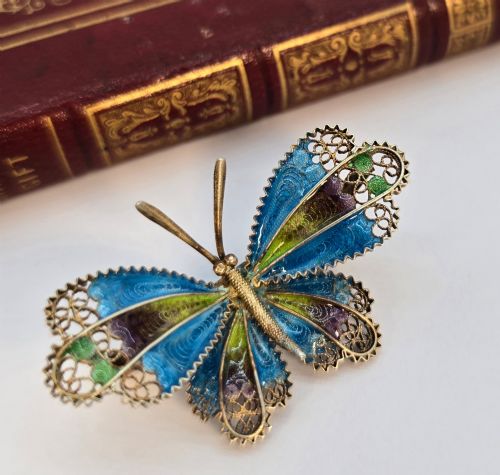
While true Edwardian examples sit alongside earlier Victorian pieces and later 1920s and 1930s items, they share a fascination with naturalistic insect forms. Some utilise silver gilt and colourful enamel to mimic the iridescent sheen of real wings.
How they were made
Goldsmiths and silversmiths shaped precious metals into slender frames, employing silver gilt, sterling silver, pewter and 9ct, 15ct or 18ct gold. Filigree wirework and cast metal created the delicate legs, antennae and wing veins of each creature.
Gemstones including rose-cut diamonds, rubies, sapphires, emeralds, amethysts, turquoise and moonstones were meticulously set into the metal bodies. Enamel and butterfly wings added vibrant colour and texture to the delicate wing panels.
Listings feature precious metals from sterling silver and silver gilt to 9ct, 15ct and 18ct gold.
What varies in quality
The refinement of the metalwork distinguishes finer examples, where tiny antennae and legs are rendered with anatomical precision rather than heavy casting. The choice of stones elevates a piece, shifting from simple paste or glass to matched rubies, sapphires and fine diamonds.
Enamelling technique and the preservation of delicate wing scales or butterfly wing panels create clear distinctions across the range. A harmonious balance between the gemstones and the supporting precious metal marks out the more accomplished workshop output.
Rene Lalique
The Edwardian Insect Brooch Glossary
- Silver Gilt
- Silver that has been coated with a thin layer of gold. This technique provides the warmth of gold combined with the working properties of silver.
- Filigree
- Delicate jewellery-work of fine wire made of gold or silver. It is twisted and soldered to form openwork patterns resembling lace.
- Hatpin
- A long pin used to secure a hat to the hair. These often featured decorative insect terminals matching the design of contemporary brooches.
- Rose-Cut
- A diamond or gemstone cut with a flat base and a faceted dome consisting of triangular facets. This historic cut produces a soft, shimmering reflection rather than intense brilliance.
Edwardian Insect Brooch: Frequently Asked Questions
What materials are used in insect brooches?
Makers utilised silver, sterling silver, silver gilt and various purities of gold ranging from 9ct up to 18ct. These metals were often combined with diamonds, rubies, sapphires, emeralds, pearls, turquoise, amethyst and moonstone.
Enamel and natural butterfly wing panels also appear frequently to add colour and texture to the wings of butterflies and dragonflies.
How do I date an insect brooch?
Dating relies on examining the metalwork styles, gemstone cuts and materials typical of specific periods. Victorian pieces often feature heavier gold and naturalistic multi-gem settings, while Edwardian examples favour platinum or silver-topped gold with delicate diamond work.
Later pieces from the 1920s and 1930s introduce geometric Art Deco lines, colourful enamelling and silver filigree work.
Were these always worn as brooches?
While the majority function as bar brooches or pin brooches, many were designed with versatility in mind. Some pieces double as pendants, allowing them to be suspended from a chain as well as pinned to garments.
Other related items from the same periods take the form of hatpins for securing millinery.
How should I care for antique insect jewellery?
These delicate pieces require gentle handling due to their intricate filigree, thin legs, antennae and small set stones. Store them individually in a lined box to prevent the fine metalwork from bending or tangling with other items.
Avoid harsh chemical dips, especially on pieces featuring enamel, pearls, moonstones or butterfly wing panels, and clean only with a soft, dry cloth.