



Vintage Butterfly Brooch
A vintage butterfly brooch brings brilliant colour and delicate metalwork to a lapel, spanning Victorian garnet-set forms to mid-century Scandinavian enamels.
Vintage Butterfly Brooch
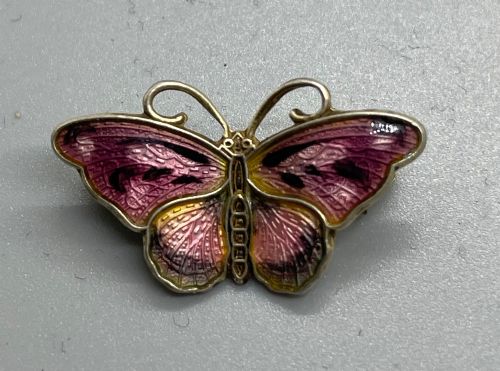
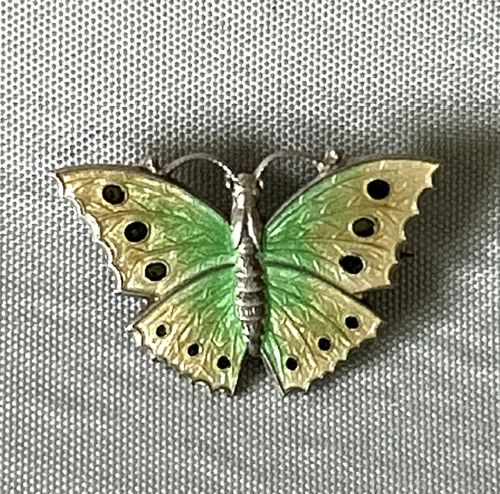
A vintage butterfly brooch encompasses a broad decorative span, appearing in precious metals and delicate wing panels from the late nineteenth century through to the middle of the twentieth. The most common examples met on this page date from the nineteen-thirties and combine sterling silver with vibrant guilloche enamel.
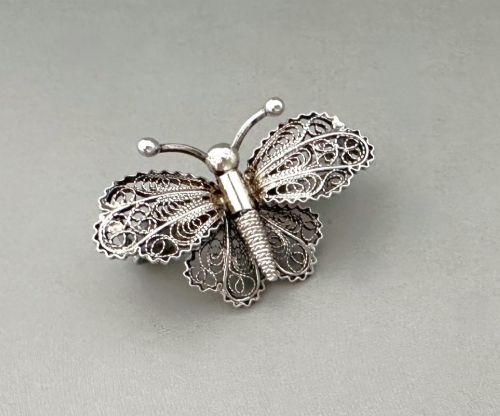
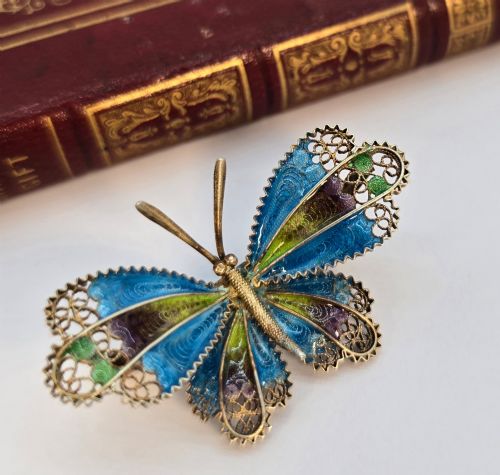
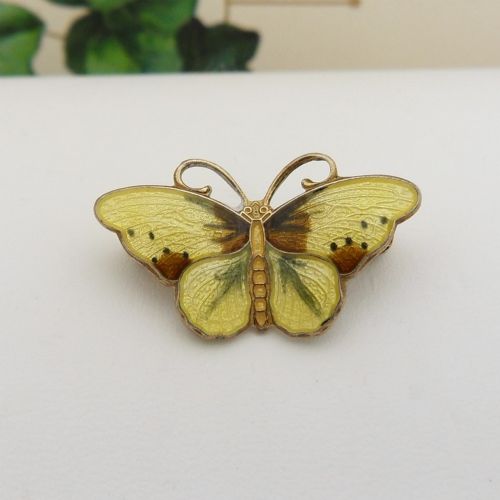
Makers across Europe and East Asia shaped these winged insects into wearable ornaments, employing techniques ranging from intricate filigree wirework to smooth glass wings. Victorian iterations favour rich gold set with moonstones or diamonds, whereas later Scandinavian workshops focused on clean silver gilt washed in translucent coloured enamel.
Forms vary from petite hatpins and simple pins to substantial jewelled statements, reflecting the changing tastes of Art Nouveau, Art Deco, and mid-century modern design. Buyers encounter both naturalistic specimens that use real butterfly wings beneath glass and highly stylized metallic interpretations.
How they were made
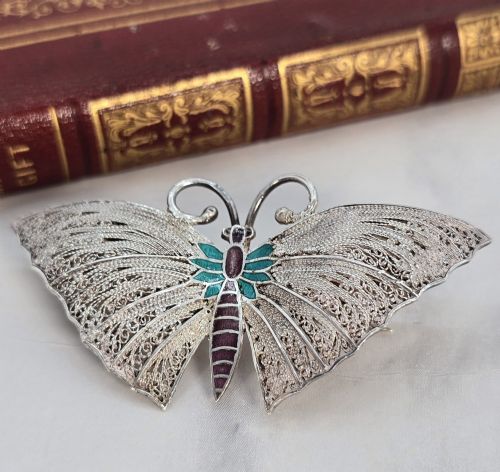
Silversmiths constructed the foundational frames using sterling silver, silver gilt, and occasionally yellow gold, often drawing fine wire into delicate filigree lace patterns to mimic insect veins. Enamellers then applied powdered glass pastes over guilloche engraved backgrounds, firing the pieces to achieve glossy, translucent shades of red, blue, green, and yellow.
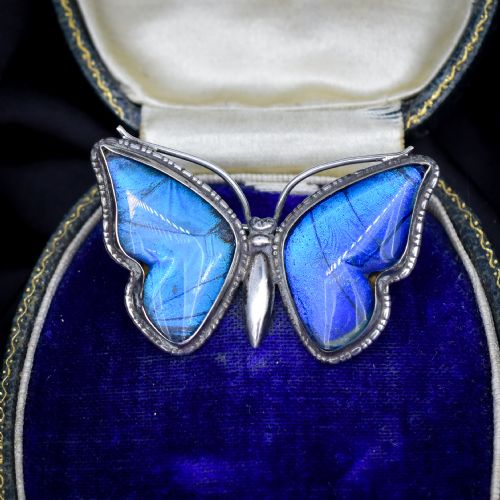
Alternative methods incorporated natural butterfly wing segments sealed securely beneath convex glass cabochons to capture iridescent blue and brown tones. High-value pieces introduced gemstones such as diamonds, sapphires, and moonstones flush-set into heavy gold or silver mounts by hand.
Some Edwardian hatpins transformed actual tropical butterfly wings into tiny flying ornaments for heavy brimmed hats.
What varies in quality
The weight and purity of the metal frame also separate standard items from exceptional examples, as heavier silver gilt and solid gold constructions retain sharper wing definitions and secure pin mechanisms over decades of use.
Hroar Prydz·Aksel Holmsen·David Andersen·Theodore Olsen·Ivar Holth·Kristian Hestenes·Volner Bahner·Sporrong and Co·Rene Lalique
The Vintage Butterfly Brooch Glossary
- Guilloche enamel
- A decorative technique where transparent enamel is laid over a metal surface that has been machine-turned with repetitive geometric patterns. This method creates shimmering, wave-like light reflections beneath the coloured glass.
- Silver gilt
- Silver that has been coated with a thin layer of gold, commonly known as vermeil in later periods. It provides the warm appearance of solid gold while retaining a silver core.
- Filigree
- Ornamental work consisting of fine wire, usually gold or silver, twisted and soldered together to form open-work lace designs. This technique gives insect wings a light, airy structure.
- Butterfly wing art
- A Victorian and Art Deco craft utilising natural Morpho butterfly wings sealed under bevelled glass to create iridescent pictures of landscapes or insects. The technique preserves the natural scales without fading.
- Hatpin
- A long, decorative pin used to secure women's hats to their hair, often featuring a miniature winged insect terminal matching the brooch style. These pieces require long, straight shafts to function properly in thick hairstyles.
Vintage Butterfly Brooch: Frequently Asked Questions
How do I wear a vintage butterfly brooch?
These pieces pin securely to heavy wool lapels, silk scarves, or structured hat brans using traditional pin-stem and C-clasp closures.
Heavier gem-set variations require thicker fabrics to prevent sagging, while lighter enamel versions suit delicate summer garments.
Are butterfly wing brooches made from real wings?
Many examples from the early twentieth century utilise genuine tropical butterfly wings preserved under sealed bevelled glass panes.
The natural scales produce a bright iridescent blue sheen that shifts colour depending on the viewing angle.
How can I tell Norwegian enamel work apart?
Norwegian workshops frequently applied translucent guilloche enamel over textured sterling silver gilt bases to depict distinct insect anatomy.
Master signatures or maker marks stamped onto the reverse side typically confirm Scandinavian origin.
What is the difference between Victorian and Art Deco styles?
Victorian examples rely on heavy yellow gold, natural gemstones, and naturalistic motifs derived from nineteenth-century romantic sentiment.
Art Deco pieces favour sleek sterling silver frames, geometric enamel patterns, and stylized symmetrical insect silhouettes.