

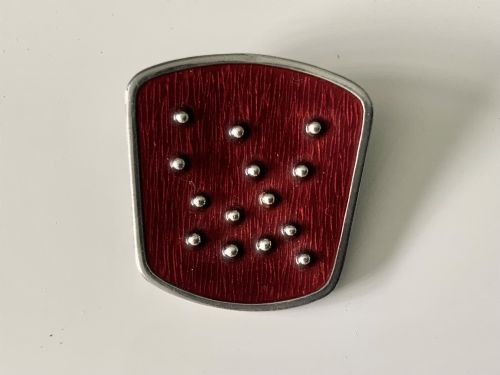


Norwegian Enamel Brooch
A norwegian enamel brooch brings vibrant colour and clean modernist lines to a lapel through brilliant silverwork and vitreous glass.
Norwegian Enamel Brooch
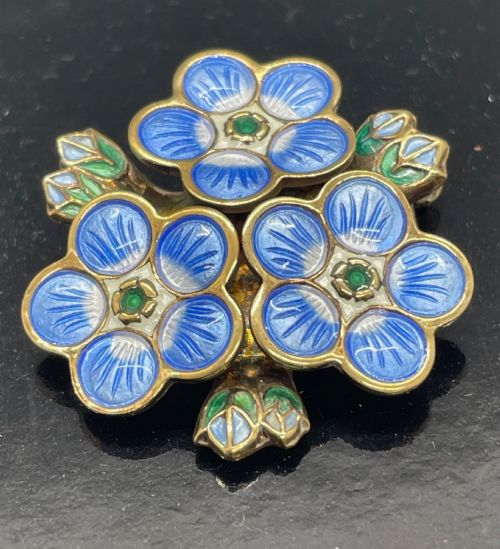
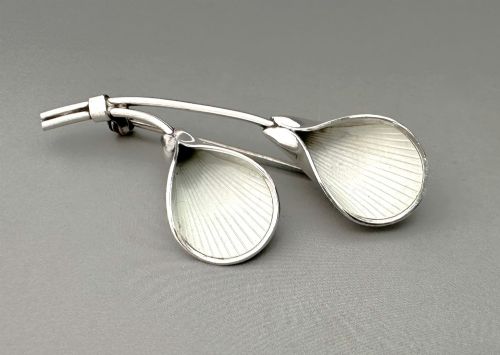
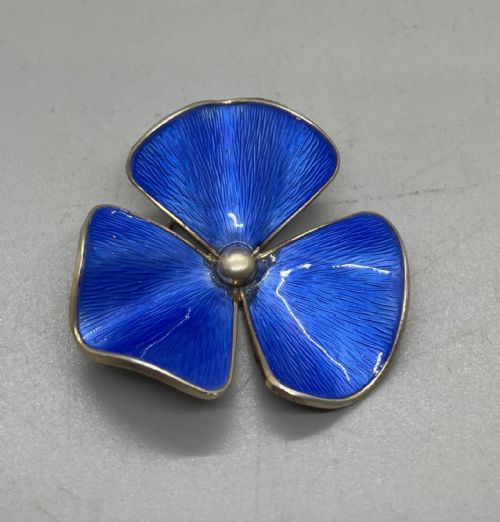
A norwegian enamel brooch is a miniature work of decorative metalwork typically found in mid-century modernist or earlier geometric styles. Collectors seek these pieces for their combination of translucent coloured glass fused onto sterling silver or silver gilt grounds. The selection centres heavily on mid-century Scandinavian designs alongside earlier Art Deco and Victorian interpretations.
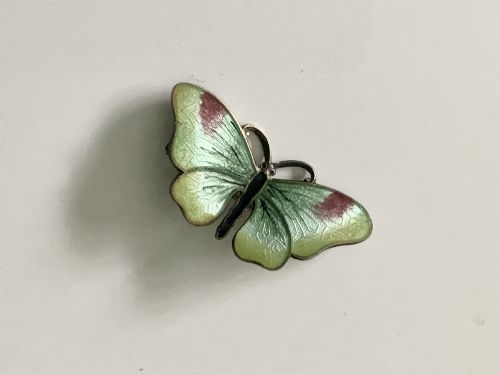
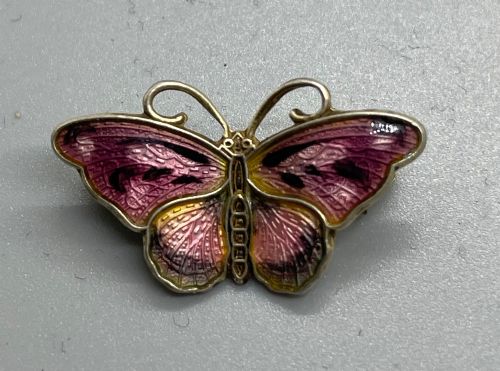
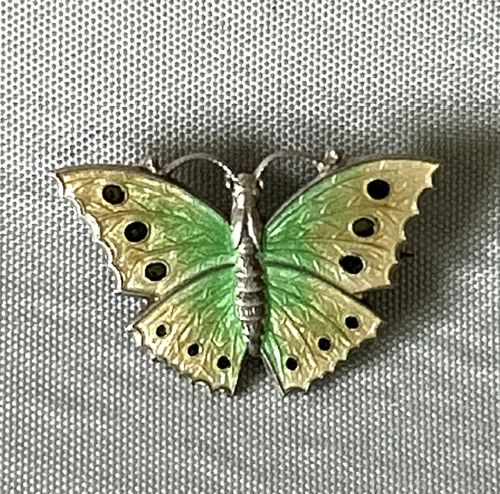
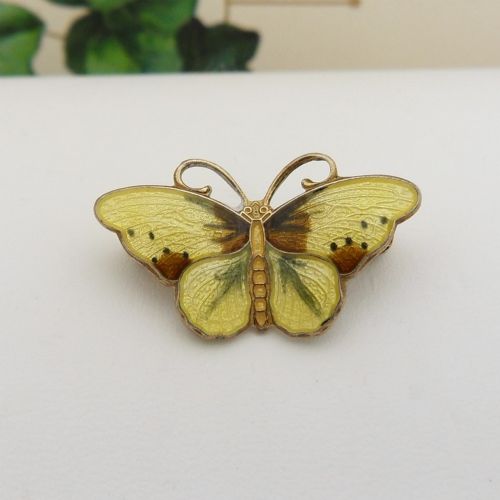
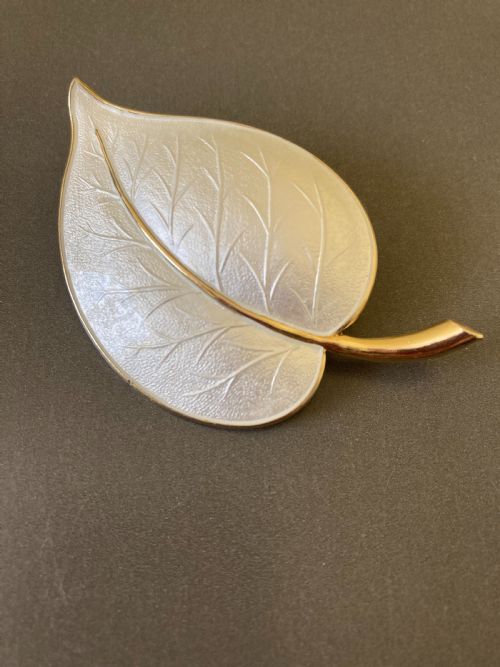
Forms span naturalistic motifs and geometric abstraction, with butterfly shapes, floral arrangements, leaves, and Viking ships frequently appearing. The butterfly motif in red, blue, green, or white enamel forms a significant portion of what a buyer encounters in this category. Pieces emerge from the 1920s through to the 1960s, capturing shifting aesthetic preferences from ornate floral details to sleek modernist geometry.
Materials and technique
Makers construct these ornaments primarily from sterling silver, frequently applying a layer of gold gilt or vermeil over the base metal to enrich the tone. Artisans fuse vitreous enamel directly onto the silver surface, often employing a guilloche technique where machine-turned engraved patterns beneath translucent coloured enamel create shimmering wave effects.
Silversmiths shape the silver into delicate frames for butterfly wings, leaves, flowers, and abstract subjects before firing the powdered glass in a kiln. The combination of guilloche engraving and rich coloured enamel produces a distinctive depth of light that defines the workshop output.
Listings feature periods spanning from the Victorian era through the 1920s, 1930s, 1940s, 1950s, and 1960s.
Assessing quality
Quality rests upon the crispness of the guilloche engraving beneath the translucent glass and the precision of the hand-applied enamel work. Superior examples display flawless vitreous surfaces without pitting or cloudiness, alongside substantial silver gauges and well-defined maker marks.
The sophistication of the design and the reputation of the workshop separate standard production pieces from masterworks. The skill required to execute delicate translucent shading on complex silver forms dictates the standing of each ornament within the range.
David Andersen·Aksel Holmsen·Hroar Prydz·Ivar T Holth·J Tostrup·Gustav Gaudernack·Albert Scharning·Hans Myhre·Knut A Rasmussen·OF Hjortdahl·N M Thune·Andresen & Scheinpflug
The Norwegian Enamel Brooch Glossary
- Guilloche
- A decorative technique involving a mechanical engraving process that etches precise geometric patterns into metal. This patterned ground shines through translucent enamel to create shimmering visual depth.
- Vitreous Enamel
- A material made by fusing powdered glass to a substrate by firing, usually between eight hundred degrees Celsius. The resulting compound creates a durable, glossy coloured coating.
- Silver Gilt
- Silver that has been coated with a thin layer of gold. This treatment provides a warm golden hue while retaining the working properties of a silver base.
- Vermeil
- A high-quality grade of sterling silver that is plated with thick gold. It combines the durability of silver with the rich appearance of solid gold.
- Bar brooch
- A slender horizontal pin popular across various periods. These pieces often support central enamel motifs such as leaves or abstract shapes.
Norwegian Enamel Brooch: Frequently Asked Questions
How do I date a norwegian enamel brooch?
Dating relies on stylistic shifts from early geometric Art Deco and Victorian historicism toward clean mid-century Scandinavian modernist forms. Maker marks and silver hallmarks also help narrow down the decade of production.
Simpler naturalistic leaf and butterfly designs often point to the post-war mid-century decades, whilst heavier settings and specific workshop stamps indicate earlier twentieth-century origins.
How should I wear an enamel brooch?
These pieces suit lapels, heavy knit cardigans, scarves, and structured coat collars where the bright enamel colours stand out against dark fabrics. Pinning them securely through thick weaves prevents rotation during wear.
Because the vitreous glass is hard yet brittle, avoid placing them where they might suffer sharp impacts against hard surfaces.
Are these brooches made of solid silver?
Most examples utilise sterling silver foundations, frequently marked with standard silver fineness stamps such as 925. Many workshops also applied a gold gilt or vermeil wash over the silver.
The precious metal framework provides the sturdy base necessary to support the fused vitreous glass panels.