
Edwardian Inlaid Writing Desk
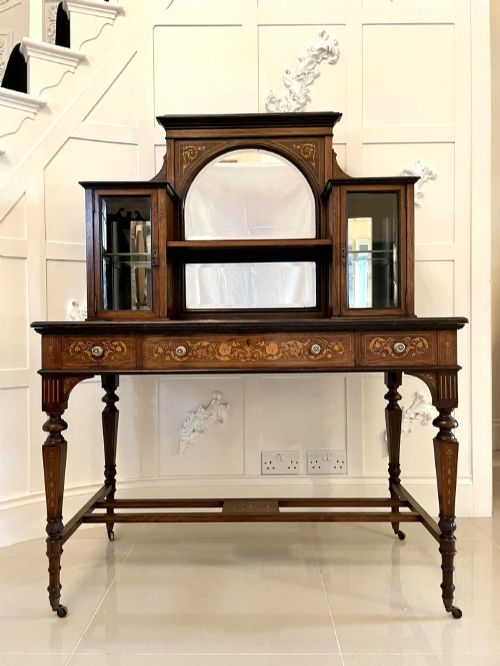
When you search for an edwardian inlaid writing desk, you find refined freestanding and kneehole forms made for domestic correspondence.
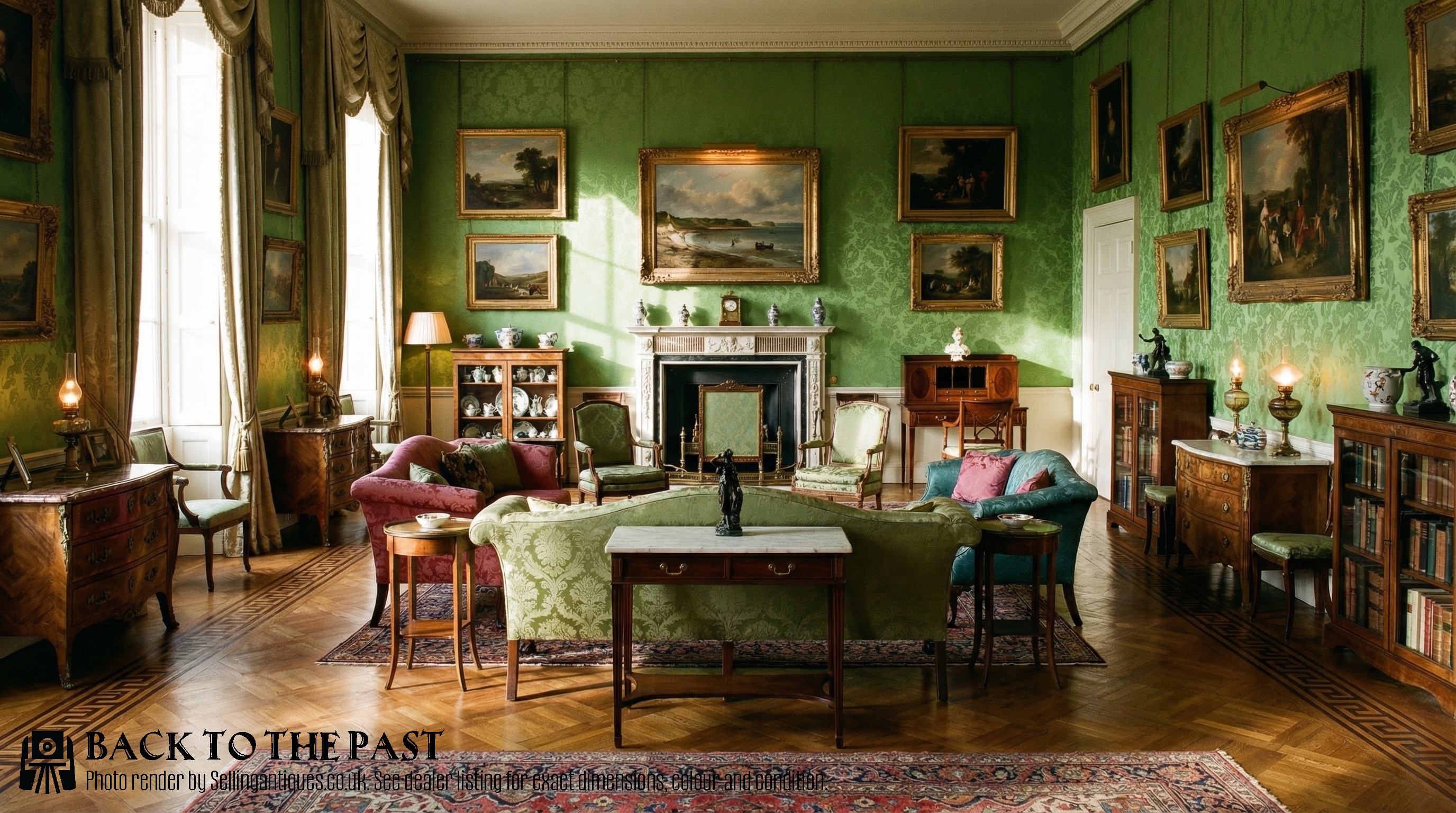
Edwardian Inlaid Writing Desk
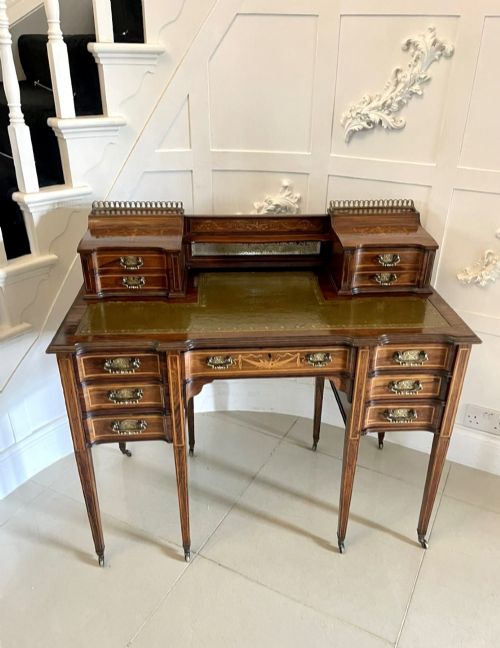
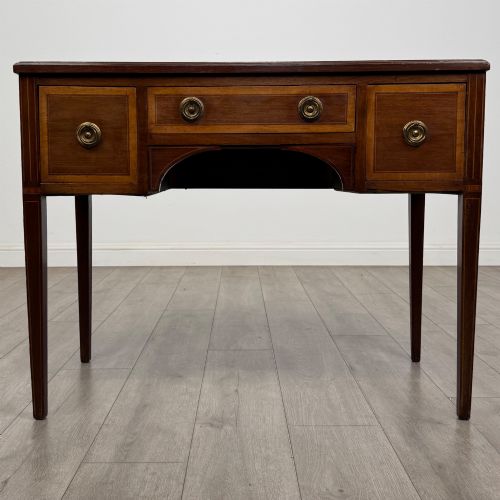
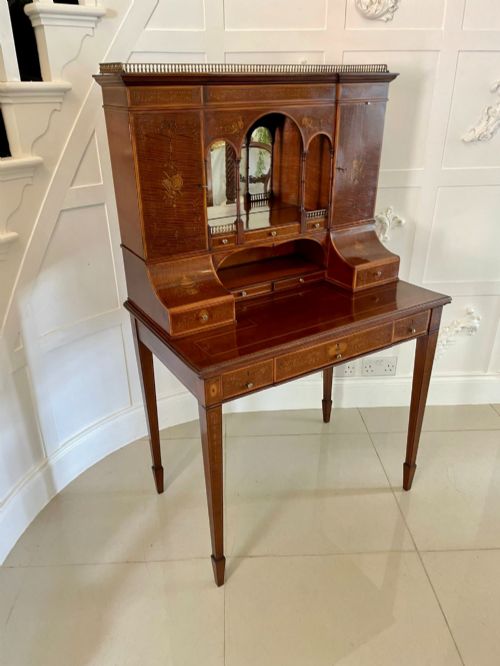
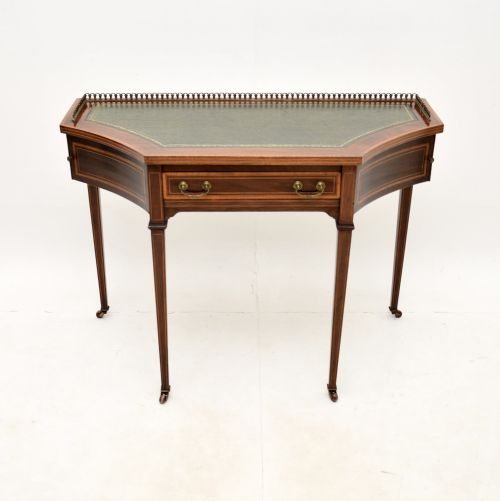
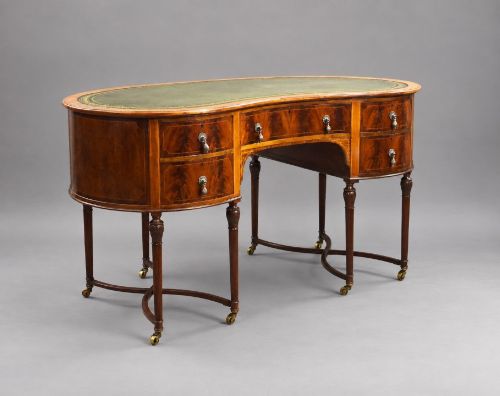
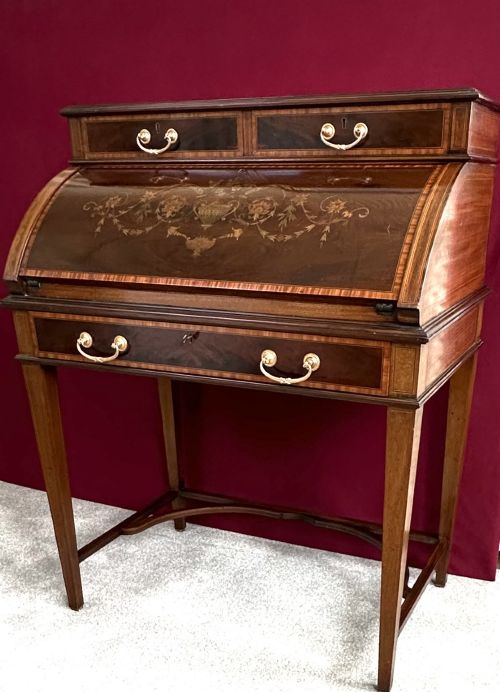
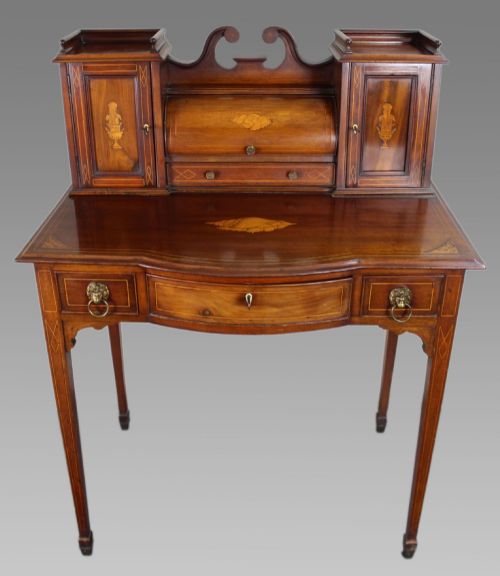
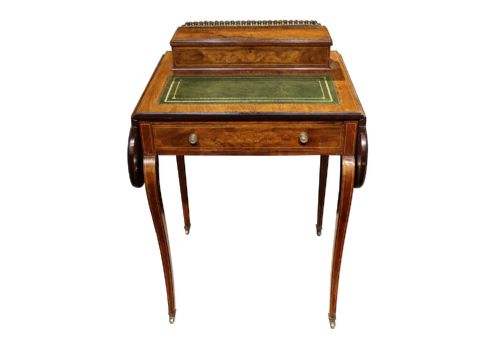
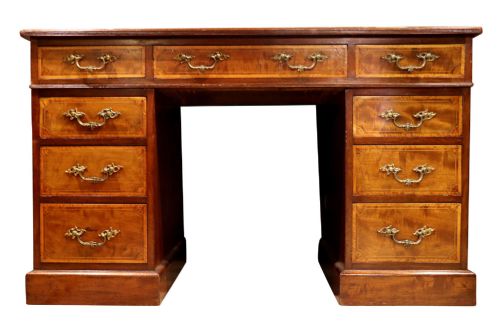
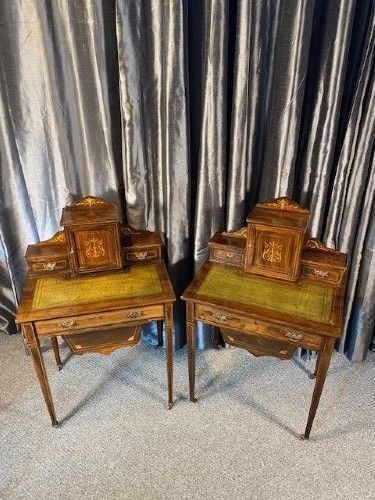
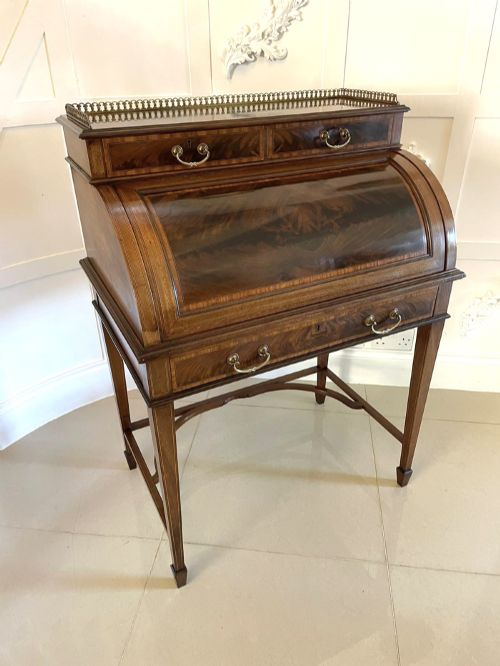
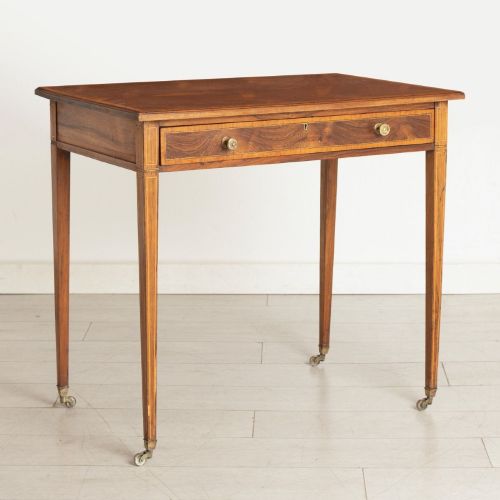
The pieces grouped under an edwardian inlaid writing desk search predominantly originate from the Edwardian period and the late nineteenth century, reflecting the tastes of Sheraton Revival design. You will encounter various forms here, from compact lady's writing tables and kidney-shaped desks to elaborate Carlton House desks and cylinder fronts.
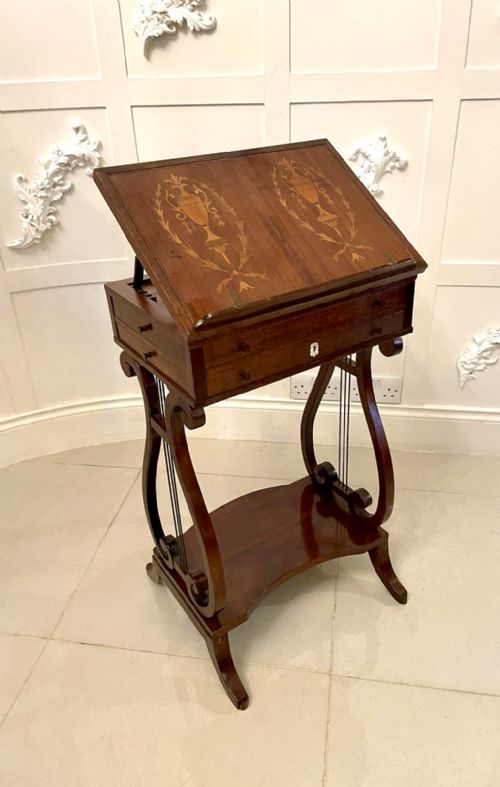
Mahogany and rosewood serve as the primary timbers, frequently decorated with satinwood, boxwood, and marquetry details. These tables often incorporate fitted interiors with small drawers and pigeonholes, alongside original leather writing surfaces.
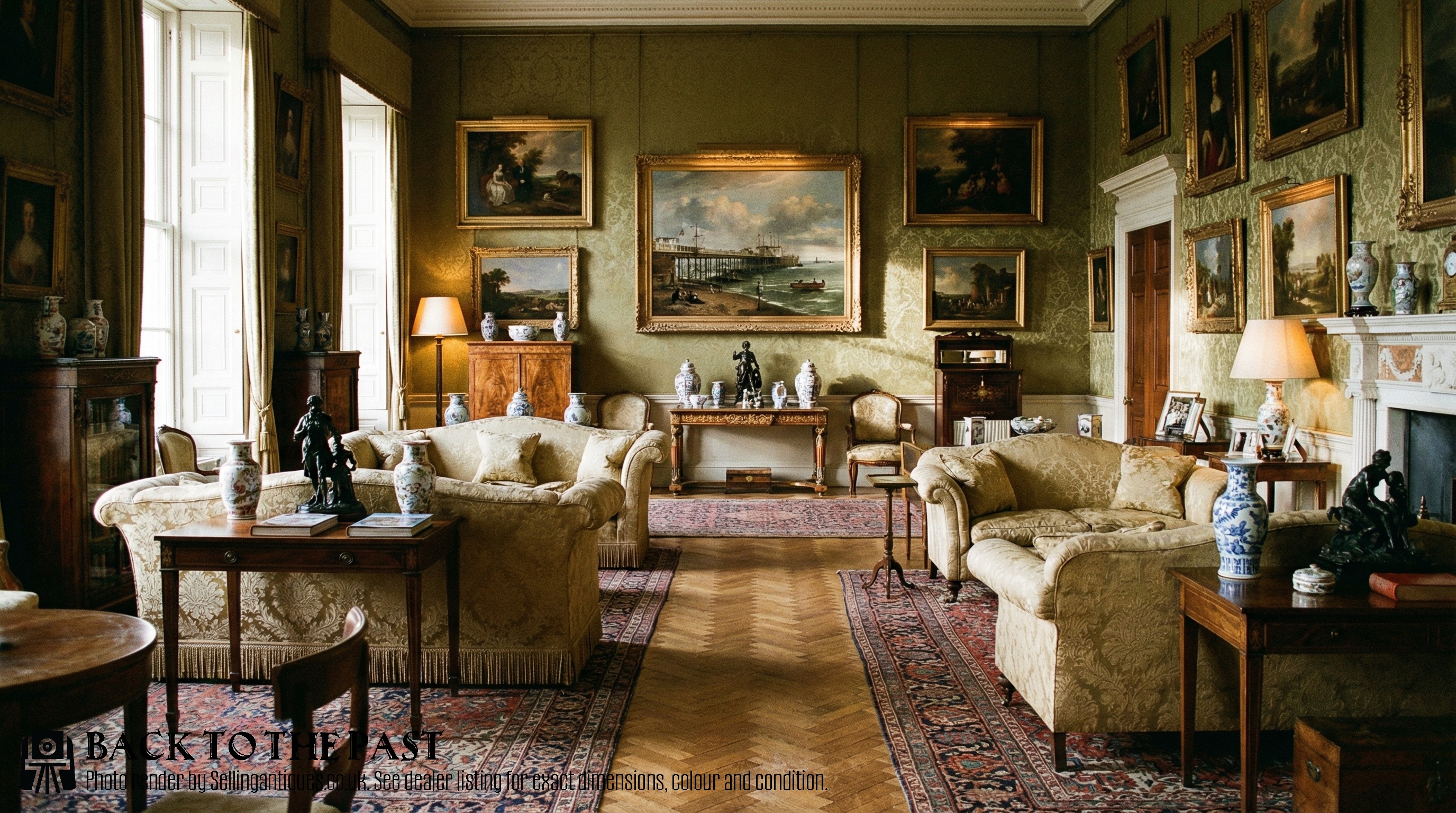
How They Were Made
Cabinetmakers constructed these desks using solid and veneered timbers such as mahogany and rosewood, incorporating delicate boxwood and satinwood inlay to create contrasting decorative borders and motifs. Surfaces often feature fine marquetry work and hand-tooled leather writing inserts.
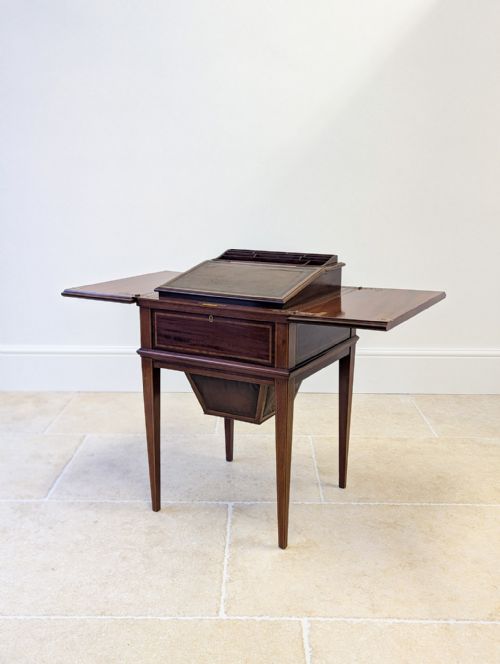
Structural hardware typically includes brass handles, hinges, and casters, while specialised mechanisms govern cylinder fronts, fall-front bureaus, and metamorphic writing tables.
Edwardian Inlaid Writing Desk Retail Price Guide 2026
Typical asking prices for edwardian inlaid writing desk among the pieces listed under this phrase on Sellingantiques today, from the lower quarter to the upper quarter. They describe what is for sale here now, not the wider market.
The listings span the Victorian, Edwardian, and Regency Revival periods, utilising mahogany, rosewood, and satinwood.
What Varies in Quality
The standard of timber selection and the precision of the inlay work largely determine the calibre of each piece, with finely figured flame mahogany and intricate satinwood marquetry representing the upper tiers. The crispness of the cabinetmaking and the presence of original brass hardware and fitted internal compartments further separate standard production items from exhibition pieces.
Freestanding examples finished on all sides for central room placement generally demand greater joinery skill than standard wall-facing tables.
Maple & Co·Edwards & Roberts·William H Vaughan & Co·S & H Jewell
The Edwardian Inlaid Writing Desk Glossary
- Carlton House desk
- A form of writing desk featuring a superstructure of small drawers and pigeonholes arranged in a concave curve around the back and sides of the writing surface.
- Marquetry
- Decorative veneer patterns composed of various woods and other materials assembled to form pictorial or geometric designs.
- Satinwood
- A hard, durable timber with a characteristic golden-yellow sheen, frequently utilised for contrasting inlay and stringing on dark woods.
- Cylinder desk
- A writing desk fitted with a quarter-circle rotating wooden cylinder that conceals the writing surface and internal drawers when closed.
- Kneehole desk
- A compact pedestal desk designed with a central recessed space for the user's legs, flanked by banks of small drawers.
Edwardian Inlaid Writing Desk: Frequently Asked Questions
How do I identify Edwardian inlay?
Edwardian inlay frequently utilises contrasting satinwood and boxwood set into mahogany or rosewood surfaces.
Designs often incorporate Sheraton Revival motifs such as bellflowers, ribbons, and delicate scrolling foliage.
Where were these desks placed?
These pieces were designed for private drawing rooms, boudoirs, and personal studies rather than formal administrative offices.
Freestanding models were finished on all sides so they could sit prominently in the centre of a room.
What is a cylinder front desk?
A cylinder front desk conceals the writing surface and internal compartments behind a rolling curved wooden shutter.
Rotating the cylinder upward reveals a pull-out leather-lined writing slide and small pigeonholes.