
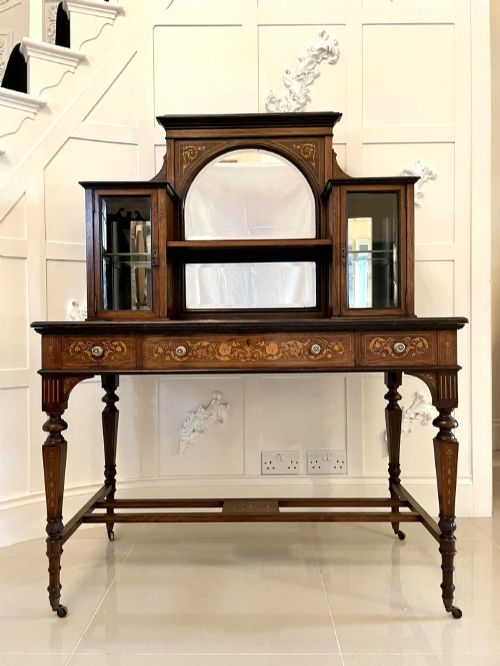
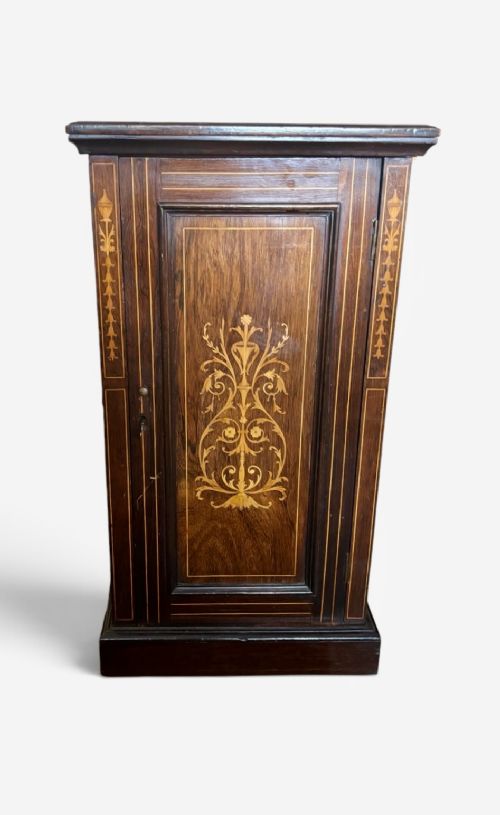
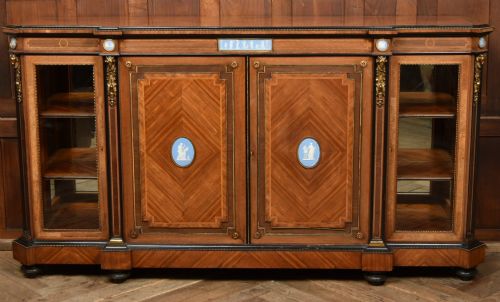
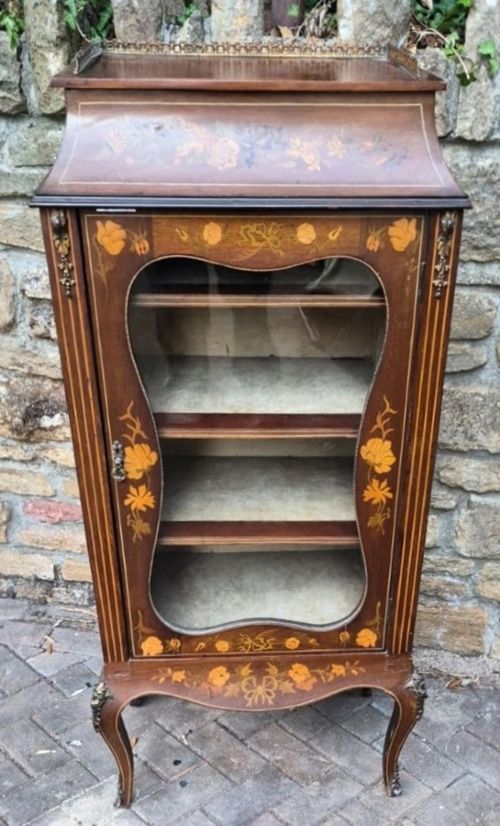


Edwardian Inlaid Rosewood Cabinet
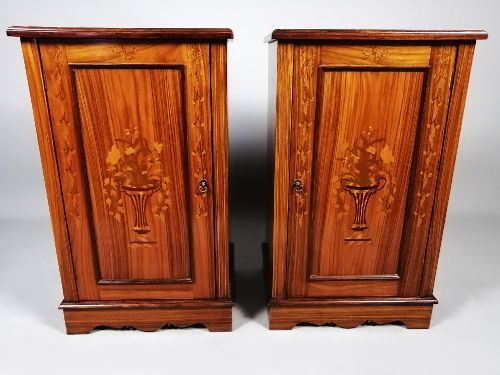
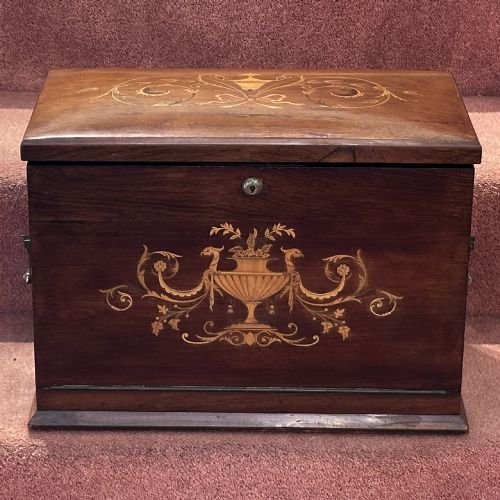
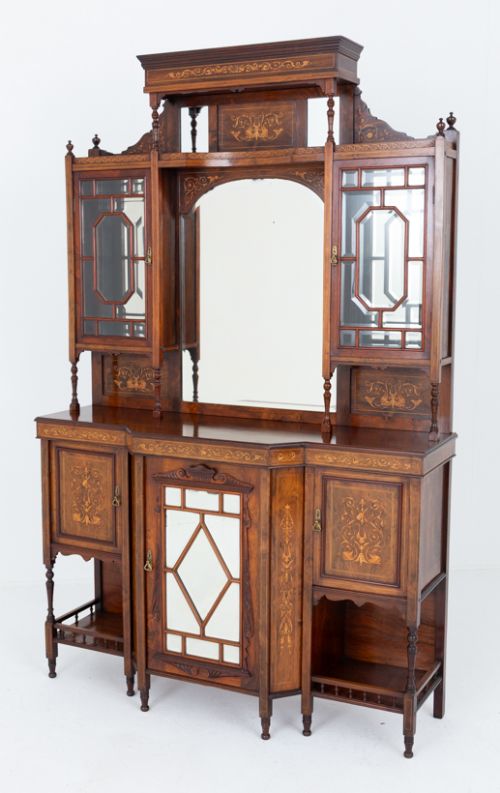
These pieces of edwardian inlaid rosewood cabinet combine rich dark timbers with delicate contrasting work to anchor a room.
Edwardian Inlaid Rosewood Cabinet
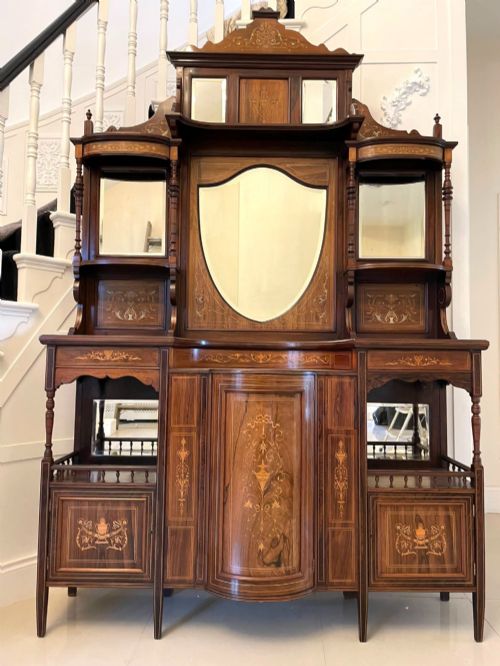
An edwardian inlaid rosewood cabinet brings together dense, dark timber and lighter botanical ornament, appearing most frequently in forms designed for display or music storage. The selection spans upright music cabinets, glazed corner cupboards, and freestanding side pieces produced around the turn of the twentieth century.
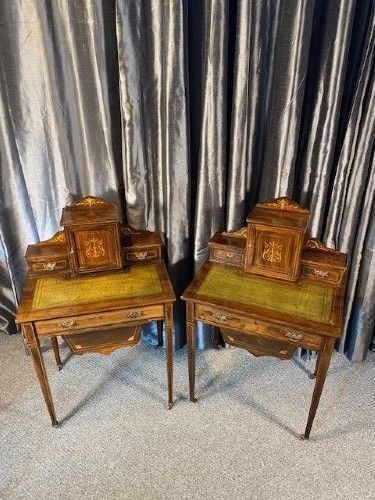
Makers of the period drew heavily on earlier Georgian and Sheraton vocabularies, applying symmetrical stringing and floral motifs across rectilinear carcases. While Edwardian examples dominate the output, the listings also encompass late nineteenth-century Victorian antecedents sharing the same core materials.
Buyers encounter varied formats ranging from low bedside cupboards to tall parlour cabinets featuring mirrored backs and open shelving. Each form utilises the characteristic grain of rosewood as a dark ground for contrasting light inlays.
Materials and construction
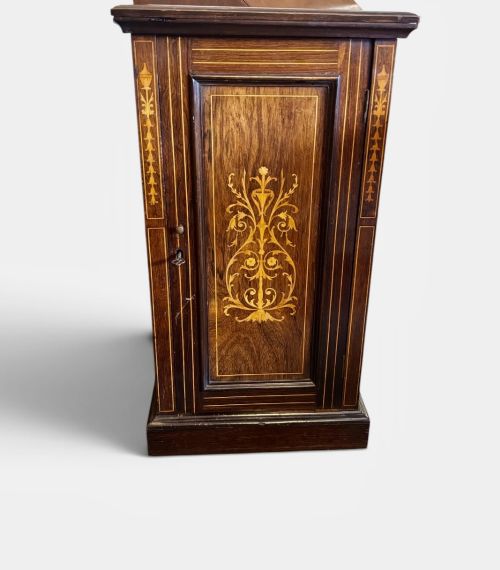
Cabinet makers built these carcases using solid or veneered rosewood, laying the dark timber over secondary woods to stabilise the structure. Satinwood and boxwood were then cut into thin strips and delicate floral motifs, dropped into hand-chiselled recesses across the doors and friezes.
Glass panels feature frequently in doors designed to protect books or sheet music, often secured with slender wooden glazing bars. Brass hardware, including hinges, locks, and drop handles, provides functional contrast against the polished dark surfaces.
Several cabinets retain their original internal compartments designed specifically for holding rolled sheet music from the late nineteenth century.
Factors of quality
The distinction between ordinary and superior pieces rests on the precision of the marquetry and the choice of timber figure. Finer examples display tight, symmetrical grain patterns in the rosewood paired with crisp, deeply embedded boxwood and satinwood inlay that sits completely flush with the surface.
Construction details also dictate the tier of a piece, separating standard utility furniture from high-end workshop production. Superior cabinets reveal careful hand-dovetailed drawer linings, substantial original brass fittings, and well-balanced proportions that maintain structural integrity across decades.
Edwards and Roberts
The Edwardian Inlaid Rosewood Cabinet Glossary
- Marquetry
- The art of forming decorative patterns by fitting together small pieces of wood veneer. This technique allows complex floral or symmetrical designs to cover flat cabinet doors.
- Satinwood
- A pale, lustrous timber native to India and Sri Lanka, valued for its golden yellow sheen. It serves as the primary contrast material in detailed cabinet inlay.
- Boxwood
- A dense, pale yellow wood used for fine stringing and linear inlay work. Its tight grain permits extremely sharp cutting.
- Stringing
- A narrow inlaid line of contrasting timber set flush into the surface of a panel. It frames drawers, doors, and tabletops to define geometric zones.
Edwardian Inlaid Rosewood Cabinet: Frequently Asked Questions
What were music cabinets used for?
Music cabinets provided dedicated storage for sheet music and folios in drawing rooms and parlours. Interior drop-down fronts or vertical tiers kept fragile paper scores flat and organised.
Today, these compartmented interiors suit modern storage needs while maintaining period character in living spaces.
How do I distinguish Edwardian from Victorian cabinets?
Edwardian pieces generally exhibit lighter proportions, restrained inlay, and a greater emphasis on Sheraton Revival symmetry. Victorian examples often lean towards heavier carvings, darker finishes, and more robust carcases.
Both periods appear frequently alongside one another in the rosewood category.
Where should I place a corner cabinet?
Corner cabinets utilise awkward architectural junctions by drawing the eye upwards into dead space. Glazed variants work effectively in dining rooms or hallways for displaying small ceramics.
Freestanding models require minimal floor area while offering functional cupboard storage.
How do I care for rosewood furniture?
Rosewood surfaces respond best to occasional dusting with a soft, dry cloth and protection from direct sunlight. Excessive heat or moisture can dry out the timber and cause lifting in delicate boxwood inlays.
Applying microcrystalline wax sparingly helps preserve the natural lustre of the polished grain.