
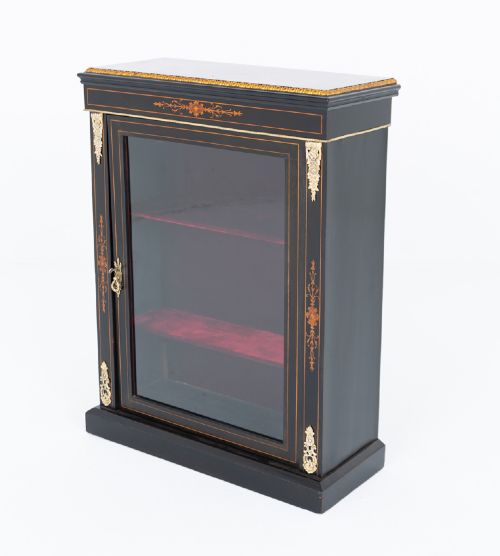


Victorian Inlaid Music Cabinet
When you search for a victorian inlaid music cabinet, you find upright parlour furniture designed to store sheet music inside dedicated compartments.
Victorian Inlaid Music Cabinet
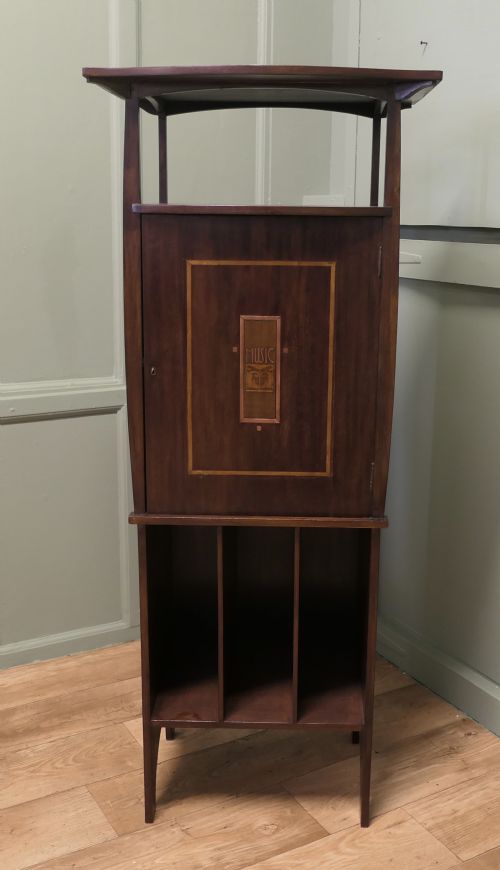
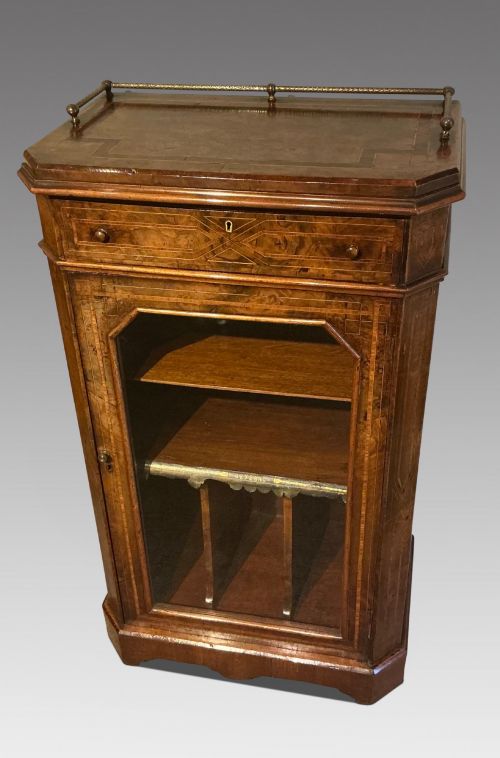
A victorian inlaid music cabinet is a specialised form of home storage developed to house sheet music and folios in the nineteenth century. These pieces stand tall and relatively narrow, often fitted with internal shelves or drops down fronts intended for paper organisation.
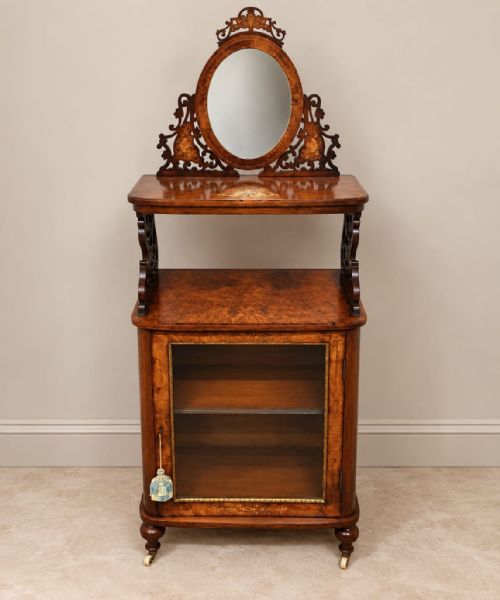
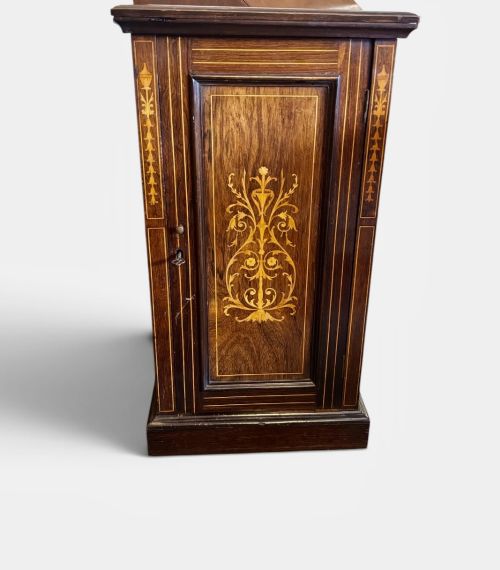
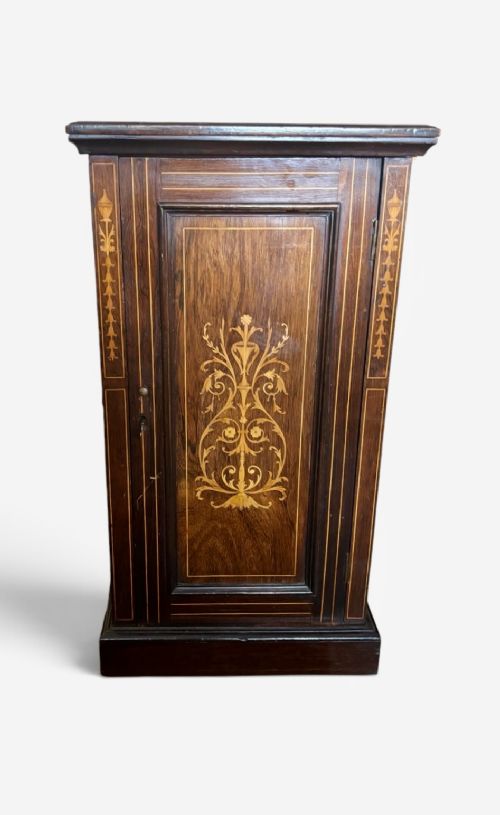
The versions most commonly met on this page date from the Victorian period through to the late nineteenth century, constructed primarily in walnut, burr walnut, and rosewood. Many incorporate marquetry details and boxwood stringing along the door panels or upstands.
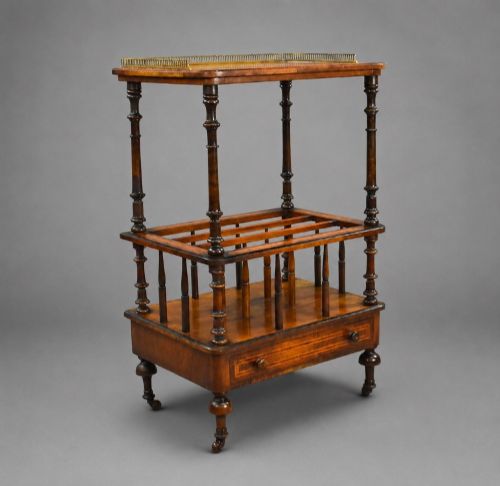
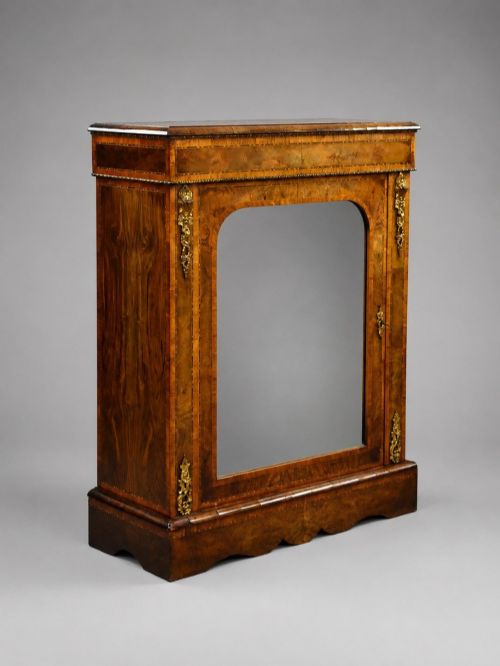
Cabinet makers produced these pieces alongside related forms such as music canterburys, pier cabinets, and display cabinets. They served parlour rooms where guests gathered around pianofortes and required tidy storage for musical scores.
Materials and Construction
Carpenters constructed carcasses from foundational timbers such as mahogany, walnut, or ebonised wood, onto which finely figured veneers like burr walnut and rosewood were applied. Marquetry inlay utilised contrasting lighter woods, including boxwood and satinwood, to create floral or geometric motifs across flat surfaces.
Glazing with glass panels and mounts cast in brass appeared on variations designed to display objects alongside or above the sheet storage. Cabinet makers integrated specialised interior divisions to keep paper folios upright and sorted without bending.
Listings span the Victorian period, late nineteenth century, and Edwardian eras, predominantly featuring walnut, burr walnut, and rosewood constructions.
Assessing Quality
Quality rests upon the selection of timber veneers, particularly the density and grain pattern of burr walnut or rosewood employed on the primary facade. Elaborate marquetry inlay executed with precision demonstrates superior workshop skill compared to simpler linear stringing.
The integrity of internal fittings, such as original shelving, dividers, and hardware like brass hinges and locks, separates standard production items from finer bespoke commissions.
GM Elwood for JS Henry·Keeble London
The Victorian Inlaid Music Cabinet Glossary
- Marquetry Inlay
- Decorative woodwork formed by fitting contrasting veneer pieces into a prepared ground to create pictures or patterns. This technique frequently ornaments the doors of nineteenth century parlour furniture.
- Burr Walnut
- Timber taken from the warted growth on a walnut tree, yielding highly twisted and mottled grain patterns. Cabinet makers prized this wood for its decorative visual impact.
- Canterbury
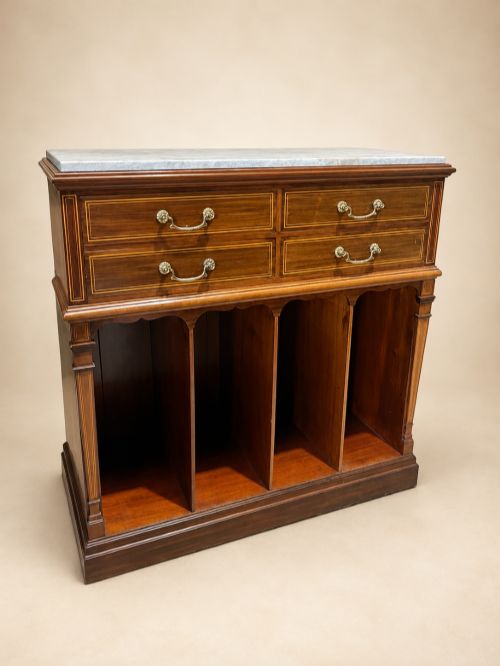
- A low stand featuring slatted partitions designed to hold sheet music, magazines, or folios. Some examples incorporate a small drawer beneath the main rack.
- Pier Cabinet
- A narrow cabinet designed to stand against the wall space between windows. These pieces often feature glass doors and velvet lined shelves.
- Upstand
- A low decorative board rising above the back or sides of a cabinet top. It frequently incorporates carved or inlaid details matching the rest of the piece.
Victorian Inlaid Music Cabinet: Frequently Asked Questions
How do I tell walnut from rosewood?
Walnut displays a rich brown tone with darker grain swirls and, in burr examples, dense swirling patterns. Rosewood offers a heavier, denser feel with darker, purplish-brown grain lines.
Both timbers were heavily polished by nineteenth century makers to accentuate their natural colour variations.
Where were these cabinets placed originally?
Victorian households positioned these cabinets in drawing rooms or music parlours close to the piano. They kept scores organised and within reach during evening gatherings.
In modern interiors, they function well as hallway storage, bedside units, or compact display surfaces in smaller reception rooms.
Did all music cabinets have glass doors?
Many examples feature solid wooden doors decorated with marquetry inlay or brass fittings to conceal the paper inside. Other variations include glazed doors or open framework similar to a Canterbury.
The choice depended on whether the maker intended the stored music to remain hidden or visible.