

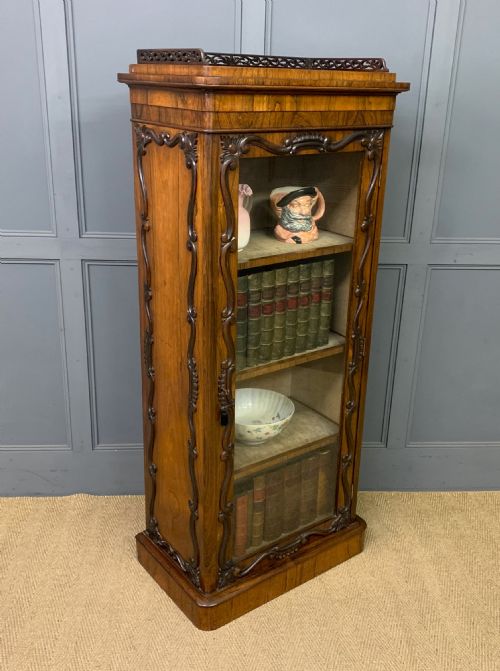


Narrow Rosewood Cabinet
A narrow rosewood cabinet brings deep dark timber and vertical presence into a tight corner, offering refined storage without dominating the room.
Narrow Rosewood Cabinet
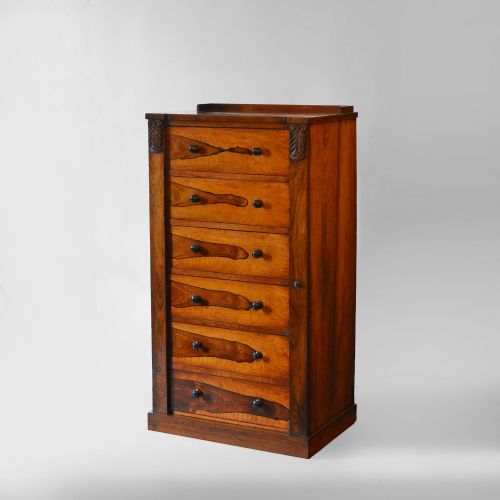
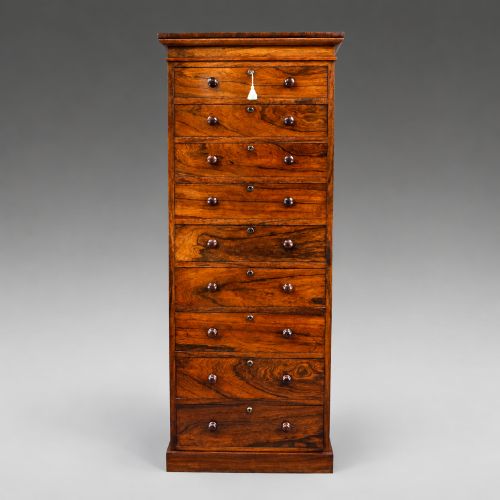
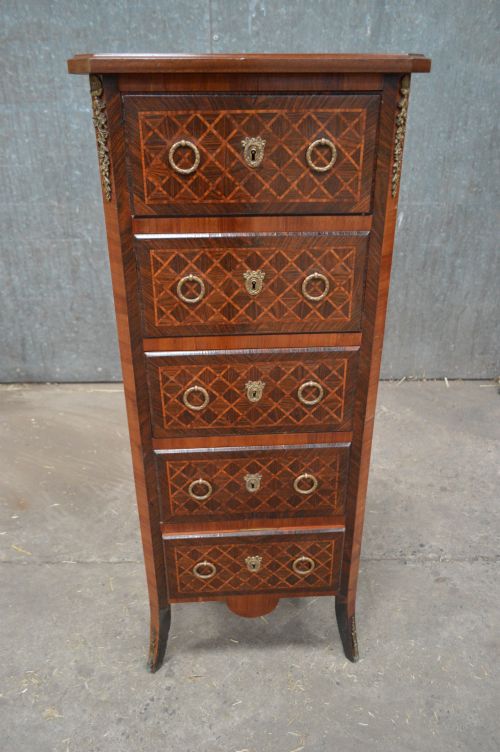
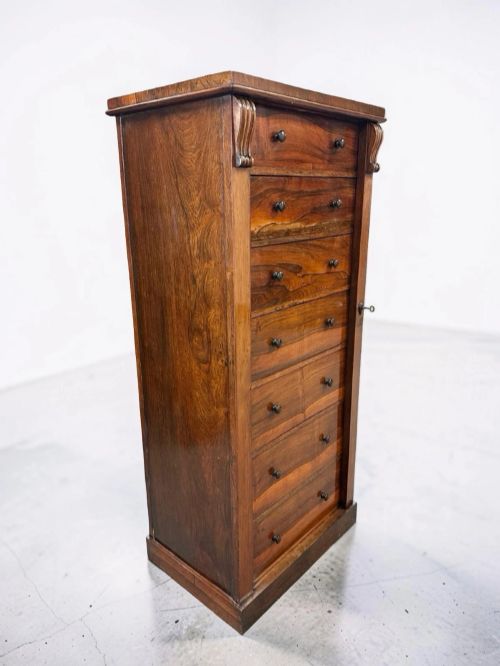
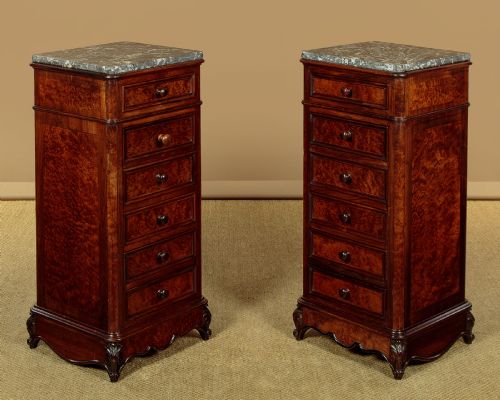
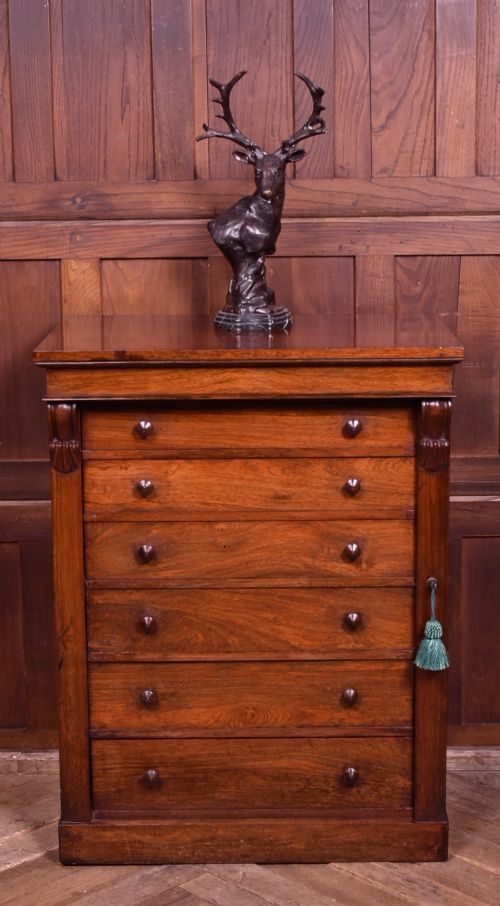
A narrow rosewood cabinet encompasses tall upright forms designed to maximise storage in compact spaces, spanning Victorian production and revival styles. The selection frequently includes Wellington chests, bedside pedestals, pier cabinets, and music cabinets with slender proportions.
Most pieces date from the nineteenth century, including specific decades such as eighteen-fifty and eighteen-ninety, alongside later Edwardian examples from nineteen-twenty. These items appear in both freestanding formats and matched pairs, often incorporating glazed doors or open shelving.
Makers and designers of the period utilised rosewood as a primary carcass timber, frequently complemented by contrasting secondary woods to enhance the visual impact of the narrow silhouette.
Materials and construction
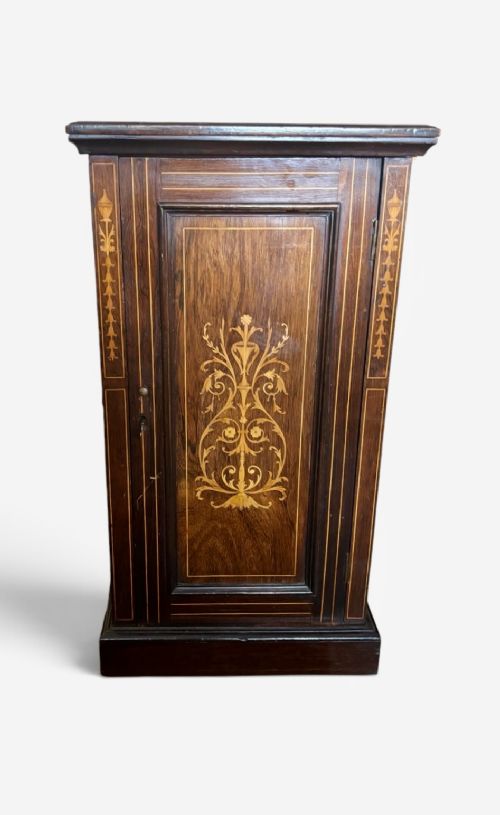
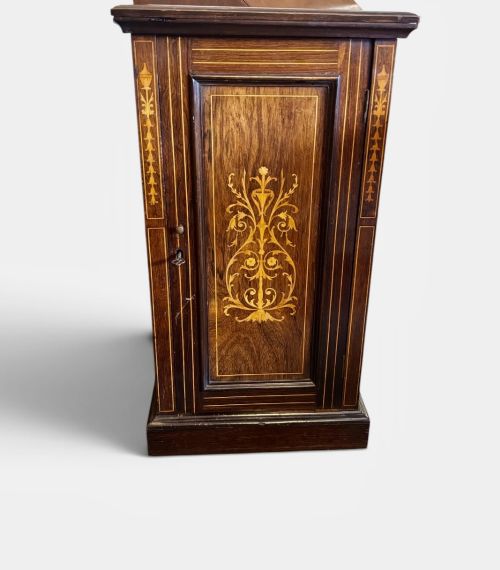
Cabinet makers constructed these pieces using solid rosewood and supportive sub-frames, applying fine veneers over stable secondary timbers to achieve rich grain patterns. Marquetry and parquetry ornamentation involved meticulous hand-cutting of satinwood, boxwood, and kingwood inlay.
Metalwork details such as brass grilles, locks, and hinges provide functional security and structural accent, whilst inset marble tops on French examples offer durable, cool-surfaced utility. Glass panels feature in bookcase doors and display sections, secured with delicate timber glazing bars.
Narrow Rosewood Cabinet Retail Price Guide 2026
Typical asking prices for narrow rosewood cabinet among the pieces listed under this phrase on Sellingantiques today, from the lower quarter to the upper quarter. They describe what is for sale here now, not the wider market.
Several pieces on offer began life holding sheet music rather than books.
Quality variations
The standard of a narrow rosewood cabinet is determined by the precision of its marquetry work and the depth of figure in the timber veneer. Superior examples display seamless alignment in inlaid satinwood or boxwood motifs and retain their original patination.
Structural integrity in the drawer runners, locking mechanisms, and the snug fit of doors separate workshop output of high ambition from standard commercial production.
James Winter
The Narrow Rosewood Cabinet Glossary
- Wellington chest
- A tall, narrow chest of drawers secured by a locking hinged pilaster on one vertical edge. This design originated in the early nineteenth century.
- Pier cabinet
- A low or tall display cabinet designed to fit narrow wall spaces between windows. These pieces often feature glass doors and velvet-lined interiors.
- Marquetry
- Decorative patterns formed by inserting pieces of contrasting veneer into a wood foundation. Craftsmen use various exotic timbers to create floral or geometric designs.
- Parquetry
- Geometric mosaic woodwork used for ornamenting floors and cabinet surfaces. It relies on precise angular blocks of timber.
Narrow Rosewood Cabinet: Frequently Asked Questions
What is a Wellington chest?
A Wellington chest is a tall, narrow set of drawers distinguished by a vertical locking stile on one side that fastens the entire column of drawers.
This specific form provided secure storage for personal papers and valuables in nineteenth-century domestic interiors.
How do I style a pier cabinet?
Pier cabinets work effectively in alcoves or narrow wall spaces where standard furniture proves too bulky for the footprint.
Their glass doors and shelves suit the display of small collections while maintaining an open circulation route in the room.
What is the difference between marquetry and parquetry?
Marquetry employs varied veneers to create pictorial or floral motifs, whereas parquetry constructs geometric patterns from angular wooden tiles.
Both techniques appear frequently on nineteenth-century cabinet surfaces to provide visual contrast against the dark rosewood.
How do I care for rosewood furniture?
Rosewood benefits from placement away from direct heat sources and strong sunlight to prevent the timber and its polish from drying out.
Regular dusting with a dry, soft cloth maintains the finish without the need for heavy chemical polishes.