

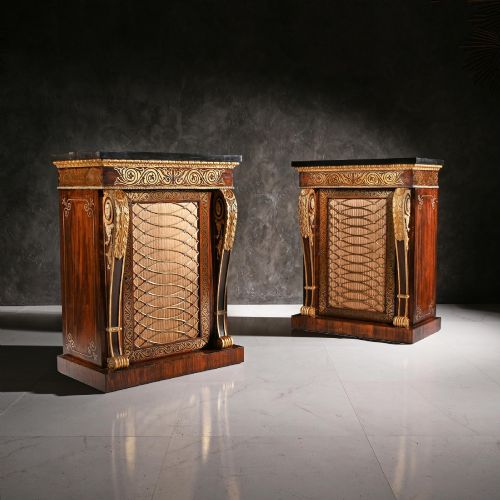


Inlaid Rosewood Pier Cabinet
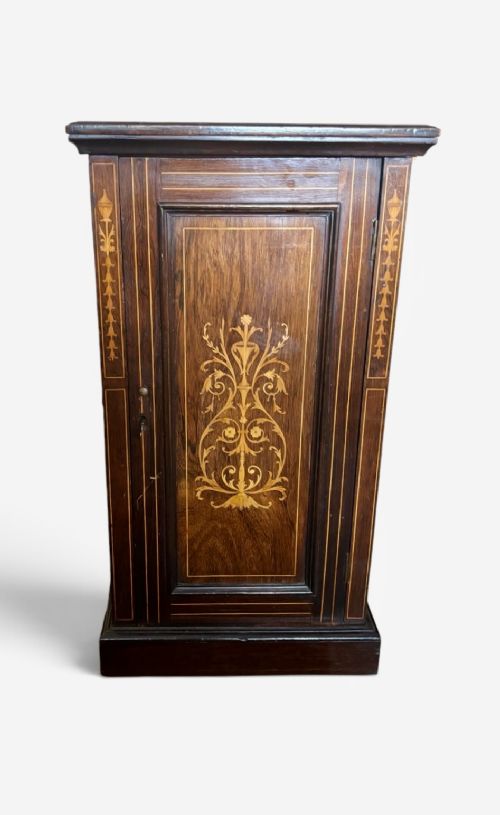
An inlaid rosewood pier cabinet is a slender nineteenth-century display piece designed for narrow wall spaces between windows, combining rich timber with delicate contrasting decoration.
Inlaid Rosewood Pier Cabinet
An inlaid rosewood pier cabinet is a narrow display piece designed to sit against the wall between windows, making economical use of tight spaces in nineteenth-century interiors. These items appear primarily from the Victorian and Regency periods, taking forms such as side cabinets, narrow cabinets, and cabinet bookcases.
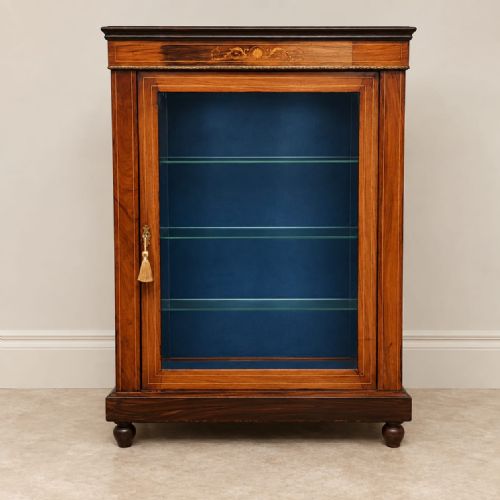
The versions most frequently met on this page are Victorian and Regency examples, often featuring glass doors for displaying prized porcelain or small ornaments. Such pieces bring dark, figured timber into a room alongside lighter contrasting details to brighten formal drawing rooms and reception spaces.
How they were made
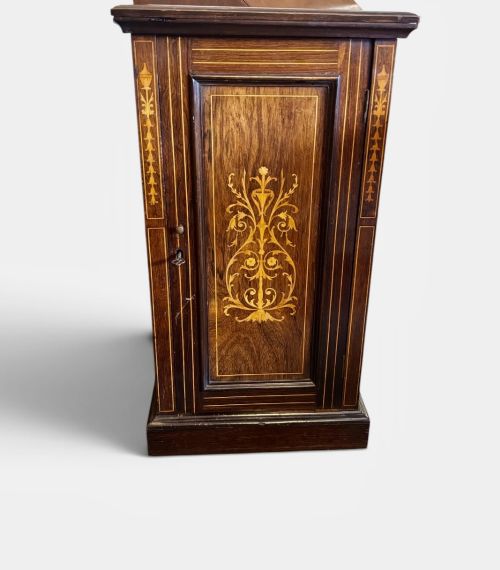
Cabinet makers constructed these pieces using dense rosewood as a primary surface, frequently enhanced by contrasting inlays of boxwood, satinwood, ebony, and burr walnut. These lighter timbers formed intricate floral motifs, geometric lines, and delicate arabesques across the dark background.
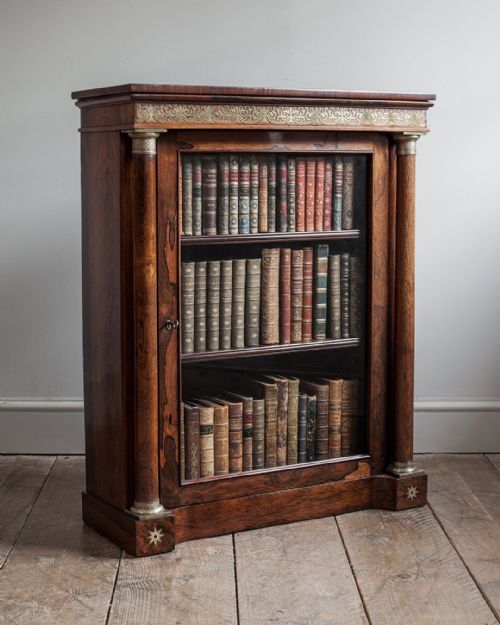
Metal and glass components played an integral role in construction, with cast or chased ormolu mounts and fine brass stringing outlining doors and panels. Glazed doors protected the interior shelves, while marble tops occasionally provided a durable and cool upper surface.
Inlaid Rosewood Pier Cabinet Retail Price Guide 2026
Typical asking prices for inlaid rosewood pier cabinet among the pieces listed under this phrase on Sellingantiques today, from the lower quarter to the upper quarter. They describe what is for sale here now, not the wider market.
Listings on this page span the Regency, William IV, and Victorian eras, alongside French Louis XV styles from the nineteenth century.
What varies in quality
The standard of an inlaid rosewood pier cabinet depends significantly on the precision of the marquetry and the choice of timber grains. Superior examples display tightly fitted brass or contrasting wood inlays that remain flush with the polished surface, executed by skilled hands rather than hasty production.
Overall proportions and the refinement of subsidiary materials also distinguish finer cabinet work. Heavy or clumsily cast ormolu mounts indicate a simpler build, whereas crisp metalwork and well-figured rosewood denote a higher grade of nineteenth-century manufacture.
Louis Constantin Le Gaigneur
The Inlaid Rosewood Pier Cabinet Glossary
- Pier cabinet
- A narrow display cabinet specifically built to occupy the wall space between two windows. These pieces often feature a single glazed door and flat sides to fit flush against a pier.
- Marquetry
- Decorative veneer work arranged in pictorial or geometric patterns using various coloured woods. Craftsmen cut thin slices of timber and fitted them together like a puzzle before gluing them to the carcase.
- Ormolu
- Gilded bronze used for decorative mounts and furniture trim during the eighteenth and nineteenth centuries. The technique involves applying a gold amalgam to cast bronze and heating it to drive off the mercury.
- Stringing
- Thin strips of contrasting wood or brass inlaid into channels cut into the furniture surface. This linear detail defines borders and frames panels on Regency and Victorian cabinetry.
Inlaid Rosewood Pier Cabinet: Frequently Asked Questions
Where did these cabinets go in a room?
These cabinets were specifically designed for the narrow expanse of wall situated between tall nineteenth-century windows, known as the pier. Placing them in these awkward gaps provided useful display space without obstructing movement or light.
In modern rooms, they work well in similar narrow wall spaces, hallways, or smaller alcoves where a standard sideboard would prove too bulky.
How do I tell a Victorian from a Regency piece?
Regency pieces generally date from the early nineteenth century and frequently incorporate bold brass inlay alongside clean architectural lines. Victorian examples, appearing from the middle of the century onwards, often lean towards more ornate floral marquetry and varied timber combinations like satinwood and walnut.
Examining the internal construction and secondary woods alongside the exterior style helps confirm the specific nineteenth-century decade of manufacture.
Can these cabinets hold heavy books?
Pier cabinets were primarily intended for the display of delicate ceramics, decorative glassware, and small ornaments behind glass doors. The internal shelving and slender upright frames are rarely suited to supporting heavy loads of books.
While some larger variants include bookcase sections, standard pier cabinets should be used for lighter display purposes rather than heavy library storage.
How do I care for the rosewood surface?
Rosewood benefits from regular dusting with a soft, dry cloth and protection from direct sunlight to prevent the deep timber tones from fading. Avoid silicone-based polishes, as they build up over time and attract dust.
Applying a traditional beeswax sparingly and buffing it gently helps maintain the natural lustre of the polished wood and protects the delicate inlay work.