




Edwardian Inlaid Nesting Tables
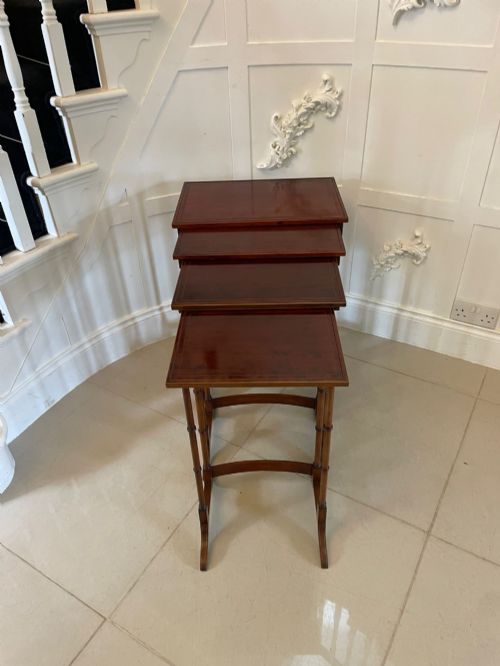
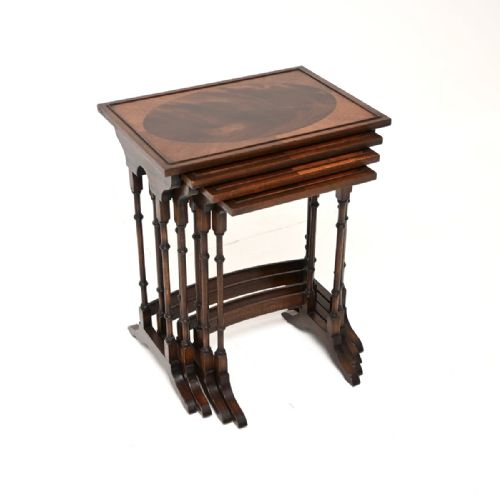
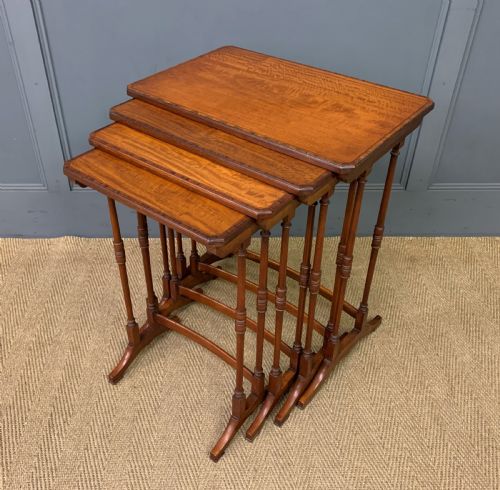
Edwardian inlaid nesting tables offer clever multi-tiered surface space crafted in mahogany and satinwood, designed to slide neatly together when floor space is at a premium.
Edwardian Inlaid Nesting Tables
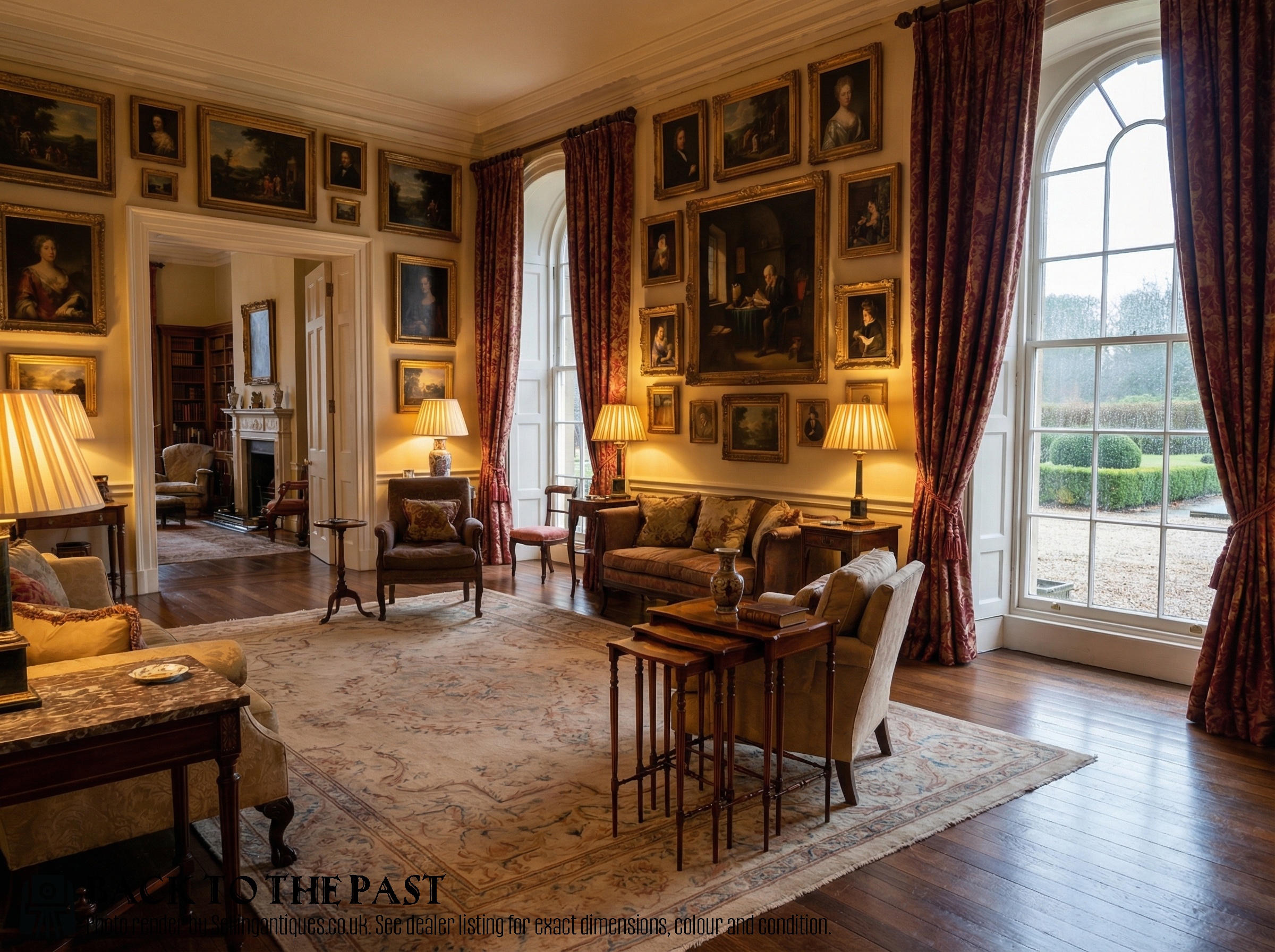
When you search for edwardian inlaid nesting tables, you find sets of graduated tables designed to fit one beneath another. The pieces on this page span the Edwardian period, Victorian eras, and the early twentieth century.
Most examples appear as sets of three or four, known historically as quartetto tables, built to serve as occasional, coffee, or lamp tables.
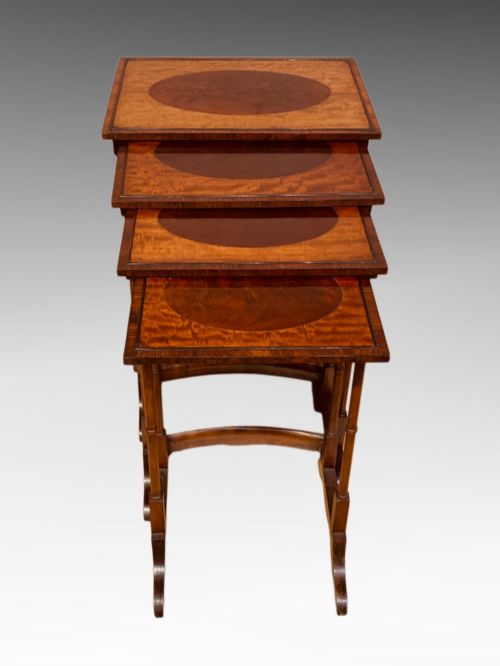
The dominant timbers are mahogany and satinwood, often enhanced by decorative boxwood and marquetry inlay work.
Materials and Construction
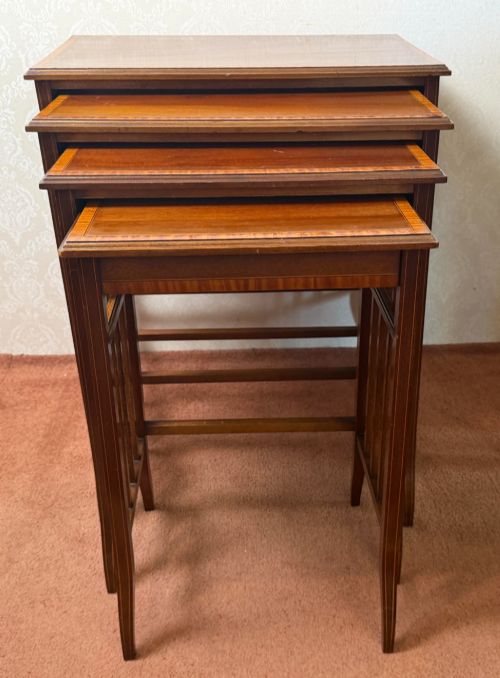
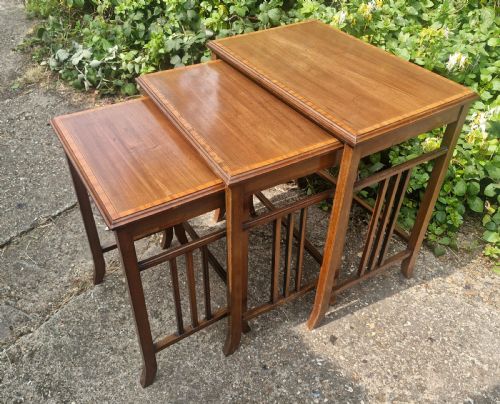
Cabinet makers utilised solid mahogany and satinwood for the primary frames and table tops, frequently applying contrasting boxwood stringing and satinwood cross-banding.
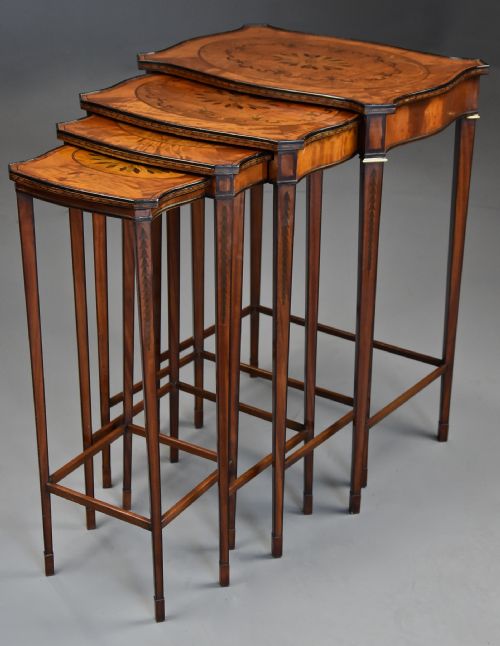
Inlay techniques incorporate marquetry and parquetry patterns set directly into the timber surfaces, while structural stability is maintained through slender square tapered legs.
Current listings feature pieces primarily from the Edwardian and Victorian eras, constructed mainly in mahogany and satinwood with various inlay styles.
Distinguishing Quality
Quality rests upon the crispness of the inlay work, the selection of figured timber veneers, and the structural integrity of the joints when tables are repeatedly nested and withdrawn.
Finely made sets exhibit balanced proportions, delicate serpentine or kidney-shaped forms, and meticulous attention to secondary timbers on the undersides.
The Edwardian Inlaid Nesting Tables Glossary
- Quartetto
- A matched set of four small tables designed to slide one beneath another. This traditional term appears frequently in descriptions of nesting tables from the period.
- Satinwood
- A durable, lustrous timber imported from the tropics, prized for its golden yellow colour and smooth grain. It is often utilised for decorative veneers and table top panels.
- Marquetry
- The art of applying small pieces of veneer to a structure to form decorative pictures or geometric patterns. Makers used various contrasting woods to achieve pictorial depth.
- Cross-banding
- A border of veneer laid around the edge of a table top with the grain running perpendicular to the central panel. This technique frames the primary timber effectively.
- Boxwood
- A dense, pale wood employed for fine stringing lines and contrasting details in antique furniture. Its bright colour makes geometric inlays stand out clearly.
Edwardian Inlaid Nesting Tables: Frequently Asked Questions
What is a quartetto nest of tables?
A quartetto nest consists of four graduated tables built to slide neatly into one another to save floor space.
Cabinet makers designed these sets as versatile occasional furniture that could be separated when entertaining.
How are these tables usually arranged?
The tables are scaled so that each smaller piece fits precisely beneath the one immediately larger than it.
When not in use, the entire set occupies the footprint of just the single largest table.
What woods were used for inlay?
Makers incorporated satinwood, boxwood, and various contrasting timbers to create delicate banding and geometric patterns.
These decorative elements are typically set directly into mahogany or satinwood table tops.
How do I care for inlaid table tops?
Keep the timber away from direct sunlight and excessive heat sources to prevent the veneers and inlay work from drying out.
Regular polishing with traditional beeswax maintains the lustre of the polished mahogany and satinwood surfaces.