


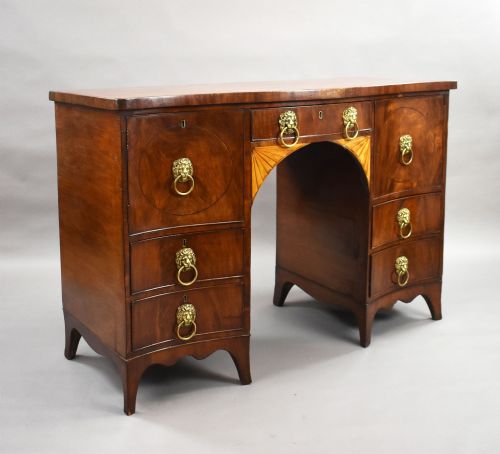


Edwardian Inlaid Dressing Desk
An edwardian inlaid dressing desk brings refined woods and delicate marquetry together for daily writing and grooming.
Edwardian Inlaid Dressing Desk
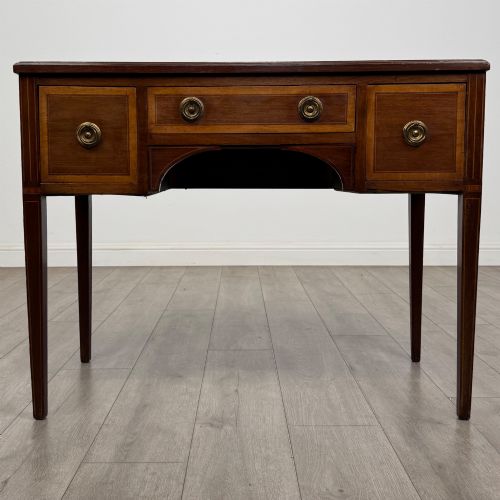
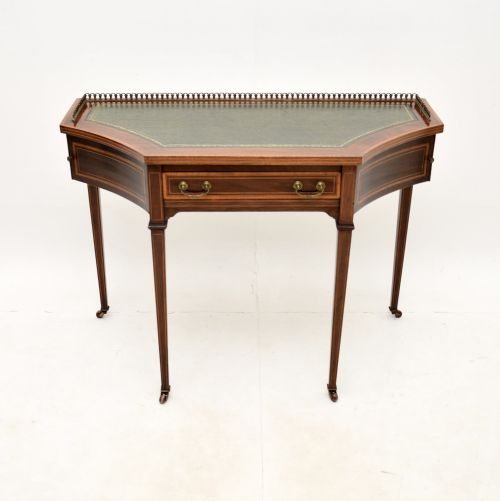
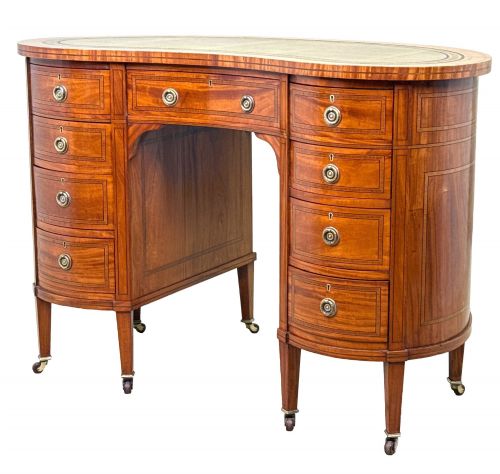
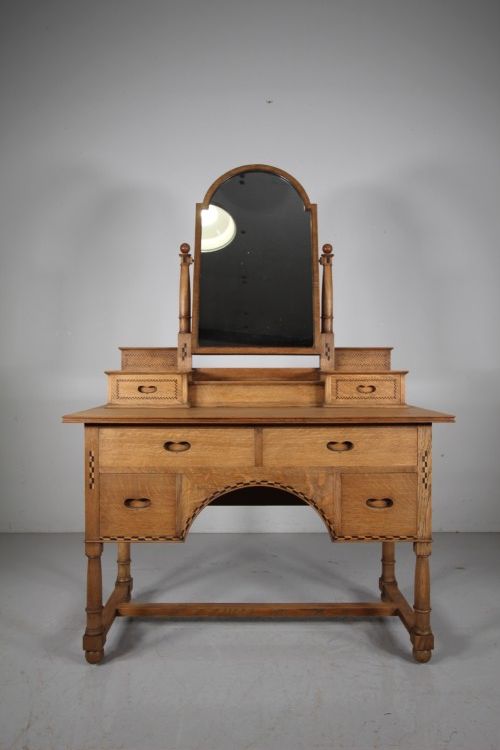
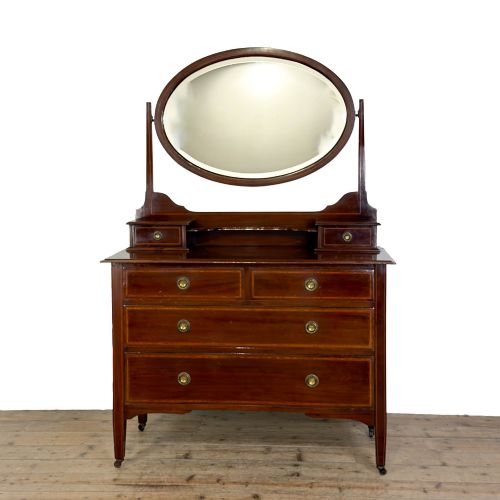
An edwardian inlaid dressing desk combines the surface of a writing table with the mirrors and compartments of a dressing table, originating chiefly from the Edwardian period and the late nineteenth century. These forms include kidney-shaped desks, kneehole tables, and bedroom desks designed for domestic utility.
Makers working in the Sheraton Revival style favoured this dual-purpose furniture, incorporating satinwood, boxwood, and mahogany to satisfy the demand for lighter interior furnishings. The pieces on this page span writing tables, dressing chests, and occasional side tables produced around nineteen hundred.
Surviving examples reflect the transition from late Victorian heaviness to the cleaner, more delicate proportions of the early twentieth century. Buyers encounter both dedicated writing desks and dressing tables fitted with drawers and inlaid surfaces.
How they were made
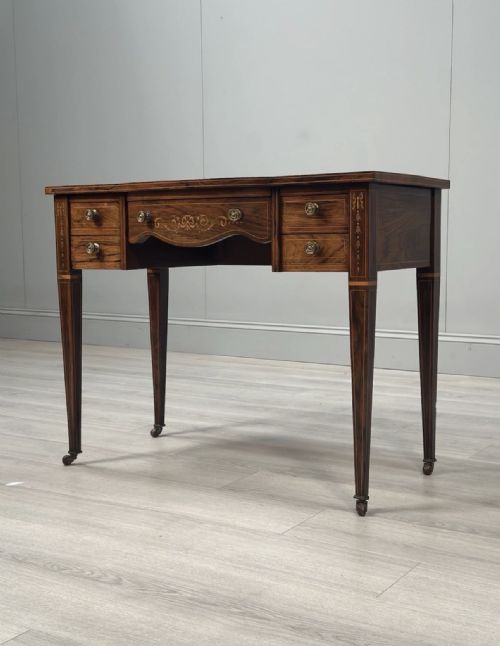
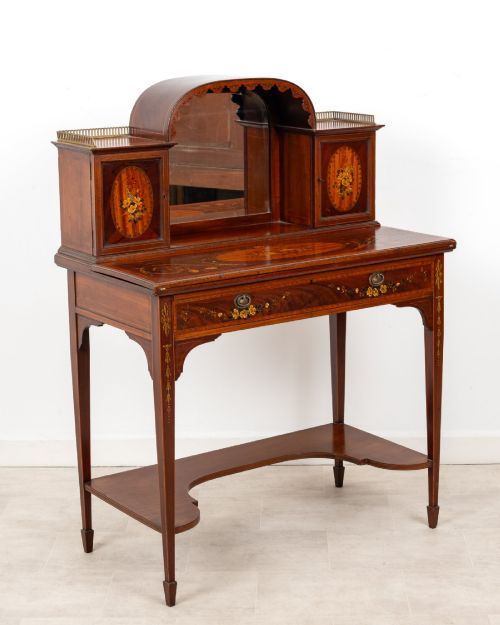
Cabinetmakers constructed the carcases using solid mahogany, oak, or walnut, often applying satinwood veneers to create contrasting borders and central panels. Artisans embedded boxwood and tulipwood inlay into the primary wood to form delicate stringing, geometric patterns, and classical motifs.
Fitted interiors required precise joinery for small drawers, pigeonholes, and compartments, while writing surfaces frequently incorporated inset leather panels. Brass handles, escutcheons, and castors completed the construction, providing both functional movement and decorative contrast against the dark timber.
Listings feature mahogany, satinwood, oak, and walnut, paired with boxwood inlay and brass hardware across the Edwardian and Victorian periods.
What varies in quality
The refinement of the marquetry and satinwood inlay separates standard production from exceptional workshop output, with hand-cut citrus and fruitwood details showing greater precision than mass-produced alternatives. The choice of primary timber also dictates tier, where dense, figured mahogany or distinct satinwood elevates the piece.
Signed or labelled furniture from prominent cabinetmakers demonstrates superior structural integrity and finishing in hidden secondary woods like oak or pine. The crispness of the carving, the symmetry of the stringing, and the integration of functional drawers define the upper echelon of these desks.
Edwards & Roberts·James Shoolbred of London·Wright & Hunter of Belfast·Maple & Co.·Gillows
The Edwardian Inlaid Dressing Desk Glossary
- Inlay
- A technique where pieces of contrasting wood, shell, or metal are inserted into depressions flush with the surface. This method creates decorative borders and floral motifs on tabletops.
- Satinwood
- A lustrous, yellow-brown timber imported from the tropics, prized for its golden sheen and smooth grain. Cabinetmakers used it extensively for veneers and banding during the Sheraton Revival period.
- Marquetry
- The art of applying pieces of veneer to a structure to form decorative patterns and pictures. It differs from inlay by covering the entire surface rather than fitting into recessed channels.
- Kidney-shaped
- A curved furniture design resembling a bean or kidney, allowing the user to sit closer to the centre. This form appeared frequently in writing desks and dressing tables of the late nineteenth and early twentieth centuries.
Edwardian Inlaid Dressing Desk: Frequently Asked Questions
What is an edwardian inlaid dressing desk?
An edwardian inlaid dressing desk is a multifunctional wooden table designed for writing and personal grooming, featuring decorative wood veneers.
These pieces typically date from the early twentieth century and incorporate satinwood or boxwood details within a mahogany framework.
How do I identify a sheraton revival piece?
Sheraton Revival furniture emulates the lighter neoclassical designs of the late eighteenth century using Edwardian construction methods.
Look for symmetrical satinwood inlay, tapered legs, and refined mahogany surfaces that prioritize elegance over heavy Victorian proportions.
Where were these desks used?
These tables served primarily in bedrooms, boudoirs, and private dressing rooms as dual-purpose writing and vanity surfaces.
Their compact dimensions allowed them to function effectively in domestic reception rooms and private chambers alike.
Are the writing surfaces leather?
Many writing tables and desks feature inset leather panels tooled with gold leaf to provide a smooth writing surface.
This material protected the underlying timber while offering a durable texture for daily correspondence.
How should I care for satinwood?
Protect satinwood surfaces from direct sunlight to prevent the golden tones from fading over time.
Apply occasional wax polish and avoid excessive moisture to maintain the natural lustre of the veneer.