
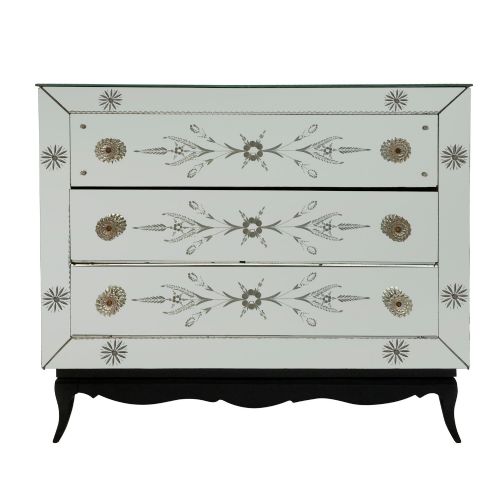
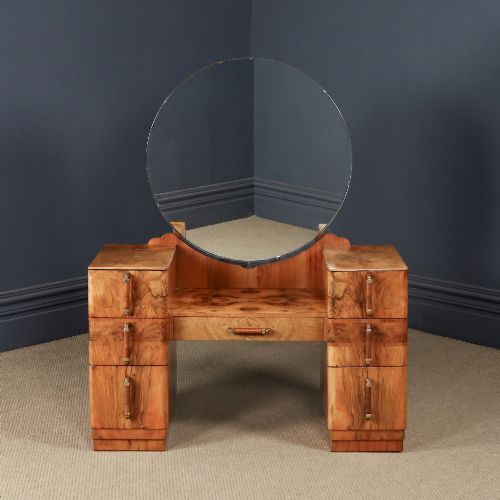
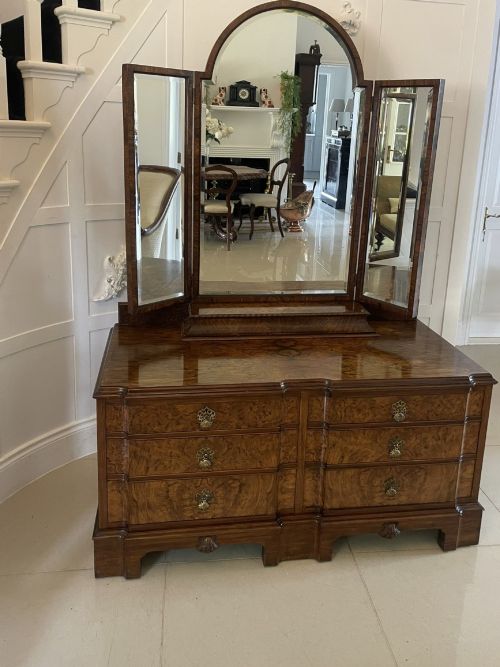
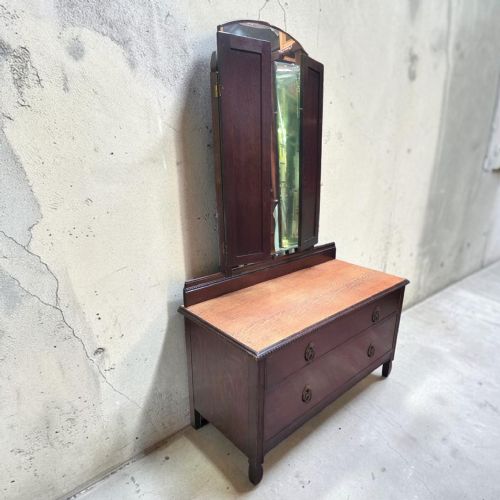

Antique Bedroom Vanity Chest
An antique bedroom vanity chest brings timber grain and fitted mirrors into a domestic sleeping space.
Antique Bedroom Vanity Chest
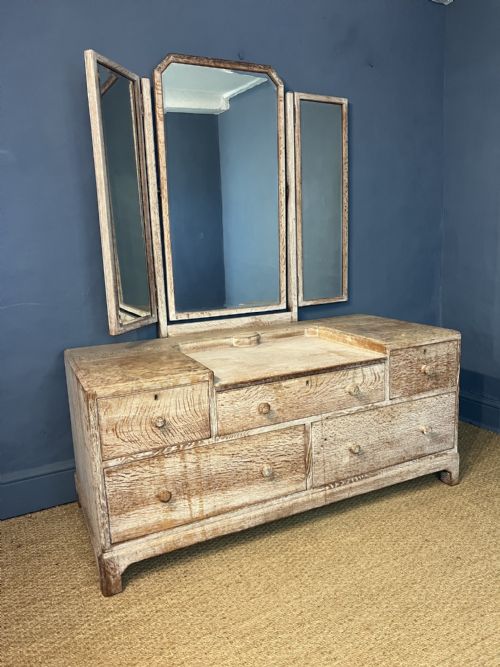
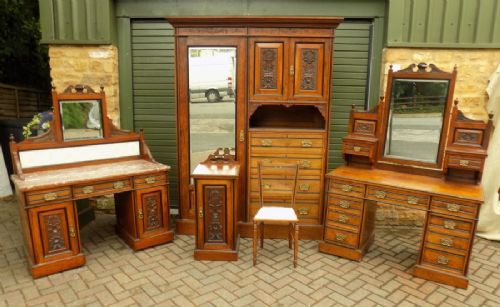
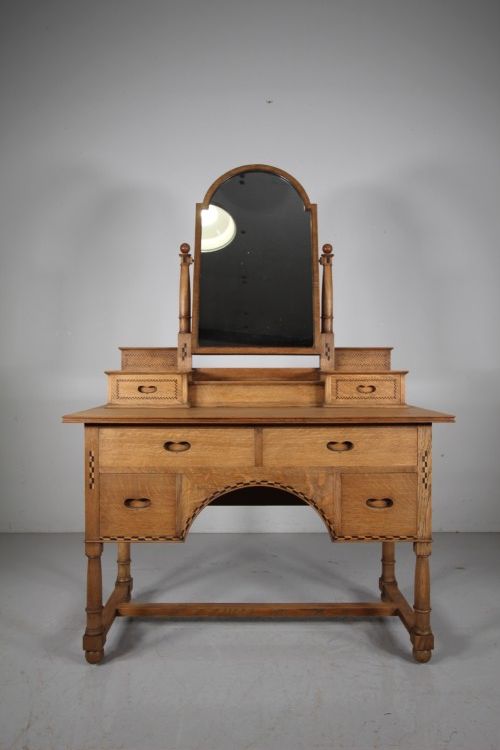
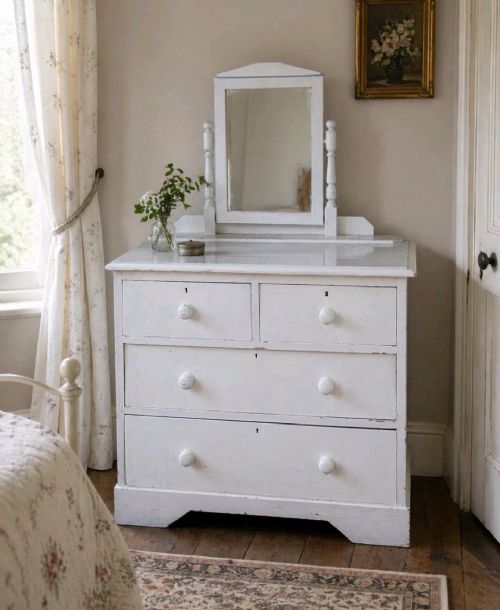
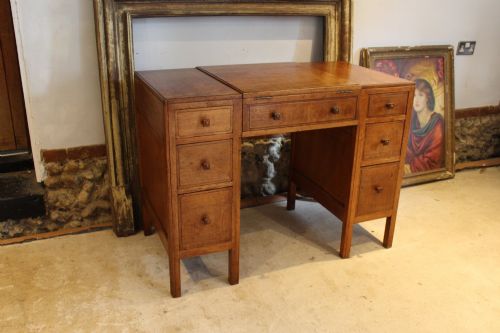
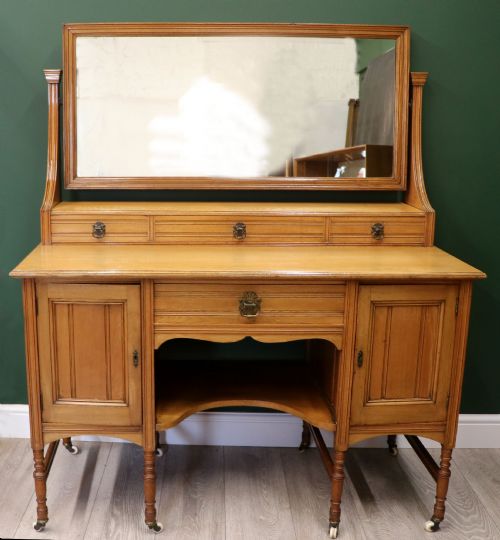
An antique bedroom vanity chest takes the form of a dressing table, dressing chest, or washstand designed for personal grooming and bedroom storage. You will encounter Victorian and Edwardian examples most often on this page, alongside pieces from the 1920s and 1930s.
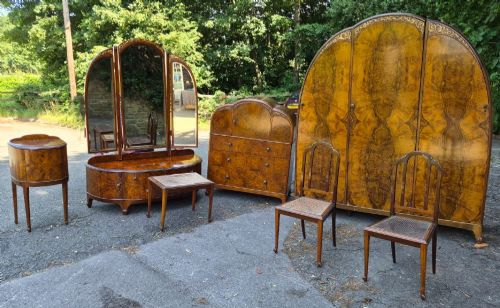
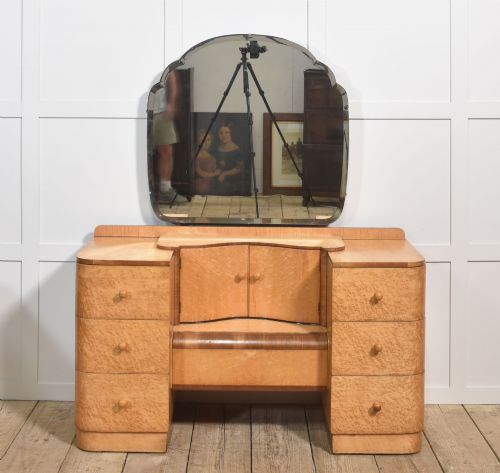
The construction spans Georgian proportion, Arts and Crafts utility, and Art Deco geometry. Makers combined chests of drawers with tilting or fixed mirrors, incorporating pedestals, marble tops, and matching stools.
Materials and construction
Cabinet makers utilised solid and veneered timbers including mahogany, oak, walnut, burr walnut, pine, satinwood, and maple. Surfaces often display figured grain patterns, marquetry inlay, or limed and painted finishes.
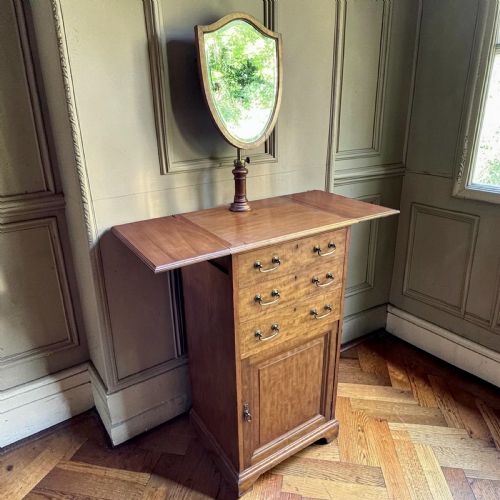
Mirrored glass forms an integral component, set in adjustable shields, triple frames, or oval surrounds. Brass hardware, glass elements, and occasionally French marble tops complete the structure.
Listings feature oak, walnut, mahogany, pine, and satinwood alongside marble and brass.
Judging the standard
Quality rests upon the selection of timber figures, such as burr walnut or figured mahogany, and the precision of the cabinet work. Maker attribution through stamps, labels, or distinctive workshop design separates standard production from superior output.
The integrity of the original mirror glass, supporting framework, and hardware dictates the sustained character of the piece. Matching suites and balanced proportions elevate certain examples above simpler single items.
Frank Taylor & Co.·Heal & Sons·Shapland and Petter·Maurice Adams·Wright & Hunter of Belfast·Edwards & Roberts·Gillows
The Antique Bedroom Vanity Chest Glossary
- Burr walnut
- A timber harvested from walnut tree growths, yielding intricate swirling grain patterns. Cabinet makers prized this veneer for principal drawer fronts and dressing table tops.
- Pedestal dressing table
- A form featuring banks of drawers flanking a central kneehole space. These often incorporate flanking mirrors and substantial upper frameworks.
- Washstand
- A bedroom piece traditionally holding a basin, frequently fitted with a marble top. Examples on record bridge the gap between washing furniture and general vanity storage.
- Limed oak
- A finish applied to oak timber to produce a pale, pickled appearance. This treatment gained popularity during the Arts and Crafts and 1930s modernist movements.
- Duchess dressing table
- A large Victorian form incorporating a central swing mirror above a small trinket drawer and deeper flanking drawers. These pieces rely on elaborate scrollwork and walnut construction.
Antique Bedroom Vanity Chest: Frequently Asked Questions
How do I identify an Edwardian dressing table?
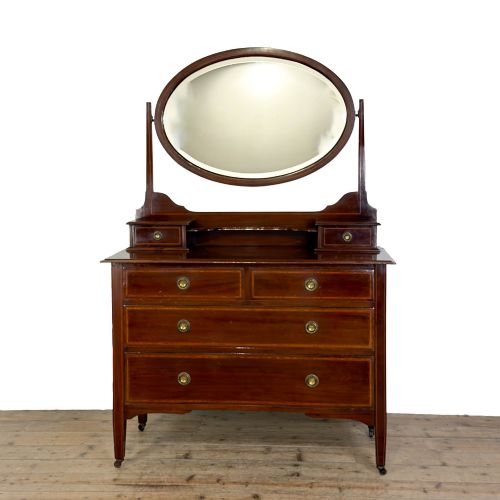
Edwardian pieces frequently utilise mahogany or pine with lighter inlay work, supporting adjustable shield or oval mirrors. Their construction reflects the domestic scale of the early twentieth century.
They often match larger bedroom suites or stand alone with simple bracket feet and brass handles.
What distinguishes Art Deco vanity chests?
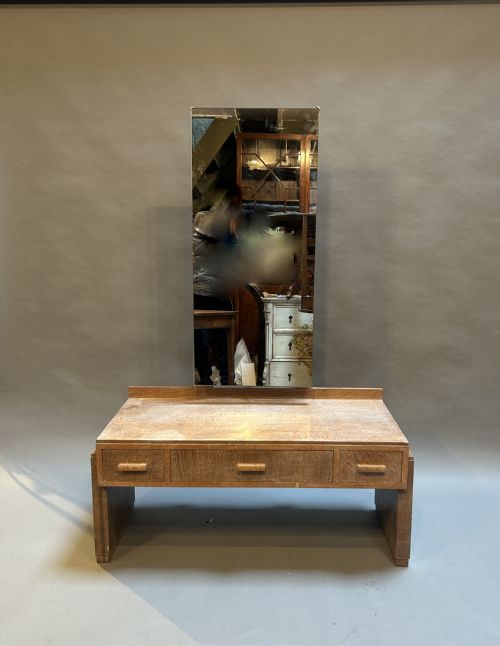
Art Deco examples feature bold geometric forms, figured burr walnut or maple veneers, and integrated mirror plates. Makers like Heal and Maurice Adams championed these streamlined shapes during the 1920s and 1930s.
They rely on clean architectural lines rather than applied period carving.
How were marble topped washstands used?
Washstands provided a durable surface for ceramic basins and ewers before plumbed bathrooms became standard. The marble top offered water resistance during daily ablutions.
Later adaptations often repurpose these sturdy frames as general vanity or hallway surfaces.
Are mirrors original to these chests?
Many pieces retain their original bevelled glass mirror plates, secured within tilting wooden frames or fixed uprights. Replacement glass does occur due to the fragility of antique mirrors.
Original mirror silvering often displays foxing or spotting, which indicates age.