



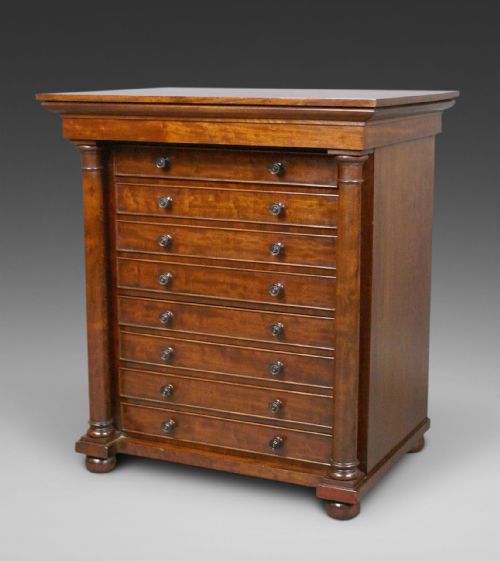
Mahogany Jewellery Cabinet Desk
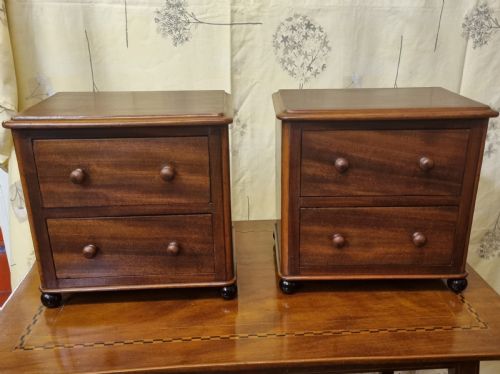
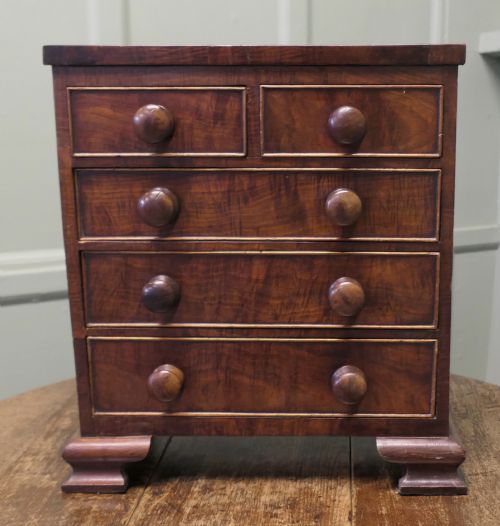
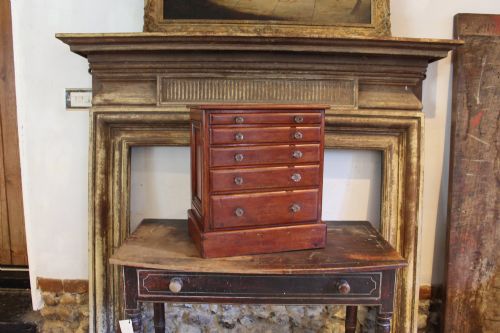
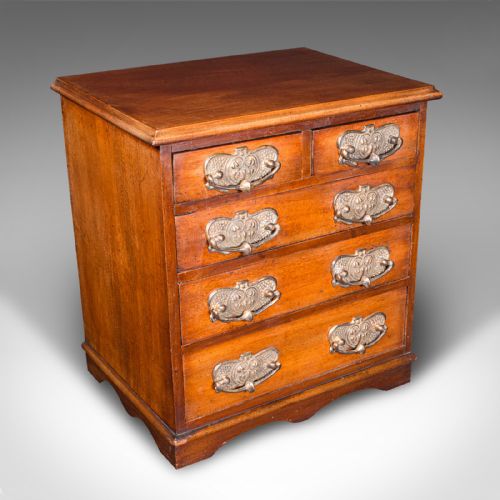
These mahogany jewellery cabinet desk pieces are miniature chests and tabletops built to hold small valuables, offering centuries of timber craftsmanship in portable forms.
Mahogany Jewellery Cabinet Desk
A mahogany jewellery cabinet desk brings together miniature chests of drawers, tabletop chests, and small dressing tables designed for intimate storage. These items serve as compact containers for trinkets, letters, or specimens, shrinking the proportions of full-sized domestic furniture into portable formats.
The pieces encountered on this page span the Georgian and Victorian eras, alongside specific dates from the eighteenth and nineteenth centuries. Buyers frequently meet diminutive chests and apprentice pieces that replicate larger case furniture with surprising fidelity.
Makers such as Edwards & Roberts appear alongside unsigned examples, reflecting both bespoke cabinet-making workshops and vernacular production. Each item presents a scaled-down architectural presence tailored for the desktop or dressing table.
Materials and construction
Construction relies primarily on solid mahogany and mahogany veneers, often paired with secondary woods like oak. Cabinet-makers shaped these dense hardwoods to withstand daily handling while maintaining sharp, clean drawer profiles.
Decorative detailing incorporates contrasting elements such as boxwood, satinwood inlay, and brass handles. Glass and bone appear in specific hardware or interior fittings, adding tactile variety to the miniature drawer fronts.
Some miniature drawers are so tiny they could probably only store a very determined mouse's collection of postage stamps.
Distinctions in quality
Quality rests upon the precision of the drawer dovetailing and the crispness of the timber's grain orientation. Superior examples display carefully selected mahogany veneers that wrap evenly around the carcase without interruption.
The refinement of secondary embellishments, such as inlaid satinwood stringing or finely cast brass pulls, separates standard workshop production from signed maker pieces. Proportional accuracy to full-scale furniture also dictates the overall success of the miniature form.
Edwards & Roberts
The Mahogany Jewellery Cabinet Desk Glossary
- Apprentice piece
- A small-scale item demonstrating a craftsman's skill to attain master status within a guild. These objects typically replicate standard furniture forms with precise miniature construction.
- Marquetry
- Decorative veneer work created by fitting together small pieces of different coloured woods to form pictorial designs. On these cabinets, satinwood and boxwood frequently form geometric or floral patterns.
- Carcase
- The main structural body or framework of a piece of furniture before drawers and doors are fitted. In mahogany chests, the carcase provides the solid foundation for veneered surfaces.
- Dovetail
- A joint formed by interlocking wedge-shaped fingers, prized for its tensile strength in drawer construction. Fine examples show tight, hand-cut pins that secure the corners indefinitely.
Mahogany Jewellery Cabinet Desk: Frequently Asked Questions
How were these miniature chests used?
Historically, owners utilised these small cabinets to keep jewellery, letters, or collection items secure and organised. Their portable nature allowed individuals to move their most prized possessions between rooms or residences easily.
They also served as demonstration pieces for woodworkers showcasing their technical abilities to potential clients or guild examiners.
How do I identify Georgian pieces?
Georgian examples, dating from the eighteenth century, often feature simpler, more robust proportions with understated timber grain and classic bracket feet. The construction methods rely on hand-cut joinery and traditional timber preparation specific to that era.
Examining the secondary woods, such as oak drawer linings, helps confirm the earlier manufacturing period compared to later nineteenth-century items.
How do I care for mahogany surfaces?
Maintain mahogany by keeping the timber away from direct sunlight and sudden changes in room temperature, which can dry out the wood. Dust the surface regularly with a soft, dry cloth to prevent accumulation in carved details and inlay.
Occasional application of appropriate natural wax feeds the timber and preserves the historical finish without building up heavy chemical layers.