

Edwardian Inlaid Drawers
Edwardian inlaid drawers bring refined marquetry and proportion to bedroom storage.
Edwardian Inlaid Drawers
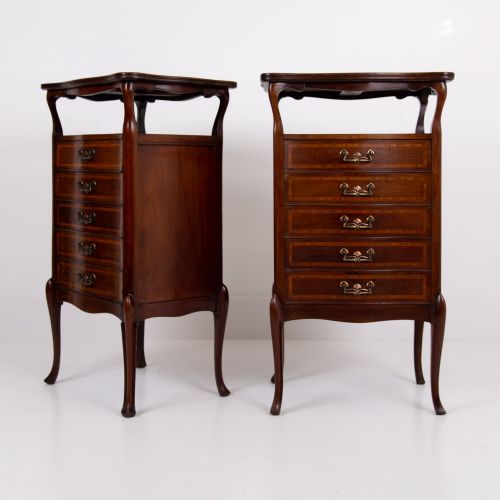
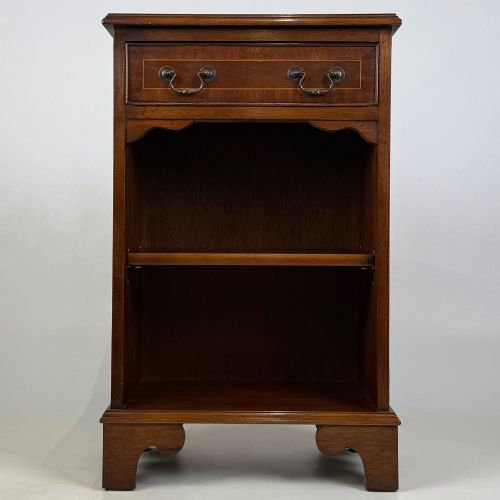
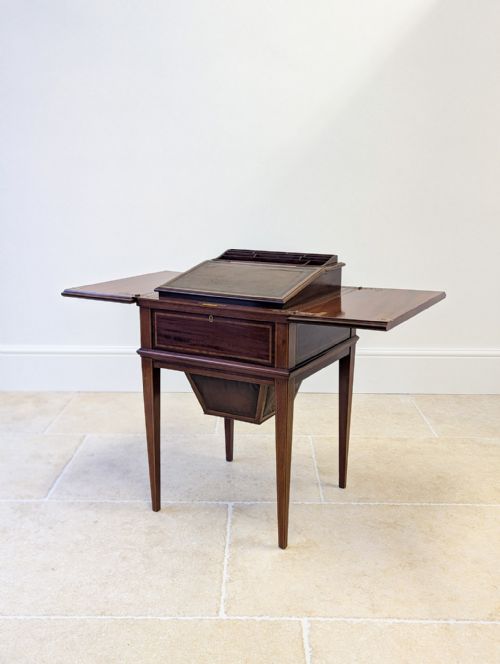
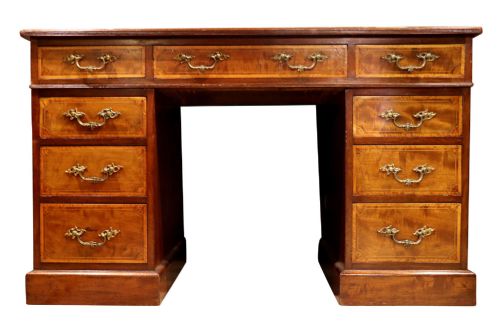
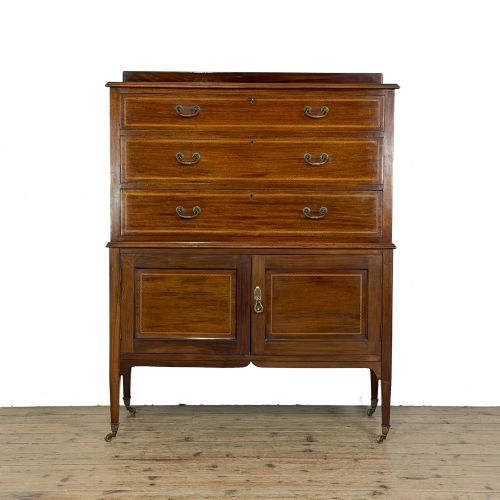
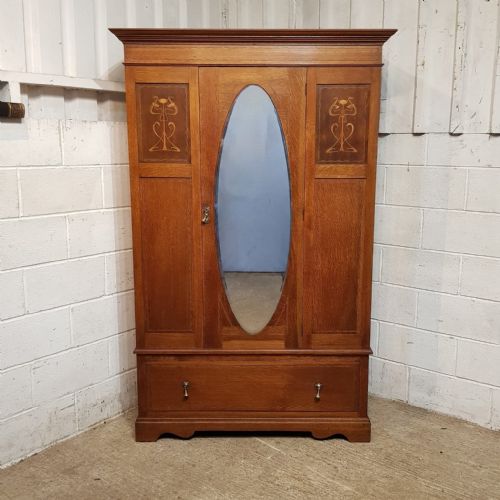
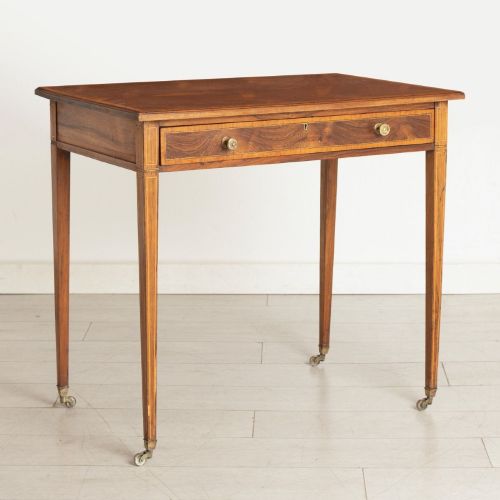
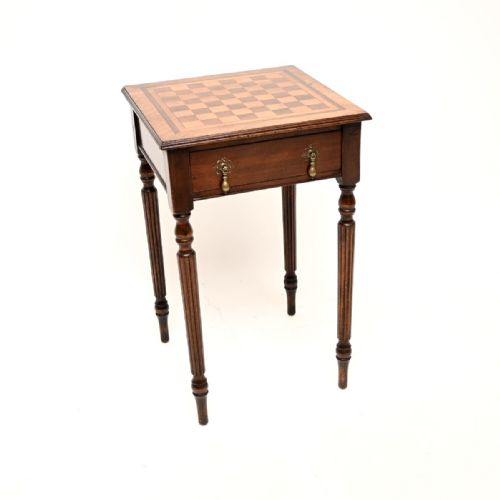
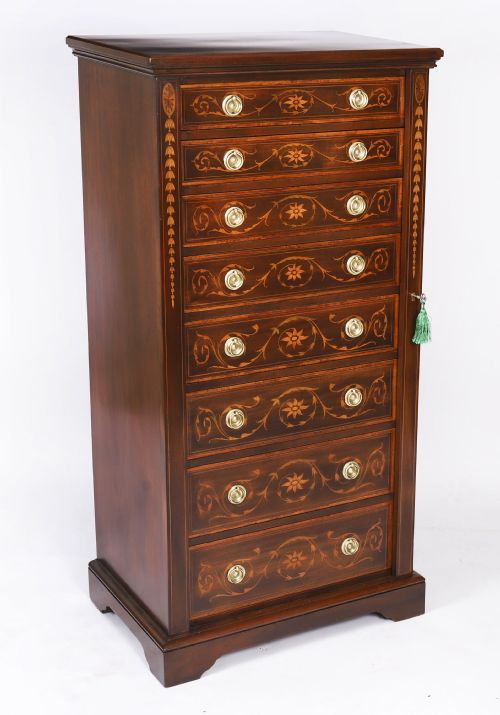
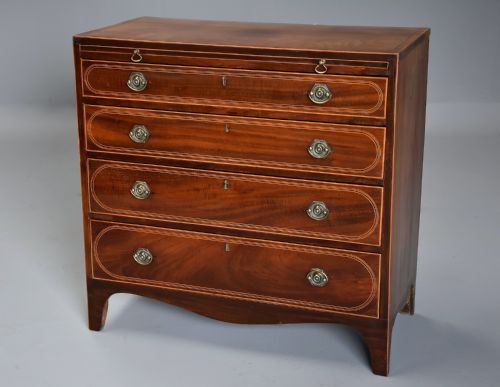
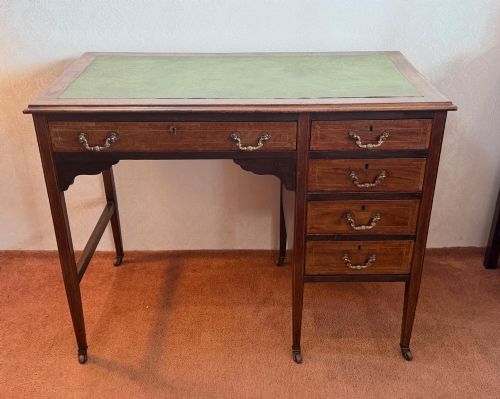
When searching for edwardian inlaid drawers, collectors encounter pieces primarily originating from the Edwardian period and the early twentieth century. The selection ranges from compact bow-front chests and tallboys to multi-drawer pedestal cabinets and writing furniture.
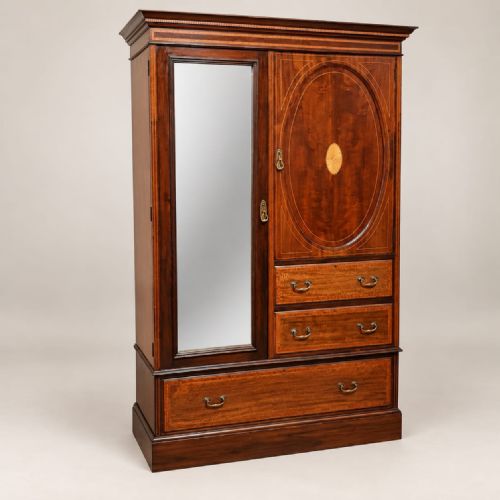
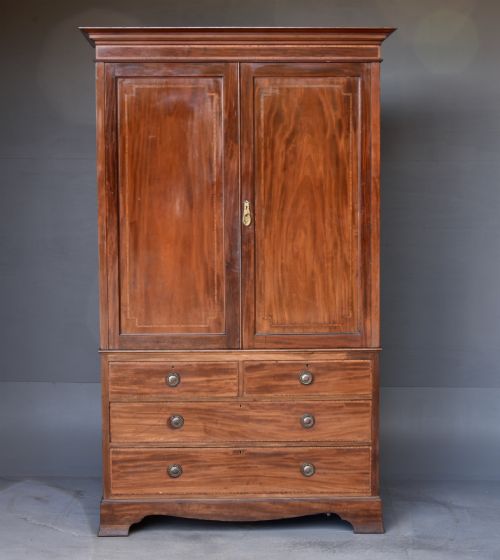
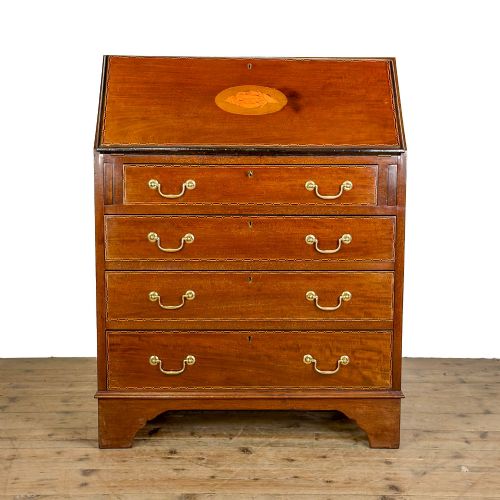
Mahogany forms the principal body of these pieces, frequently enhanced with contrasting satinwood, boxwood, and ebony stringing or floral motifs. The style leans heavily towards Sheraton Revival elegance, reflecting eighteenth-century grace adapted for Edwardian interiors.
How they were made
Cabinetmakers utilised solid mahogany and rich flame mahogany veneers applied to sturdy oak or pine carcases. Drawer linings typically consist of softwoods like deal or oak, joined with hand-cut dovetails that indicate traditional workshop methods.
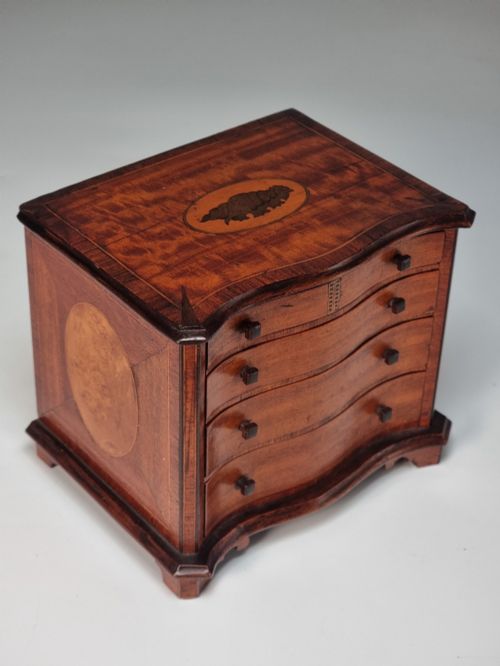
Inlay work relied on precise hand-cut stringing, banding, and pictorial veneers of satinwood and boxwood set flush into the timber surface. Brass drop handles, oval backplates, and occasionally original locks completed the construction.
Certain miniature chests were built as apprentice masterpieces or delicate travelling writing cabinets.
What varies in quality
The distinction between standard commercial output and superior craftsmanship rests in the depth of the timbers and the crispness of the marquetry. Finer examples display symmetrical flame mahogany veneers and intricate, multi-timber boxwood and satinwood inlay without lifting or gaps.
Maker attribution elevates certain pieces, with workshops such as Maple and Co, Edwards and Roberts, and J Shoolbred producing higher specifications of hardware and secondary woods. Original drawer pulls, smooth running actions, and intact mirrored matching pieces further separate exceptional survivals from basic utility furniture.
maples & co·Edwards & Roberts·J Shoolbred·Druce & Co·A. F. Lloyd, Bideford·Waring
The Edwardian Inlaid Drawers Glossary
- Marquetry
- Decorative patterns formed by the insertion of small pieces of wood, veneer, or shell into a veneered surface. This technique allows for elaborate floral and symmetrical motifs across drawer fronts.
- Stringing
- Thin lines of contrasting wood inlaid into grooves in the furniture surface. It defines borders and creates geometric framing on drawer panels.
- Tallboy
- A tall chest of drawers, often constructed in two sections with a smaller chest sitting atop a larger base. These pieces maximise vertical storage space.
- Bow front
- A convex curved front facade characteristic of refined case furniture. It softens the geometric lines of standard rectangular chests.
- Wellington chest
- A tall, narrow chest of drawers secured by a hinged vertical locking side bar fastened with a key. This form originated in the nineteenth century and continued into the Edwardian era.
Edwardian Inlaid Drawers: Frequently Asked Questions
How do I identify an Edwardian chest?
Edwardian chests generally feature lighter mahogany timbers, delicate satinwood or boxwood stringing, and Sheraton Revival styling that distinguishes them from heavier Victorian furniture.
Drawer construction typically shows machine-cut or neat hand-cut dovetails alongside oak or deal secondary woods.
Were these drawers used in bedrooms?
Most pieces served as bedroom furniture for storing garments, often paired with matching dressing tables, wardrobes, or washstands.
Smaller variants also functioned as hall chests, writing desks, or music cabinets in reception rooms.
What is satinwood inlay?
Satinwood is a luminous, yellow-toned timber utilised for contrasting panels, fan motifs, and banding against darker mahogany carcases.
Its bright grain provides the characteristic decorative flourish seen on Sheraton Revival pieces.