

Edwardian Hearth Guard
An Edwardian hearth guard protects a room from stray embers while adding polished metal and decorative glass to the fireplace.
Edwardian Hearth Guard
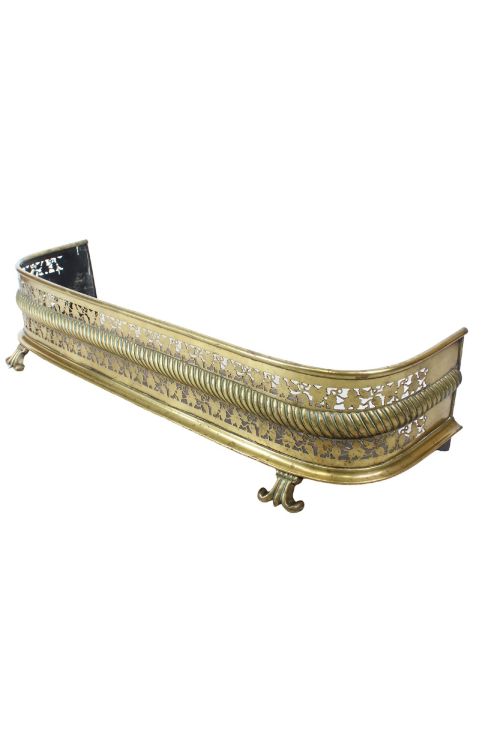
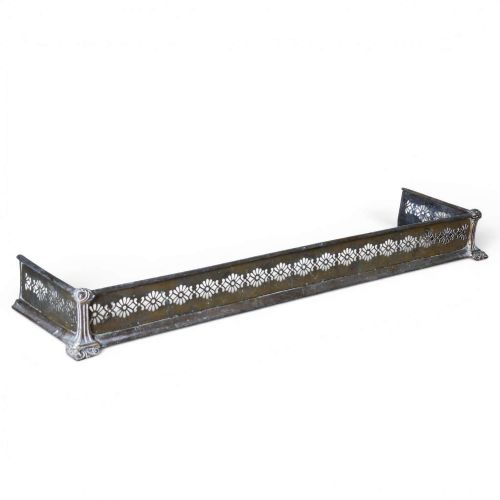
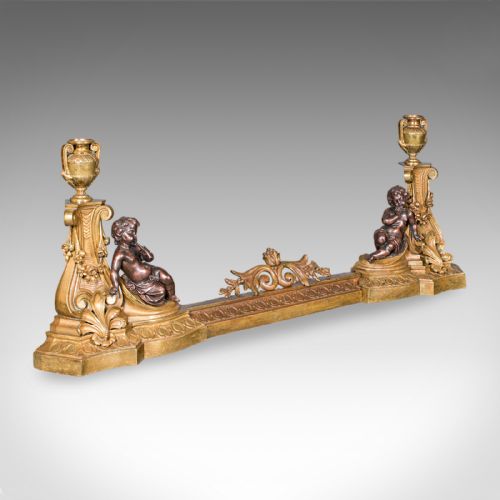
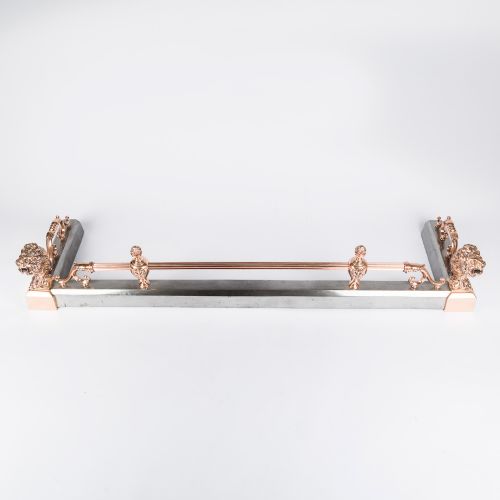
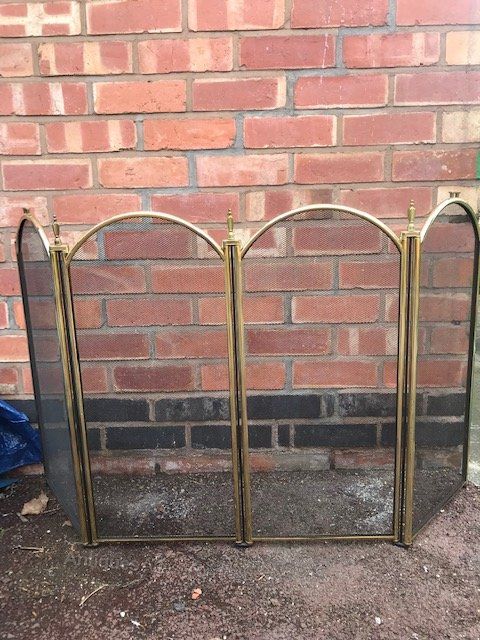
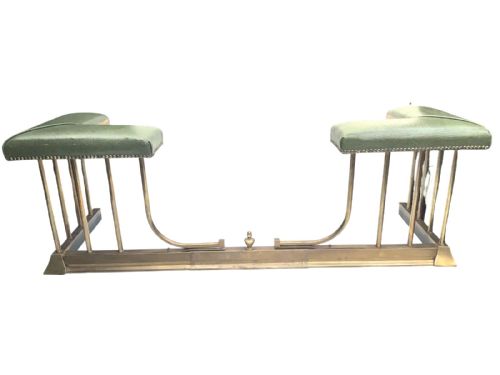
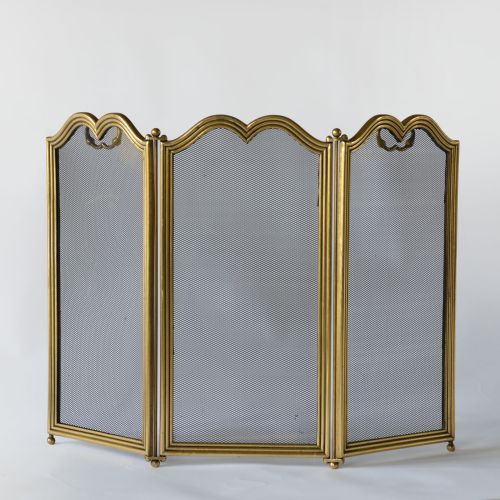
An Edwardian hearth guard sits before the fireplace to catch flying sparks and frame the grate. When you search for an Edwardian hearth guard, you encounter rigid brass spark guards, folding mesh panels, and substantial club fenders.
The pieces on this page span the Victorian, Edwardian, and early twentieth-century periods. These guards originate from domestic settings where open coal fires required physical barriers for safety.
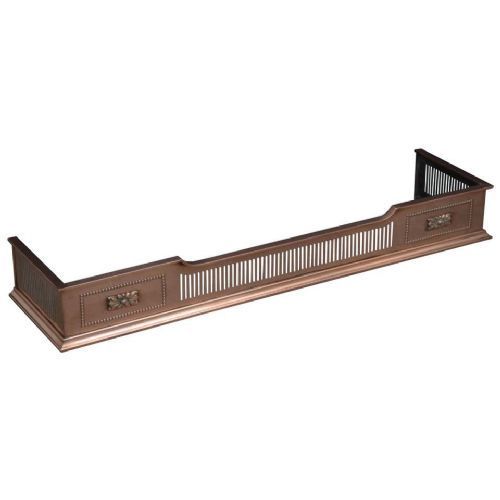
Most examples function as simple folding screens or low perimeter kerbs. A buyer is most likely to meet straightforward brass wire frames alongside solid metal fenders fitted with upholstered corner seats.
Materials and construction methods
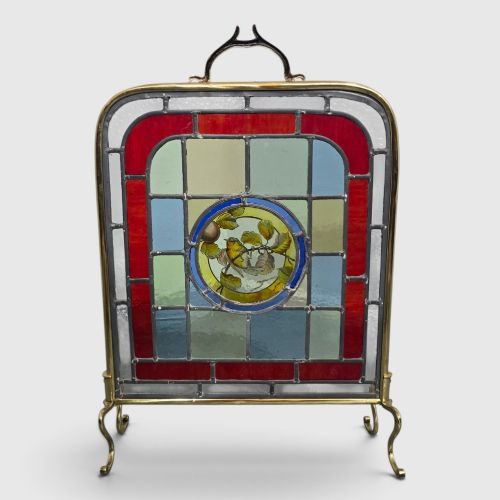
Makers shaped these hearth guards using brass, copper, iron, and steel. Many items combine a polished metal frame with woven wire mesh or stained glass panels.
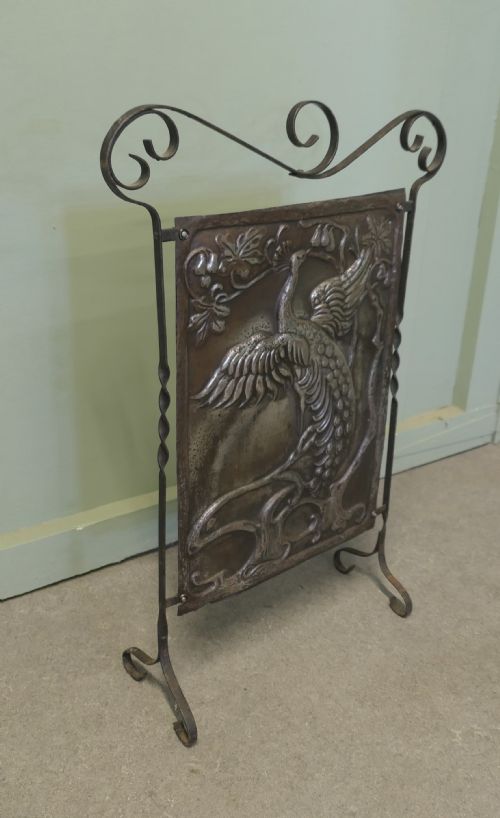
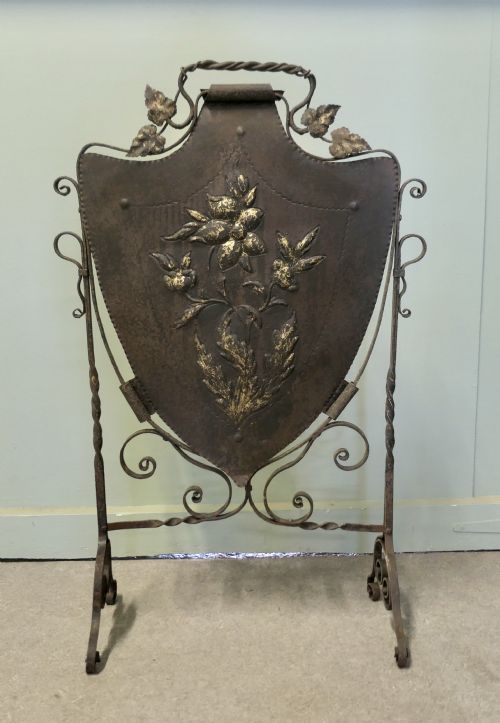
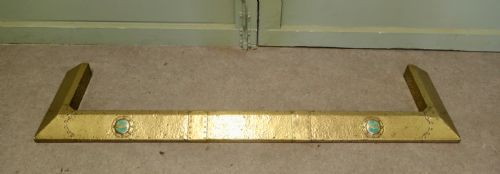
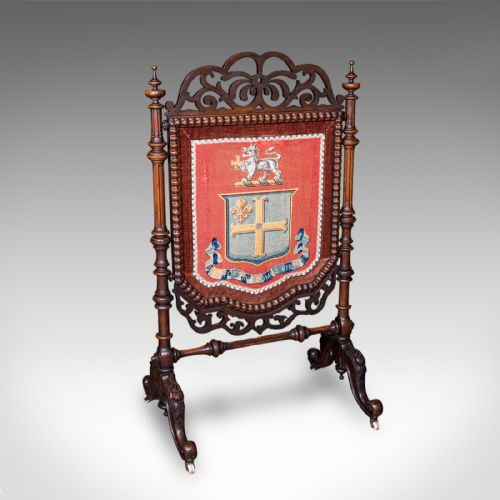
Carpenters and metalworkers integrated wood, walnut, and oak into club fender frames, often topping the low seats with leather. Decoration relies on beaten copper panels, green enamel cabochons, and pierced metalwork.
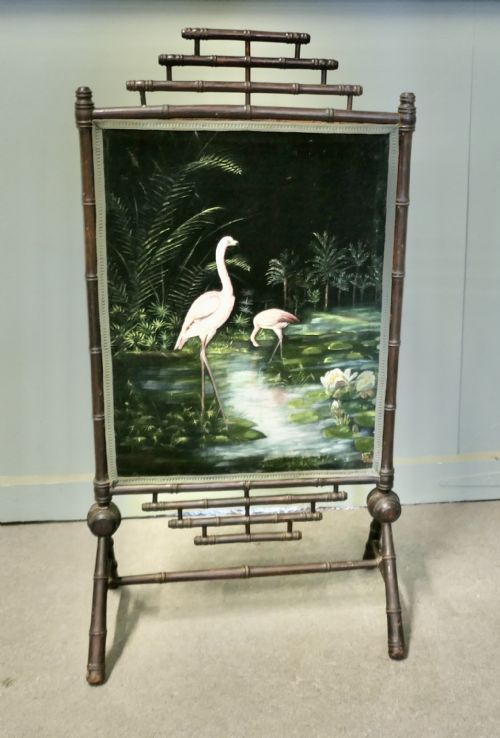
Art Nouveau and Arts and Crafts influences appear in whipped metal stems, floral patera, and peacock motifs. Black lacquer finishes and painted details occasionally contrast with bright polished brass.
Flamingos occasionally stalk across black lacquer screens, proving that Victorian hearthside wildlife extended far beyond domestic cats and dogs.
Judging metalwork and construction
Quality rests in the weight of the metal and the crispness of the piercing or hammering. Heavy brass and thick iron stand firm against daily knocks, whereas lighter frames bend easily under pressure.
The refinement of decorative details separates standard items from exceptional work. Hand-beaten copper panels, secure riveted joints, and intact stained glass elevate a guard far above mass-produced wire mesh.
Upholstery condition and leather quality dictate the appeal of club fenders. Firm padding and neat stitching indicate skilled workshop production rather than hurried assembly.
The Edwardian Hearth Guard Glossary
- Club fender
- A low, U-shaped metal kerb fitted with padded leather seats at the corners. They originated to provide seating close to the fire.
- Spark guard
- A fine metal mesh screen designed to catch flying embers from an open fire. These often feature folding tripartite sections for easy storage.
- Patera
- A circular ornamental bas-relief resembling a classical disk, frequently stamped into brass or copper fenders. These decorative motifs punctuate linear metal borders.
- Cabochon
- An unfaceted gemstone or polished piece of glass set into metalwork. Green enamel cabochons often accent Arts and Crafts copper and brass screens.
- Fender
- A low metal barrier placed around the hearth to keep logs and coal contained. They range from simple flat kerbs to adjustable extending designs.
Edwardian Hearth Guard: Frequently Asked Questions
How do I use a hearth guard?
Place the guard directly in front of the fireplace opening to catch sparks and prevent rolling logs from reaching the floor. Folding versions adjust to fit the width of the hearth.
Club fenders serve a dual purpose as both a safety barrier and low fireside seating. Ensure the guard sits level on the hearth surface before lighting a fire.
What is the difference between a fender and a screen?
A fender forms a low perimeter kerb around the base of the fireplace, sometimes incorporating seats or extending arms. It stays fixed to the floor.
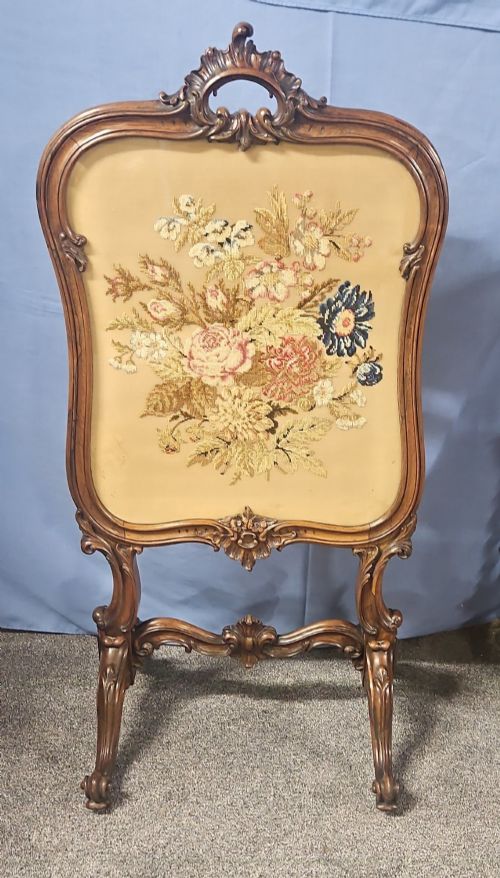
A screen stands upright to block radiant heat and flying embers directly in front of the fire opening. Many screens feature folding panels or carrying handles.
How do I clean brass and copper?
Dust the metal regularly with a soft dry cloth to prevent grime buildup. Avoid harsh abrasive cleaners that strip historic patination from the surface.
If polishing is necessary, use a mild metal cream applied sparingly with a soft cloth. Take care to keep polishes away from stained glass, leather, and painted areas.