
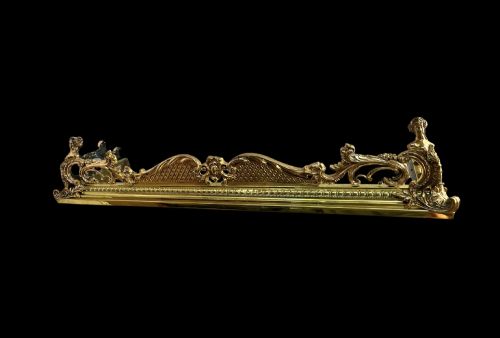
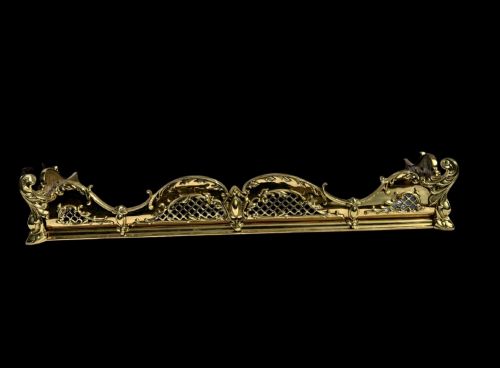
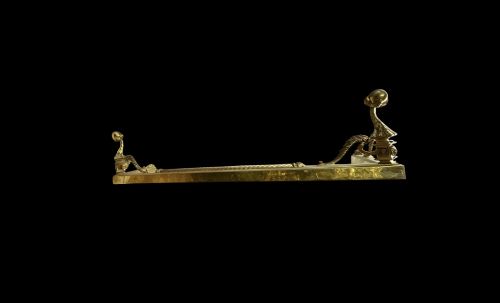


Polished Brass Fire Fender
A polished brass fire fender frames the hearth with a bright metallic gleam, protecting the room from stray embers.
How they were made
Construction relies heavily on combinations of brass, iron, and steel, utilising both cast and sheet metal. Makers formed the structural chassis from heavy iron or steel for stability, then clad or mounted it in polished brass, cast brass, and bronze components.
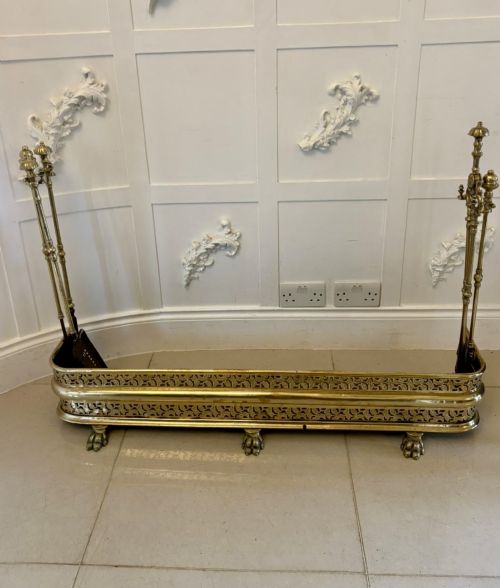
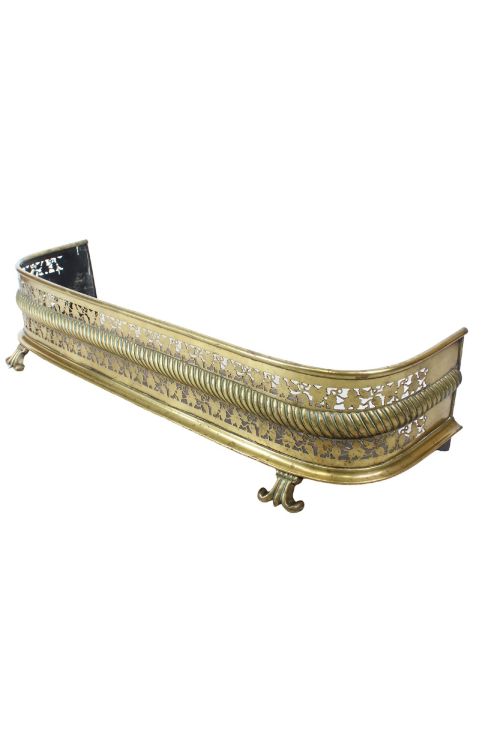
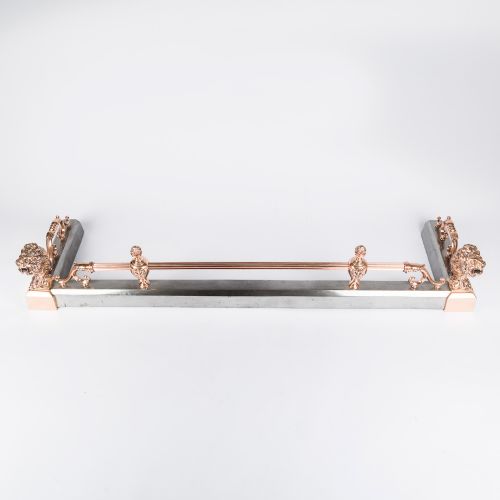
Decorative surfaces display intricate techniques such as piercing, fretwork, and rosette mounting. Pierced brass galleries and scrolled castings required skilled hand-finishing, while extending mechanisms allowed hearth guards to fit varying fireplace widths precisely.
What varies in quality
Quality separates mass-produced hearth accessories from superior examples through the thickness of the metal and the crispness of the casting. Heavier gauge brass and deeply chased or pierced fretwork denote finer production standards.
The integration of secondary materials like steel, bronze, and leather upholstery distinguishes standard guards from high-end pieces. Original matching fire irons or specialised club seating indicate a higher grade of original commissioning.
Listings feature brass combined with iron, steel, bronze, and leather across Victorian, Edwardian, Georgian, and Regency periods.
The Polished Brass Fire Fender Glossary
- Curb fender
- A low metal barrier that sits directly on the floor around the hearth opening. It keeps ash and embers contained within the fireplace.
- Club fender
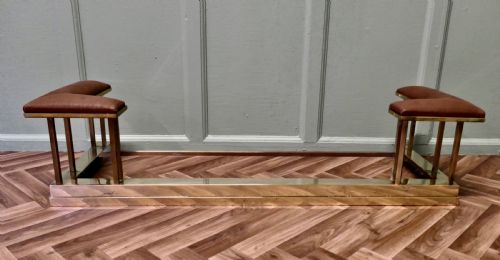
- A heavy hearth guard featuring upholstered leather top rails designed for seating. These provide a comfortable spot close to the fire.
- Pierced brass
- Sheet metal decorated by cutting decorative patterns through the material. This technique lightens the visual weight of the heavy metal frame.
- Fire irons
- Matching tools such as pokers, tongs, and shovels used to tend the hearth. They often accompany period fenders as a complete suite.
- Extending fender
- A design featuring telescopic or sliding sections to adjust the overall width. This allowed standard production models to fit various fireplace dimensions.
Polished Brass Fire Fender: Frequently Asked Questions
How do I measure for a fender?
Measure the width and depth of your hearth space directly on the floor against the fireplace surround. Allow sufficient clearance for the inner dimensions to sit comfortably around the hearth stone.
Check whether your chosen piece is a fixed size or an extending model. Extending versions offer flexibility if your hearth dimensions do not match standard fixed lengths.
Can I sit on a club fender?
Club fenders featuring leather-upholstered top rails were historically constructed to provide extra seating close to the warmth of the fire. The sturdy iron and brass internal frames support weight securely.
Ensure the leather upholstery and internal padding remain stable if you intend to use the top rails for regular seating. Many period examples retain their original leather pads.
How do I clean polished brass?
Maintain polished brass surfaces using a soft cloth and a gentle metal cleaner formulated for brass. Avoid abrasive pads that can scratch the polished finish or wear down fine engraved details.
Preserve any mellow historic patina by dusting regularly rather than aggressive polishing. Excessive cleaning can remove the character accumulated over centuries of use.
Are fire irons always included?
Some listings include matching sets of fire irons, pokers, or companion suites designed to complement the specific fender style. Check individual item descriptions to confirm whether tools are part of the sale.
Fenders and fire irons of the same period share design motifs such as claw and ball feet or brass rosettes. Collecting matching suites was common practice in nineteenth-century interiors.