

Edwardian Hallway Stick Rack
These edwardian hallway stick rack options bring order to boots and umbrellas, offering solid brass and oak craftsmanship for daily use in a busy entrance.
Edwardian Hallway Stick Rack
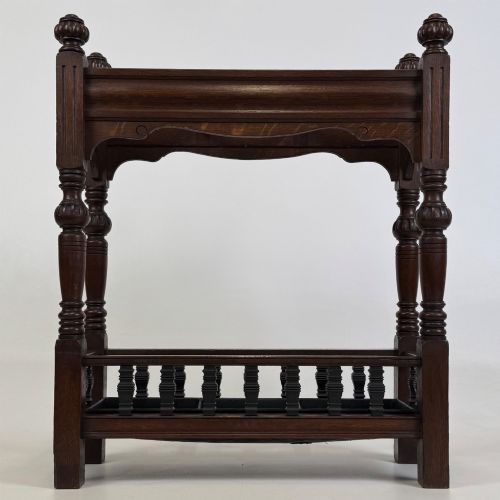
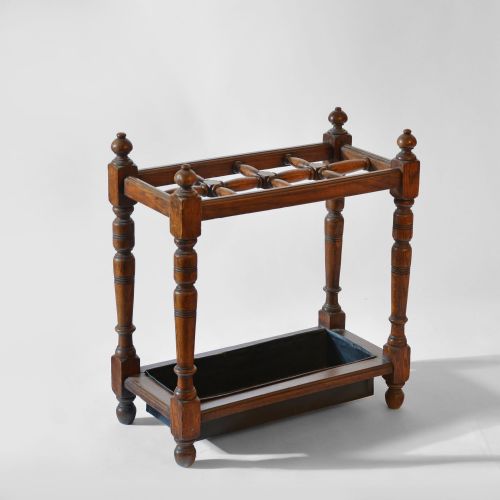
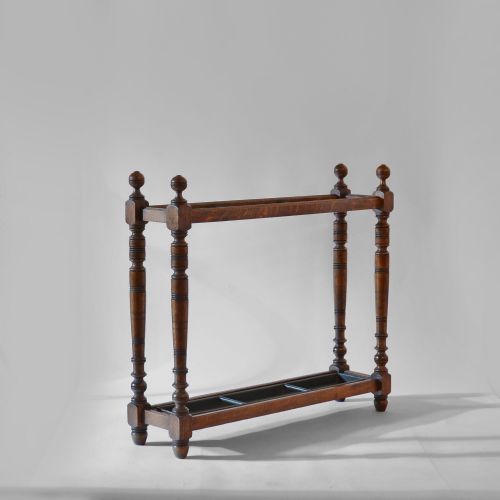
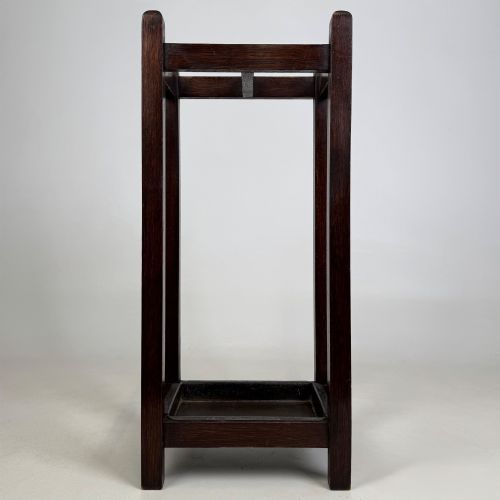
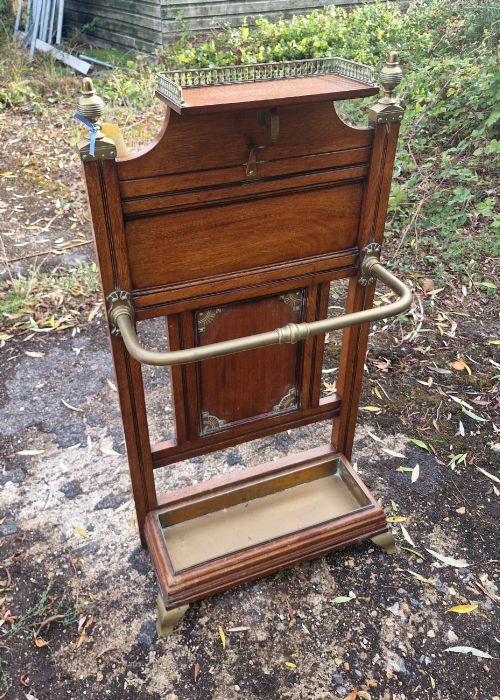
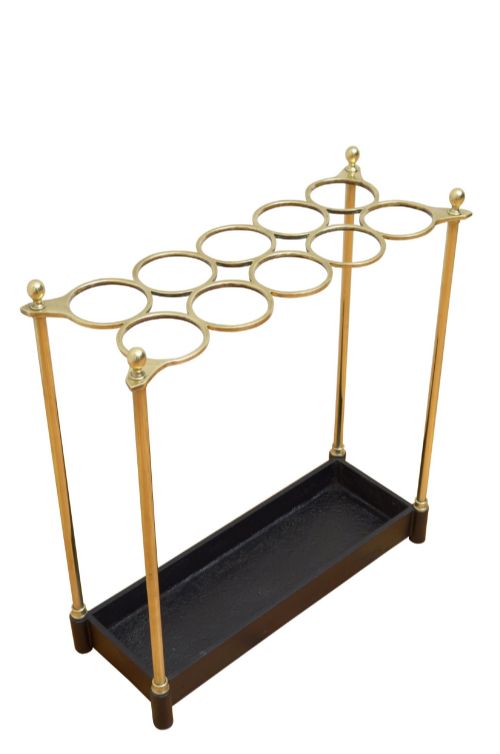
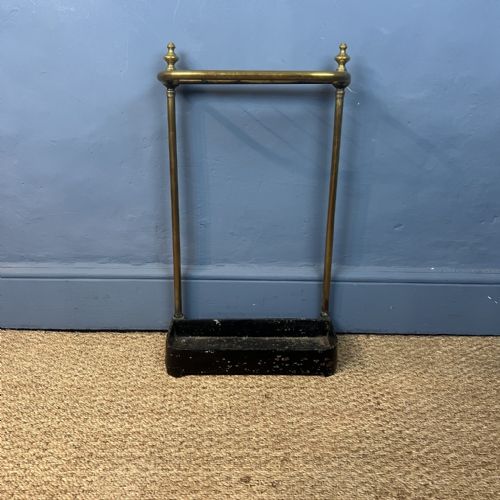
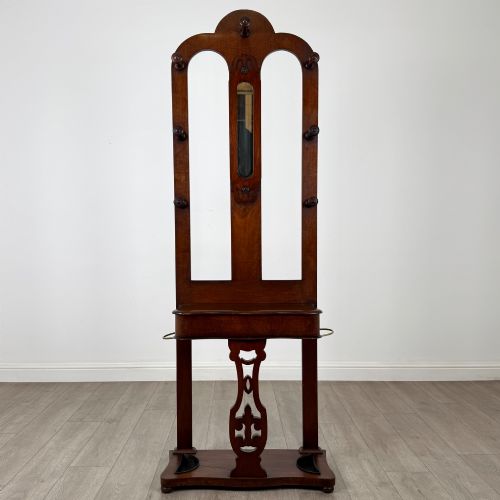
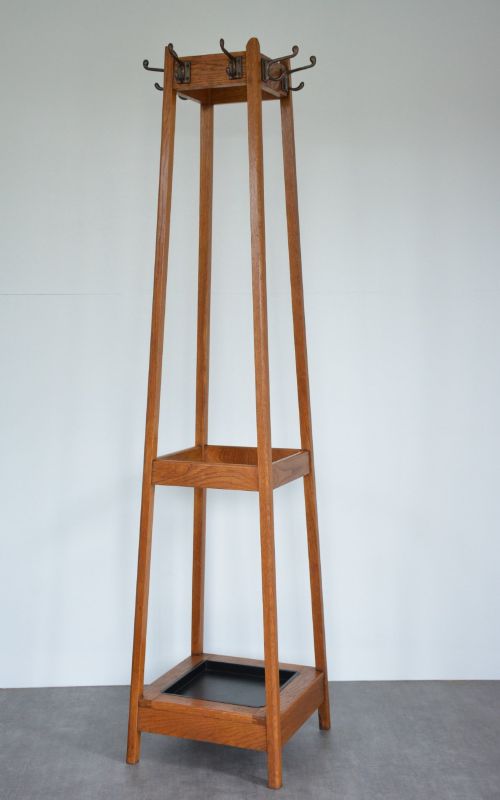
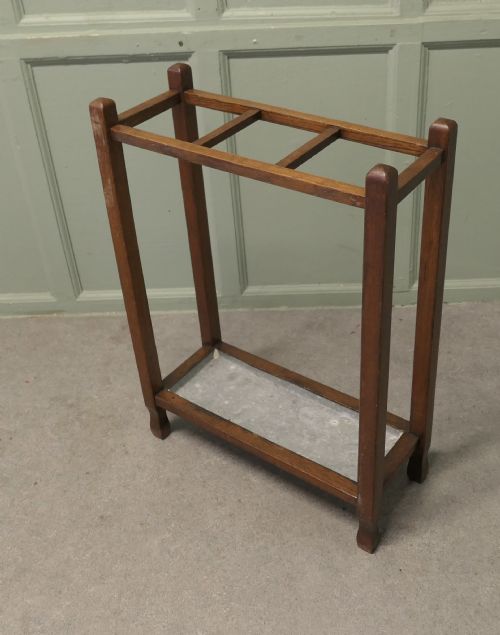
When searching for an edwardian hallway stick rack, buyers encounter functional hall furniture designed to hold walking sticks, canes and umbrellas. These pieces stem from the Edwardian and Victorian eras, often taking the form of dedicated umbrella stands, hall stands or combined coat racks.
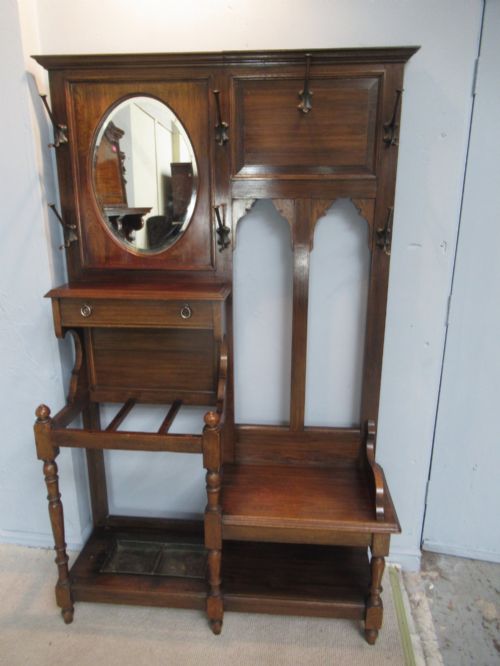
Origins stretch across the late nineteenth and early twentieth centuries, reflecting the domestic habits of period household entrances. Buyers find both compact small stands and larger architectural hall pieces fitted with mirror panels and hat hooks.
Materials and construction methods
The construction relies heavily on solid oak, mahogany, cast iron and brass. Wood sections are joined with traditional cabinet-making techniques, while metal components utilise casting and riveting to support heavy walking canes and damp umbrellas.
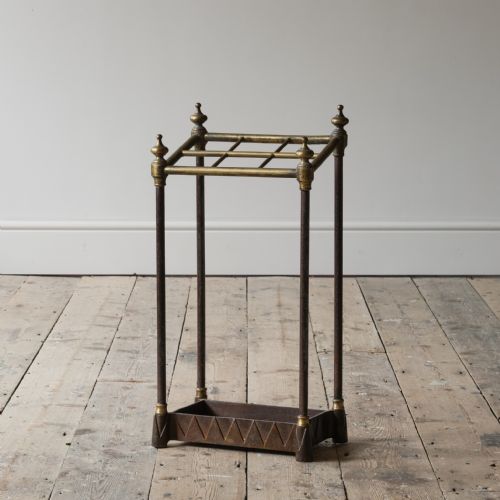
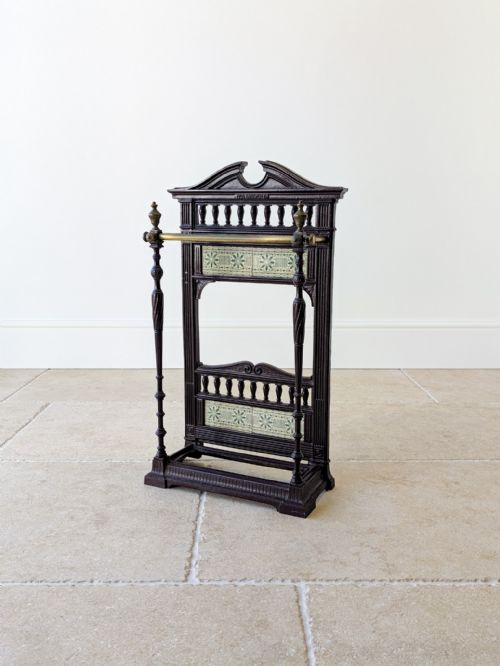
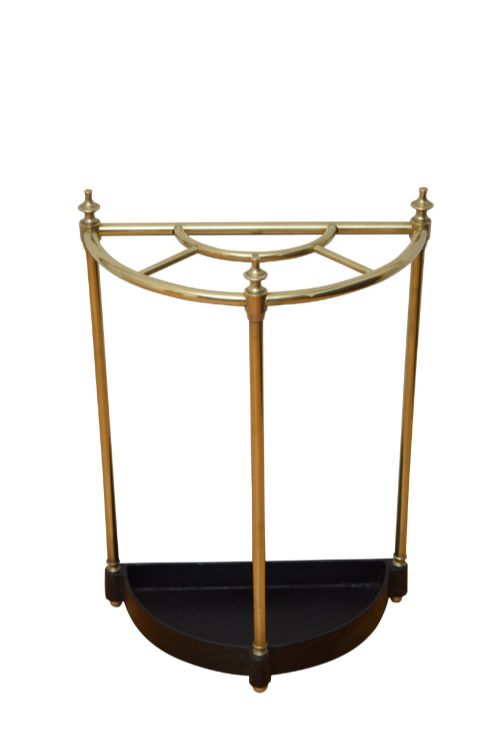
Many brass and cast iron examples incorporate decorative ball finials, dog tooth trays and removable metal drip trays to catch water. Timber frames often showcase carved details, golden oak tones or bamboo structures characteristic of the period style.
Listings feature oak, mahogany, cast iron and brass across Victorian and Edwardian periods.
Distinctions in construction and finish
Quality rests upon the integrity of the materials and the crispness of the casting or joinery. Heavy gauge brass and solid quartersawn oak represent the upper tier of production, whereas thinner sheet metal and composite repairs sit lower in the scale.
Original hardware, such as intact ceramic or brass drip trays and secure finials, elevates a piece significantly. The presence of maker attributions or distinct stylistic movements like Arts and Crafts also separates standard utility items from finer workshop output.
Coalbrookdale·Heals of London·Liberty
The Edwardian Hallway Stick Rack Glossary
- Demi Lune
- A half-moon shape allowing stands to fit snugly against a hallway wall. This profile is particularly common in brass umbrella holders.
- Drip Tray
- A removable metal or ceramic base positioned beneath the rack to catch water from wet umbrellas. These trays protect timber flooring from moisture damage.
- Arts and Crafts
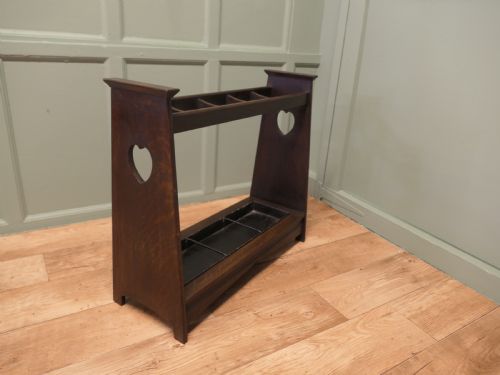
- A design movement favouring honest construction, simple forms and visible craft traditions. Oak stick stands from this genre often display plain pegged joints.
- Aesthetic Movement
- A late nineteenth-century style prioritising visual beauty over narrative function. Pieces from this tradition utilise bamboo and stylised brass fittings.
- Finial
- A decorative terminal ornament finishing the top of a post or frame. Brass stands frequently utilise ball finials on their upright supports.
Edwardian Hallway Stick Rack: Frequently Asked Questions
Where should an edwardian hallway stick rack go?
These pieces belong immediately inside the main entrance of a house, where visitors arrive and shed outerwear. Their narrow footprint allows them to occupy tight corridors without blocking passage.
Positioning them near the front door also ensures wet umbrellas and walking canes find an immediate home upon entry.
How do I protect floors from wet umbrellas?
Most period examples include an integrated metal or ceramic drip tray positioned at the base. These trays catch runoff water before it reaches timber floorboards.
Buyers should check that the original tray remains present inside the lower frame to prevent moisture damage to hall carpets.
What is the difference between an umbrella stand and a hall stand?
An umbrella stand functions solely as a holder for sticks and canes, usually featuring a compact footprint. A hall stand is a larger architectural piece combining stick holders with coat hooks, hat shelves and occasionally a mirror.
Both items served the same domestic purpose in period hallways but cater to different spatial requirements.
How do I date an antique stick stand?
Dating relies on material combinations, construction marks and stylistic movements visible in the frame. For instance, bamboo frames and Aesthetic motifs typically point to the late nineteenth century, while golden oak and specific brass casting styles align with Edwardian production.
Comparing the hardware and timber finishes against documented pieces helps narrow the decade of manufacture.