


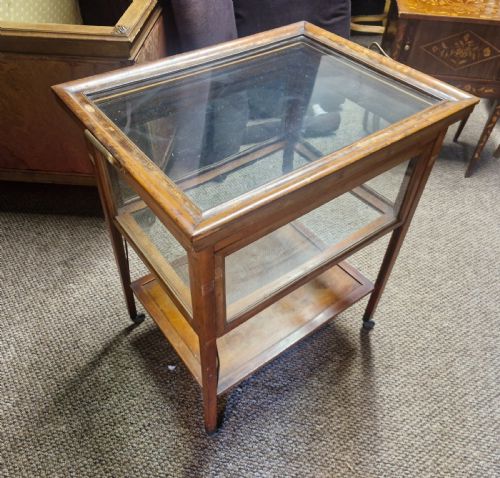


Edwardian Glass Display Table
An edwardian glass display table brings elegance to any room by showcasing treasured objects beneath clear glass.
Edwardian Glass Display Table
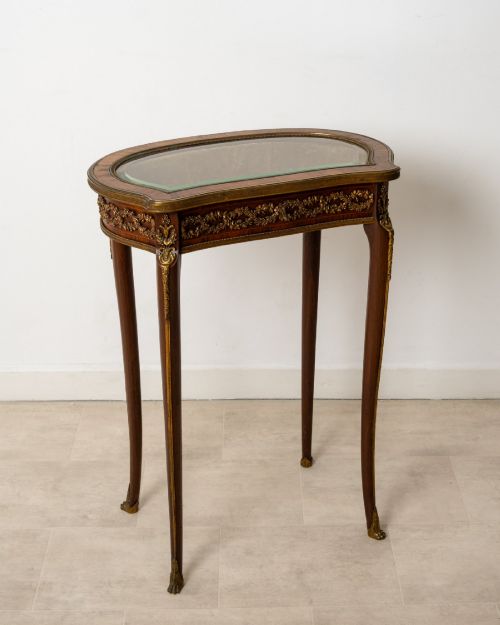
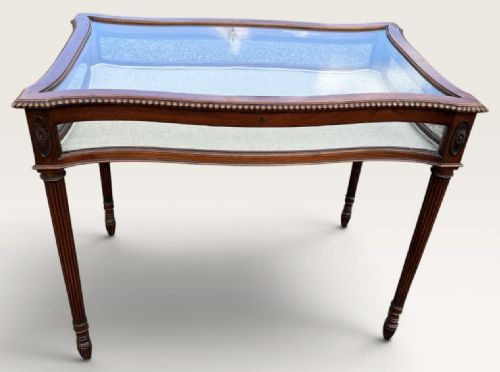
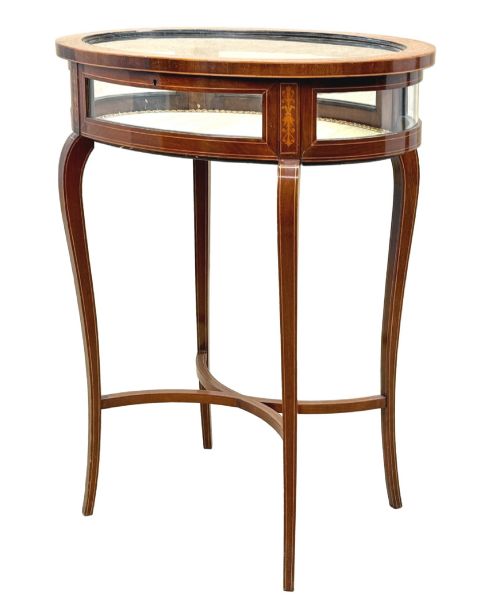
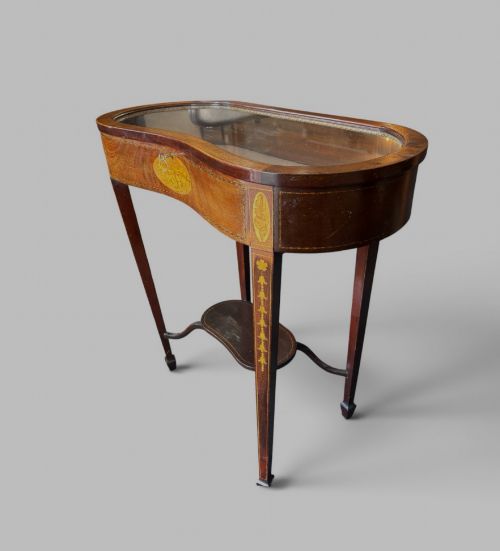
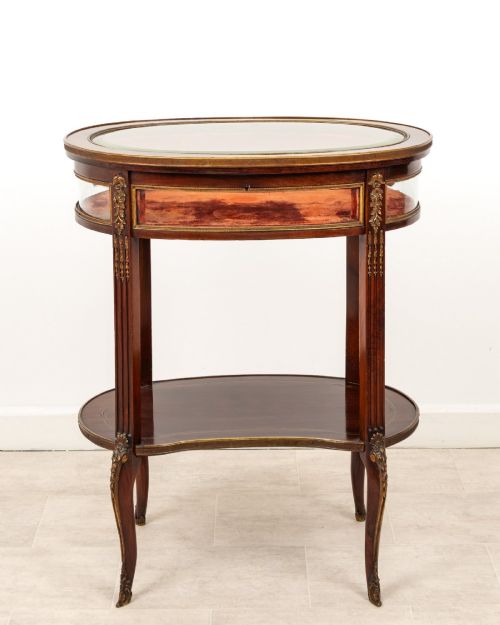
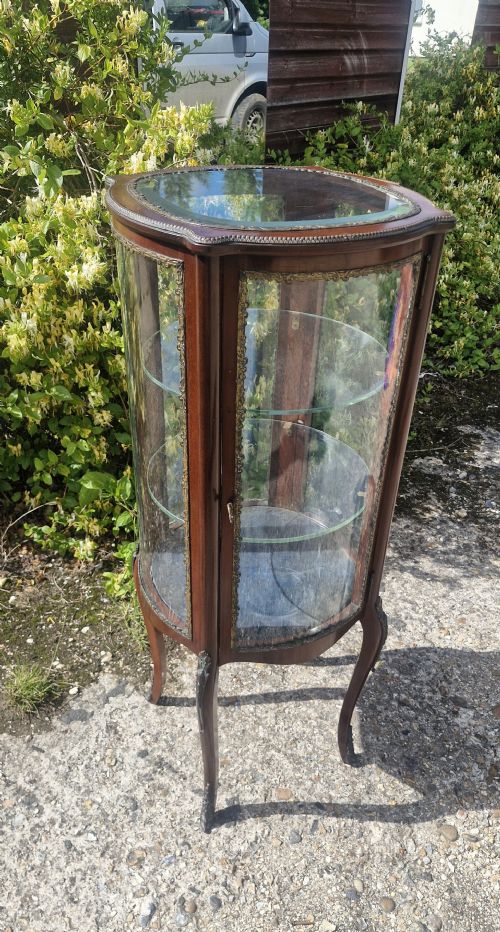
An edwardian glass display table, often called a bijouterie table, is a specialised piece of furniture designed to exhibit small ornaments, jewellery, and collections under a glazed top. These tables combine the utility of an occasional table with the function of a vitrine, allowing owners to view their keepsakes without exposing them to dust.
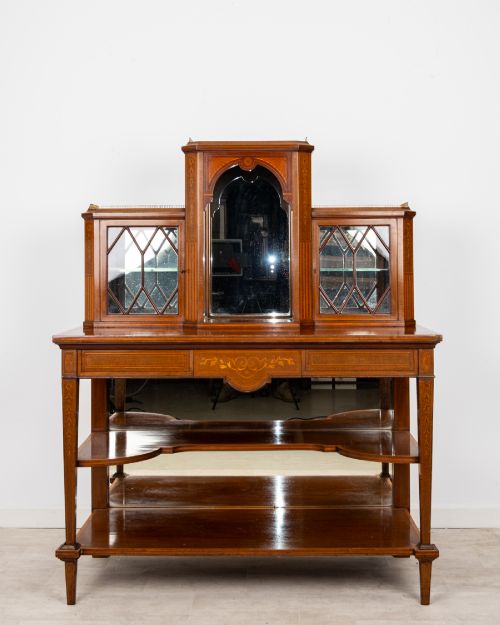
The pieces appearing most frequently on this page date from the Edwardian era and the late nineteenth century, spanning various woods and shapes. Common forms include oval, serpentine, and kidney-shaped tables, alongside occasional cabinet and desk hybrids that incorporate glazed compartments.
Makers of the period drew upon multiple design revivals, producing variations in styles such as Chippendale, Queen Anne, and Sheraton. Buyers encounter both British and French influenced pieces, ranging from simple mahogany frames to elaborate inlaid designs.
How They Were Made
Craftsmen built these tables primarily using mahogany, walnut, rosewood, and satinwood, often applying delicate stringing and marquetry inlay to enhance the timber surfaces. Glazed display compartments typically featured hinged or lifting lids fitted with brass or gilt metal mountings.
Interior display areas were frequently lined with velvet, satin, or other soft fabrics to cushion delicate items placed inside. Structural framing relied on traditional joinery techniques, supporting the weight of glass panels and metal hardware while maintaining slender, elegant legs.
One unexpected table arrived bearing later sign-writing for Breitling watches, hinting at a past life in a jeweller's window.
What Varies in Quality
Quality in an edwardian glass display table rests upon the crispness of the cabinetwork, the selection of timber veneers, and the finesse of any inlaid decoration. Superior examples display tightly fitted joints, well-cast brass mounts, and carefully chosen grains of mahogany or satinwood.
The refinement of the legs and the execution of carved details, whether influenced by French Rococo or English revival styles, set finer pieces apart from simpler utilitarian items. Original fabric linings and smoothly operating glazed lids further distinguish the better examples in the range.
The Edwardian Glass Display Table Glossary
- Bijouterie table
- A specialised display table featuring a glass-topped compartment specifically designed for holding small valuable items and trinkets. These tables became popular during the Victorian and Edwardian periods for domestic display.
- Satinwood
- A pale, dense timber prized for its lustrous grain, frequently utilised for decorative stringing and inlay on mahogany furniture. It gives a bright contrast to darker cabinet woods.
- Ormolu
- Gilded bronze ornamentation applied to furniture mounts, hinges, and feet, commonly seen on French-influenced pieces. The technique adds metallic lustre and decorative relief to the woodwork.
- Vitrine
- A glass-fronted or glass-topped cabinet used for displaying objects of curiosity and fine collections. In the context of tables, it refers to the glazed compartment holding the display items.
- Serpentine
- A gently undulating curved line forming the front or top edge of a piece of furniture. This contour requires skilled carpentry to shape accurately.
Edwardian Glass Display Table: Frequently Asked Questions
What is an edwardian glass display table used for?
These tables serve primarily to exhibit small personal collections, medals, pocket watches, and jewellery within a protected glass enclosure. They allow owners to view delicate items clearly while keeping them safe from handling and dust.
Beyond simple display, they function as occasional tables in sitting rooms and hallways, adding a refined decorative element to an interior space.
How do I care for the fabric lining inside?
The velvet or satin lining inside the glass compartment requires gentle maintenance using a soft brush or low-suction vacuum attachment to remove dust. Avoiding direct sunlight prevents the fabric colours from fading over time.
If the textile requires deeper cleaning, professional textile conservation advice should be sought to protect the surrounding antique wood and glass setting.
Are these tables sturdy enough for daily use?
While structurally sound, most antique display tables were built for lighter domestic duties rather than heavy everyday loads. Their slender legs and glazed hinged tops mean they are best suited for displaying decorative objects rather than supporting heavy items.
Placing them in low-traffic areas of the home helps protect the delicate joinery and glass panels from accidental knocks.
How can I tell an Edwardian piece from a Victorian one?
Edwardian display tables generally exhibit lighter proportions, brighter satinwood inlays, and simpler neoclassical or Sheraton revival lines compared to earlier Victorian examples. Victorian pieces often favour darker burr walnut or heavier carved mahogany.
Examining the construction methods, secondary timbers, and hardware styles helps determine the manufacturing period more precisely.