


Kidney Shaped Display Table
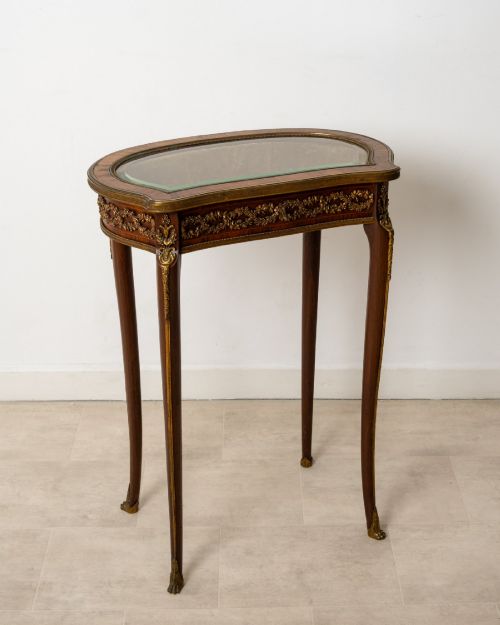
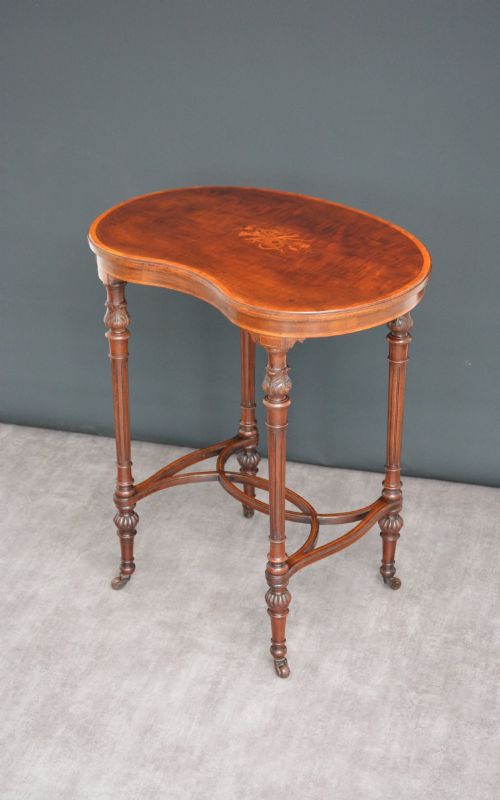
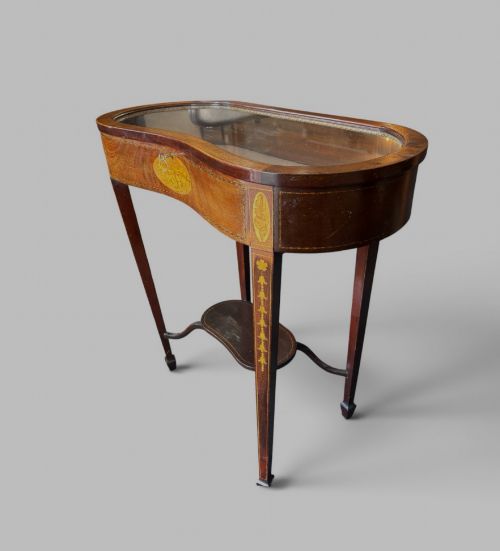
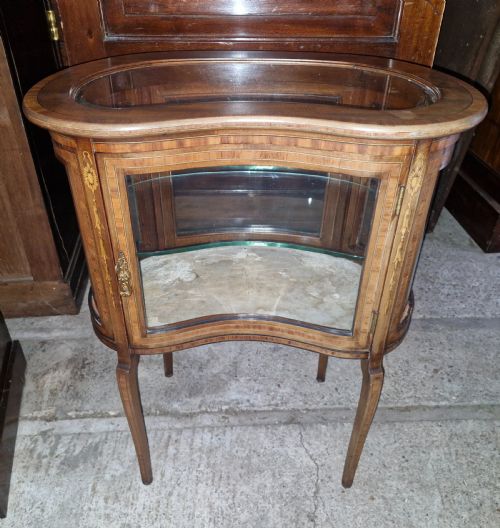
These kidney shaped display table pieces bring elegant curved lines and glass-topped visibility to your rooms.
Kidney Shaped Display Table
A kidney shaped display table offers a distinctive curved silhouette designed to sit neatly against walls or beside seating. These pieces serve primarily as vitrines, bijouterie cabinets, and side tables for exhibiting small collections and decorative objects under glass.
Most examples found here date from the Edwardian period and around nineteen hundred, alongside Victorian items. They typically combine display surfaces with enclosed glazing or lower tiers for practical placement in drawing rooms.
Makers drew on Sheraton Revival and French Louis XV styles, incorporating graceful cabriole legs or slender supports. The form ranges from simple lamp and side tables to elaborate cabinetwork intended for drawing rooms.
How they were made
Cabinetmakers utilised rich timber veneers including mahogany, satinwood, and walnut to form the curved frames. These primary woods often received intricate marquetry and marquetry inlay detailing to accentuate the sweeping outline.
Glazing enclosed the display areas while brass fixtures provided structural mounts and hinges. Fabric lined the interior wells of bijouterie tables to cushion delicate items placed within the glass-topped compartments.
The selection includes side tables, vitrines, and bijouterie cabinets utilising French Louis XV style and Sheraton Revival design elements.
What varies in quality
The sophistication of the timber work and the precision of the marquetry inlay determine the standing of each piece. Finer examples feature exhibition quality execution with carefully chosen veneers that follow the difficult curved contours without flaw.
Hardware choices and structural integration of the glass galleries and internal fabric linings separate standard production from superior craftsmanship. The handling of the French Louis XV style influences and Sheraton Revival motifs reveals the artisan's skill.
The Kidney Shaped Display Table Glossary
- Bijouterie table
- A glass-topped display table specifically designed for showing small valuable items and curiosities. These often feature hinged lids and fabric-lined interiors.
- Marquetry inlay
- Decorative patterns formed by fitting contrasting veneer pieces into a prepared wood surface. This technique creates elaborate floral or geometric designs across the tabletop.
- Sheraton Revival
- A late nineteenth and early twentieth century design movement that reinterpreted the refined neoclassical furniture of the eighteenth century. It favours light timbers and delicate classical ornamentation.
- Vitrine
- A glass cabinet or display case used for protecting and exhibiting porcelain, glass, and ornaments. They stand on slender legs to maintain a light visual presence in a room.
Kidney Shaped Display Table: Frequently Asked Questions
What is a kidney shaped display table used for?
These tables provide a specialised surface for exhibiting small collectables, curiosities, and personal trinkets beneath a glass top. They combine the utility of a standard occasional table with the protective display qualities of a cabinet.
Many examples incorporate lower tiers or enclosed vitrine sections for additional storage and display space. Their curved form allows them to fit comfortably into room corners or beside seating arrangements.
How do I date an Edwardian display table?
Edwardian pieces typically date from the early twentieth century, spanning roughly from nineteen hundred to nineteen ten. Look for construction methods and timber choices characteristic of the period, such as satinwood veneers and Sheraton Revival styling.
Examine the hardware, joinery, and interior fabric linings for signs of period manufacture. Comparing the decorative marquetry inlay against known stylistic markers helps confirm the era of production.
How do I care for inlaid satinwood furniture?
Keep satinwood and mahogany pieces away from direct sunlight and heat sources to prevent the wood veneers from drying and warping. Maintain stable indoor humidity levels to protect the delicate marquetry inlay.
Dust gently with a soft cloth and avoid harsh chemical polishes that can damage the antique finish. Professional wax application preserves the natural sheen of the timber.