

Edwardian Full Length Mirror
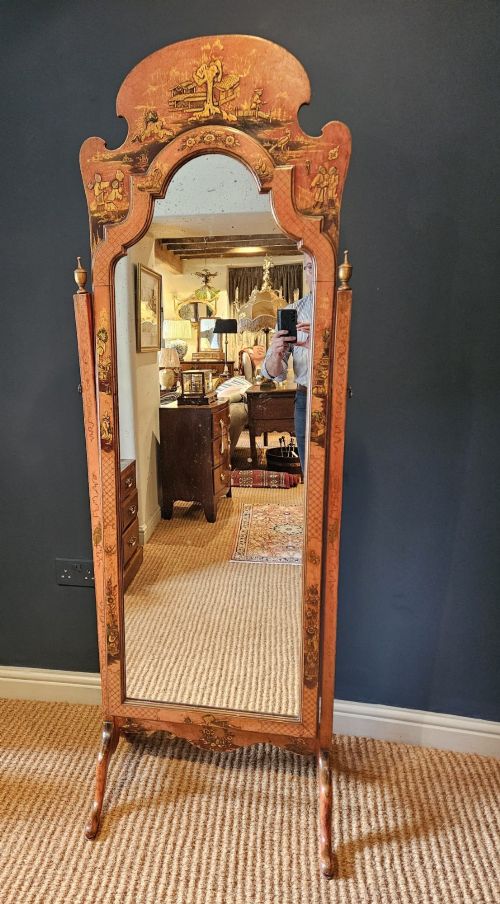
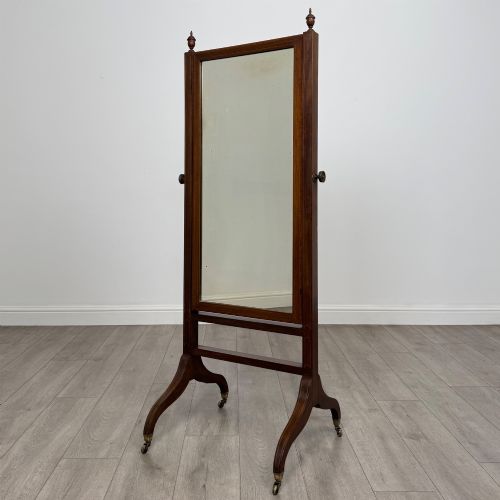
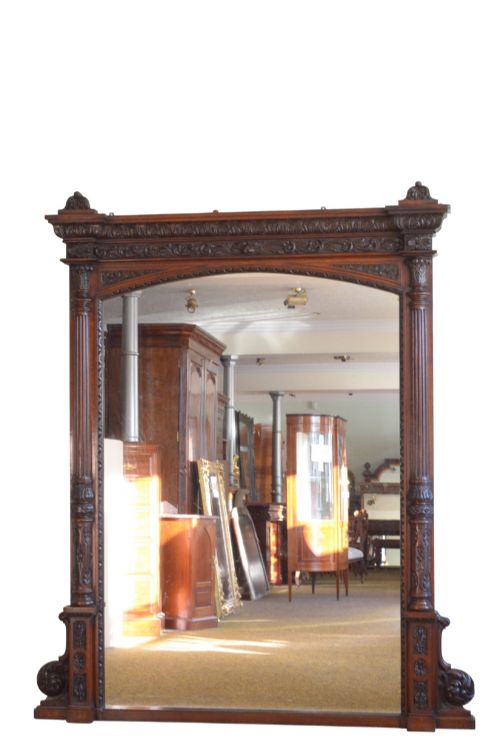
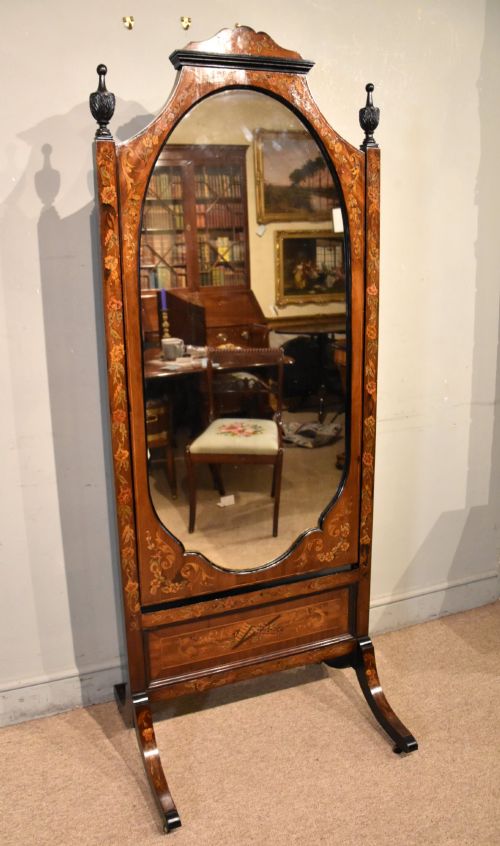
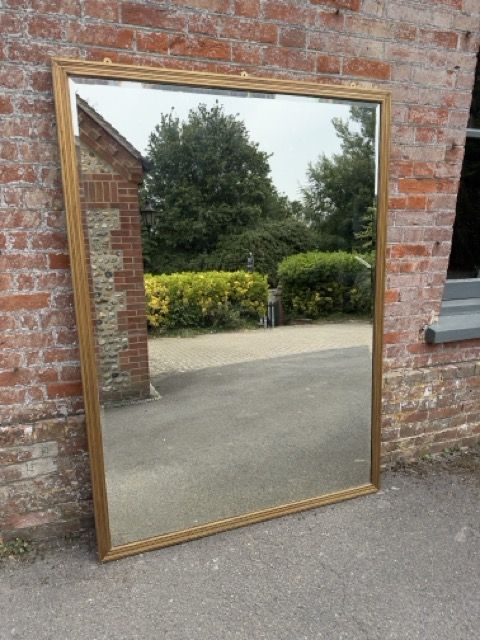
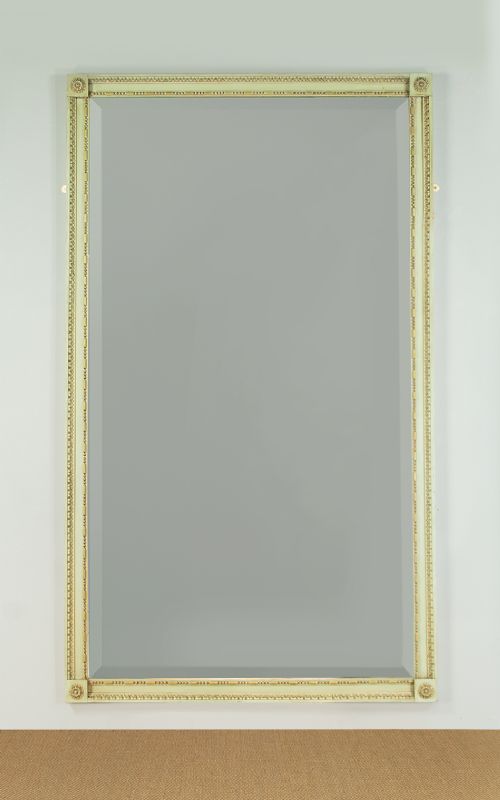
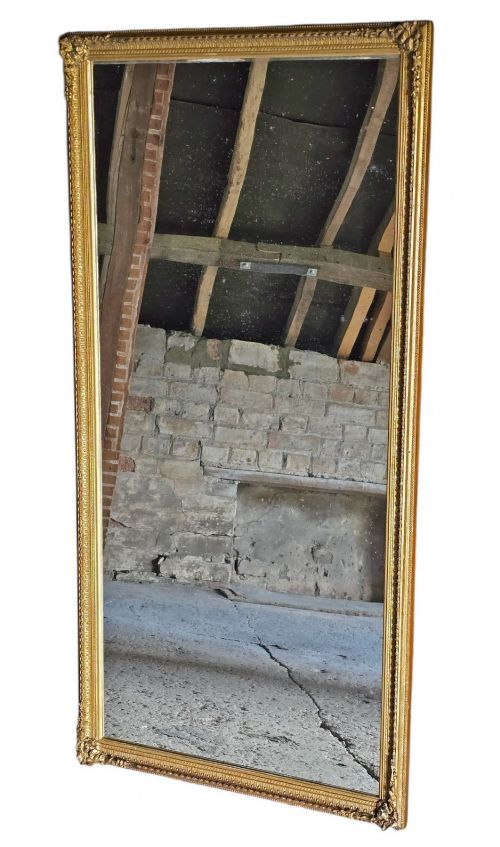
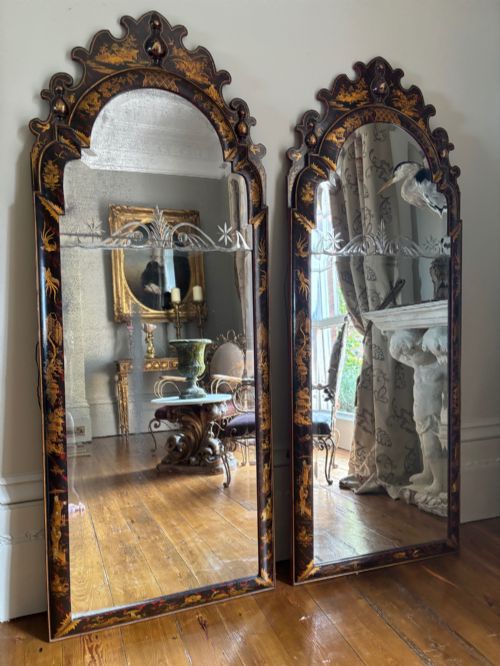
Edwardian full length mirror designs offer tall glass set within substantial timber frames, bringing practical function and period presence to a dressing room.
Edwardian Full Length Mirror
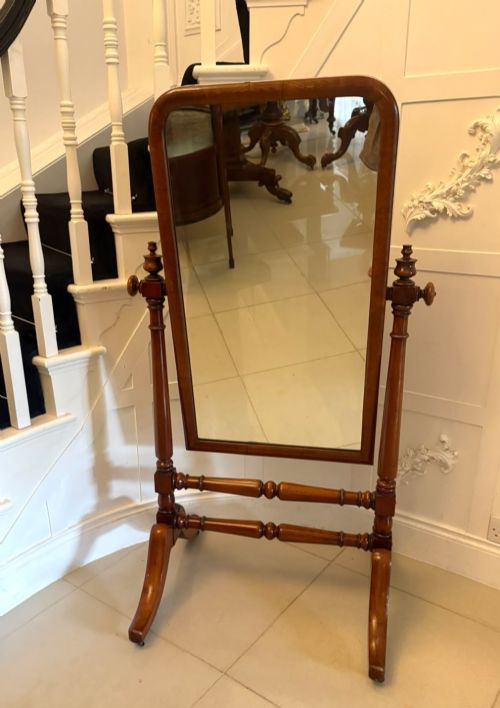
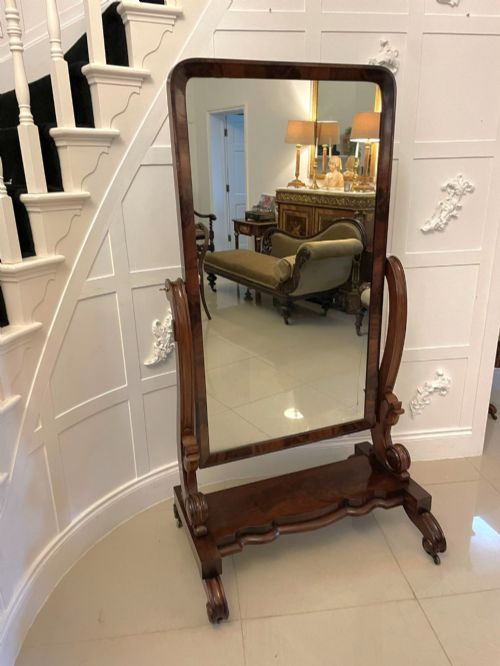
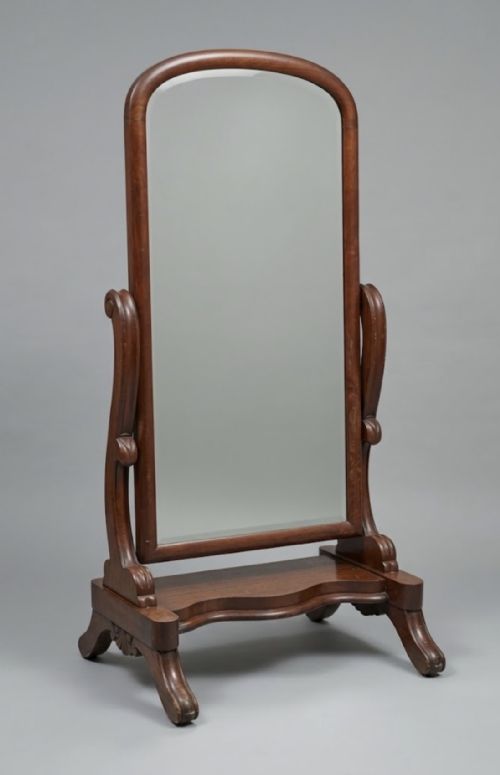
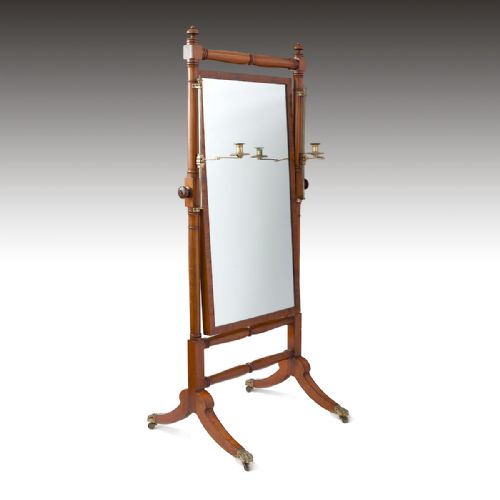
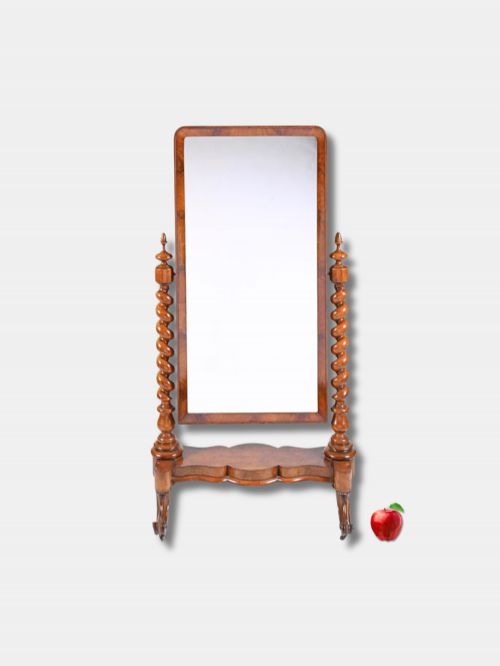
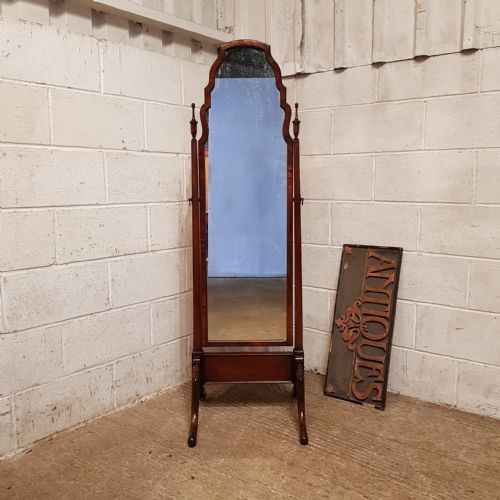
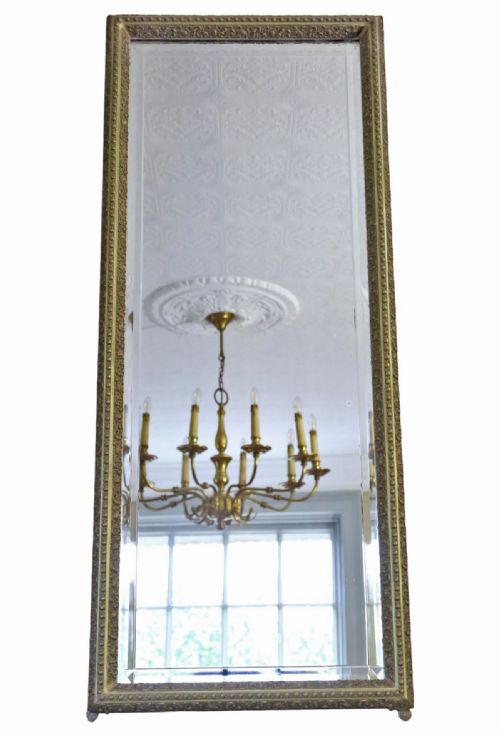
An edwardian full length mirror typically takes the form of a freestanding cheval mirror that tilts upon a pivoted frame, or a tall wall-mounted glass panel. The pieces on this page span the Edwardian period alongside earlier Victorian and Regency designs, with mahogany and oak as dominant timbers.
Freestanding examples provide an adjustable angle for full-length viewing, supported by sturdy feet or trestle bases. Wall-mounted alternatives utilise the vertical span of a room, serving both domestic dressing spaces and commercial shop interiors.
Materials and Construction
Makers built these frames using dense hardwoods such as mahogany, oak, walnut and satinwood, frequently applying decorative inlays, marquetry or carved details. Gilt and gesso finishes appear on ornate frames, adding a reflective metallic layer to architectural mouldings.
The mirror glass itself rests within secure rebates, supported by backboards of pine or similar secondary timbers. Pivoting brass hardware allows cheval frames to swing smoothly between upright supports.
Edwardian Full Length Mirror Retail Price Guide 2026
Typical asking prices for edwardian full length mirror among the pieces listed under this phrase on Sellingantiques today, from the lower quarter to the upper quarter. They describe what is for sale here now, not the wider market.
Some tall mirrors spent their early mornings inside haberdashery shops and gentlemen's outfitters before finding a home in the bedroom.
Assessing Quality
Quality rests in the selection of timber figures, such as burr walnut or figured mahogany, and the crispness of hand-carved ornamentation. Refined joinery, substantial brass pivot fixings, and intact original mirror plates distinguish finer examples from standard production.
The weight and stability of the supporting frame indicate the standard of construction, ensuring a tall glass swings securely without wobble.
Edwards and Roberts·Waring and Gillow
The Edwardian Full Length Mirror Glossary
- Cheval mirror
- A freestanding full-length mirror hung on vertical pivots within a frame. This allows the glass to tilt forward or backward.
- Gesso
- A plaster-based material applied to wood frames and carved or gilded. It provides a smooth surface for metallic leaf.
- Marquetry
- Decorative patterns created by fitting small pieces of veneer into a timber ground. It appears on finer cabinetwork.
- Barley twist
- A type of turning shaped like a spiral rope. It decorates the vertical supports of frames and tables.
- Rebate
- A recess cut into the edge of timber to hold a mirror plate securely. This keeps the glass flush with the frame.
Edwardian Full Length Mirror: Frequently Asked Questions
How do I secure a heavy floor mirror?
Heavy freestanding cheval mirrors require placement on level flooring away from high-traffic zones to prevent tipping.
For added stability, wall-mounted versions need proper fixings into masonry or timber studs to support the weight of the glass.
Can these mirrors be wall mounted?
Many tall mirrors are built specifically for wall hanging, featuring sturdy fixing points on the reverse of the timber frame.
Freestanding cheval models are generally designed to remain on the floor, supported by their own base and uprights.
How do I clean antique mirror glass?
Cleaning requires a soft microfiber cloth and a mild glass cleaner applied sparingly to avoid seeping behind the silvering.
Moisture must be kept away from the edges of the glass and the wooden rebate to prevent deterioration.
How do I identify an Edwardian frame?
Edwardian frames often show lighter mahogany or oak construction, sometimes featuring subtle inlay work rather than heavy Victorian carving.
Construction methods, secondary timbers, and original hardware fixings help confirm the period of manufacture.