
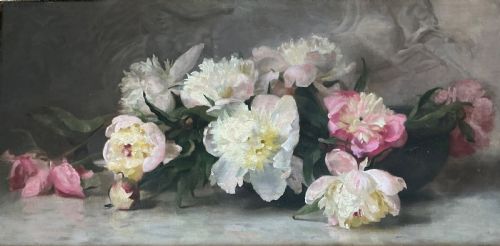


Edwardian Floral Still Life
Edwardian floral still life paintings capture soft petals and garden blooms in oils and watercolours, bringing a gentle charm to any room.
Edwardian Floral Still Life
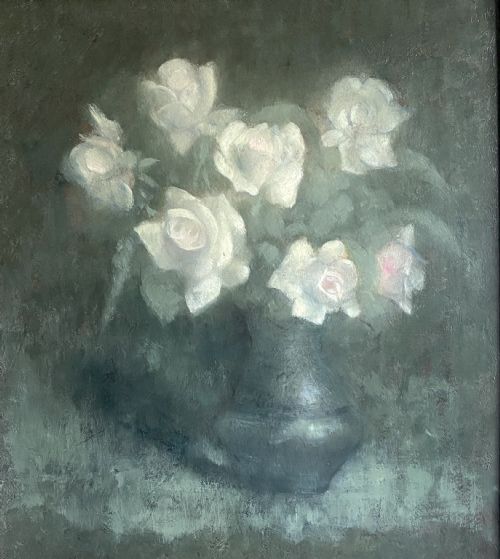
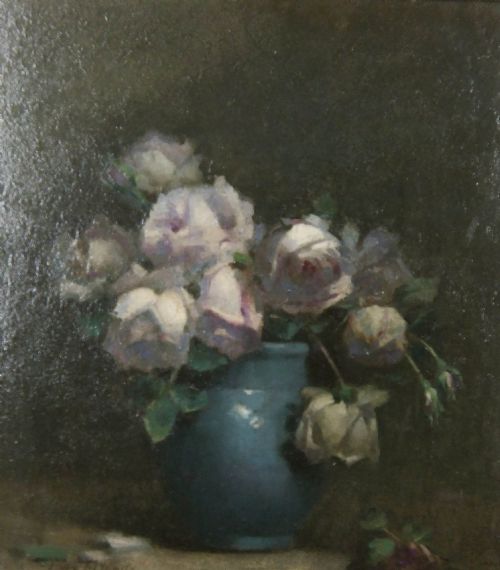
An edwardian floral still life brings domestic gardens onto canvas and paper, capturing roses, peonies, anemones, and summer flowers in delicate arrangements. These works span from the nineteenth century into the 1930s, reflecting Victorian botanical traditions alongside British Impressionism and Art Nouveau styles.
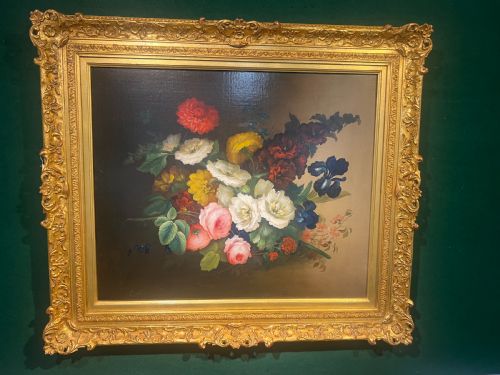
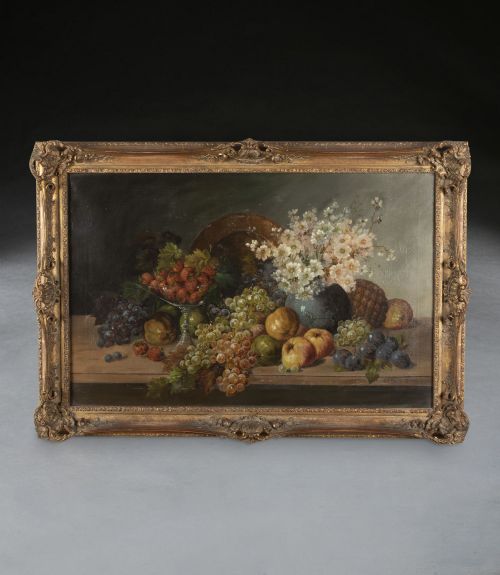
Buyers will most frequently encounter oil paintings on canvas and board, alongside detailed watercolours on paper. The compositions focus closely on single blooms or overflowing vases, often framed in gold leaf that highlights the natural pigments of the flowers.
The pieces on this page bridge the late nineteenth century and the interwar period, offering a glimpse into domestic interior decoration of the era. Whether signed by named artists or presented as anonymous works, they share a common dedication to recording natural flora.
Materials and techniques
Artists relied primarily on oil paint applied to canvas, board, or paper, building up rich textures for petals and foliage. Watercolours on paper offered a lighter, more translucent approach, capturing the delicate qualities of polyanthus and pelargoniums.
Gold leaf frames frequently complement these works, adding a warm border that enhances the pigments of the painted blossoms. The combination of traditional canvas supports and layered oil paint allowed artists to achieve depth and luminosity in floral subjects.
Listings span several decades, featuring works dated from eighteen ninety through nineteen thirty across oil and watercolour mediums.
Distinguishing quality
Quality rests in the handling of light across petals and the accuracy of botanical form, where confident brushwork separates accomplished compositions from stiffer studies. The depth of colour in oils and the preservation of paper in watercolours dictate the visual impact of each piece.
The integration of the subject with its background reveals the hand of a skilled painter, distinguishing works that possess atmospheric presence from standard decorative examples.
Edwin Steele·William Thomas Wood·Gertrude Hayes·Lester Sutcliffe·Elizabeth T Sutcliffe·Alice Macallan Swan·Annie Mary Youngman·Edith Alice Andrews·Ernest Higgins Rigg·Louisa Mary Bancroft
The Edwardian Floral Still Life Glossary
- Oil on canvas
- Pigment mixed with drying oil applied to a woven fabric stretched across a wooden frame. This surface allows for thick impasto and rich blending of floral tones.
- Watercolour
- A paint consisting of colour suspended in a water-soluble vehicle, typically applied to paper. It yields transparent washes that suit delicate botanical subjects.
- Gold leaf
- Gold beaten into extremely thin sheets used for gilding frames. It provides a traditional metallic border that frames the painted canvas.
- British Impressionism
- A painting style focusing on light and spontaneous brushwork. Artists working in this manner prioritized atmosphere over rigid academic detail in their floral studies.
Edwardian Floral Still Life: Frequently Asked Questions
What is an edwardian floral still life?
These artworks depict arranged flowers, such as roses, anemones, and spring blossoms, painted during the late nineteenth and early twentieth centuries.
They use mediums like oil on canvas and watercolour on paper to record domestic flora in various artistic styles.
How were these paintings displayed?
Period works were typically housed in wooden frames, often accented with gold leaf to complement the warm tones of the interior rooms where they hung.
Collectors today place them in living spaces and studies to introduce natural subjects into modern interiors.
How do I identify the period?
Dating relies on the materials, artist signatures, and stylistic markers such as Art Nouveau curves or British Impressionist brushwork.
Works span from the late nineteenth century through the 1930s, reflecting changing tastes in botanical illustration.
Are watercolours different from oils?
Watercolours use water-soluble pigments on paper to create luminous, translucent studies of plants and flowers.
Oils utilise thick paint on canvas or board, allowing for textured layers and deeper colour saturation.