
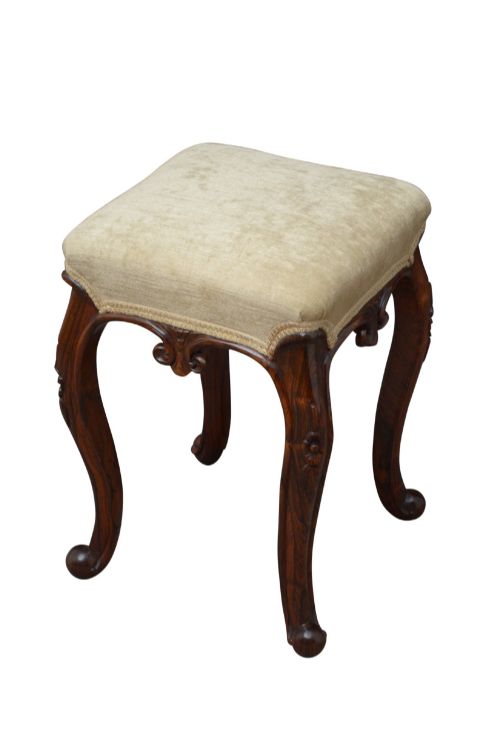
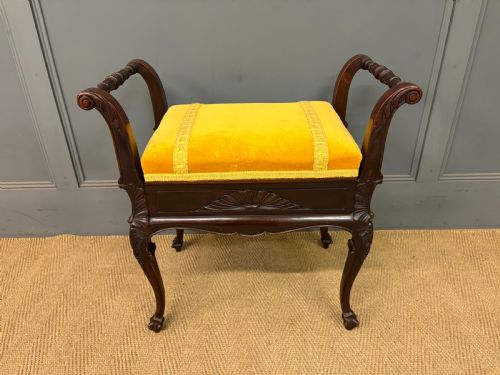

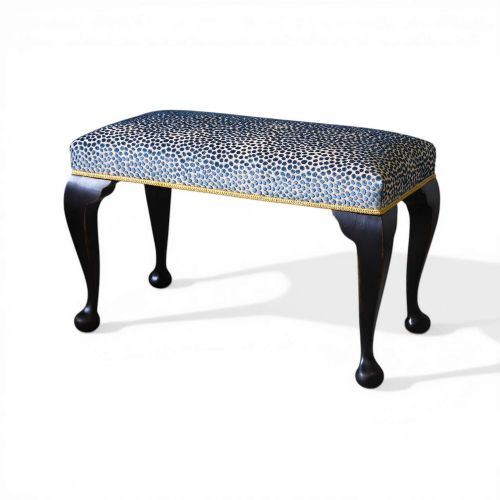
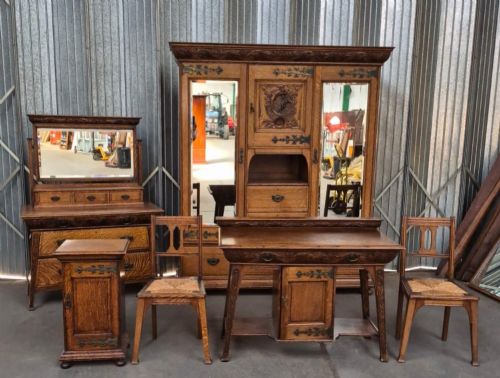



Edwardian Dressing Seat
An Edwardian dressing seat provides a practical bedroom perch, combining period timber work with traditional upholstery.
Edwardian Dressing Seat
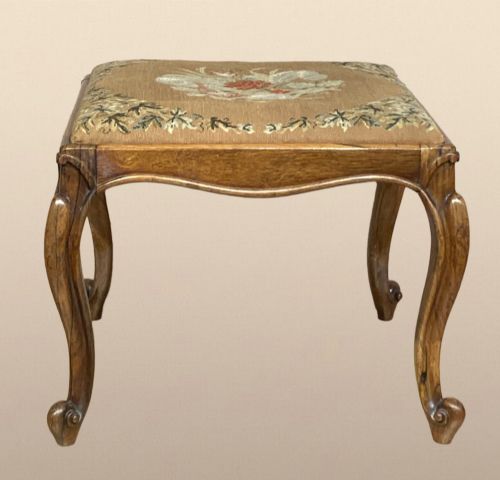
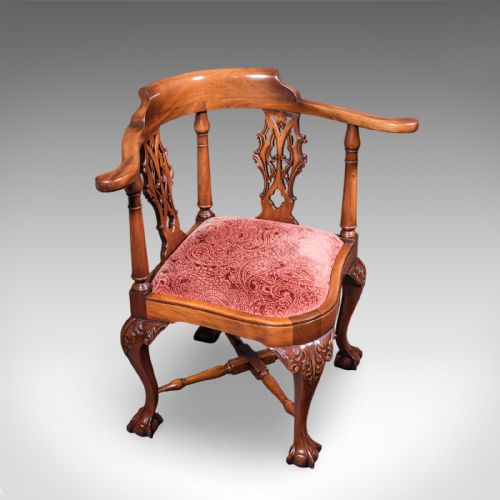
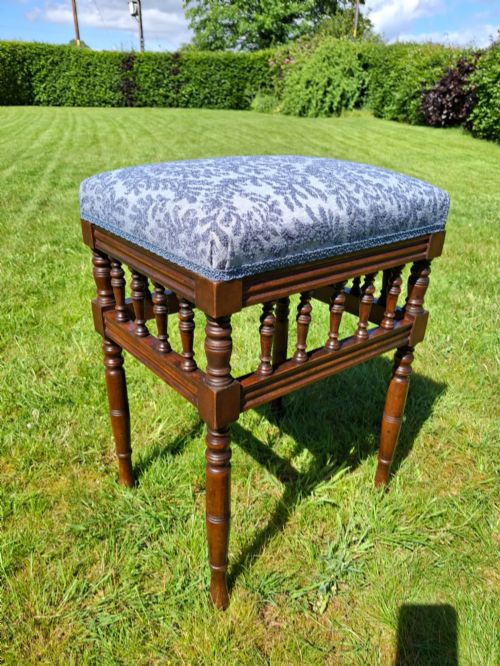
When searching for an edwardian dressing seat, a buyer encounters low seating designed for bedrooms, dressing rooms, and dressing tables. These forms appear as stools, piano stools, and small chairs intended for domestic convenience.
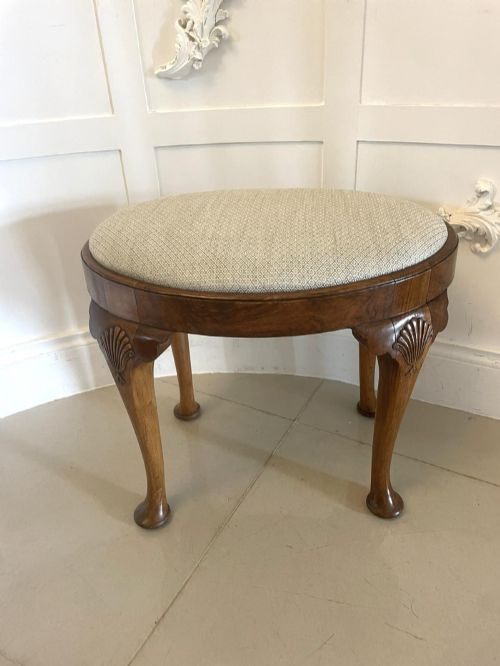
The version most commonly met on this page dates from the early twentieth century or borrows earlier aesthetics such as Queen Anne, Chippendale revival, and Arts and Crafts styles. They function as portable seats, window seats, or dressing table companions.
Origins trace across various British periods, with Edwardian pieces appearing alongside late nineteenth century Victorian examples and later revivals. Form follows utility, resulting in compact frames that fit beneath dressing tables or sit quietly in bedroom corners.
Materials and Construction
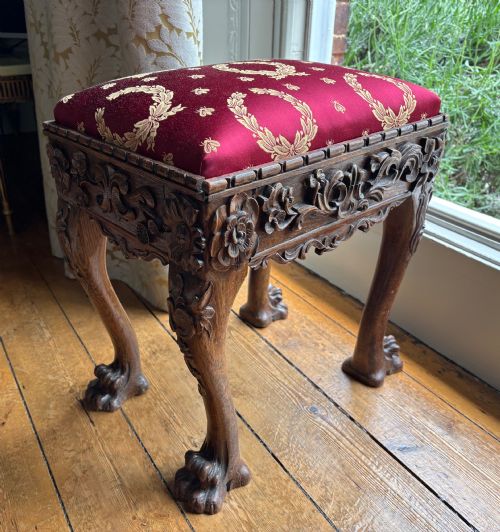
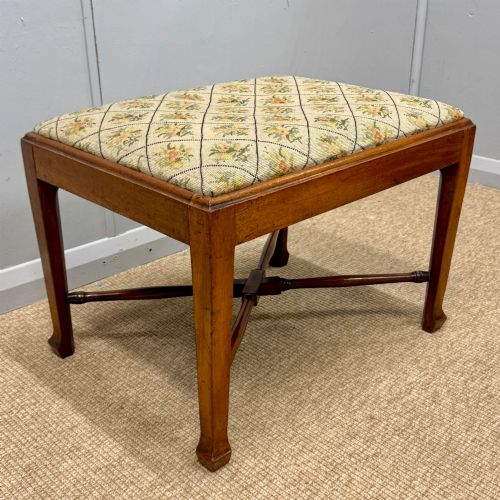
Frames rely upon traditional hardwoods including mahogany, walnut, oak, satinwood, and beech, often shaped with turned legs, cabriole supports, or cross stretchers for stability. Cabinet makers utilised inlay work and carving to decorate the timber surfaces.
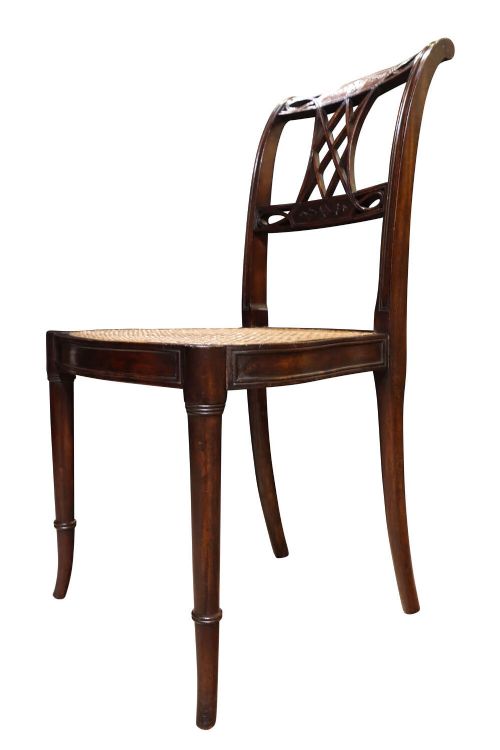
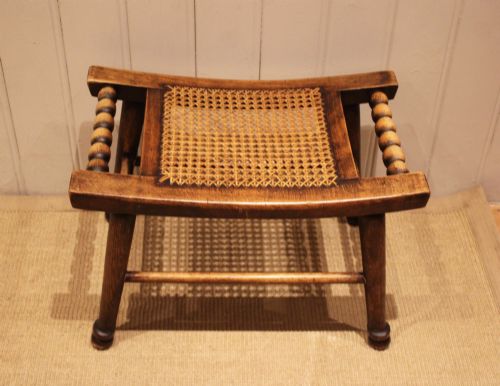
Upholstery incorporates fabric, tapestry, textile, red damask, tweed linen, and cane work for seat pads and squabs. Caned panels provide lightweight rigidity while upholstered pads introduce soft textures to the timber frames.
Listings feature multiple wood types, with mahogany, walnut, and oak appearing alongside cane, tapestry, and textile upholstery across the Edwardian and Victorian eras.
Assessing Quality and Craftsmanship
Quality reveals itself in the selection of timber, where figured mahogany or rich walnut displays superior grain depth compared to plain secondary woods. Cabinet making proficiency shows in tight joinery, such as sound stretcher joints and cleanly executed inlay.
The standard of upholstery and the preservation of original cane work distinguish finer examples. Pieces retaining integrated carved details or robust structural framing stand apart from simpler utility seating.
J. Shoolbred·Jas Shoolbred
The Edwardian Dressing Seat Glossary
- Cabriole leg
- A furniture leg that curves outward at the knee and tapers inward to an ankle, found on many period stools. This design originates from classical furniture traditions.
- Cross stretcher
- Wooden rails connecting the lower legs of a stool to provide structural bracing. They often intersect in an X shape beneath the centre.
- Cane seat
- A seating surface woven from rattan or similar plant material to form a porous, flexible mesh. This technique lightens the visual weight of the frame.
- X-frame stool
- A seat supported by intersecting diagonal members forming an X shape from end to end. This folding or rigid architectural form appears in revival pieces.
- Saddle seat
- A wooden seat carved with hollows to mirror the contours of a saddle. This form provides ergonomic comfort without requiring textile upholstery.
Edwardian Dressing Seat: Frequently Asked Questions
How do I use an edwardian dressing seat today?
These compact seats fit neatly beneath modern dressing tables or serve as occasional seating in bedrooms and hallways. Their modest proportions make them easy to move wherever extra seating is required.
They also function effectively as low window seats or piano benches. The variety of wood finishes and upholstery allows them to blend with both period and contemporary interiors.
What is the difference between a dressing stool and a piano stool?
Dressing stools were traditionally made to accompany bedroom dressing tables, featuring fixed upholstered pads or cane work. They focus on low, compact dimensions to tuck out of the way.
Piano stools often incorporate rotating height adjustment mechanisms or storage compartments beneath the seat lid. Both forms share similar timber frames and period aesthetics.
How can I tell an Edwardian seat from a Victorian one?
Edwardian pieces tend to show lighter construction, often employing satinwood inlay, lighter mahogany tones, or Edwardian satin birch. They frequently reflect neoclassical or Sheraton revivals.
Victorian seats generally display heavier proportions, darker rosewood or walnut timbers, and more robust carving. Cabriole legs on Victorian pieces often feature deep, heavy curves.
Are these seats suitable for everyday use?
Most surviving pieces possess sturdy hardwood frames built for daily domestic service. Regular use requires checking that stretcher joints remain tight and secure.
Upholstered pads can be renewed if the internal webbing or covering shows wear over time. Cane panels should be treated with care to avoid punctures.