
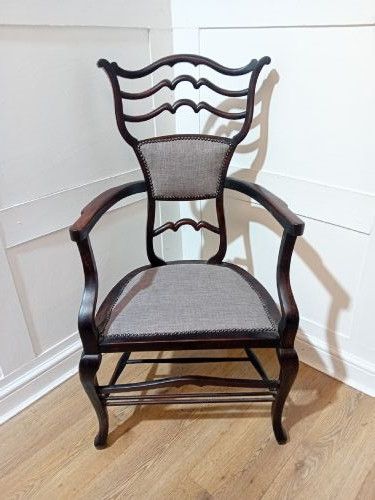
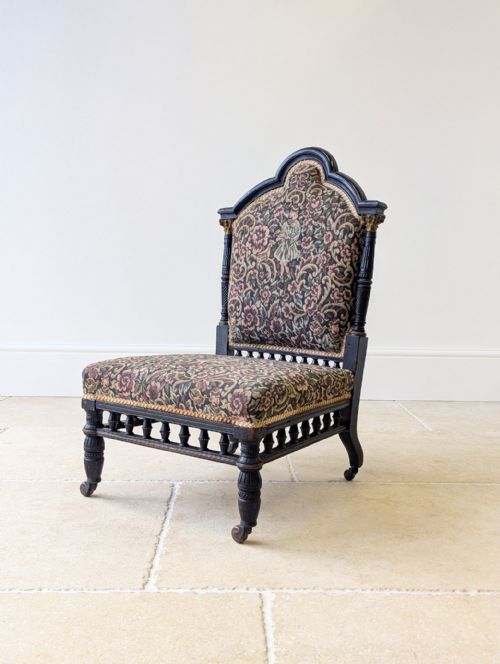
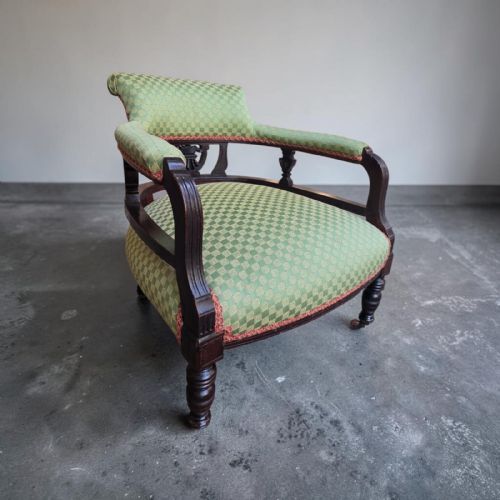
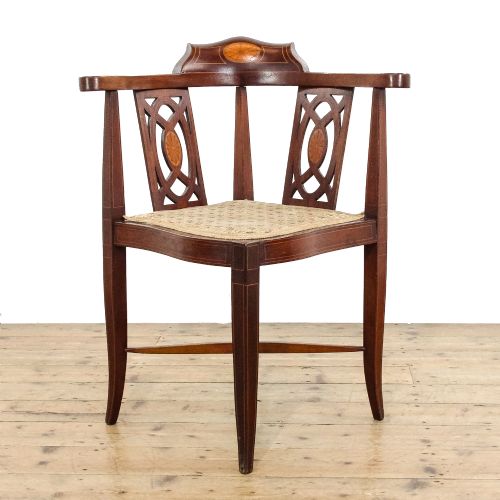



Edwardian Corner Armchair
An Edwardian corner armchair brings clever geometry and inviting curves to an awkward empty space.
What They Are
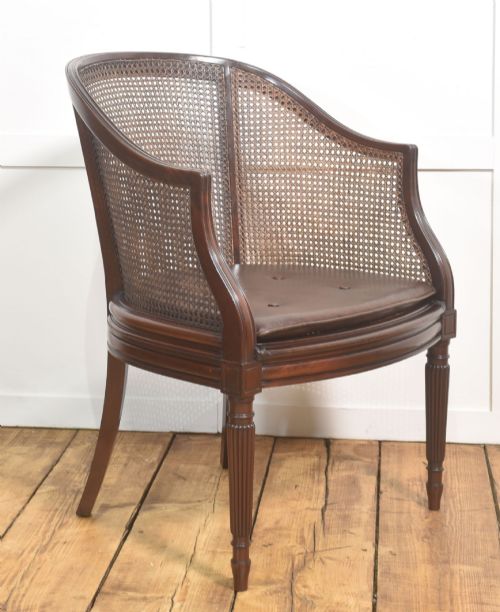
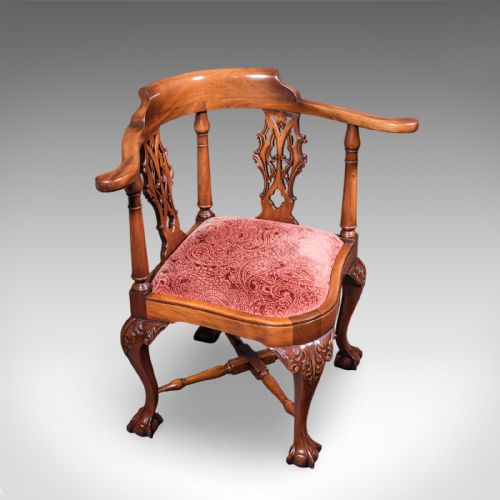
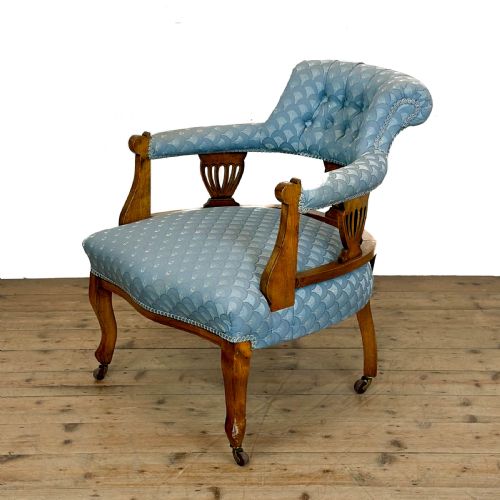
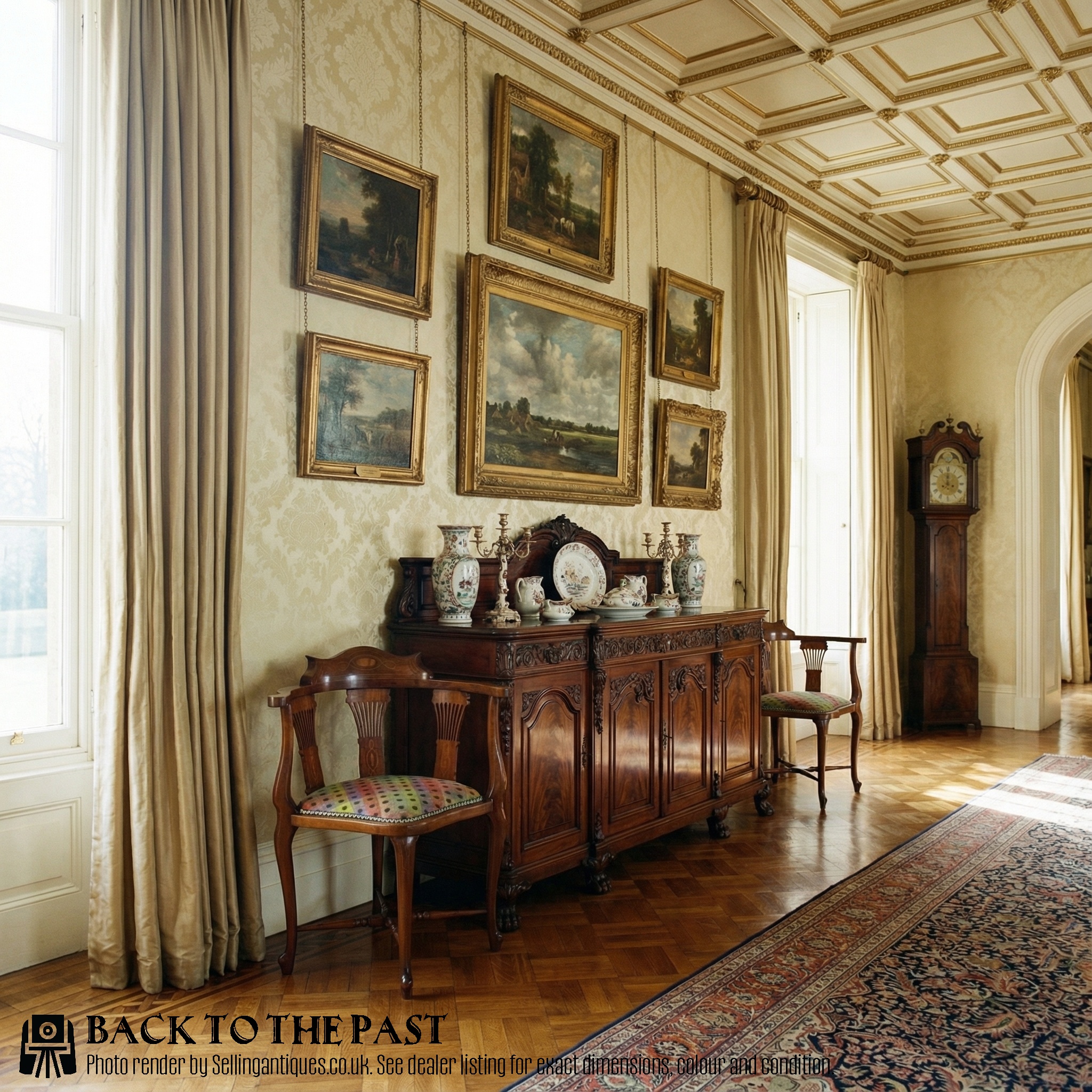
An edwardian corner armchair sits neatly into room junctions, offering an unusual diagonal seating position that breaks up the monotony of straight walls. These compact seats appear across various forms, functioning as dressing seats, accent chairs, or occasional tub chairs in domestic settings.
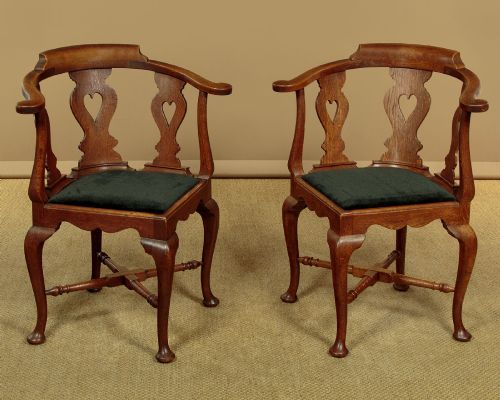
The majority of pieces encountered here date from the Edwardian period or around nineteen hundred, carrying the distinct lighter aesthetic that followed Victorian heaviness. Surviving examples include both single chairs and matched pairs, showcasing the versatility demanded by period interiors.
Design influences range from straightforward Edwardian production to revivalist pieces adopting earlier Georgian motifs or simpler Arts and Crafts principles. This variety ensures that every corner chair brings a distinct architectural presence to modern rooms.
How They Were Made
Cabinetmakers built these frames primarily using mahogany and oak, selecting dense hardwoods capable of supporting the unusual diagonal stress of a corner seat. Many examples incorporate satinwood inlay and detailed marquetry inlay to decorate the splats and crest rails.
Upholstery plays a central role in the construction, utilising traditional fabrics stretched over supportive seat pads designed for occasional use. Some regional or revivalist variants substitute wooden slats with woven rush seats, reflecting diverse workshop traditions.
Retail Price Guide 2026
Typical UK retail prices for edwardian corner armchair, calculated from the Sellingantiques database of over a million retail prices indexed since 2003. This retail price guide relies exclusively on Sellingantiques data; no external sources or auction records are used, so the figures do not describe the wider market.
Design influences documented here span the Edwardian period, the Arts and Crafts movement, and Georgian revival interpretations.
What Varies in Quality
The distinction between standard production and exceptional work rests entirely on the crispness of the carving and the precision of the inlay. Finely cut satinwood details and deeply sculpted mahogany frames elevate a piece far beyond simple utility.
Structural integrity through the complex angled joints determines the lasting worth of any corner chair. Pieces that retain rigid frames without excessive reinforcement demonstrate superior initial carpentry and careful preservation.
The Edwardian Corner Armchair Glossary
- Edwardian
- Pertaining to the reign of King Edward VII, noted for lighter furniture designs and refined inlaid decoration. This era favoured elegance and adaptability in domestic seating.
- Marquetry Inlay
- The art of forming decorative patterns using thin veneers of contrasting wood applied to a solid ground. It adds pictorial richness to chair backs and rails.
- Satinwood Inlay
- A bright, yellowish timber used for contrasting stringing and geometric details on darker mahogany surfaces. It provides a sharp visual border.
- Georgian Revival
- A design movement looking back to eighteenth-century classical proportions and forms. Makers reinterpreted earlier styles with Edwardian precision.
Frequently Asked Questions
Where do you put a corner armchair?
These chairs are specifically designed to occupy room junctions and empty corners that standard furniture cannot fill. They work particularly well in bedrooms as dressing seats or in studies to break up parallel lines.
Because of their angled footprint, they create an inviting conversation nook without protruding too far into the central floor space.
Are Edwardian corner chairs comfortable?
They are intended primarily as occasional seats rather than deep lounging chairs. The curved backs and padded bases offer adequate support for reading or putting on shoes.
Most surviving examples feature traditional upholstery that provides a firm sit suited to their lighter proportions.
How do I identify an Edwardian corner chair?
Look for the characteristically light mahogany frames combined with satinwood or marquetry inlay. The dating typically centres around nineteen hundred, bridging Victorian bulk and twentieth-century simplicity.
Many pieces also show influences from the Arts and Crafts movement or Georgian revival styles through their carved splats and turned legs.
Do corner armchairs come in pairs?
Matched pairs do appear alongside single chairs, having originally flanked a fireplace or matching tables in a grand drawing room. Finding a pair from this period remains an appealing bonus for balanced interior layouts.
Single examples, however, are far more common as individual decorative accents.