

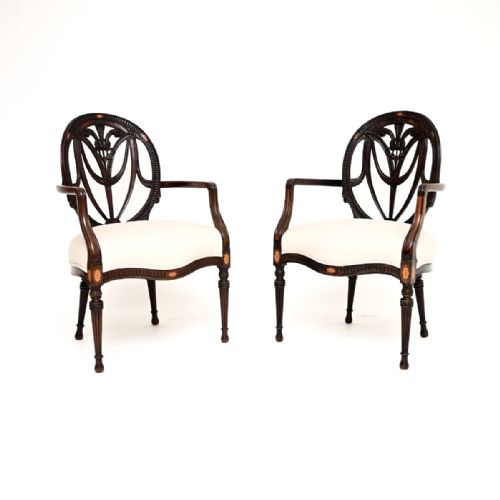
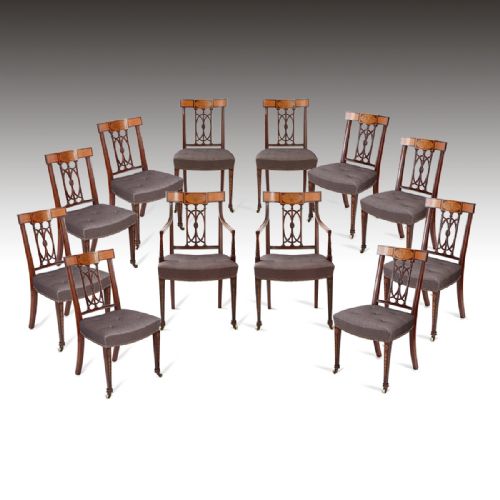
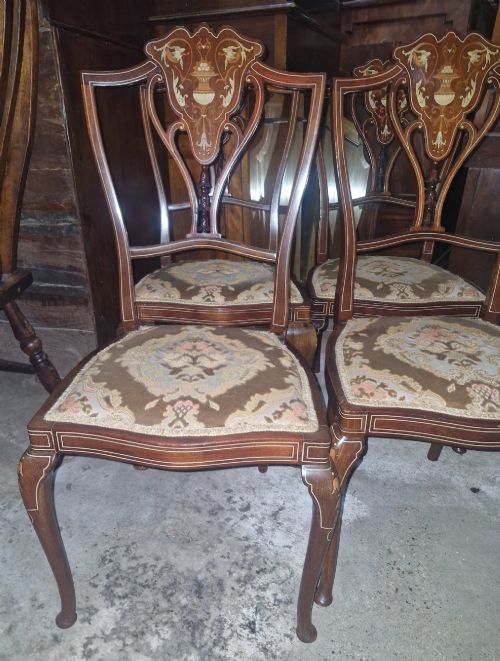
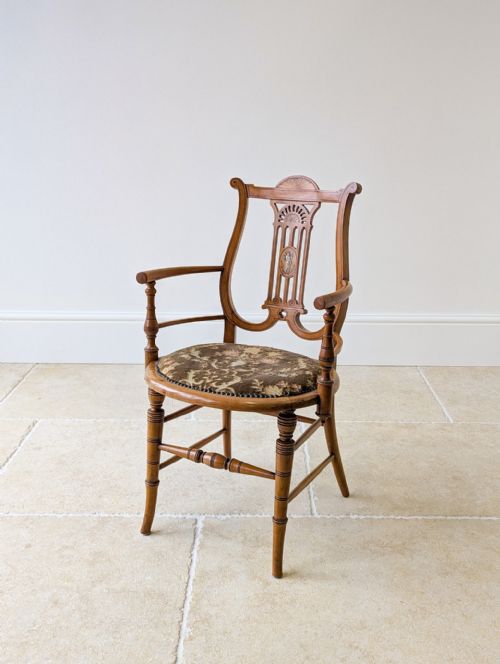
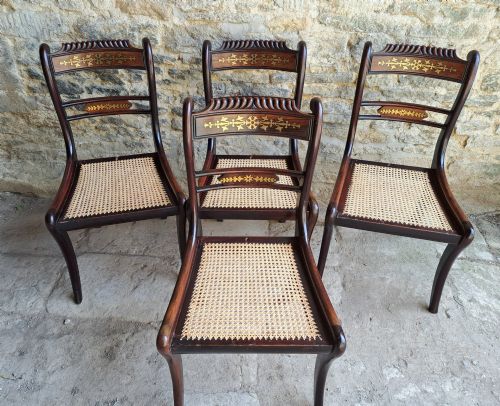
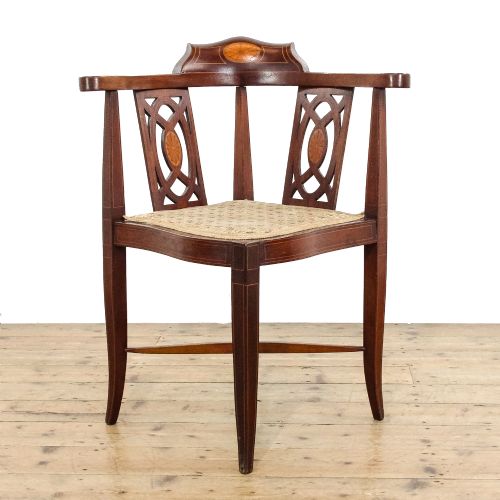
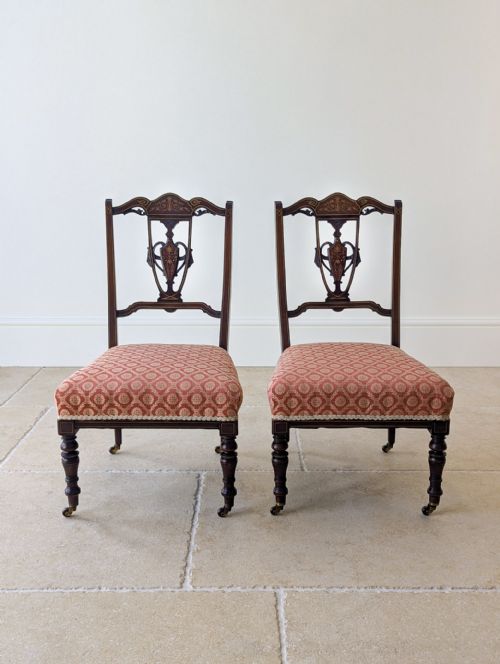
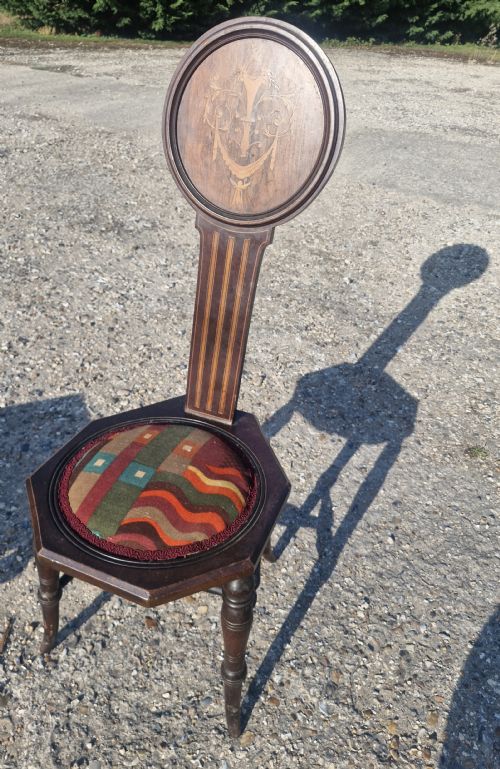
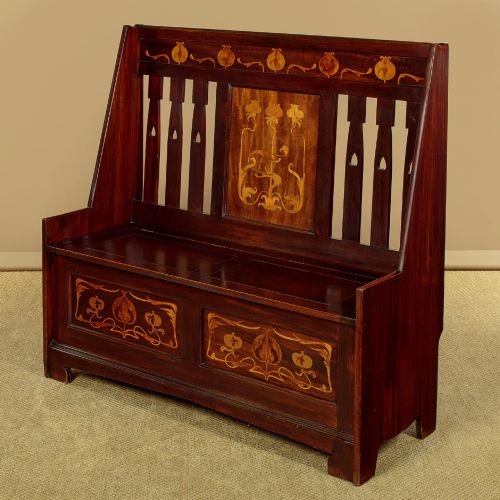
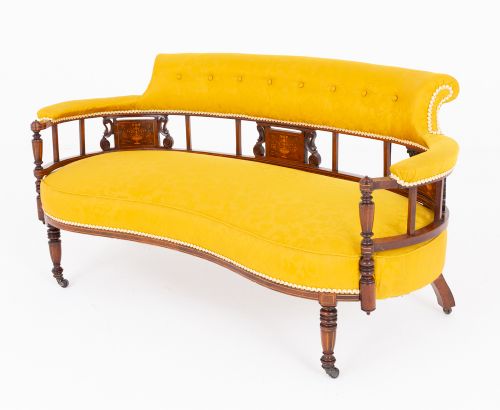

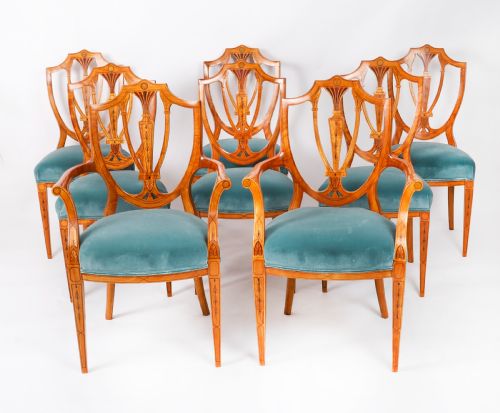

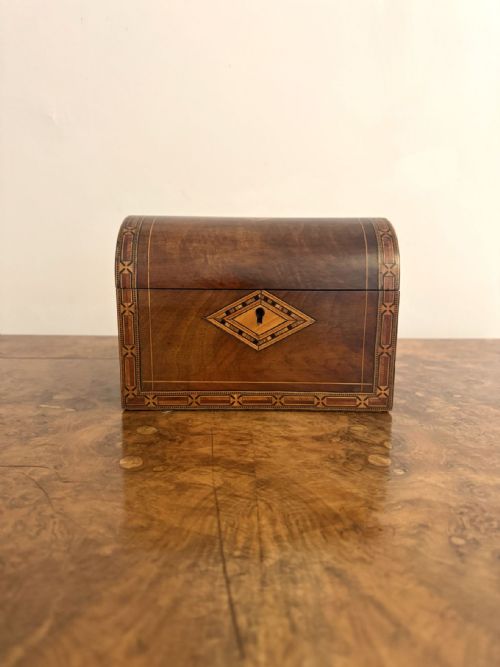
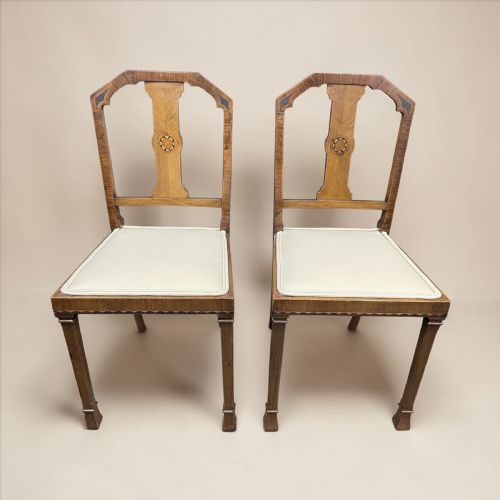
Marquetry Inlaid Chair
Marquetry inlaid chairs combine structural timber with intricate pictorial wood veneers to deliver seating that functions as fine art.
Understanding marquetry inlaid chairs
The assortment on this page leans heavily toward Edwardian mahogany pieces, including corner armchairs and child's armchairs featuring elaborate wood inlay. Alongside these standard formats, the broader history of the design includes Dutch walnut chairs, Swiss hall chairs, and rosewood salon suites. These seats served primarily as decorative occasional furniture, drawing room seating, or library reading chairs rather than heavy daily seating.
Materials and construction
Makers built the foundational frames of these chairs using solid timbers such as mahogany, walnut, rosewood, and satin birch. Rush seats, upholstered pads, and fabric or textile coverings provided the functional seating surfaces supported by these wooden structures.
Decorative surfaces relied on meticulous marquetry inlay, wood inlay, satinwood, and boxwood inlay techniques. Artisans cut thin veneers of contrasting woods by hand and assembled them into pictorial or geometric motifs before recessing them directly into the primary timber frame.
Retail Price Guide 2026
Typical UK retail prices for marquetry inlaid chair, calculated from the Sellingantiques database of over a million retail prices indexed since 2003. This retail price guide relies exclusively on Sellingantiques data; no external sources or auction records are used, so the figures do not describe the wider market.
Some Victorian makers ensured privacy by designing corner chairs that allowed Victorian ladies to sit comfortably without crushing heavy skirts.
Distinctions in craftsmanship
The standard of a marquetry inlaid chair rests on the precision of the veneer work and the complexity of the wood selection. Fine examples display seamless integration between the contrasting wood inlays and the solid mahogany or walnut background, with no visible gaps or crude filler.
Structural integrity also separates standard seating from exceptional pieces. Superior versions retain rigid joinery within complex forms like corner chairs and tub chairs, while lesser items suffer from loose joints caused by the shrinkage of multiple veneer layers over time.
Henry Thomas Peters
The Marquetry Inlaid Chair Glossary
- Marquetry inlay
- A decorative technique where small pieces of tinted or natural wood veneer are assembled into pictorial designs and embedded into the surface of a furniture piece. This method differs from simple inlay by covering large areas of the wood surface with intricate pictures or patterns.
- Corner chair
- A type of chair designed to fit into the corner of a room, featuring a diagonal seat plan and a curved backrest supported by multiple posts. These chairs often incorporate elaborate wood inlay along the top rail.
- Satinwood
- A durable, lustrous timber native to India and Ceylon known for its golden-yellow colour and natural sheen. It is frequently utilised in contrasting stringing and marquetry panels on mahogany furniture.
- Salon suite
- A matched set of seating furniture, typically comprising a settee and multiple armchairs or side chairs designed for formal entertaining. These suites feature uniform marquetry inlay and upholstery across all matching pieces.
- Tub chair
- An upholstered armchair characterised by a low, curved backrest that wraps continuously around the sides to form enclosed arms. In Edwardian examples, this curved back panel provides an ideal canvas for floral marquetry.
Frequently Asked Questions
What is a marquetry inlaid chair?
A marquetry inlaid chair is a wooden seat decorated with pictorial veneers cut from contrasting timbers. These pieces range from Edwardian mahogany corner chairs to Victorian salon seats.
Craftsmen assembled these decorative veneers by hand to create floral, geometric, or figurative panels set flush into the wooden frame.
Where were these chairs used?
These decorative chairs were primarily utilised in formal reception rooms, drawing rooms, libraries, and parlours. They functioned as occasional seating, reading chairs, or corner accent pieces rather than heavy everyday dining chairs.
Their intricate veneer work made them statement pieces intended to display the owner's taste and the maker's skill.
How do I date an inlaid chair?
Dating relies on identifying the primary timber, the style of the frame, and the nature of the marquetry. Edwardian pieces on this page typically feature light mahogany framing with delicate boxwood and satinwood inlay.
Victorian and earlier 19th-century examples often employ heavier walnut or rosewood construction with denser, more colourful floral marquetry panels.
How do I care for wood inlay?
Wood inlay requires a stable indoor environment protected from direct sunlight and extreme humidity changes. Excessive dryness can cause the thin veneer pieces to shrink, warp, or lift away from the solid timber base.
Maintenance involves dusting with a soft, dry cloth and occasionally applying appropriate furniture wax to nourish the timber and protect the delicate surface.