
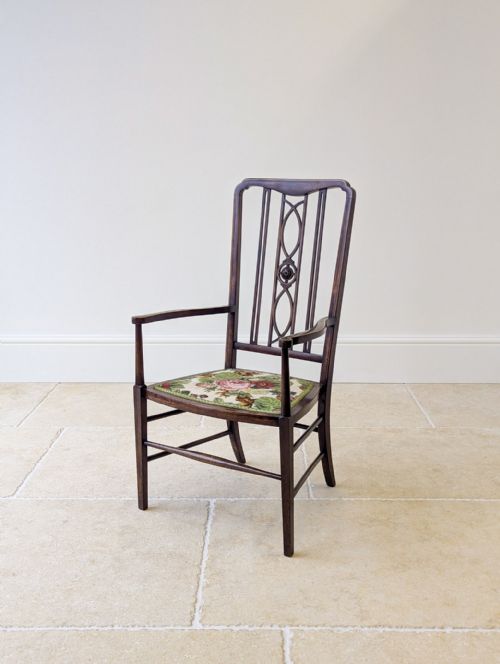
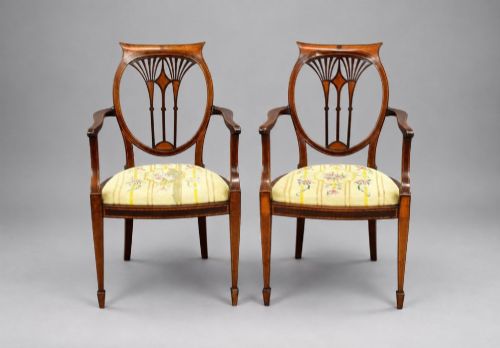
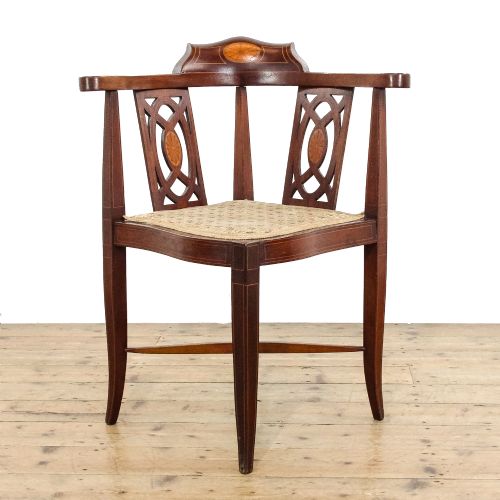
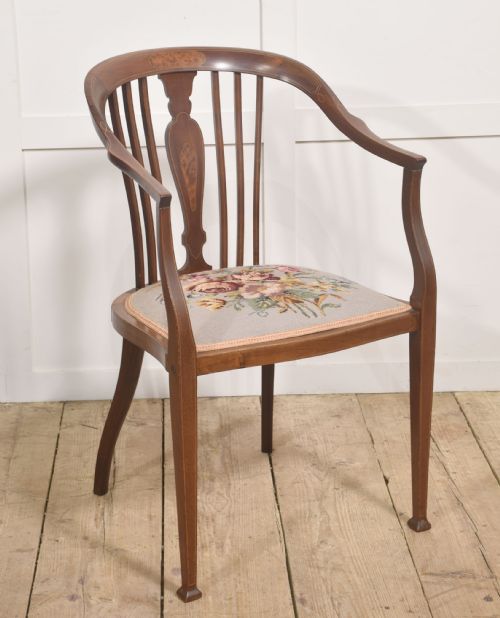


Edwardian Inlaid Elbow Chair
An edwardian inlaid elbow chair brings refined woodwork and subtle marquetry into a room, offering both comfort and decorative presence.
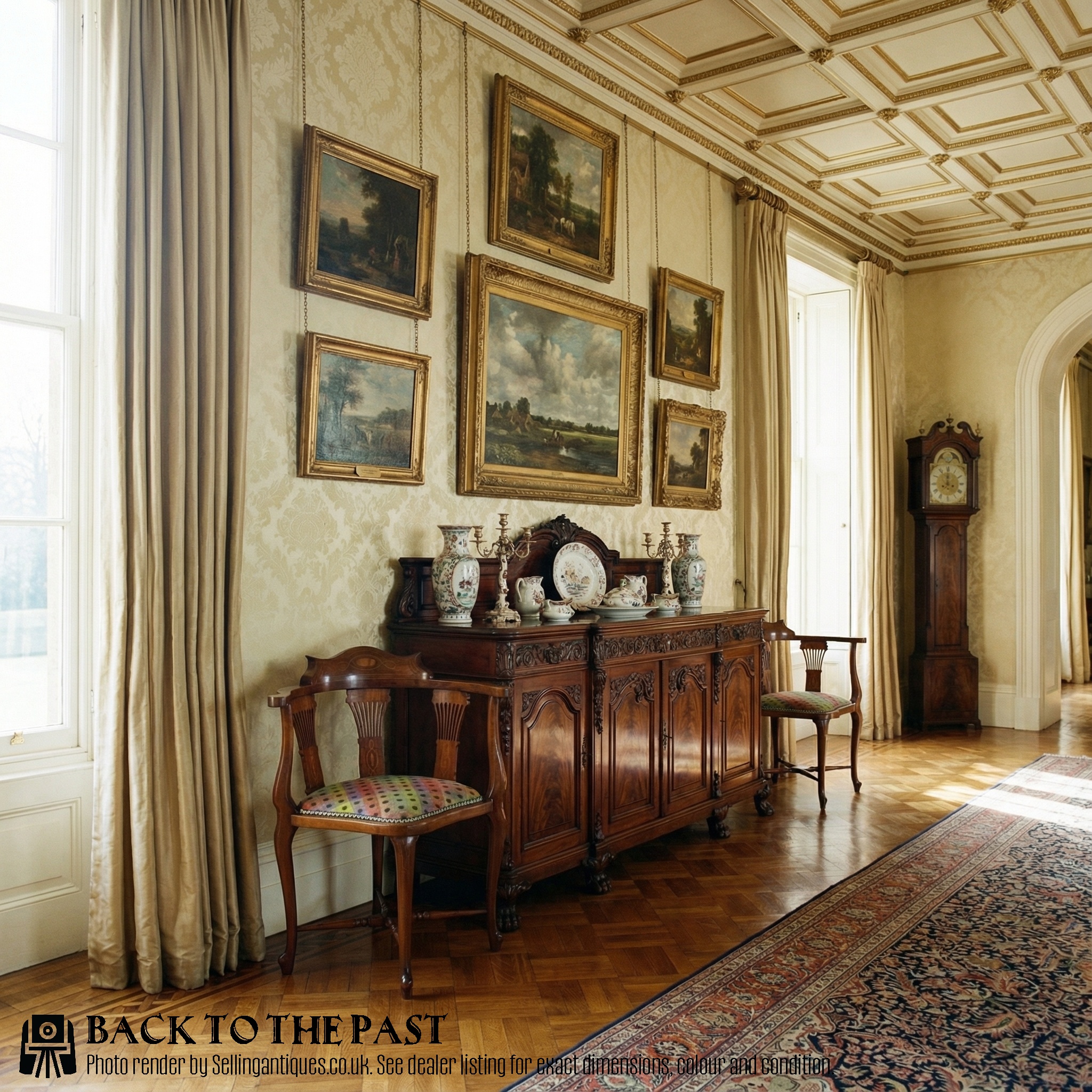
Edwardian Inlaid Elbow Chair
When searching for an edwardian inlaid elbow chair, you encounter seating designed for the drawing room, salon or desk, predominantly dating from the Edwardian period and around nineteen hundred, alongside occasional late nineteenth century and Victorian examples. These pieces combine open arms with supportive backs, frequently appearing as mahogany salon armchairs or desk chairs.
The prevailing format on this page is the mahogany armchair enriched with contrasting stringing and marquetry, though variants include oak Arts and Crafts models, corner chairs, and walnut elbow seats. Makers such as Shoolbred and Jenks and Wood occasionally contribute to this repertoire, alongside Sheraton Revival and Art Nouveau interpretations.
Origins remain rooted in British craftsmanship of the late nineteenth and early twentieth centuries, spanning periods from eighteen ninety to nineteen ten. Forms range from simple occasional chairs to elaborate library and office armchairs featuring pierced backs and X frames.
Materials and construction
Cabinetmakers relied heavily on mahogany as the primary timber, complemented by walnut and oak, shaping them into sturdy frames for armchairs and desk chairs. Satinwood, boxwood and various exotic veneers were sliced thinly to create intricate wood inlay and marquetry across crest rails and splats.
Detailing often involved delicate wood inlay executed in contrasting light and dark timbers to form floral or geometric motifs. Upholstery fabric, sometimes mounted over sprung or padded seats, completed the construction, whilst pierced woodwork provided lightness to the sides and backs.
Several armchairs incorporate pierced sides designed specifically to prevent gentlemen's voluminous late Victorian garments from creasing.
Assessing quality and craftsmanship
The standard of an edwardian inlaid elbow chair rests upon the crispness of the marquetry and the precision of the wood inlay. Superior examples display tightly fitted joints and clean, unblemished veneers that sit flush with the surrounding mahogany or walnut timber.
Design ambition separates basic utility seating from finer salon pieces, evidenced by pierced backs, shaped arms and robust framing. Maker attribution, such as work bearing stamps from established firms, further distinguishes exceptional items from standard production.
Shoolbred·Jenks and Wood
The Edwardian Inlaid Elbow Chair Glossary
- Elbow chair
- An armchair featuring low arms designed to support the elbows rather than enclosed seating. These chairs often served at desks or in salons.
- Inlay
- A technique where pieces of contrasting wood, such as satinwood or boxwood, are inserted into recessed cavities of a primary wood base to form a pattern.
- Marquetry
- Elaborate veneer work assembled into pictorial or decorative designs, applied across the surfaces of furniture frames.
- Sheraton Revival
- A late nineteenth and early twentieth century design movement that reinterpreted the lighter neoclassical furniture styles of the eighteenth century.
- Corner chair
- A seating form designed to fit into room angles, featuring a diagonal seat plan and a continuous curved armrest supported by multiple uprights.
Edwardian Inlaid Elbow Chair: Frequently Asked Questions
What defines an edwardian inlaid elbow chair?
These pieces are open-armed wooden seats produced around the turn of the twentieth century, combining structural mahogany or walnut with decorative contrasting wood details.
They typically function as salon, desk or occasional seating, reflecting the lighter aesthetic preferences of the Edwardian era.
How do I distinguish Edwardian from Victorian models?
Edwardian examples generally exhibit lighter proportions and finer stringing, whereas Victorian pieces tend to be heavier with darker timbers and denser carving.
Overlaps occur around eighteen ninety, making construction details and inlay styles key indicators of the exact period.
Where were these armchairs placed originally?
They were designed for formal reception rooms, drawing rooms, home offices and bedrooms where elegance mattered as much as utility.
Elbow chairs functioned well at writing desks or as occasional seating that could be moved easily around a room.
How should I care for the wood and inlay?
Keep wooden frames away from direct heat sources and strong sunlight to prevent the veneers and boxwood stringing from drying out and lifting.
Apply traditional beeswax occasionally to nourish the mahogany surface and maintain the natural lustre of the polish.