


Floral Needlepoint Seat
A floral needlepoint seat brings pattern and tactile warmth to a room through worked wool upholstery set on timber frames.
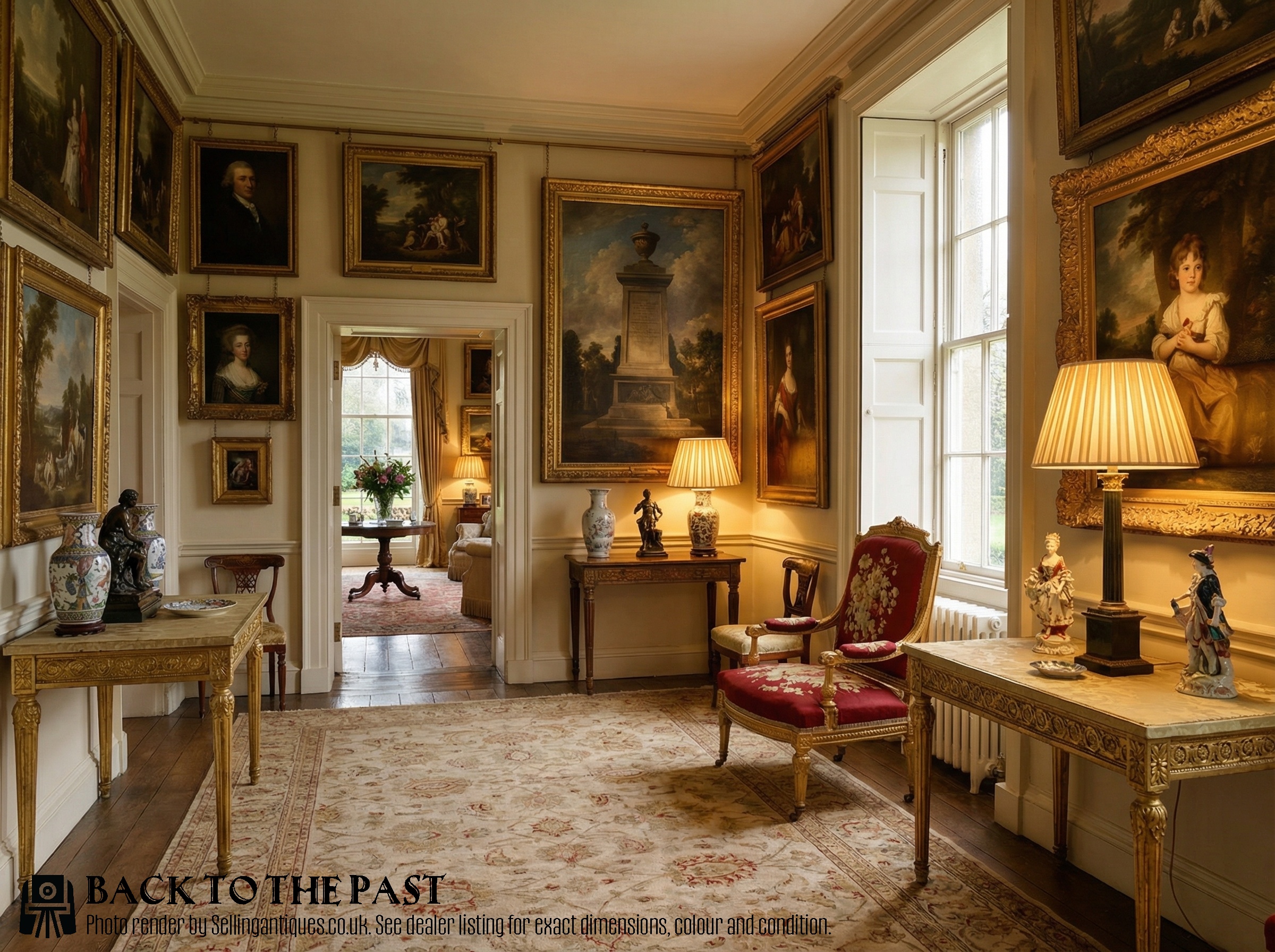
Floral Needlepoint Seat
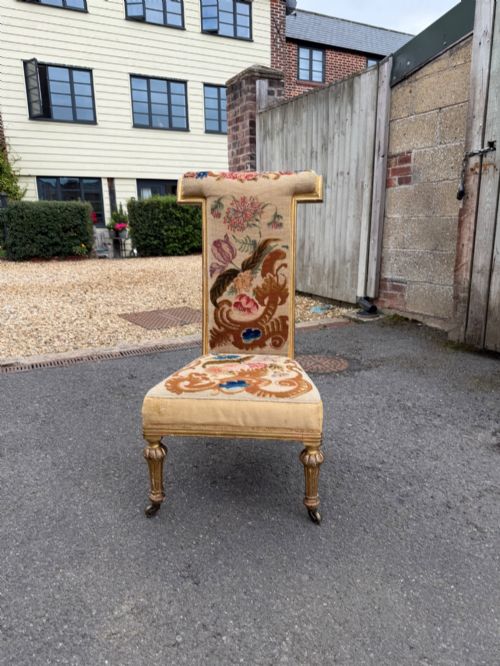
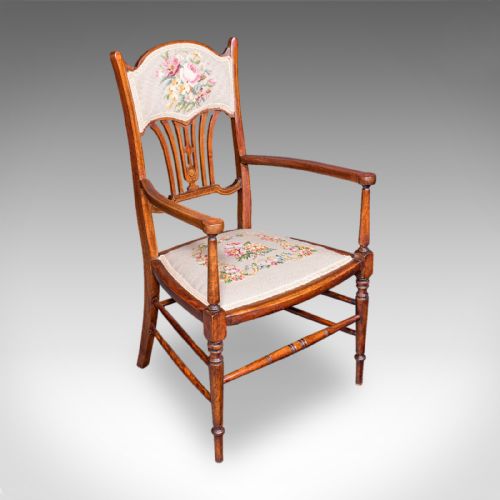
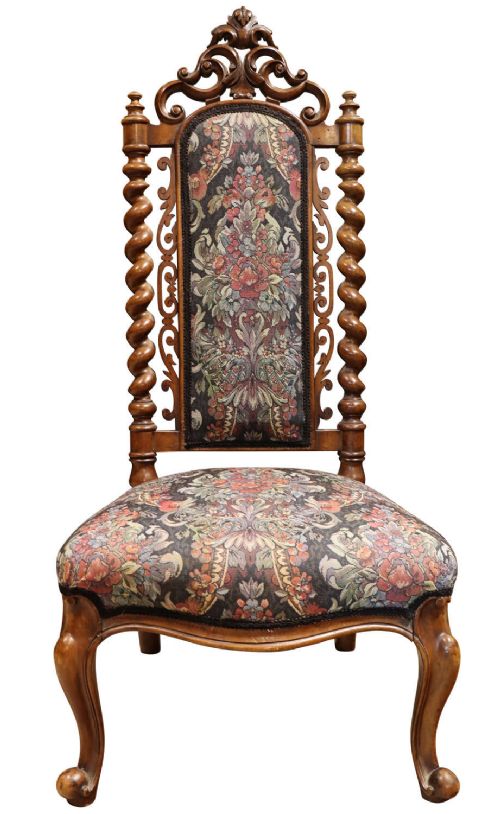
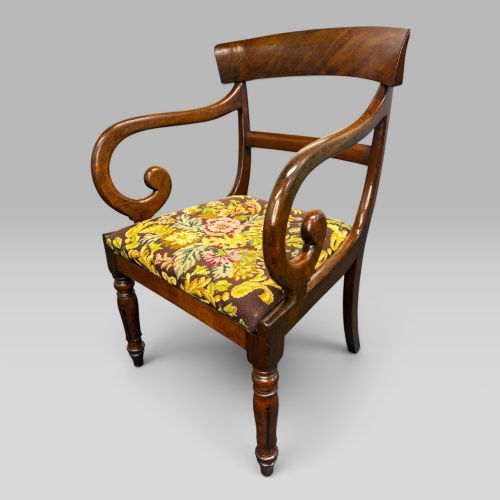
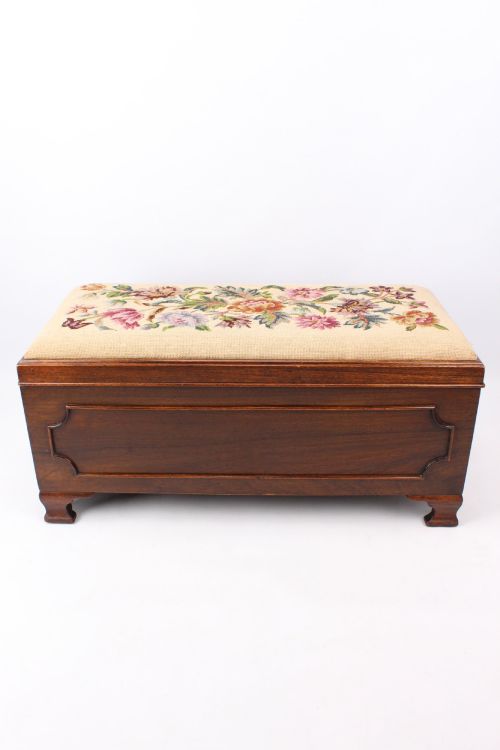
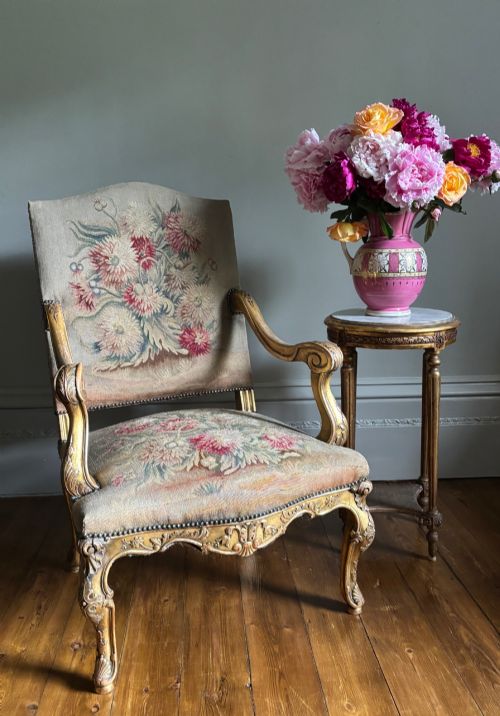
A floral needlepoint seat appears across numerous forms, encompassing armchairs, nursing chairs, dining chairs, and low stools designed for dressing rooms or salons. These pieces emerge from the nineteenth century into the early twentieth, spanning Victorian, Regency, and Edwardian eras.
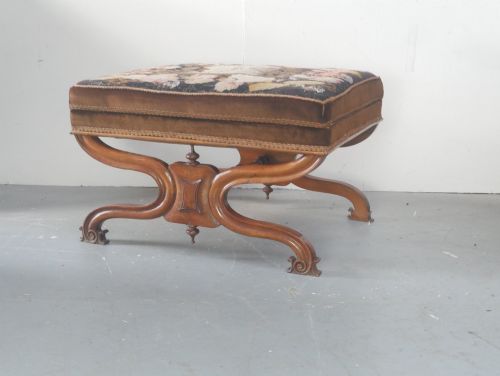
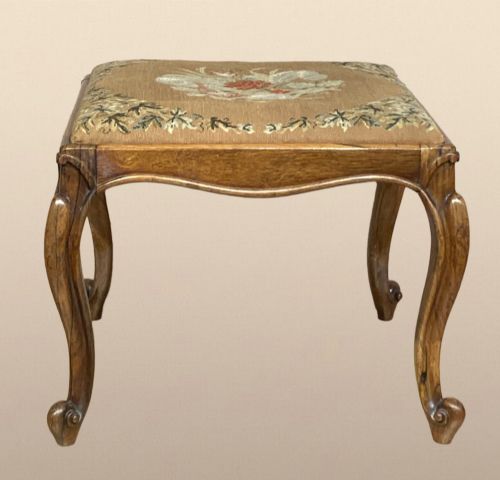
The version most commonly encountered on this page is the Victorian walnut or mahogany stool and armchair, featuring hand-worked wool tapestry covers. Alongside these sit side chairs, ottomans, and prie-dieux, often showing revival influences such as Queen Anne or Scottish Baronial styles.
Materials and construction
Frames are constructed from hardwoods including mahogany, walnut, rosewood, and beech, occasionally enhanced with giltwood, brass, or marquetry inlay. Cabinetmakers shaped these timbers into cabriole legs, sabre legs, or carved structural supports.
Upholstery relies on wool worked in needlepoint or tapestry stitches, fixed over padded foundations. These textile panels display floral patterns executed in varied colour palettes, secured to the wooden frames of chairs, footstools, and ottomans.
Historic footstools frequently preserve the quiet imprint of Victorian needlewomen who stitched flora into wool by lamplight.
Distinctions in quality
Quality rests in the crispness of the timber carving and the density of the hardwood frame, where substantial rosewood or walnut elevates a piece above standard beech. Maker attribution, through documented marks or distinct workshop characteristics, further separates standard production from finer examples.
The execution of the textile work dictates visual merit, separating finely shaded, tight needlepoint from simpler wool work. Integration between the upholstered seat and the structural frame determines the overall coherence of the furniture.
Waring and Gillow·R Whytock of Edinburgh·Holland and Sons·Gillows
The Floral Needlepoint Seat Glossary
- Needlepoint
- A type of counted thread embroidery stitched over canvas mesh to form dense pictorial or floral patterns. This technique creates the durable decorative surface seen on historic seats and footstools.
- Cabriole leg
- A furniture leg that curves outward at the knee and tapers inward toward the foot, inspired by animal limbs. It appears frequently on walnut and mahogany seating of the eighteenth and nineteenth centuries.
- Prie-Dieu
- A devotional chair featuring a low seat and an elevated, padded top rail designed for kneeling prayer. These pieces are often upholstered in tapestry or needlework panels.
- Ottoman
- A low, upholstered seat or footstool without arms or a back, frequently mounted on timber frames. They provide expansive surfaces for decorative needlework.
- Giltwood
- Timber coated with a thin layer of gold leaf or gilt gesso, creating a bright reflective surface. This finish is characteristic of formal nineteenth-century armchairs and decorative stools.
Floral Needlepoint Seat: Frequently Asked Questions
What is a floral needlepoint seat?
A floral needlepoint seat is an antique chair, stool, or ottoman featuring hand-stitched wool tapestry upholstery with botanical motifs.
These pieces combine functional wooden frames with decorative textile work produced across the nineteenth and early twentieth centuries.
How were these seats used historically?
They served practical and decorative functions across domestic interiors, from dining rooms to dressing chambers and morning rooms. Low stools and nursing chairs were specifically designed for intimate domestic seating near hearths or dressing tables.
Larger armchairs and sets of dining chairs furnished formal reception spaces.
How do I care for antique tapestry upholstery?
Protect needlepoint seats from direct sunlight to prevent wool fibres from fading over time. Gentle vacuuming through a mesh screen helps remove dust without disturbing the historic stitches.
How can I distinguish Victorian pieces from Regency examples?
Regency seating often displays classical restraint through linear mahogany frames, sabre legs, and restrained ornamentation. Victorian pieces typically feature heavier carved walnut or rosewood frames, cabriole legs, and more elaborate structural profiling.