




Edwardian Dinner Bell
An edwardian dinner bell brings traditional summons to the table through brass, bronze, and polished oak.
Edwardian Dinner Bell
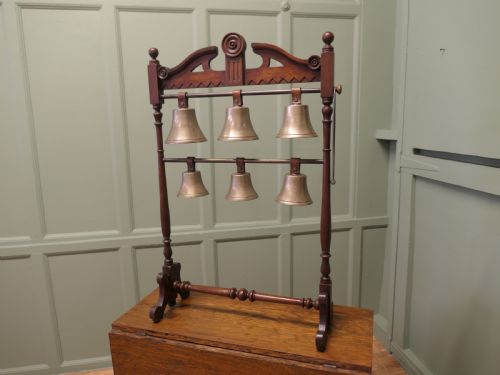
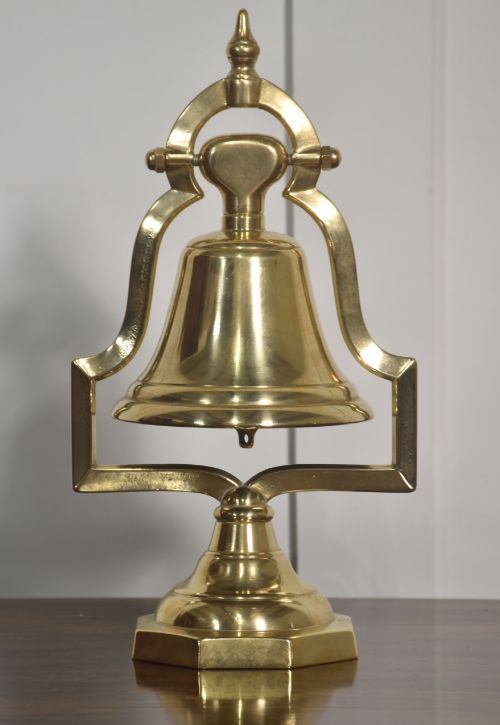
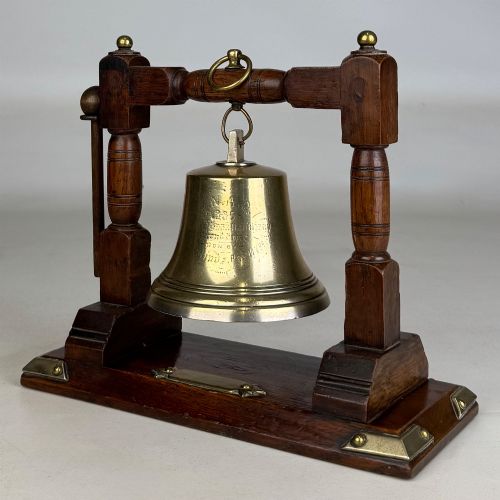
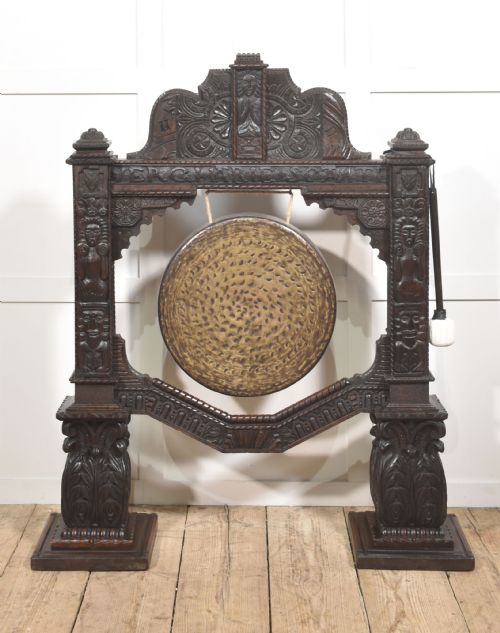
When you search for an edwardian dinner bell, you encounter table gongs, wall chimes, and handheld summons designed to gather household guests. These pieces primarily combine resonant brass bells or bronze gongs with turned oak stands and hardwood mounts.
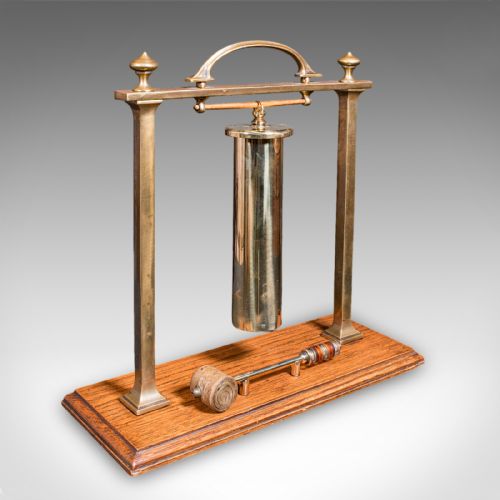
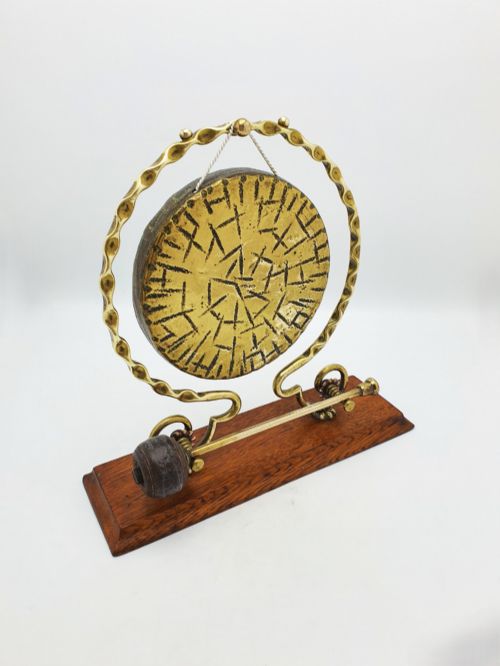
The selection ranges from compact tabletop bells to monumental carved oak frames suspended with strikers. You are most likely to meet brass gongs mounted on sturdy oak bases complete with dedicated handheld strikers.
Beyond standard domestic forms, variations include veranda supper gongs and tea ceremony pieces influenced by Oriental styles. Such examples demonstrate how domestic summons evolved to incorporate diverse decorative tastes during the period.
Materials and construction
Metalworking techniques dictate the voice of these pieces, utilising cast brass and bronze to achieve clear acoustic resonance. Strikers frequently employ matching brass or suspended bone to produce a sharp, clean tone.
Woodworking provides the structural support, relying predominantly on solid oak, walnut, and assorted hardwoods. Frames feature carved detailing, turned columns, and wall brackets secured with wrought iron.
Suspension systems utilise sturdy rope or metal fixings to isolate the vibrating gong from its wooden base. This traditional assembly ensures maximum acoustic projection when the striker hits the metal.
Listings feature oak, walnut, brass, bronze, wrought iron, and bone across various 19th and 20th-century periods.
Distinctions in quality
Quality rests primarily in the acoustic purity of the bell and the weight of the cast metal. Heavier brass and bronze castings yield a richer, more sustained tone than thin, pressed sheet metal.
Cabinetwork separates standard production from finer pieces, visible in deeply carved oak frames and stable, well-joined bases. Hand-turned wooden components and well-balanced strikers indicate superior original craftsmanship.
Decorative ambition further distinguishes the range, moving from plain utilitarian brackets to elaborate designs incorporating Art Nouveau, Japonisme, or Gothic Revival motifs.
The Edwardian Dinner Bell Glossary
- Dinner Gong
- A suspended metal disc or bowl struck with a mallet to summon people to meals. These instruments generate a deep, resonant tone designed to carry across large houses.
- Table Gong
- A smaller domestic version mounted on a portable stand for use directly on dining or tea tables. They offer a controlled, moderate volume suitable for intimate rooms.
- Striker
- The handheld mallet or hammer used to sound the bell or gong. They frequently feature turned wooden handles matching the main stand.
- Japonisme
- A late nineteenth-century artistic style influenced by Japanese art and design. Pieces featuring this aesthetic often incorporate asymmetrical motifs and exotic bronze forms.
- Gothic Revival
- An architectural and decorative style drawing inspiration from medieval forms. In these pieces, you see it expressed through pointed arches and heavy carved oak tracery.
Edwardian Dinner Bell: Frequently Asked Questions
How do you clean an antique brass bell?
Dust the surface regularly with a soft dry cloth to prevent grime accumulation. Avoid harsh chemical polishes that strip away the aged patina accumulated over decades.
For stubborn tarnish, apply a gentle brass cleaner sparingly with cotton wool. Buff the metal gently afterwards to restore a natural lustre without removing surface character.
Where were dinner gongs placed in the house?
Table gongs typically sat on sideboards or dining tables for immediate use during meals. Larger wall-mounted chimes hung in hallways or verandas so the sound carried into adjacent reception rooms.
Their placement depended on house size and the need to alert guests residing in upstairs bedrooms or distant drawing rooms. Servants operated them at strict scheduled hours.
What is the difference between a bell and a gong?
A bell is typically a hollow cup-shaped metallic vessel that produces sound through a clapper striking its inner walls. They deliver a bright, immediate ring.
A gong consists of a flat or curved metal disc struck externally with a separate mallet. This construction produces a deeper, more resonant tone with prolonged sustain.
How do I date an edwardian piece?
Examine the timber construction methods and fixing hardware used on the wooden base. Machine-cut screws and traditional tongue-and-joinery help narrow down the manufacturing decade.
Stylistic cues such as specific Art Nouveau flourishes or distinct regional carving styles provide additional chronological context. Compare the metal casting quality against known period pieces.