




Edwardian Copper Metalwork
Edwardian copper metalwork brings tactile warmth and beaten surfaces into domestic spaces, driven by Arts and Crafts ideals.
Edwardian Copper Metalwork
Edwardian copper metalwork encompasses utilitarian and decorative vessels, mirrors, and lighting shaped during the late nineteenth and early twentieth centuries. These pieces reflect the prevailing hand-wrought philosophies of the period, executed predominantly in domestic copper with occasional brass or iron framing.
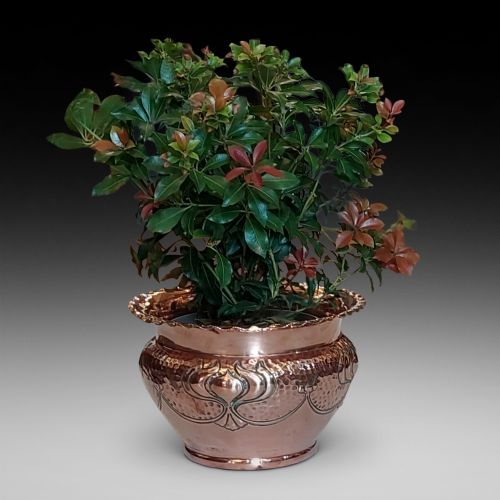
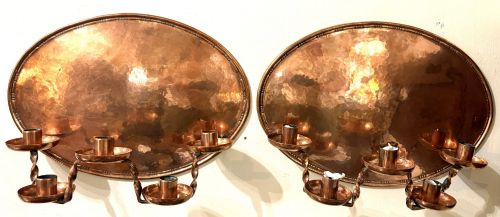
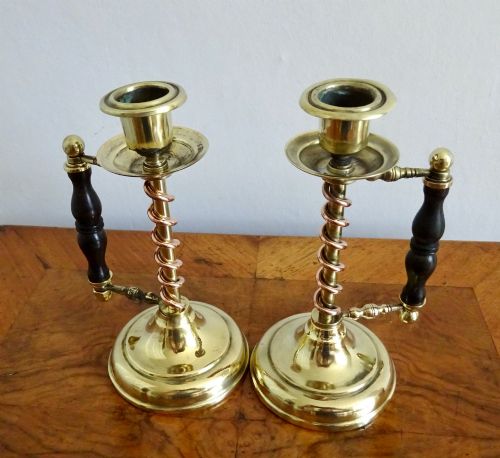
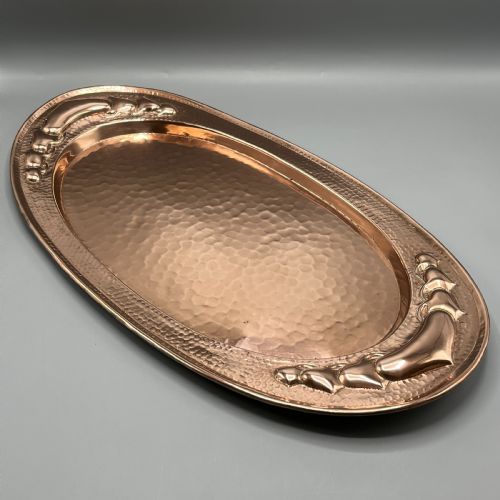
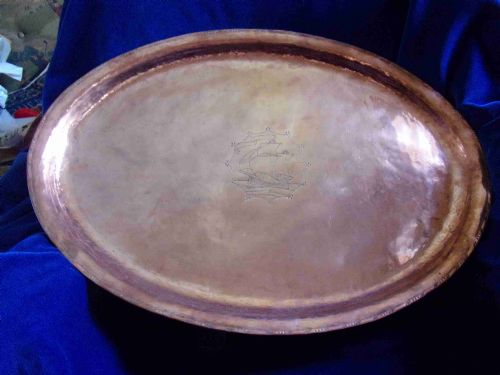
The objects most frequently met on this page include trays, wall mirrors, jardinieres, and candlesticks originating from the Edwardian era and surrounding decades. Many pieces display distinct stylistic crossovers between the Arts and Crafts movement and Art Nouveau, integrating organic motifs alongside functional design.
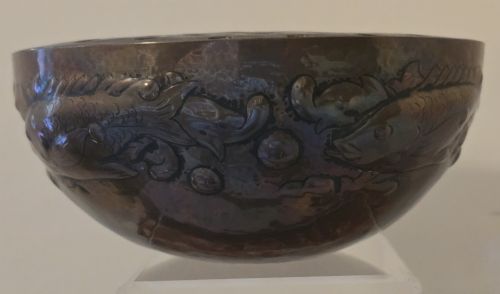
Vessels and wall pieces range from plain utilitarian items to heavily decorated chargers and rose bowls inset with enamel cabochons or turquoise. Form follows function closely, resulting in robust domestic items intended for daily use as well as display.
Construction and Materials
Makers shaped sheet copper by hand using hammers to raise vessels from flat blanks, leaving characteristic beaten textures across the surfaces. This manual hammering created resilient objects that combined structural integrity with visible craftsmanship.
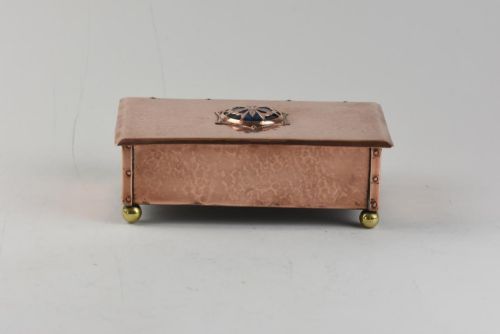
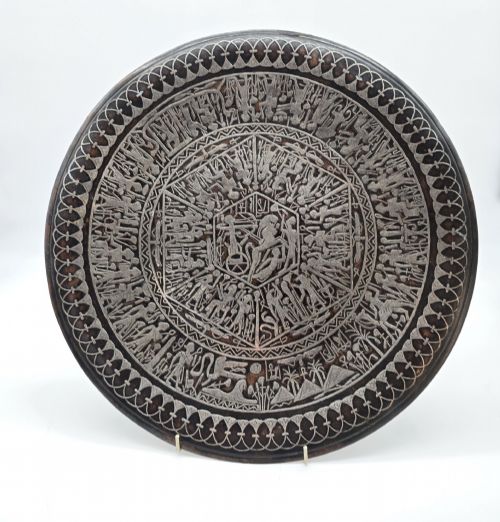
Decoration relied on repousse techniques to push designs outward from the reverse, supplemented by applied overlays, pierced lids, and riveted joints. Workshops frequently incorporated contrasting materials such as brass mounts, enamel cabochons, silver plating, and wrought iron supports.
Wooden cores, glass inserts, and ceramic or stone elements occasionally provided structural backing or interior support for boxes, trays, and planters. Finishes varied from polished metallic sheens to patinated surfaces that highlighted the natural warmth of the copper.
A copper Gladstone bag offers a sturdy metal alternative for domestic storage.
Assessing Quality
Quality rests upon the depth and control of the hand-beaten texture and the precision of the repousse relief work. Superior pieces display confident, purposeful hammer marks and crisp botanical or geometric motifs rather than shallow or mechanical stamping.
The integration of decorative details such as riveted overlays, secure enamel cabochons, and original fittings dictates the standing of an individual piece. Harmonious proportions and substantial gauge metal separate finer workshop production from simpler commercial output.
The character of the aged patina influences visual success, with untouched surfaces retaining the subtle tonal variations accumulated over decades. Original components, including pierced lids and matching pairs, elevate the integrity of the object.
Newlyn Copper·Keswick Arts and Crafts·Hugh Wallis·Birmingham Guild of Handicraft·Faulkner Bronze Company
The Edwardian Copper Metalwork Glossary
- Repousse
- A metalworking technique where the metal is hammered from the reverse side to form a raised design in relief. Details are subsequently refined from the front using chasing tools.
- Cabochon
- A gemstone or piece of enamel polished to a smooth convex shape rather than faceted. These often form central decorative focal points on boxes and bowls.
- Jardiniere
- An ornamental pot or stand designed to hold a plant or floral arrangement. These metal containers frequently feature robust handles and waterproof inserts.
- Tazza
- An Italian term for a shallow saucer-shaped dish or bowl mounted on a stem and foot. They function as centrepiece display dishes for fruit or flowers.
- Flagon
- A large vessel with a handle and spout used for holding liquids. Metal examples often double as decorative jugs within domestic collections.
Edwardian Copper Metalwork: Frequently Asked Questions
What is Edwardian copper metalwork?
Edwardian copper metalwork comprises domestic objects and decorative items produced around the turn of the twentieth century. These pieces reflect the hand-wrought ideals of the Arts and Crafts movement.
Items range from everyday vessels like kettles and trays to mirrors and wall sconces. Makers utilised traditional hammering and repousse techniques to create tactile surfaces.
How do I clean antique copper?
Antique copper generally requires minimal cleaning to preserve the historic surface patina accumulated over time. Vigorous polishing removes the dark oxidation that collectors value.
Dusting with a dry cloth or washing gently with mild soap and warm water is usually sufficient. Avoid harsh chemical cleaners that strip the natural colour from the metal.
How do I date these metal objects?
Dating relies upon stylistic markers, construction methods, and occasionally stamped workshop marks or engraved signatures. Pieces often bridge Victorian aesthetics and later modernist designs.
Examine the fastenings, fixings, and hammering patterns to understand the period of manufacture. Hallmarks or maker stamps provide the most definitive chronological evidence.
Where were these metal items made?
Production centred around specialised guilds, industrial workshops, and regional craft communities across Britain. Important schools emerged in Cornwall, the Lake District, and urban centres.
Individual craftsmen and larger metalwork enterprises produced both utilitarian wares and exhibition pieces. Regional styles often developed distinctive surface textures and decorative motifs.
How do I display copper in my home?
Copper metalwork integrates well into both traditional and contemporary interiors due to its warm metallic tone. Wall mirrors and sconces introduce reflected light and texture to plain surfaces.
Trays, bowls, and planters function effectively as standalone display pieces or functional containers. Grouping items by finish or period creates a cohesive aesthetic display.