






Hammered Metal Platter
These hammered metal platter examples combine utility and texture, offering a tactile surface that brings historic metalwork directly into contemporary rooms.
Hammered Metal Platter
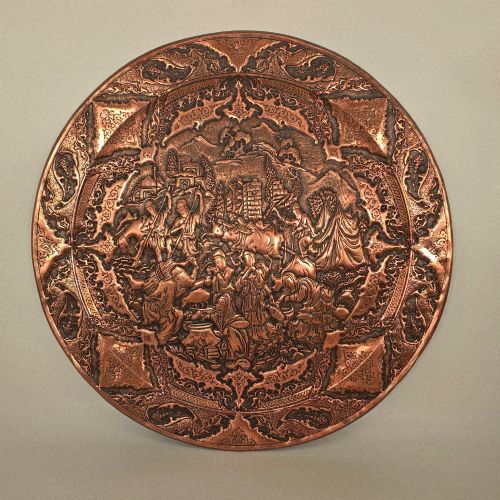
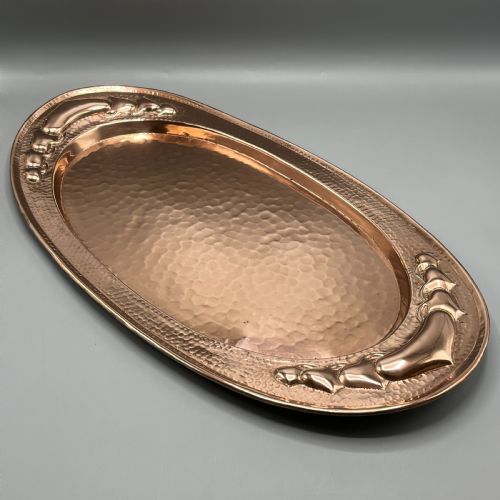
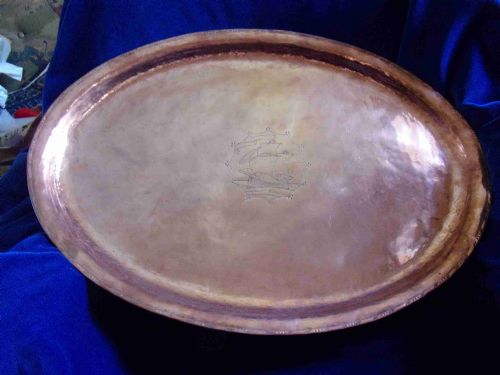
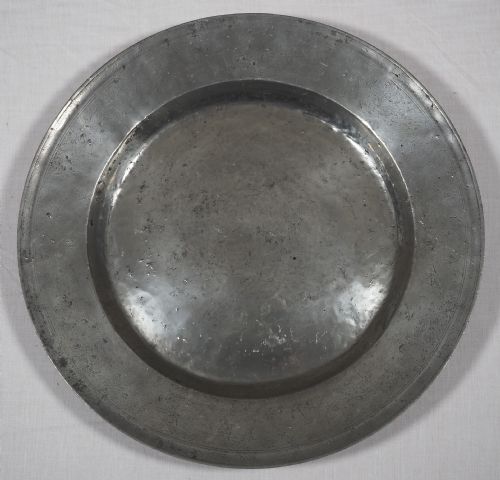
A hammered metal platter sits at the intersection of functional serving ware and decorative wall display, drawing the eye through worked surface textures. When seeking a hammered metal platter on this page, you encounter forms spanning from late seventeenth century English pewter chargers to early twentieth century Arts and Crafts copper and brass vessels.
The selection ranges across distinct stylistic lineages, including Persian and Anglo-Indian Raj metalwork, continental European revivals, and domestic British workshops. Serving trays, decorative chargers, and wall plates dominate the inventory, each bearing the characteristic indentation marks of the artisan's mallet.
Pieces from the Arts and Crafts and Art Nouveau periods frequently display botanical motifs, pomegranates, or stylized floral relief, whilst earlier examples rely on hammered all-over finishes and incised rims. You meet objects shaped for display or service, utilising copper, brass, and pewter across multiple centuries.
Assessing quality and execution
Quality in these pieces rests upon the crispness of the repoussé work and the balance of the overall design across the metal surface. Superior examples demonstrate a confident control of the hammer, where every indentation contributes to a coherent visual rhythm rather than random surface marking.
The weight of the metal and the integrity of the rim construction separate standard domestic wares from workshop pieces designed by notable makers. Depth of relief, clarity of chased details, and the survival of an original patinated surface further distinguish the finer examples in this field.
Hammered Metal Platter Retail Price Guide 2026
Typical asking prices for hammered metal platter among the pieces listed under this phrase on Sellingantiques today, from the lower quarter to the upper quarter. They describe what is for sale here now, not the wider market.
Listings feature hammered metal platters spanning the seventeenth century through to the 1930s, utilising copper, brass, and pewter.
Hugh Wallis·Liberty and Co·Faulkner Bronze Company·Thomas Powell
The Hammered Metal Platter Glossary
- Repoussé
- A metalworking technique where the artisan hammers the design from the reverse side to create a raised relief on the front. This method gives these platters their characteristic three-dimensional pictorial depth.
- Charger
- A large ornamental plate or platter originally used for ceremonial dining or displayed upright on sideboards and walls. These items often feature more elaborate decoration than everyday service trays.
- Pewter
- A malleable alloy traditionally composed of tin alloyed with copper and lead or antimony. It provides a soft metallic lustre suited to heavy hammering and early manufacturing techniques.
- Patination
- The natural or induced oxidation on the surface of copper, brass, or pewter over time. This chemical change produces distinct tonal variations that enhance the visual depth of beaten metal.
Hammered Metal Platter: Frequently Asked Questions
How do I clean an antique hammered metal platter?
Maintenance depends entirely on the metal and the presence of historic patination. Light dusting with a soft cloth is generally sufficient for copper and brass surfaces.
Avoid aggressive metal polishes that strip away age and character. Pewter requires minimal intervention beyond gentle washing with mild soap and immediate drying.
Can I use these antique platters for serving food?
Most of these pieces served ornamental roles or decorative functions in their original domestic contexts. Historical pewter and brass alloy compositions may contain trace elements unsuitable for modern food contact standards.
Display them as wall plates or table centerpieces rather than utilising them for daily dining.
How do I hang a heavy charger on the wall safely?
Wall display requires a specialised wire plate hanger with protective rubber tips that grip the rim without biting into the metal. Ensure the fixing matches the substantial weight of copper or pewter chargers.
Check that the wall anchor secures directly into a stud or uses heavy-duty plaster toggles.
How can I tell an Arts and Crafts platter from an earlier one?
Arts and Crafts pieces from the late nineteenth and early twentieth centuries typically feature stylized organic motifs, pomegranates, or fluid Art Nouveau lines. Makers from this movement often signed their work or reflected specific guild aesthetics.
Earlier seventeenth and eighteenth-century examples rely on plain hammered surfaces, triple reeded rims, or heraldic engraving rather than reformist design motifs.