

Edwardian China Display Case
An edwardian china display case brings lightness and refinement to a room, framing porcelain and glassware behind glazed timber doors.
Edwardian China Display Case
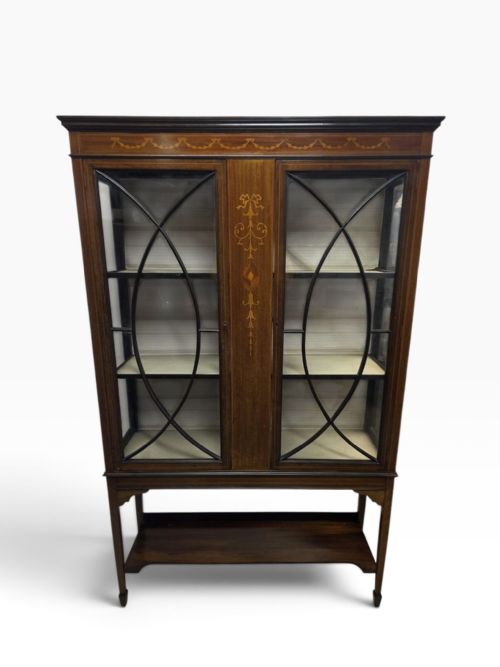
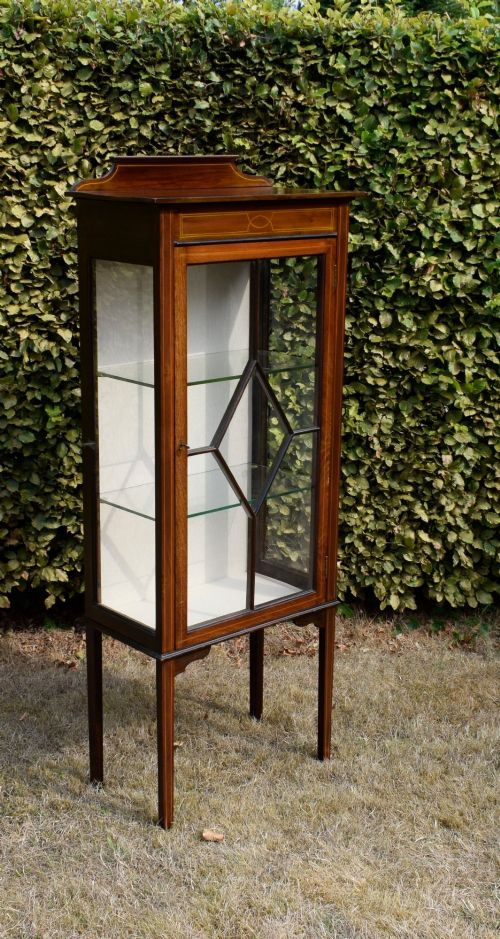
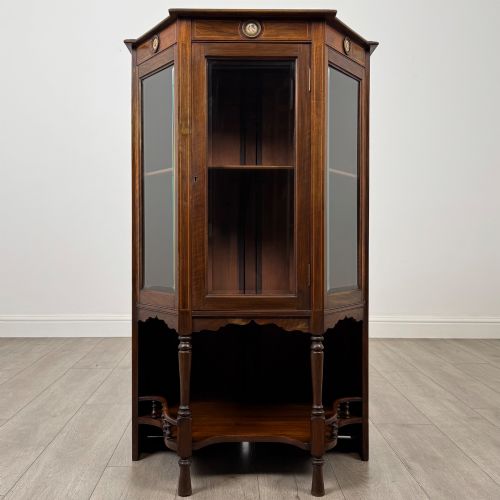
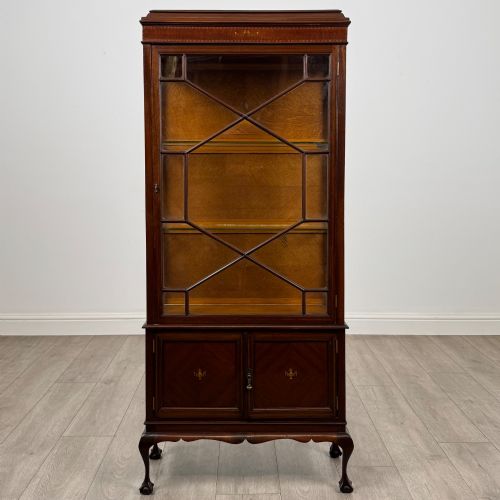
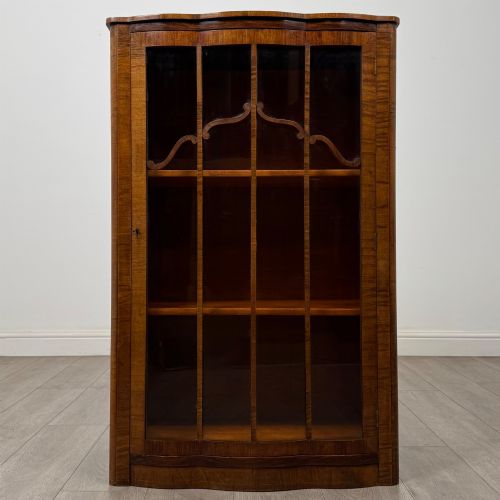
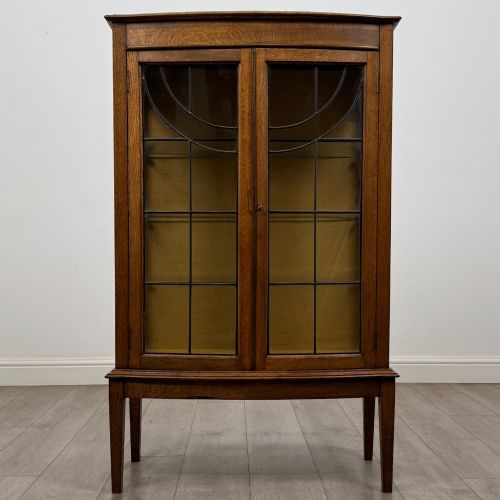
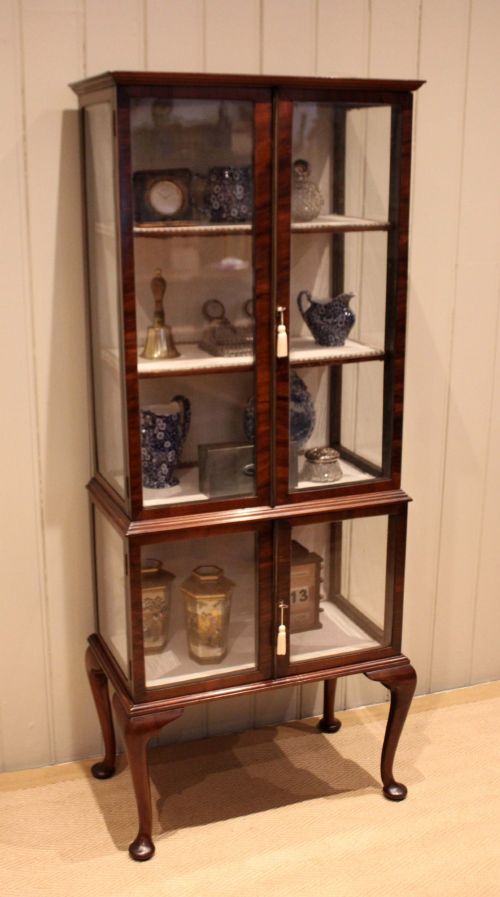
An edwardian china display case is typically encountered as a freestanding cabinet or bookcase in mahogany or oak, dating from the early twentieth century. These pieces combine glazed doors and sides to showcase decorative ceramics while protecting them from dust.
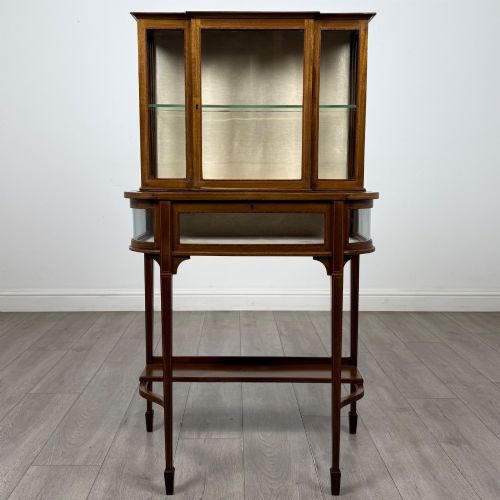
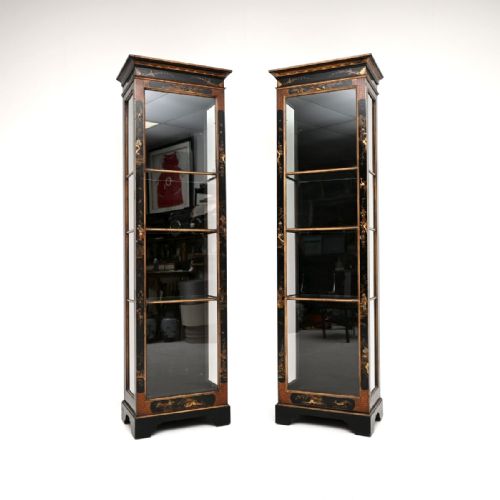
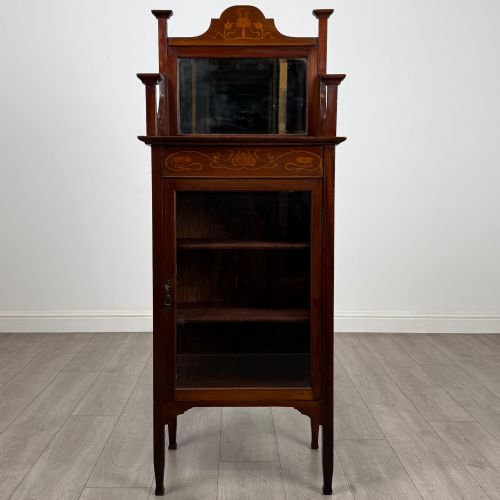
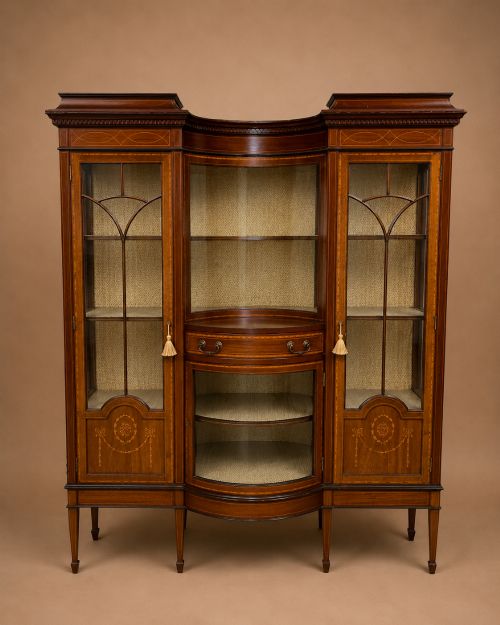
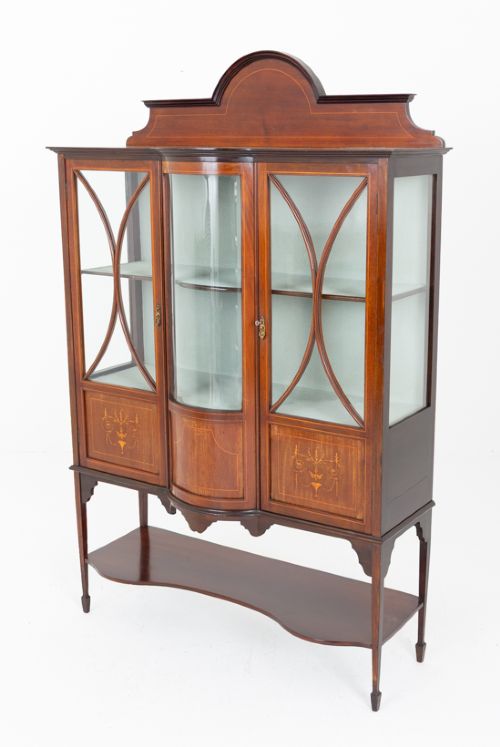
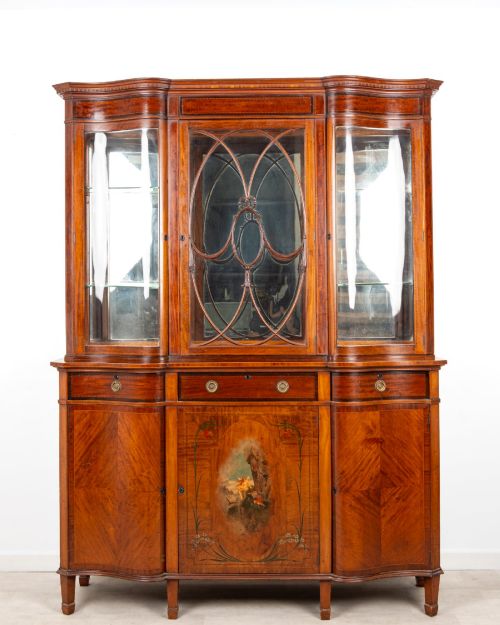
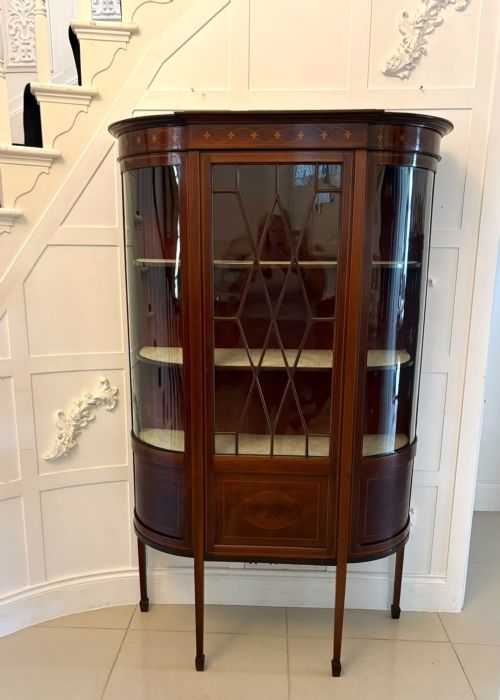
The selection ranges from upright serpentine and bow-front forms to corner cabinets and taller bookcase combinations. Alongside standard Edwardian work, pieces reflect Sheraton Revival, Art Nouveau, and Chinoiserie tastes from the period.
Origins span English workshops alongside Continental and French-influenced designs, maintaining the characteristic light proportions and polished wood surfaces of the era.
How They Were Made
Cabinetmakers utilised solid and veneered timbers including mahogany, satinwood, walnut, and oak, often mounting glass panels within slender wooden frames. Brass hardware, mirrored backs, and fabric linings were integrated to enhance the interior display.
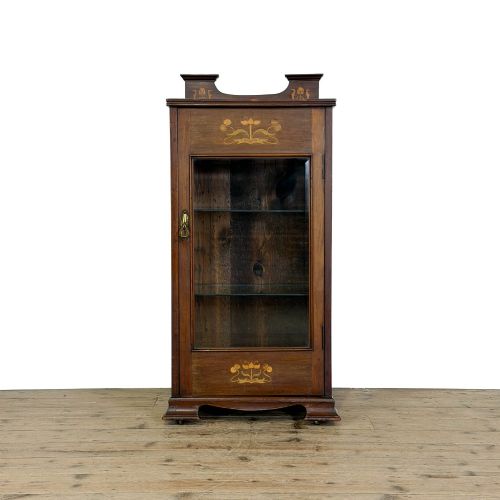
Decoration relied on contrasting satinwood inlay, painted motifs, and gilt mounts rather than heavy carving, preserving a delicate aesthetic. Lacquering appeared on specialised Chinoiserie examples, while leaded glass gave structure to particular bookcase doors.
Form variations on this site include corner cabinets, bookcase combinations, and serpentine bow-front display storage.
What Varies in Quality
The distinction between standard utility and finer craftsmanship lies in the selection of figured veneers, the precision of the inlay work, and the handling of curved elements such as serpentine or bow fronts. Superior examples employ carefully matched timber grains and refined glazing bars.
Construction details, including the thickness of the timber, the integration of brass mounts, and the crispness of painted or lacquered decoration, separate mass-produced items from pieces built by skilled makers.
Maple & Co.
The Edwardian China Display Case Glossary
- Sheraton Revival
- A late nineteenth and early twentieth century style inspired by the neoclassical furniture designs of Thomas Sheraton, often featuring satinwood inlay and tapered legs.
- Serpentine
- A curved cabinet front or shelf outline that undulates outward in the centre and inward at the sides, demanding high skill in woodworking.
- Bow-front
- A convex, outwardly curved front section typical of certain display cabinets and sideboards from the period.
- Chinoiserie
- European decorative design employing imitation Chinese motifs, frequently executed in lacquer and painted finishes on cabinets.
- Inlay
- A technique where pieces of contrasting wood, such as satinwood, are inserted into recessed portions of a primary timber surface to form decorative patterns.
Edwardian China Display Case: Frequently Asked Questions
What is an edwardian china display case used for?
These cabinets were originally designed to house and exhibit fine porcelain sets, tea services, and glassware within the domestic parlour or drawing room. The glazed panels allowed collectors to view their items safely while keeping them free from dust.
Today, they serve a similar purpose in contemporary interiors, providing upright storage that keeps decorative objects visible and protected.
How do I identify an Edwardian piece?
Edwardian furniture generally dates from the reign of King Edward VII between 1901 and 1910, though pieces span from the late nineteenth century into the 1920s. Look for lighter proportions, mahogany or oak construction, and subtle satinwood inlay rather than the heavier dark woods of the Victorian era.
Stylistic influences often point towards revival movements, including Sheraton Revival and Art Nouveau, which favour elegance and symmetry.
Where should I place a display cabinet?
These cabinets suit dining rooms, living spaces, or hallways where natural light can pass through the glazed doors to illuminate the interior contents. Because many examples feature finished sides or flat backs, they can stand flush against a wall or sit neatly within a corner depending on the specific form.
Avoid positioning them in direct sunlight to protect antique timber finishes and any fabric linings inside.
Are these cabinets suitable for small rooms?
Many Edwardian display pieces were built with slender frames, raised legs, and mirrored backs that help bounce light around a smaller interior space. Slimmer upright models and corner configurations take up minimal floor area while offering vertical storage.
Their restrained decoration prevents them from overwhelming a compact room compared to bulkier period furniture.