
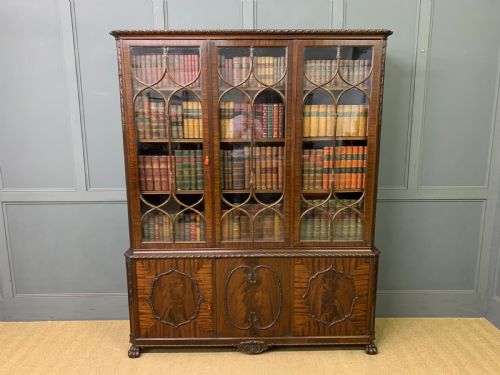
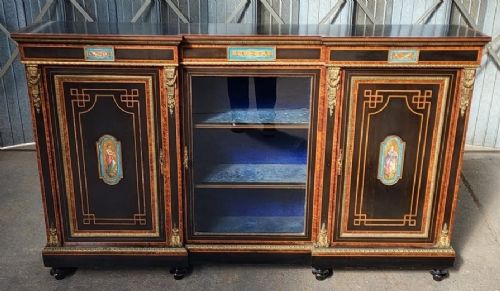
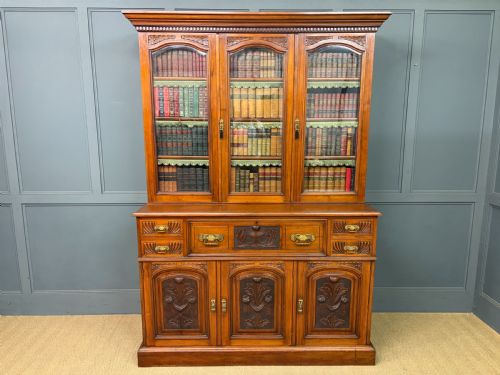
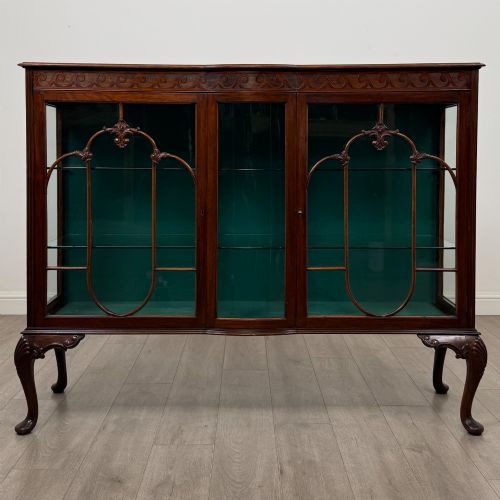
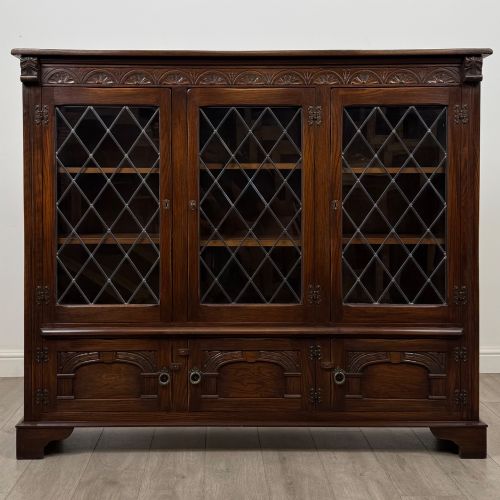
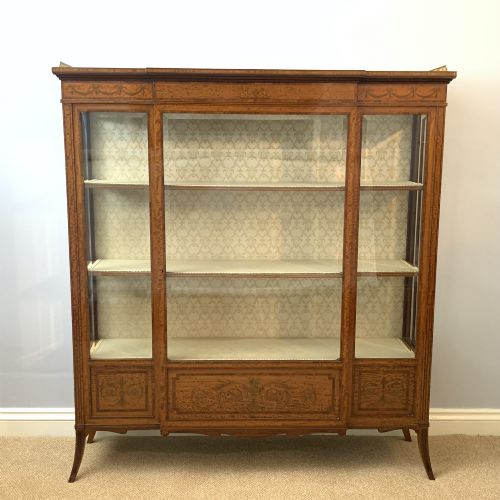
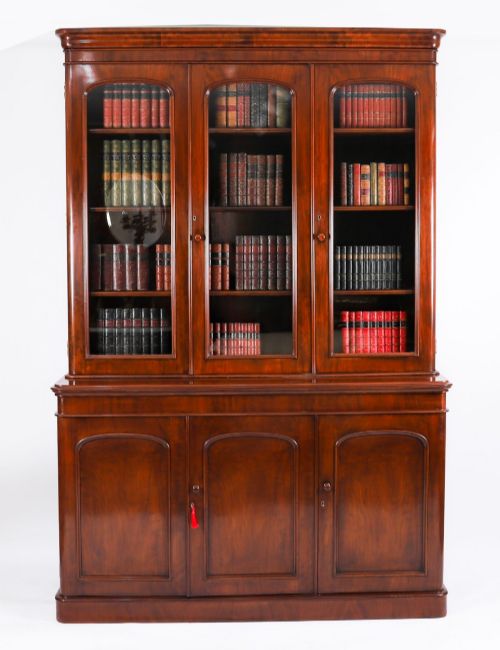
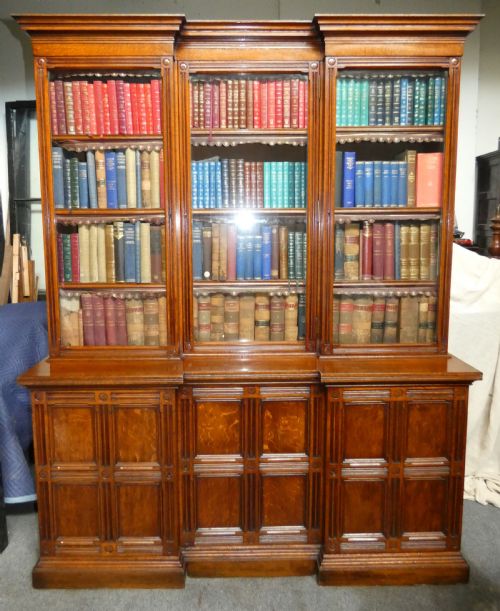
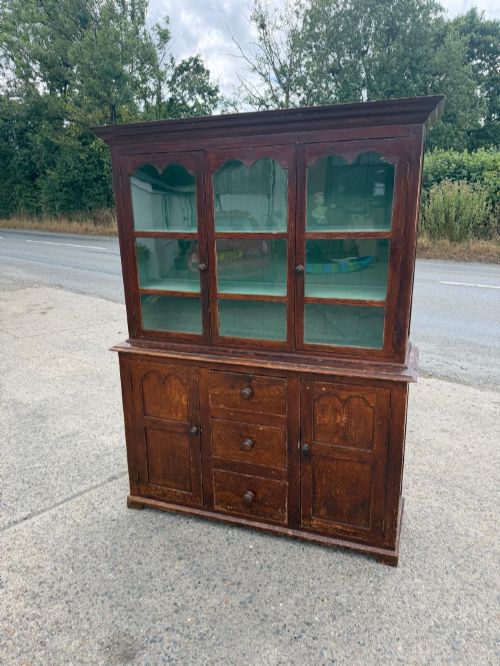
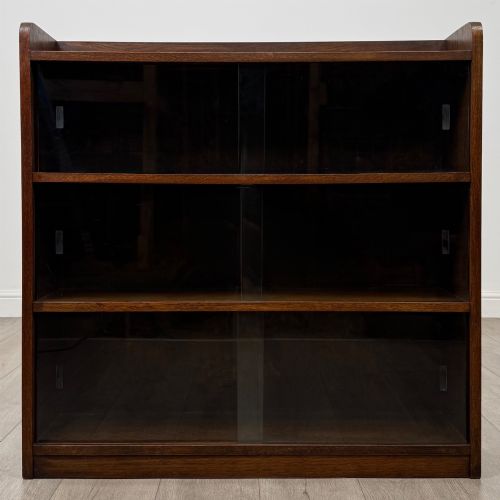
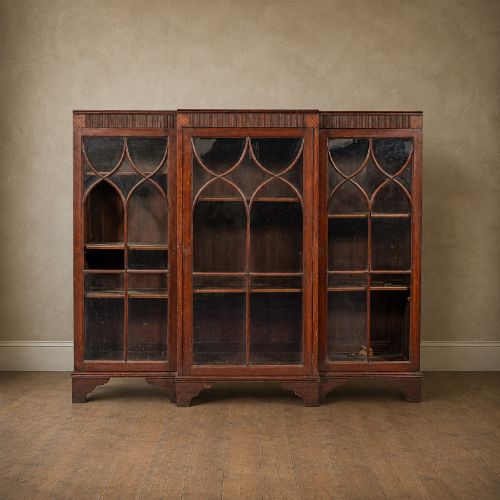
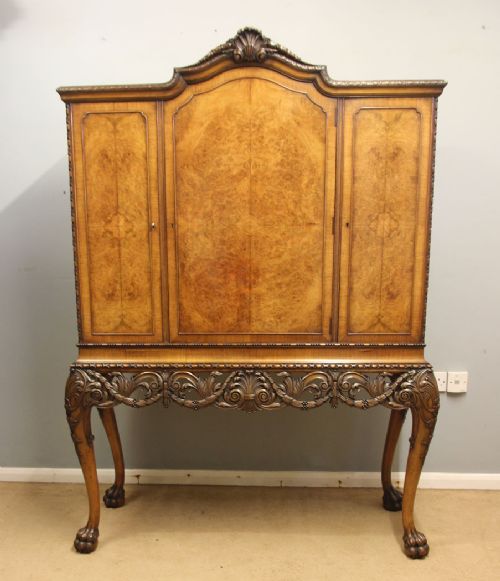


Three Door Display Cabinet
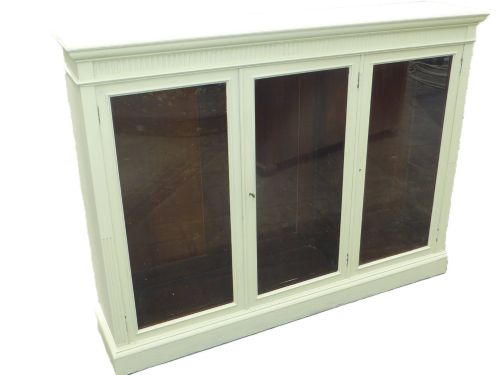
A three door display cabinet offers generous glazed storage for collections, uniting the utility of a bookcase with the theatricality of a vitrine.
Three Door Display Cabinet
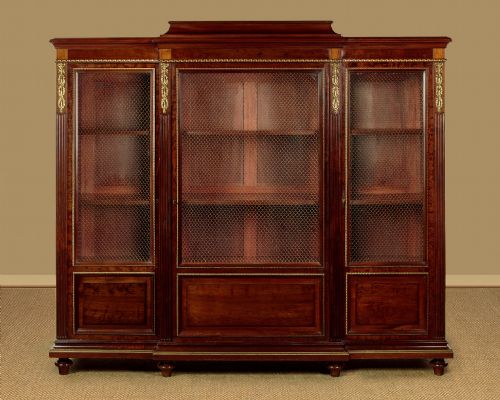
A three door display cabinet serves as a substantial architectural presence in a room, combining large glass panes with timber shelving to showcase books and objects. These pieces emerge predominantly from the Victorian and Edwardian eras, spanning walnut, mahogany and oak constructions that reflect revivalist tastes.
The format frequently appears as a breakfront configuration, where the central section projects forward to create depth and visual rhythm across the three glazed doors. Buyers encounter both dedicated display cabinets and multi-functional library bookcases that adapt glazed upper sections for ornamental storage.
Materials and construction
Cabinet makers utilised dense hardwoods such as mahogany, walnut and oak as the foundational carcasses, often applying figured veneers like burr walnut or flame mahogany to the primary surfaces. Brass mounts, ormolu details and intricate inlay work punctuate the timber frames.
Glazing techniques employed large glass panes set within timber framing, supported by adjustable internal shelving and sometimes mirrored backs to amplify ambient light. Carved mouldings and panelled bases anchored these heavy architectural forms.
Three Door Display Cabinet Retail Price Guide 2026
Typical asking prices for three door display cabinet among the pieces listed under this phrase on Sellingantiques today, from the lower quarter to the upper quarter. They describe what is for sale here now, not the wider market.
Listings span Victorian, Edwardian and early twentieth century periods, predominantly utilising oak, walnut and mahogany.
Markers of distinction
Quality reveals itself in the selection of timber veneers, where symmetrical grain matching across three large doors demonstrates the cabinet maker's ambition. Finer examples display crisp, hand-carved ornamentation rather than cast composition details, alongside well-fitted brass hardware and original glass.
Structural integrity within the breakfront carcass and the precision of the door seating dictate the piece's longevity. Superior workshops ensured balanced weight distribution across the wide glazed frames, preventing timber warp and preserving smooth door operation.
Edwards & Roberts·Waring & Gillow·Linke
The Three Door Display Cabinet Glossary
- Breakfront
- A cabinet facade where the central section projects forward from the flanking wings. This architectural arrangement creates shadow and depth across three door elevations.
- Vitrine
- A glass-sided display case designed specifically for the exhibition of porcelain and precious objects. The term highlights the glazed emphasis found in these cabinets.
- Ormolu
- Gilt bronze mounts applied to furniture surfaces for decorative contrast. Makers used these metallic accents to elevate the formality of mahogany and ebonised carcasses.
- Inlay
- The technique of inserting contrasting strips of wood, brass or shell into recesses within the timber surface. It defines revivalist styles through precise geometric patterns.
Three Door Display Cabinet: Frequently Asked Questions
How do I light my display cabinet?
Modern discreet LED strip lighting can be installed along the interior top cornices to illuminate shelves without generating damaging heat.
Positioning the cabinet away from direct sunlight protects both the timber finish and the displayed contents from fading.
Can shelves be adjusted for height?
Many Victorian and Edwardian examples feature traditional wooden peg supports or rack systems that allow internal shelf adjustment.
Heavier library bookcases often accommodate varied book sizes through this modular internal construction.
Where should I place a breakfront cabinet?
A breakfront silhouette requires a substantial wall expanse to accommodate its forward-projecting central section without overwhelming the room.
Allowing sufficient clearance for the three wide doors to swing fully open is essential for practical access.
How do I care for antique glass?
Clean historic glass gently with a soft cloth and mild solution, avoiding abrasive ammonia-based sprays that might damage aged timber frames.
Inspect the putty or glazing beads periodically to ensure the large glass panes remain securely seated.