




Golden Wood China Cabinet
A golden wood china cabinet brings warmth and refined display space to a room, uniting delicate satinwood and yew with clear glass.
Golden Wood China Cabinet
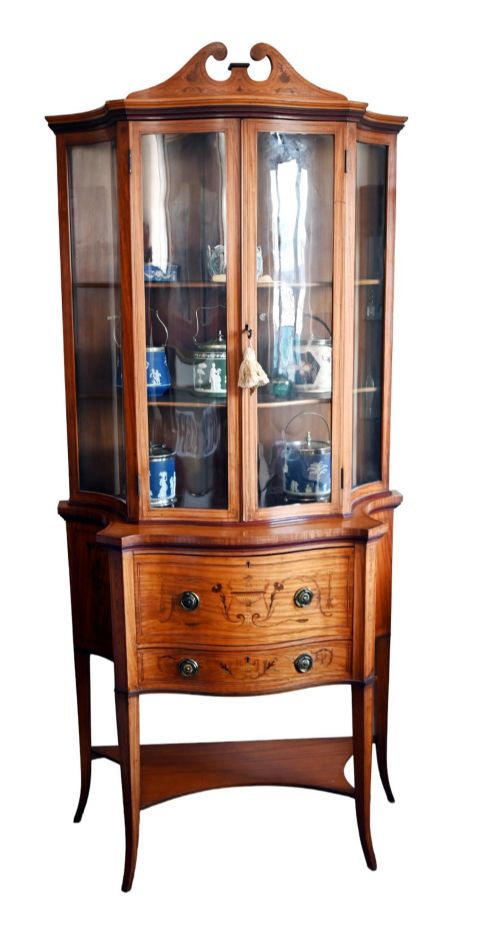
A golden wood china cabinet encompasses display cabinets, corner cabinets, vitrines, and bureau bookcases designed to showcase porcelain and treasured objects. When searching for a golden wood china cabinet, buyers encounter pieces fashioned primarily from satinwood and yew wood, often enhanced by marquetry and inlaid details. These items span periods from the Georgian era through the Victorian, Edwardian, and up to nineteen-thirty.
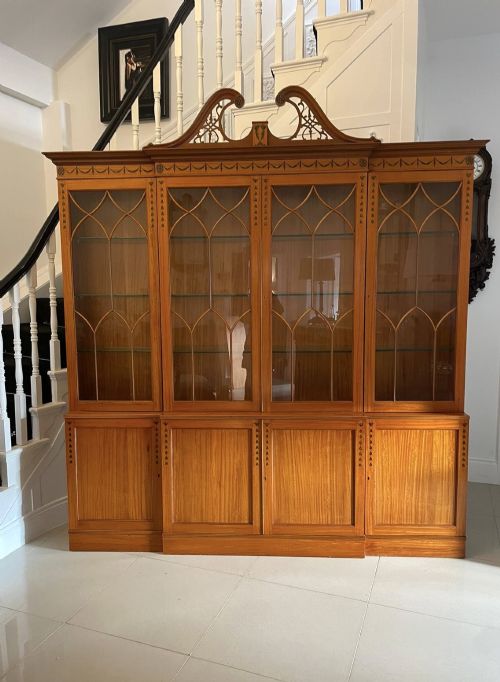
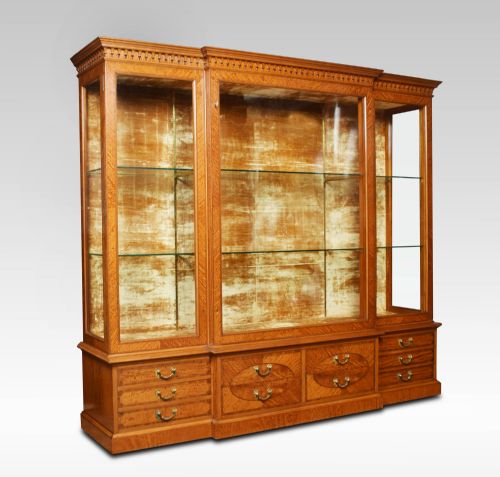
The prevailing form on this page is the display cabinet, frequently rendered in satinwood with glazed doors and serpentine fronts. Examples range from compact corner cupboards to large breakfront configurations with astral glazing and original painted decoration. One finds nineteenth-century and nineteen-hundred pieces representing Sheraton Revival and Grand Regency styles alongside traditional Victorian and Edwardian craftsmanship.
How they were made
Cabinet makers utilised fine timbers including satinwood, yew, and bird's-eye maple to achieve a luminous golden finish. These woods were frequently selected for their striking grain patterns and complemented by intricate marquetry and inlaid decoration.
Glazing was a central technique, employing glass panes held within wooden frameworks such as astral glazing bars. Brass hardware and fabric linings often completed the interior and exterior detailing of these display pieces.
What varies in quality
The calibre of a cabinet rests on the selection of timber and the precision of its marquetry and inlay work. Satinwood surfaces with rich, figured grain and well-executed painted decoration indicate superior workshop production.
Structural harmony also distinguishes finer examples, where serpentine fronts, breakfront proportions, and original glazed doors integrate seamlessly. The presence of original decorative elements elevates the integrity of the piece.
The Golden Wood China Cabinet Glossary
- Satinwood
- A durable timber known for its golden lustre and fine grain, frequently utilised in high-end cabinet making. It forms the primary material for many Sheraton Revival display pieces.
- Astral glazing
- A method of dividing glass panes within a cabinet door using slender wooden bars. This technique creates geometric patterns across the front of the display.
- Marquetry
- The art of applying pieces of veneer to a structure to form decorative patterns. Craftsmen use varied wood tones to create intricate pictorial or geometric designs.
- Serpentine
- A curved shape characterised by a convex centre flanked by concave sides. This contour adds movement and elegance to the silhouette of a cabinet.
- Breakfront
- A large piece of furniture where the central section projects forward from the flanking wings. This architectural arrangement creates depth and visual interest in larger display cabinets.
Golden Wood China Cabinet: Frequently Asked Questions
What periods do these cabinets come from?
These cabinets originate from the Georgian, Victorian, and Edwardian eras, extending into the early twentieth century. Makers drew upon styles like Sheraton Revival and Grand Regency during these periods.
Items span the late eighteenth century through to nineteen-thirty, reflecting shifting tastes in domestic display furniture.
Which woods are most common?
Satinwood is the most frequently encountered timber, prized for its pale golden appearance and smooth texture. Yew wood and bird's-eye maple also appear.
These timbers provided makers with distinctive grain patterns suitable for decorative inlay and marquetry.
How were these cabinets used?
They were designed for the formal parlour or drawing room to display valuable china, glass, and curiosities. The glass doors protected delicate items from dust while permitting visibility.
Interior fabric linings often provided a contrasting background for porcelain collections.