
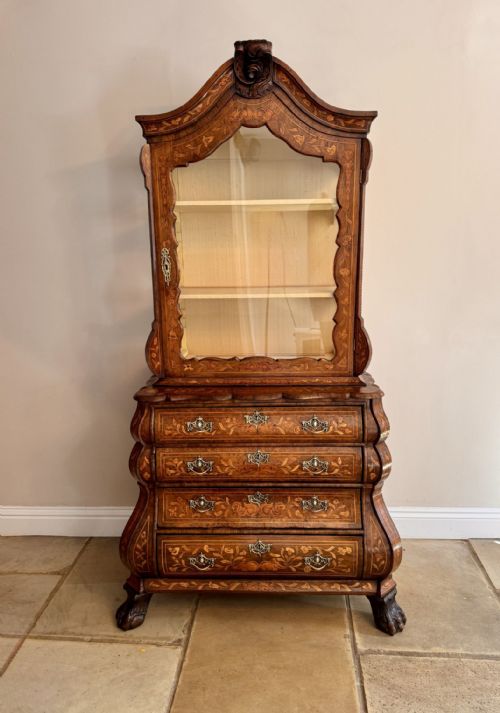
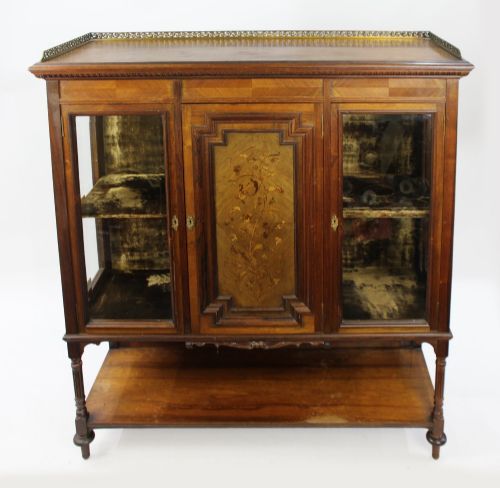
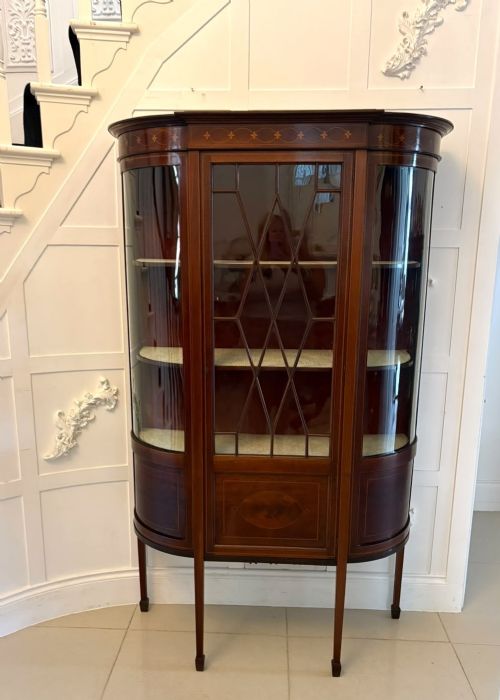
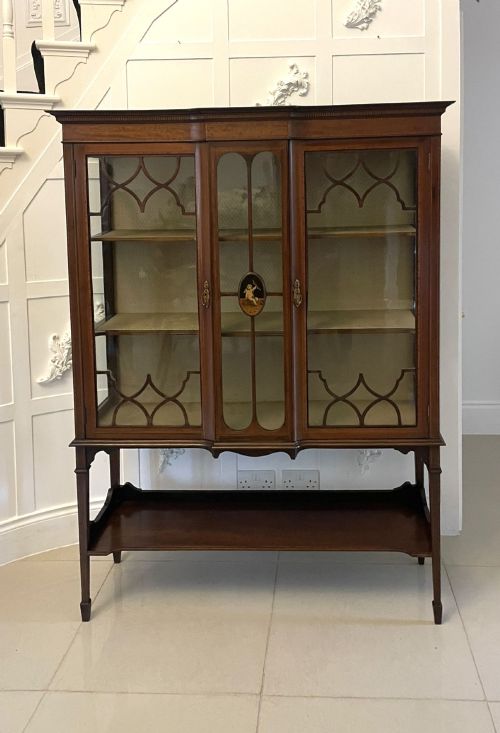
Antique Inlaid Vitrine
An antique inlaid vitrine brings disciplined glass and timber together to display porcelain and silver with unmistakable period style.
Antique Inlaid Vitrine
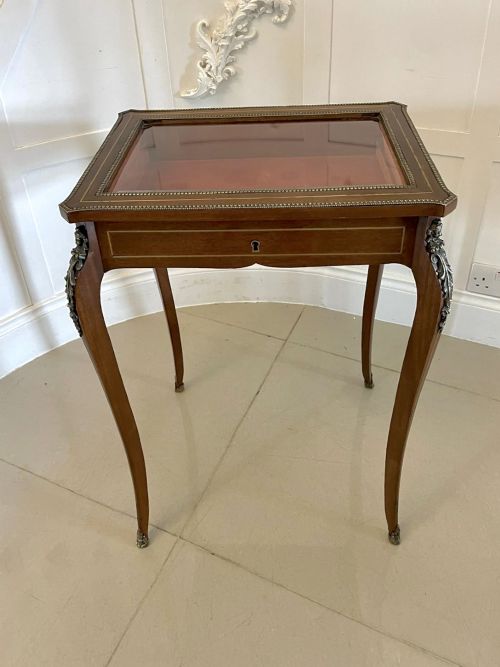
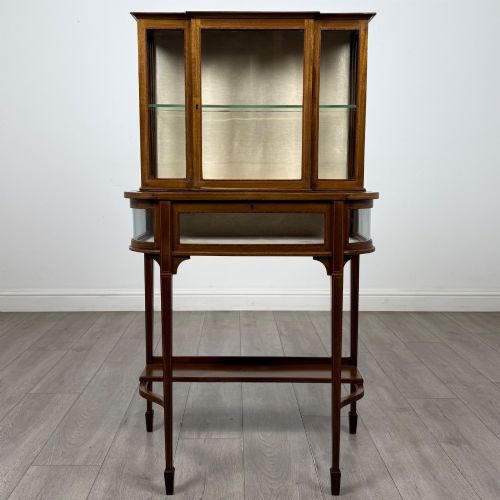
When you search for an antique inlaid vitrine, you encounter glazed display furniture designed to protect and showcase precious objects inside a room. These pieces range from upright floor cabinets and corner units to low bijouterie tables with glass lids.
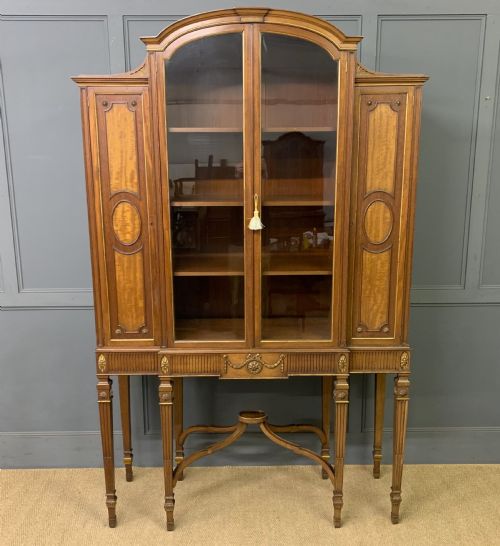
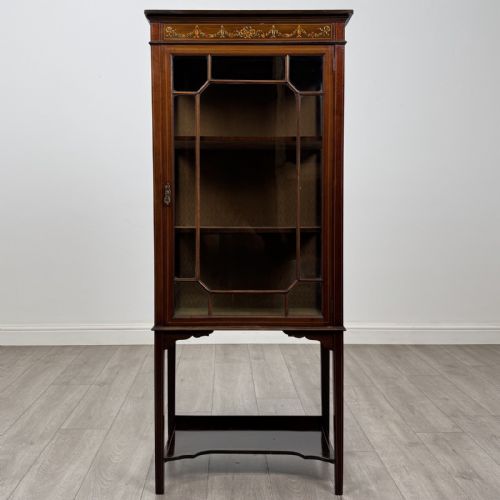
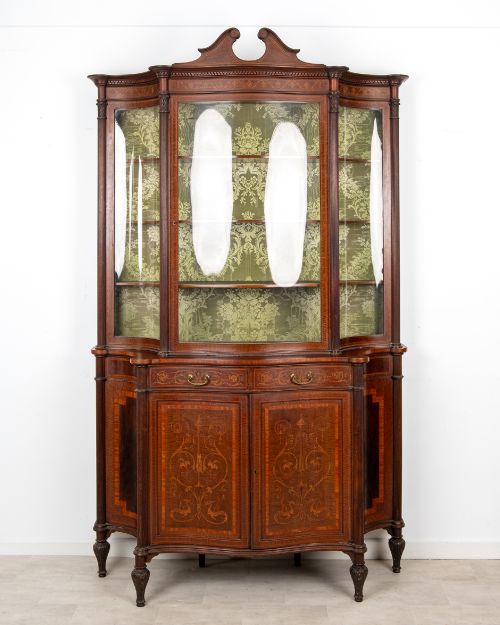
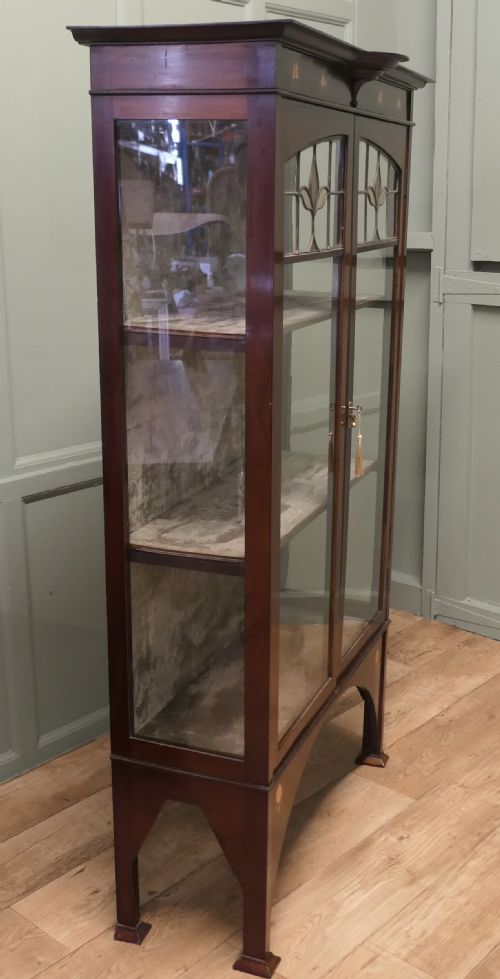
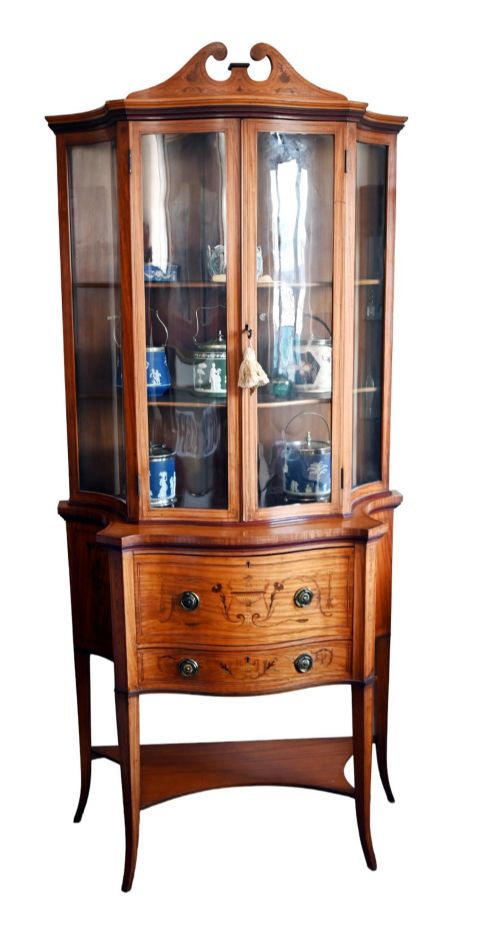
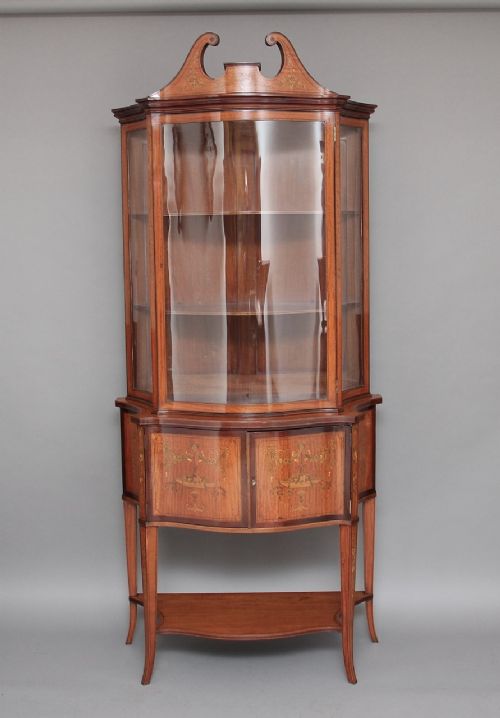
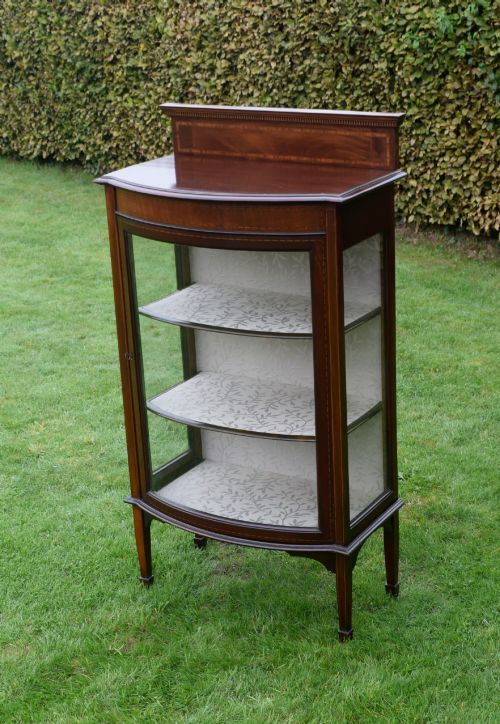
The version you are most likely to meet on this page is the Edwardian or late nineteenth-century mahogany display cabinet, often featuring satinwood inlay and curved bow-ended glass doors. Such pieces draw directly on earlier Georgian and Sheraton Revival tastes while providing a lighter focal point for domestic interiors.
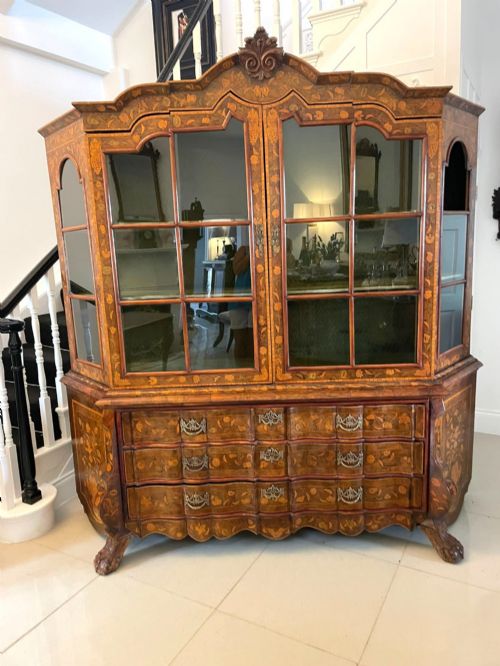
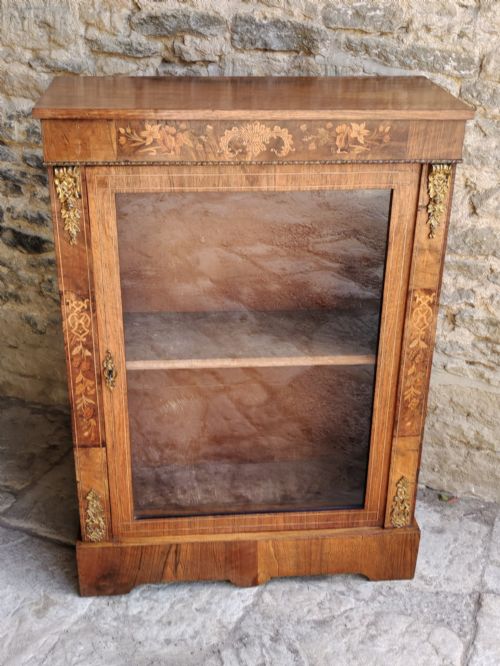
Originating across Victorian workshops and continental centres, these cabinets frequently utilise rich timbers like walnut alongside elaborate floral marquetry or brass stringing. The primary purpose remains the display of ceramics, glass or small collectables behind protective glazing.
How they were made
Cabinet makers constructed these pieces using solid and veneered timbers such as mahogany, satinwood and walnut over robust secondary woods. Glass panels were individually glazed into timber frames or doors to maintain a clear line of sight into the interior shelves.
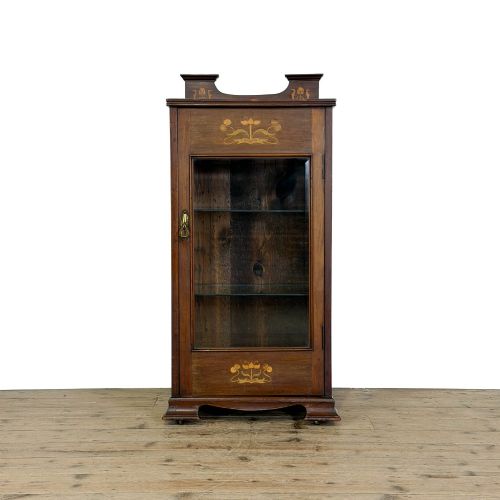
Decoration relied heavily on wood inlay, including contrasting satinwood bandings, floral marquetry and fine brass stringing set flush into the surface. Ormolu mounts and fabric linings occasionally completed the presentation of the interior display space.
Some Edwardian tables hide your trinkets beneath glass lids while you take tea.
What varies in quality
The standard of timber selection and the precision of the inlay work dictate the baseline quality of an antique inlaid vitrine. Finer examples display tightly figured mahogany or burr walnut paired with meticulous, hand-cut marquetry rather than simpler painted lines.
Construction details such as the weight of the glazing bars, the thickness of the glass, and the integration of curved bow-front doors separate standard production items from master cabinet maker outputs. Ormolu mounts and fitted interior fabric linings further distinguish the upper tier of surviving examples.
Edwards & Roberts·Shapland and Petter
The Antique Inlaid Vitrine Glossary
- Vitrine
- A glass-fronted cabinet designed for displaying fine objects or china. These pieces typically feature glazed doors and sides to maximise light inside the display space.
- Marquetry
- Decorative veneer work forming pictorial or floral patterns using various tinted woods. Artisans meticulously cut these shapes to fit flush into the primary timber surface.
- Bijouterie table
- A low display table with a glass top used for holding small trinkets and jewellery. They often sit on slender legs with hinged glazed lids.
- Sheraton Revival
- A late nineteenth-century design movement inspired by the lighter classical furniture of the eighteenth century. Pieces from this period frequently employ satinwood inlay and tapered legs.
- Bow-ended
- Having a convex, curved front shape that softens the rectangular geometry of a cabinet. This form requires skilled joinery to shape both the timber frame and the matching glass.
Antique Inlaid Vitrine: Frequently Asked Questions
What is an antique inlaid vitrine used for?
An antique inlaid vitrine serves as a display enclosure for porcelain, silver, and small collectables. The glass panels protect delicate items from dust while allowing them to be viewed from multiple angles.
Historically, these cabinets occupied drawing rooms and parlours where hosts exhibited their finest decorative possessions to visitors. Today, they continue to function as display furniture for private collections within modern homes.
How do I date an inlaid display cabinet?
Dating relies on examining timber choices, construction techniques, and stylistic markers such as inlay motifs. Edwardian and late Victorian pieces often combine mahogany with satinwood stringing and lighter proportions.
Earlier nineteenth-century examples tend to feature heavier timbers like burr walnut and more complex floral marquetry. Secondary wood analysis and hardware styles provide further confirmation of the period.
Where should I place a vitrine at home?
A vitrine requires a stable location away from direct sunlight to protect interior fabrics and timber finishes from fading. Placing the cabinet against an interior wall ensures it remains safe from heavy foot traffic.
Because these pieces feature glass doors and shelves, positioning them near natural light sources helps illuminate the objects displayed inside. Corner units offer a practical solution for smaller rooms without sacrificing floor space.