
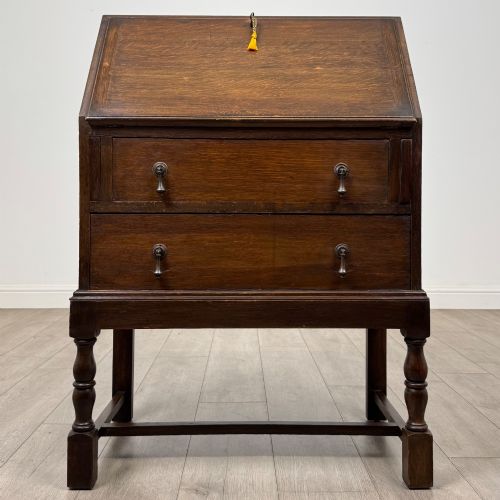
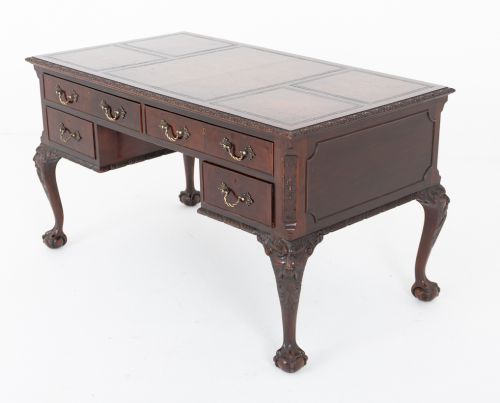
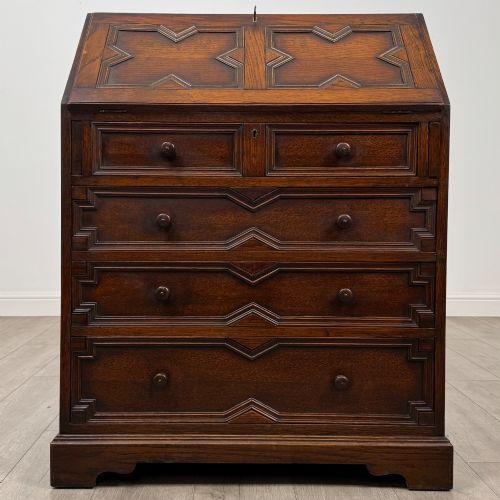
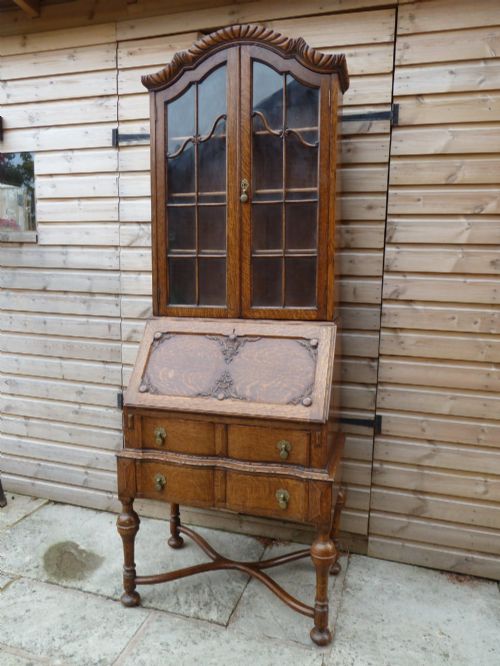
Edwardian Carved Writing Bureau
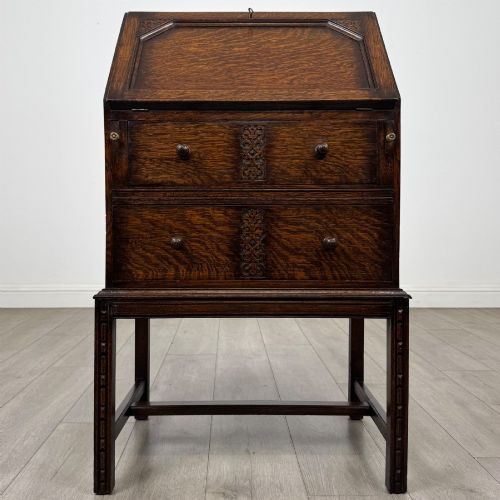
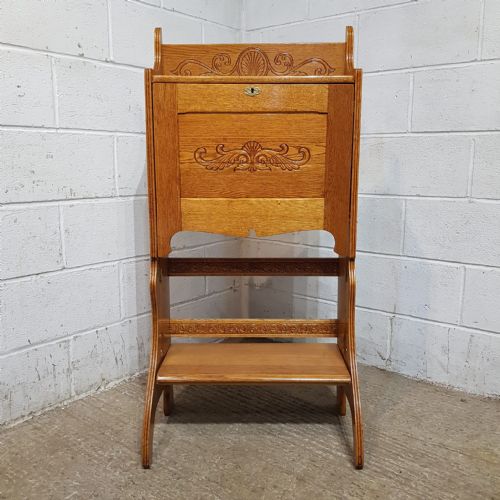
An edwardian carved writing bureau brings practical workspace and detailed timber craftsmanship together, offering the classic form most commonly met in oak or walnut on this page.
Edwardian Carved Writing Bureau
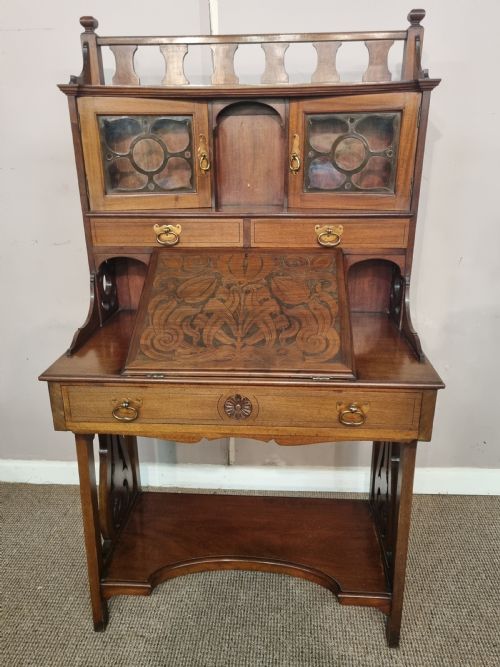
An edwardian carved writing bureau combines a fall front writing slope with fitted interior compartments, emerging predominantly from the Edwardian period alongside Victorian and later 20th century examples. These pieces serve as functional workstations and decorative furniture items within domestic studies or living spaces.
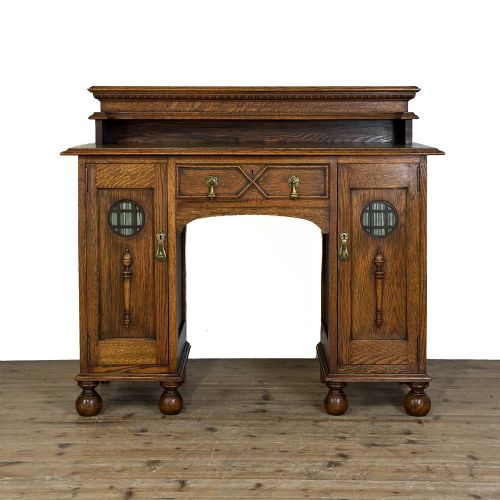
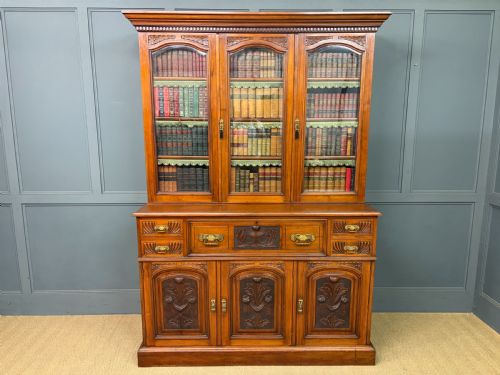
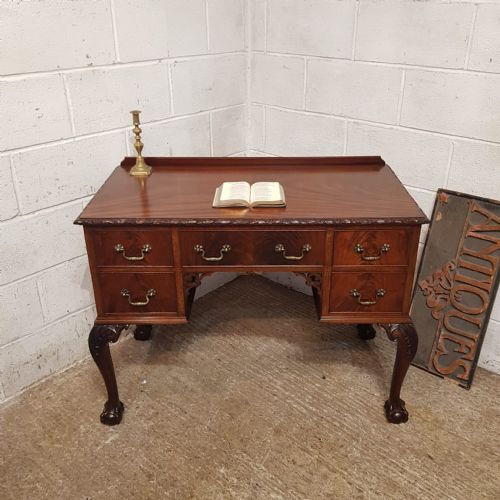
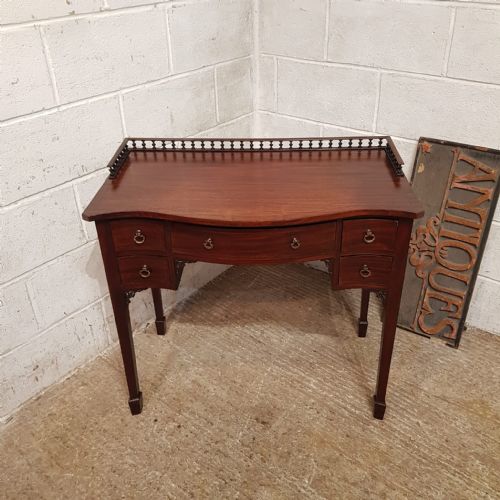
The selections span oak and various walnut timbers, featuring styles that reference Chippendale revival, Jacobean revival, and Arts and Crafts movements. Buyers encounter compact domestic desks alongside larger bureau bookcases and fitted fall front writing cabinets.
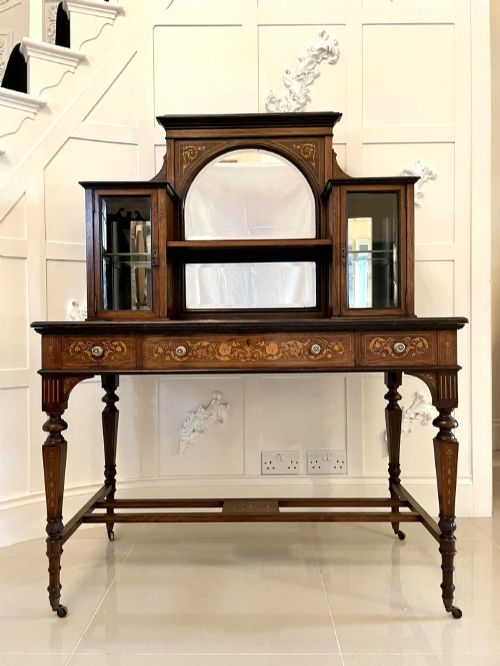
Makers and retailers such as Edwards and Roberts, Gillows, Shapland and Petter, and Liberty and Co appear among the broader selection of desks and writing tables. Pieces range from straightforward oak utilitarian items to elaborately inlaid marquetry and carved mahogany specimens.
Quality and Craftsmanship
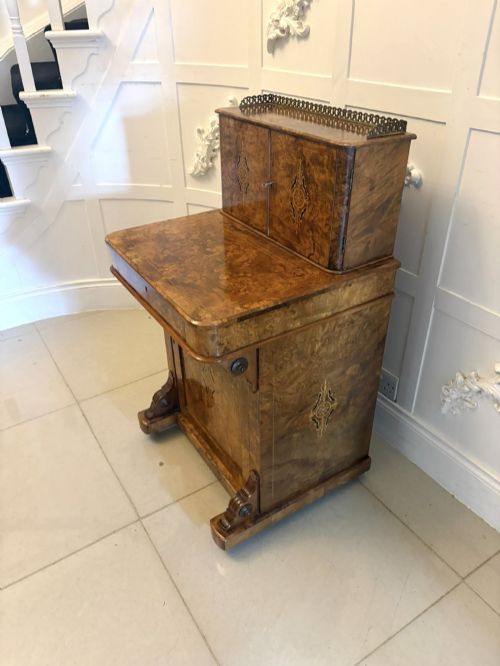
The refinement of timber selection and complexity of veneer work establish distinction across pieces, particularly where burr walnut and marquetry adorn the surface. Finer examples display precise joinery in the internal stationery compartments of the bureau interior.
Depth and crispness of hand carving separate standard production items from superior workshop output. The integration of maker signatures, branded stamps, or attributed origins adds documentary weight to surviving desks.
The inventory spans Victorian, Edwardian, and Georgian periods, incorporating Chippendale and Jacobean revival styles.
Edwards and Roberts·Gillows·Shapland and Petter·Liberty and Co
The Edwardian Carved Writing Bureau Glossary
- Bureau
- A desk featuring a sloping hinged lid that drops down to form a writing surface above a series of drawers. This form encloses pigeonholes and small drawers for correspondence.
- Marquetry
- Decorative patterns formed by inserting pieces of contrasting wood veneer into a fitted wood ground. This technique ornaments bureau lids and desk surfaces.
- Fall front
- A hinged writing flap that opens from a vertical position to a horizontal plane. It provides access to the internal compartments of a desk or bureau.
- Pedestal desk
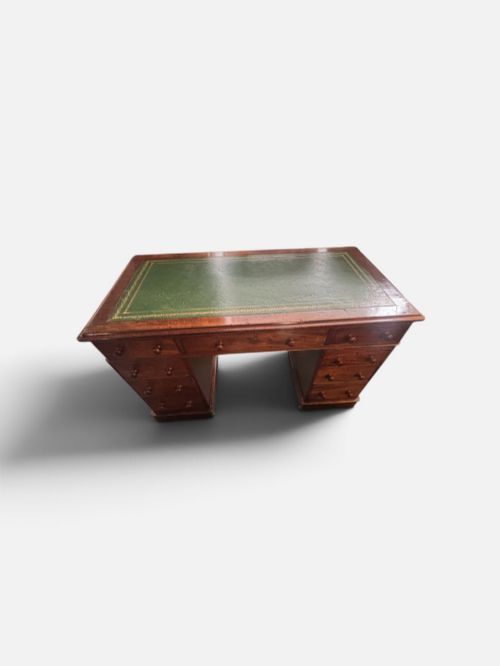
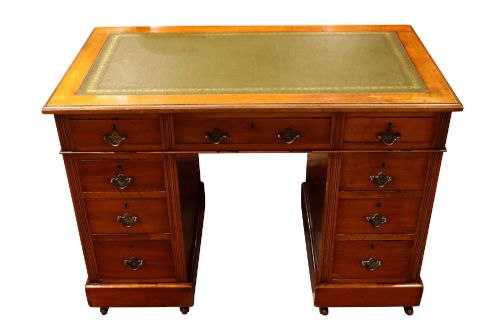
- A heavy freestanding writing table supported by two vertical banks of drawers. The top surface often incorporates a leather writing insert.
- Davenport
- A compact small desk featuring a sloped writing surface above a set of side drawers. The form developed during the 19th century for domestic correspondence.
Edwardian Carved Writing Bureau: Frequently Asked Questions
What is an edwardian carved writing bureau?
An edwardian carved writing bureau is a compact wooden desk featuring a hinged writing flap that opens above storage drawers. The interior typically houses small compartments for stationery.
These pieces combine functional workspace with decorative carving reflecting revival styles of the period. Oak and walnut serve as the predominant woods used in their construction.
How do you use a bureau?
You lower the hinged front flap to create a horizontal writing surface supported by wooden arms. This reveals internal pigeonholes and small drawers for letters and pens.
When writing concludes, the flap lifts back to a vertical position and locks shut to conceal papers. The underlying drawers store larger volumes of correspondence and supplies.
How do I identify Edwardian furniture?
Edwardian furniture dates from the reign of King Edward VII and draws heavily on earlier Georgian and Sheraton revival motifs. Lighter proportions and eclectic stylistic revivals characterise the period.
Makers frequently combined traditional timber construction with machine assisted manufacturing techniques. Surviving pieces often bear maker stamps or retailer labels inside drawer linings.
Where should I place a writing desk?
A writing desk performs best against a wall or freestanding within a study to showcase finished back panels. Sufficient clearance is required behind the piece to allow comfortable seating.
Positioning the desk near natural daylight aids reading and writing activities without placing strain on the timber. Maintaining stable room temperatures protects veneers from drying out.