
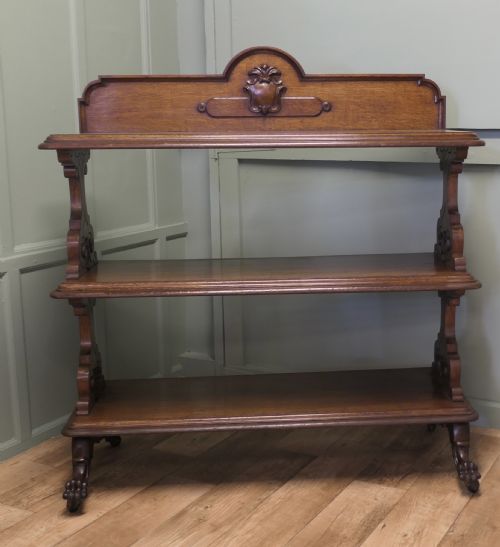
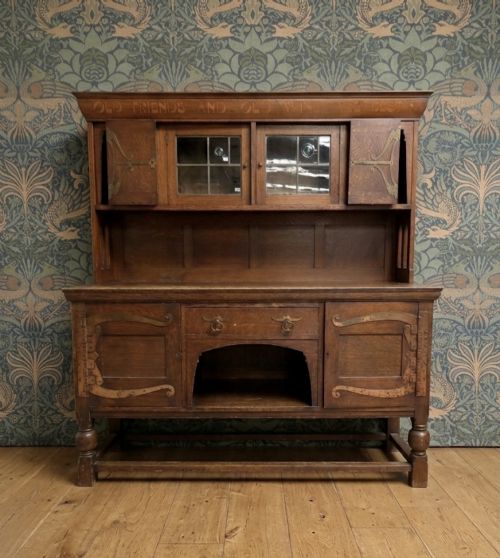
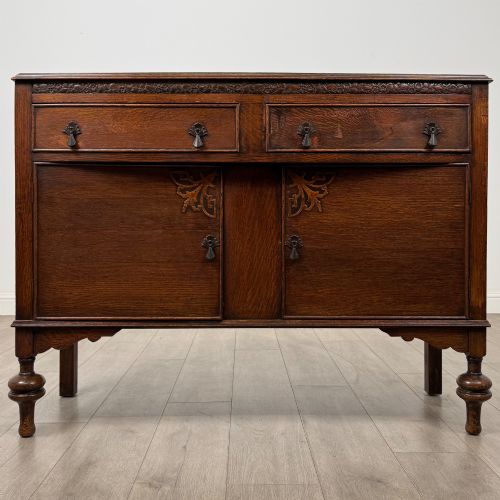
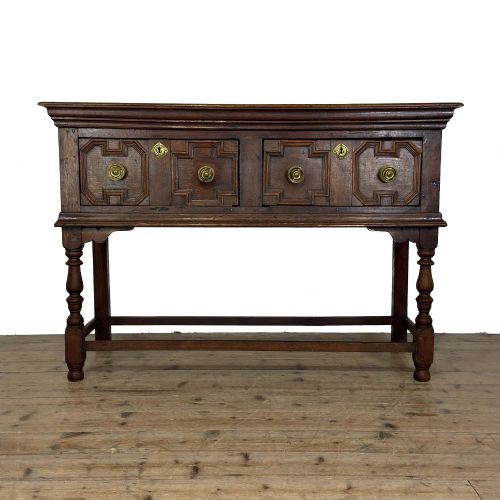
Edwardian Carved Oak Server
An Edwardian carved oak server offers substantial storage and robust timber character, anchoring a dining room with practical surface space and period presence.
Edwardian Carved Oak Server
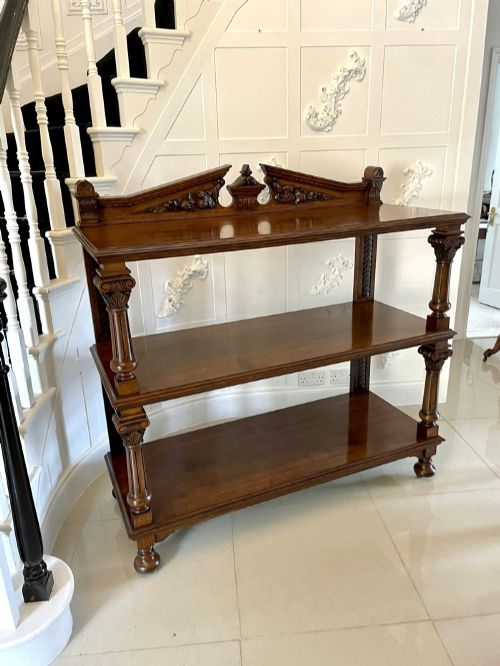
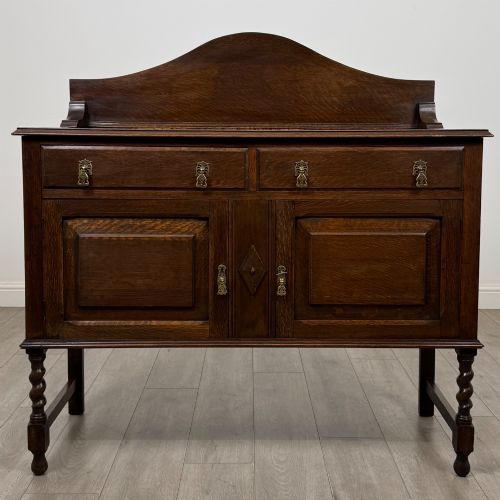
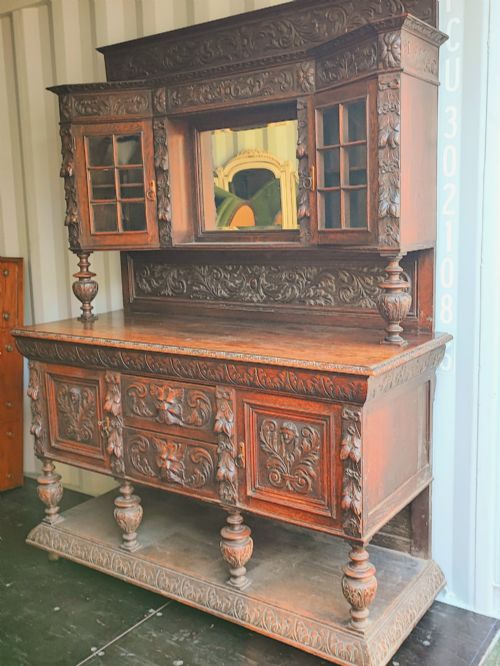
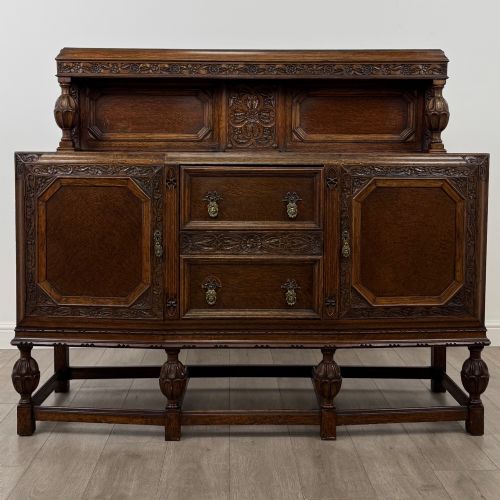
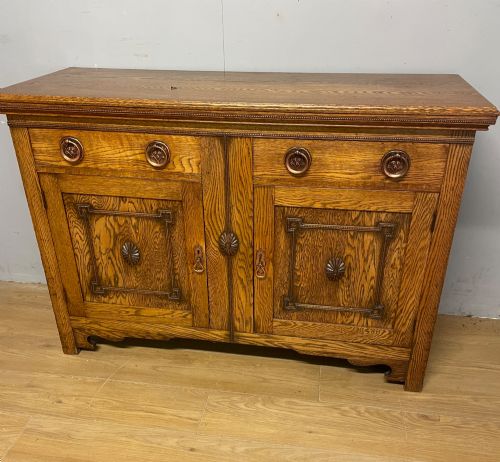
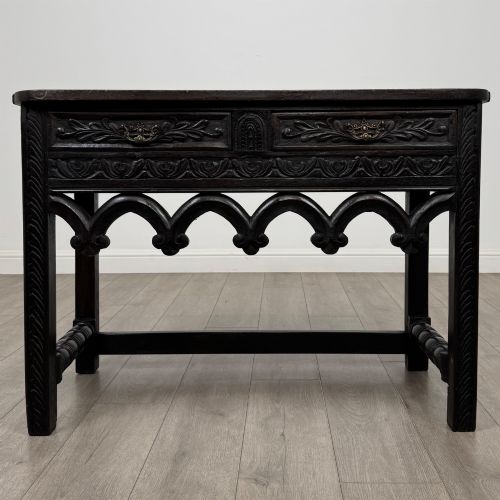
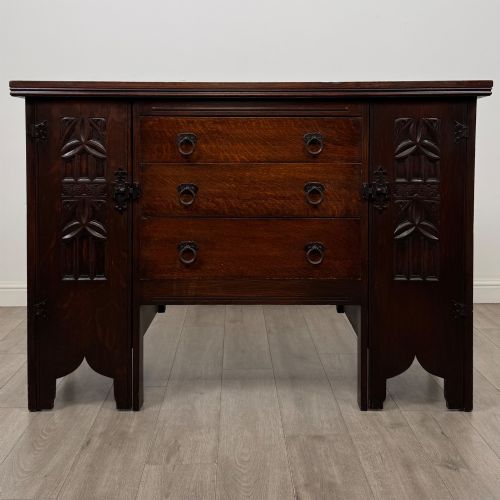
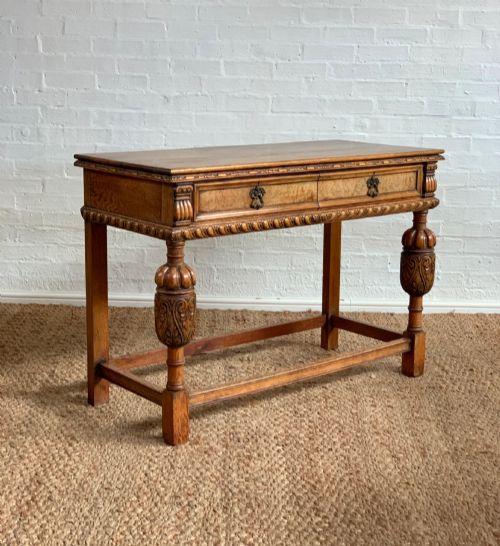
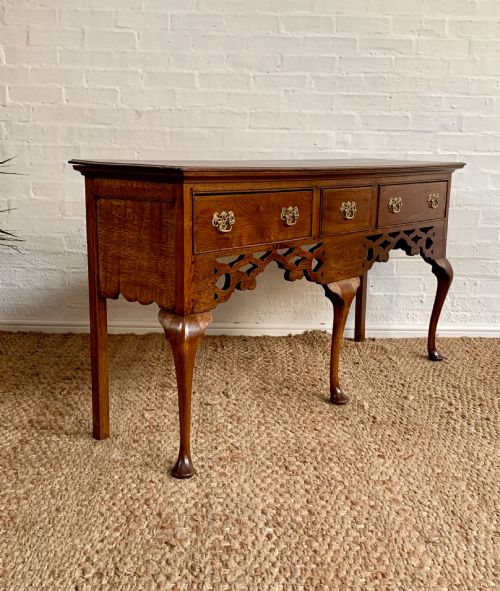
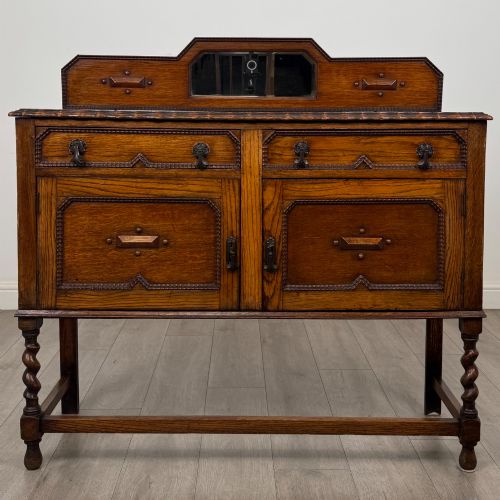
When you search for an edwardian carved oak server, you are looking at substantial dining furniture designed for serving food and displaying silver or ceramic vessels. These items take the form of sideboards, buffets, dressers, and serving tables produced during the late nineteenth and early twentieth centuries.
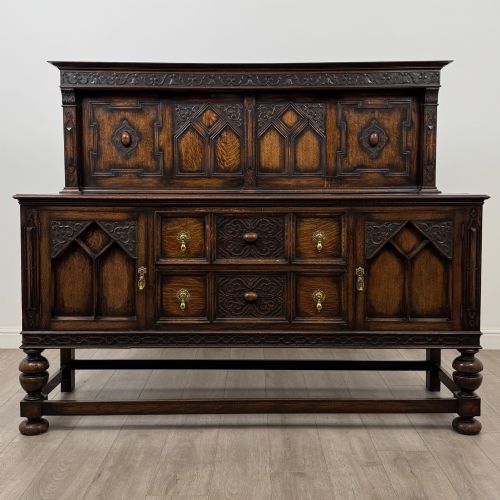
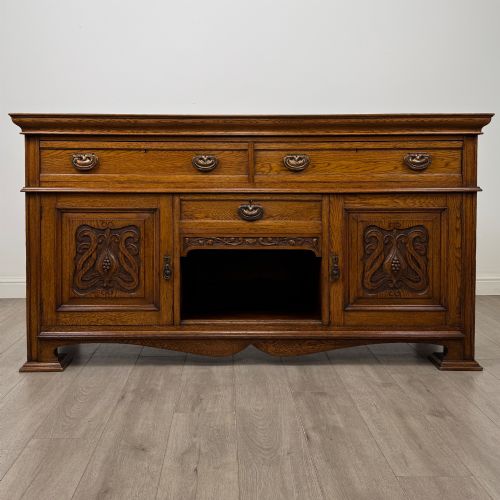
The versions you meet most often on this page date from the Edwardian period and the late Victorian era, alongside pieces reflecting revivalist tastes like Jacobean, Gothic, and Arts and Crafts styles. They function as both storage units with cupboards and drawers, and decorative centerpieces defined by carved wood panels.
Makers working in this tradition utilised solid timber frames and applied decorative carving to drawer fronts, doors, and superstructures. The scale ranges from long buffet tables to compact side cabinets suitable for smaller domestic spaces.
Distinctions in construction and design
The distinction between standard utility furniture and superior examples lies in the depth and crispness of the hand-carved detail, the selection of figured timber grain, and the integrity of the joinery. Workshop attribution also elevates a piece, particularly items connected to notable designers or firms of the period.
Secondary woods used in drawer linings and carcass backs, the originality of brass or copper hardware, and the survival of a clean, rich surface patina separate well-preserved examples from altered or heavily restored items.
The listings here span the Victorian, Edwardian, and Arts and Crafts periods, utilising oak, pollard oak, brass, and copper.
Ambrose Heal for Heal & Son·Beresford & Hicks London·Leonard Wyburd
The Edwardian Carved Oak Server Glossary
- Dresser base
- A low sideboard or serving table featuring drawers and cupboards beneath a flat top, often built without the upper plate rack of a traditional kitchen dresser.
- Green Man
- A sculptural architectural ornament depicting a human face disgorged from foliage or surrounded by leaves, frequently encountered on carved oak furniture from the Gothic Revival and Arts and Crafts periods.
- Barley twist
- A decorative turning technique producing a spiral rope-like column on table legs and structural supports, popular in seventeenth-century furniture and revived during the Victorian and Edwardian eras.
- Pollard oak
- Timber taken from trees that were pollarded, resulting in a dense, highly figured grain pattern with clustered knots utilised for decorative veneer panels.
- Pot board
- An open lower shelf built into the base of a sideboard or dresser, originally intended for storing heavy ceramic pots and kitchen utensils.
Edwardian Carved Oak Server: Frequently Asked Questions
What is an edwardian carved oak server used for?
These pieces function primarily as dining room furniture designed for serving food, storing table linens, and displaying silver or ceramic items. The flat top surface holds serving dishes during meals, while the cupboards and drawers accommodate cutlery and dining accessories.
Beyond the dining room, smaller scaled examples serve as hall tables or console units in entranceways and living spaces. Their robust timber construction provides durable surface space and hidden storage wherever they are placed.
How do I distinguish Edwardian pieces from Victorian ones?
Edwardian furniture generally exhibits lighter proportions, simpler lines, and a brighter golden oak finish compared to the darker, heavier timbers and elaborate ornamentation typical of mid to late Victorian manufacturing. Stylistic crossover is common, as cabinetmakers continued producing revivalist designs into the twentieth century.
Examining the internal construction, secondary woods, and hardware styles helps clarify the date of manufacture. Pieces influenced by the Arts and Crafts movement often display honest joinery and minimal ornamentation that separates them from heavily carved historicist revival furniture.
What styles are common in these servers?
The listings feature a range of revivalist and contemporary movements, including Jacobean Revival, Gothic Revival, and Arts and Crafts styles. Makers drew heavily on seventeenth-century architectural motifs, incorporating panelled doors, geometric mouldings, and turned legs into modern domestic furniture.
Arts and Crafts examples tend to emphasise natural wood grain and functional honesty, occasionally featuring copper strap hinges or stylized plant carvings. Gothic Revival pieces lean toward ecclesiastical motifs, pointed arches, and deep relief carvings.
How should I care for an antique oak sideboard?
Maintain oak furniture by keeping it away from direct heat sources and strong sunlight, which can dry out the timber and cause splits in the panels. Dust regularly with a soft, dry cloth and apply a quality beeswax periodically to nourish the wood and preserve the surface sheen.
Avoid silicone-based sprays, as they build up over time and attract dust. Promptly wipe away any liquid spills from the top surface to prevent water marks on the polished wood.