

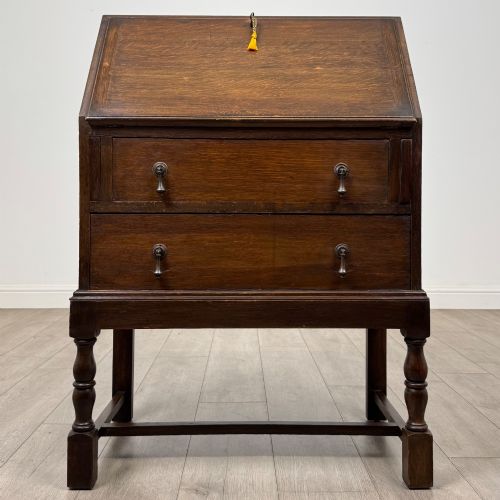
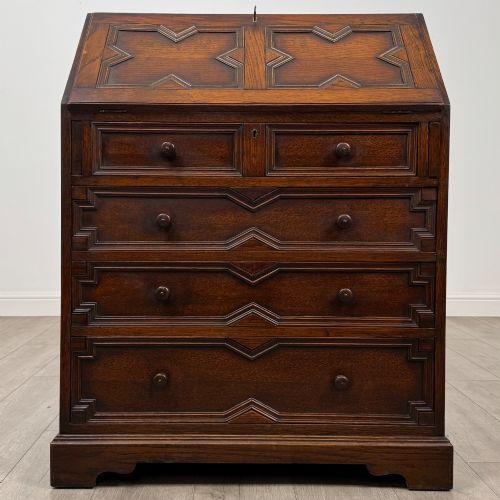
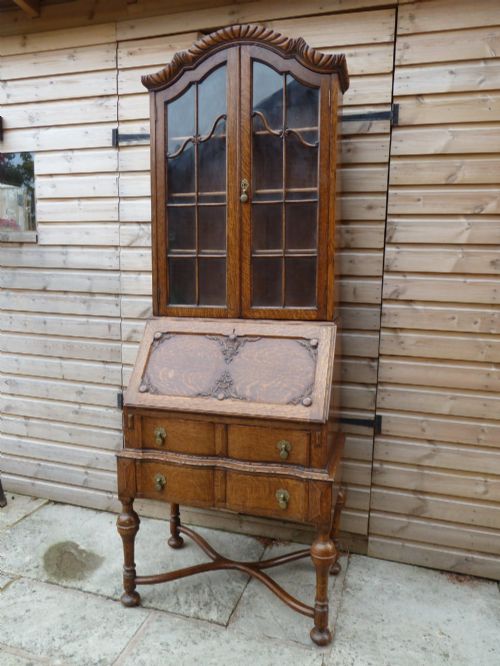
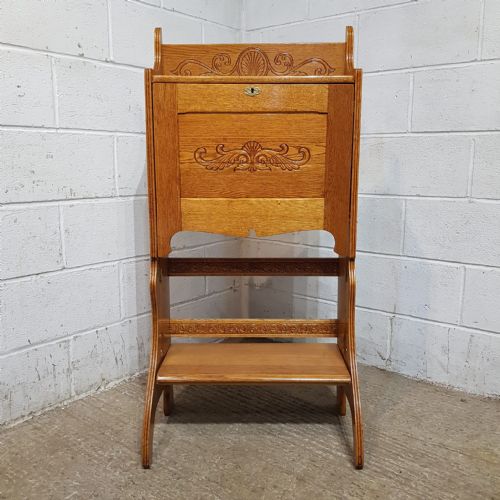
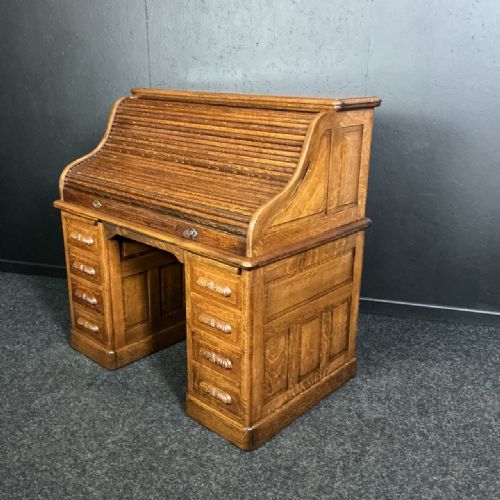


Edwardian Carved Oak Bureau
These edwardian carved oak bureau pieces combine practical workspace with period character, offering traditional writing surfaces built from durable timber.
Edwardian Carved Oak Bureau
An edwardian carved oak bureau provides a traditional writing surface alongside integrated storage, typically featuring a fall-front flap that lowers to reveal fitted pigeonholes and small drawers. These practical workspace units appear frequently alongside related forms such as writing desks, secretaire bookcases, and roll-top desks.
The pieces on this page span the late nineteenth century through to the nineteen-thirties, incorporating Victorian, Edwardian, Arts and Crafts, and Jacobean Revival styles. Most examples rely on solid oak timbers, whilst some items incorporate brass hardware, glass panels, or leather inserts.
Makers and retailers represented across these desks include Edwards & Roberts and Liberty & Co, alongside Cotswold School cabinetmakers such as Peter Waals. Buyers will also encounter substantial bureau bookcases and compact davenport forms designed for domestic studies and libraries.
Assessing quality and craftsmanship
Quality in an edwardian carved oak bureau rests upon the selection of timber and the depth of hand-carved detailing across the fall-front and drawer fronts. Superior pieces display thoughtful grain matching and solid oak secondary woods rather than utilitarian veneers.
The sophistication of the internal fitting dictates distinction within this category, separating standard production writing desks from items featuring complex moving interiors or documented workshop attribution. Well-executed brass hardware and stable drop-front hinges further indicate higher workshop standards.
Some writing bureaux conceal moving interiors designed to surprise letter-writers with hidden compartments for secret correspondence.
Edwards & Roberts·Liberty & Co·Peter Waals
The Edwardian Carved Oak Bureau Glossary
- Bureau
- A writing desk featuring a sloping fall-front flap that conceals internal compartments and small drawers. When closed, it presents a neat vertical cabinet front.
- Fall-front
- A hinged writing flap that drops down into a horizontal position to create a writing surface. It typically rests upon pull-out supports when opened.
- Secretaire bookcase
- A tall cabinet combining upper book shelving with a lower writing drawer or drop-front desk compartment. It merges a bookcase and a bureau into one piece of furniture.
- Pigeonhole
- A small, open compartment within the interior of a bureau used for sorting letters and stationery. These compartments form part of the fitted desk interior.
- Davenport
- A compact pedestal desk with a sloping writing surface and drawers opening to the side. It represents a smaller writing furniture form popular in nineteenth-century homes.
Edwardian Carved Oak Bureau: Frequently Asked Questions
What is an edwardian carved oak bureau?
An edwardian carved oak bureau is a domestic writing desk featuring a hinged fall-front writing flap and internal compartments for stationery. The exterior typically displays carved decorative motifs influenced by revival styles.
These pieces served as functional household furniture for correspondence and record-keeping in period homes. Today they function effectively as compact home office desks.
How do I use a bureau daily?
To use the desk, you unlock and lower the fall-front flap so it rests upon integrated wooden supports. This reveals the pigeonholes and small drawers designed for organising letters and writing materials.
When writing is finished, you simply return your papers to the interior compartments and lift the flap back into its vertical position. This conceals the workspace and keeps the room tidy.
What styles influence these oak desks?
These writing desks draw upon several historic revival styles including Jacobean, Tudor, and Gothic tastes. Arts and Crafts and Art Nouveau influences also appear across the selection.
Makers incorporated linenfold carving, strapwork, and geometric panels to evoke earlier historical periods. This decorative carving distinguishes these desks from plain utilitarian workspace furniture.