

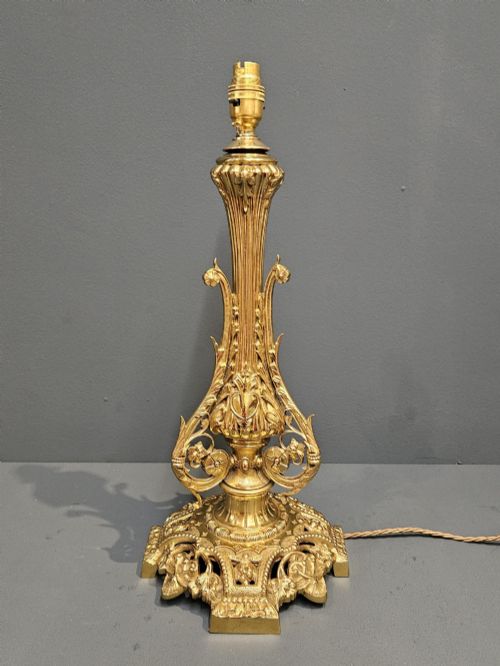
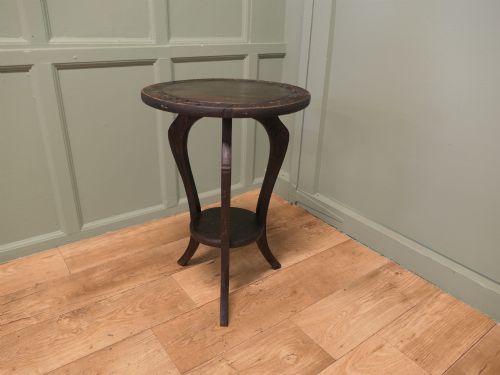
Edwardian Carved Lamp Table
An edwardian carved lamp table brings practical surface space and architectural detail to a room, holding reading lights beside a chair.
Edwardian Carved Lamp Table
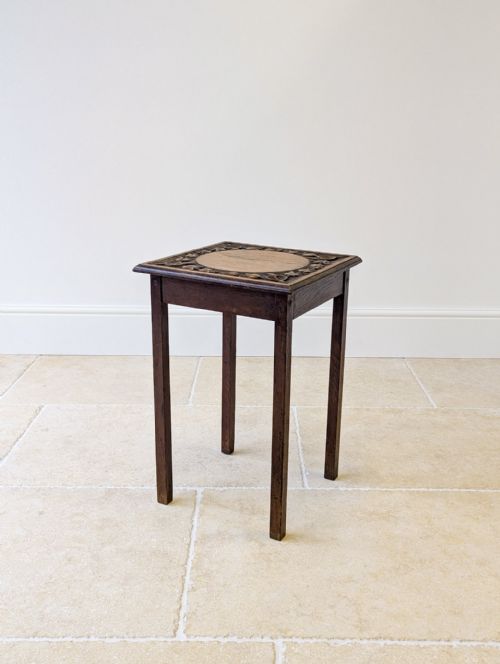
An edwardian carved lamp table combines the domestic function of a small surface with the ornamental woodwork characteristic of the early twentieth century. These small tables served as versatile furniture pieces in drawing rooms and parlours, designed specifically to hold illumination and decorative objects.
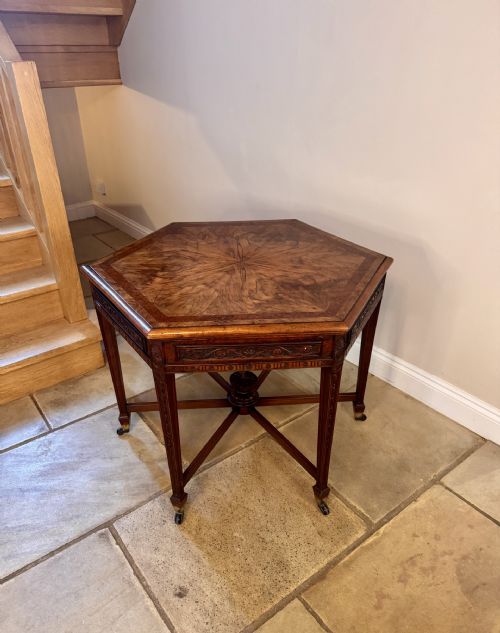
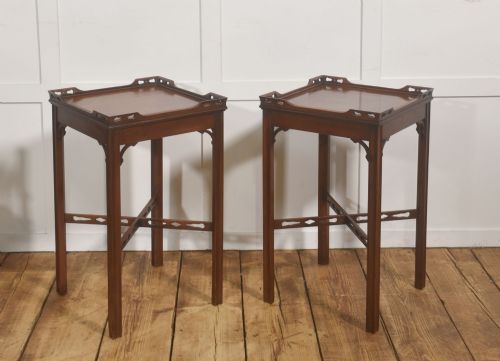
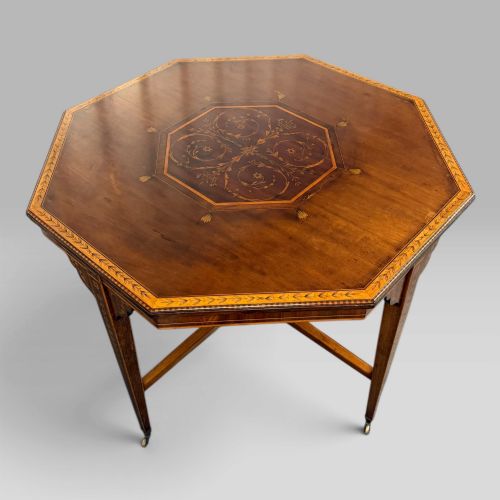
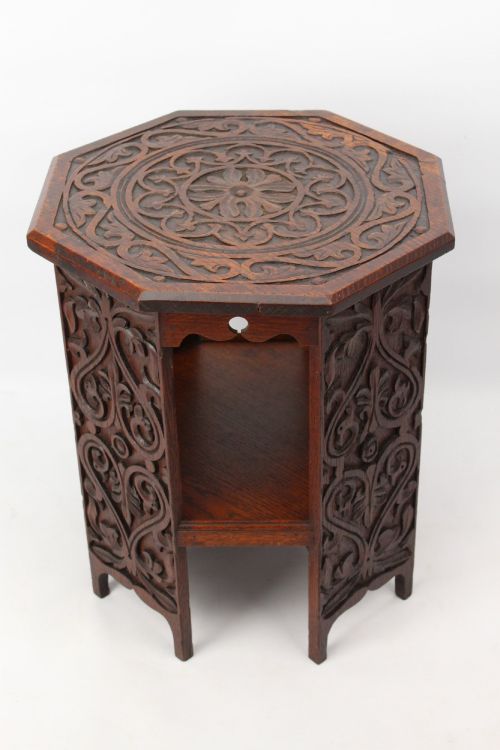
The varieties encountered most frequently on this page span the Edwardian period itself and reach into adjacent years around 1900 and 1910. Examples adopt formats such as hexagonal coffee tables, octagonal centre tables, and narrow lamp tables suited for placement beside seating.
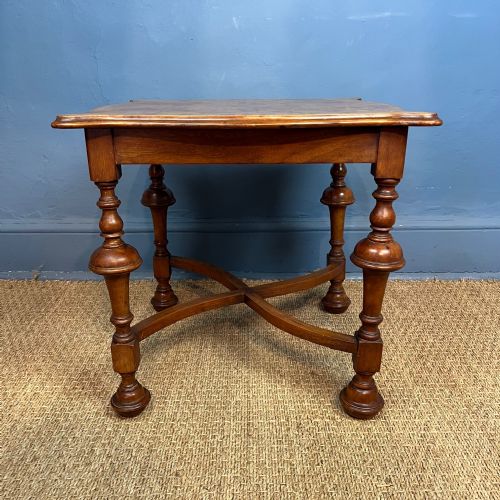
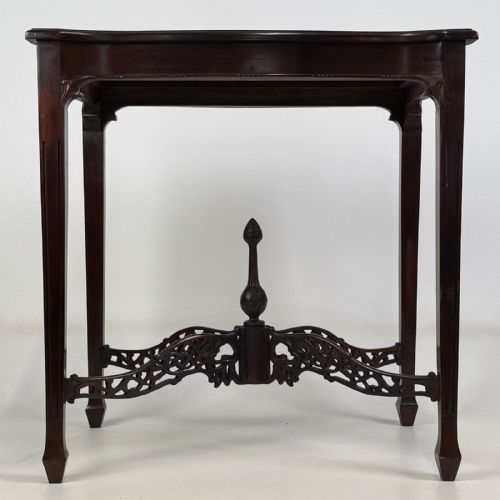
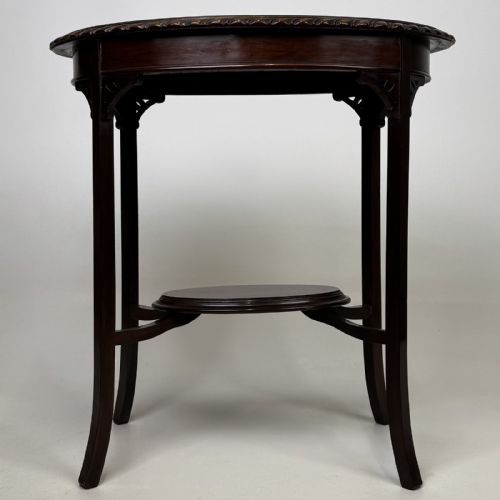
Makers and workshops of the era produced these items in various regional interpretations, drawing on Jacobean Revival, Arts and Crafts, and Chippendale Revival styles. Surfaces often display carved stretchers, gadrooned edges, or marquetry inlay alongside simpler turned supports.
Materials and Construction
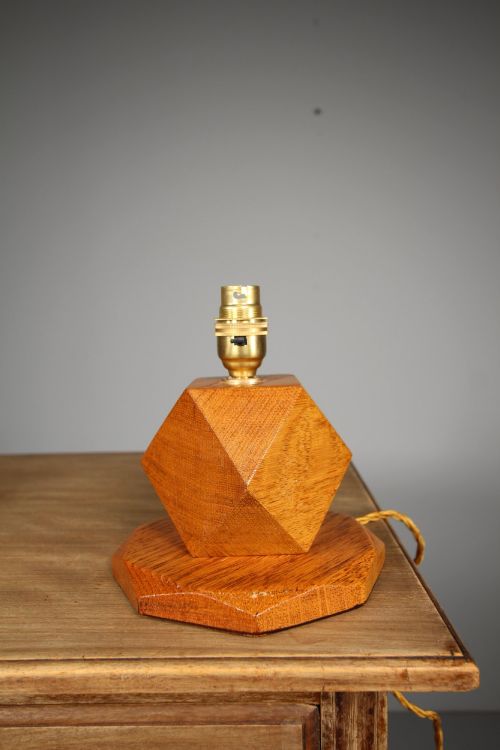
Cabinet makers utilised dense timber stocks including mahogany, oak, walnut, and burr walnut, sometimes introducing satinwood for contrasting marquetry panels. Structural integrity relied on traditional joinery techniques such as mortise and tenon joints for frames and sturdy stretcher bases.
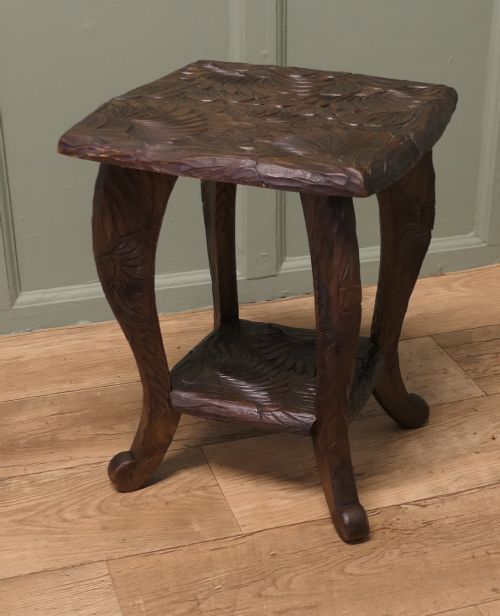
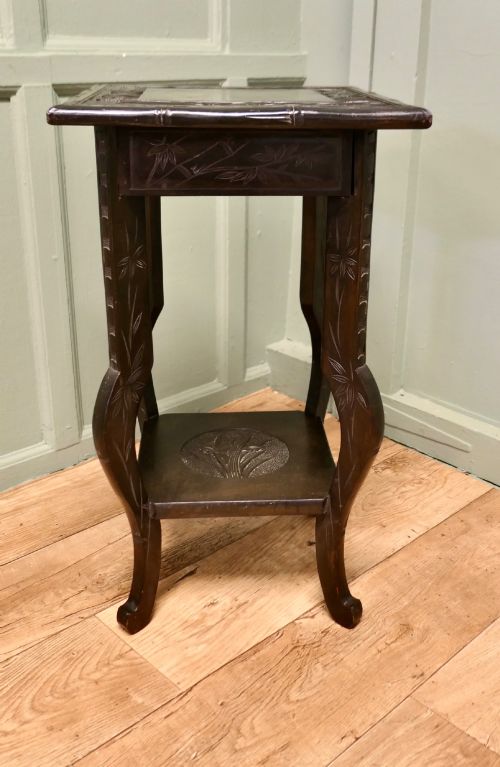
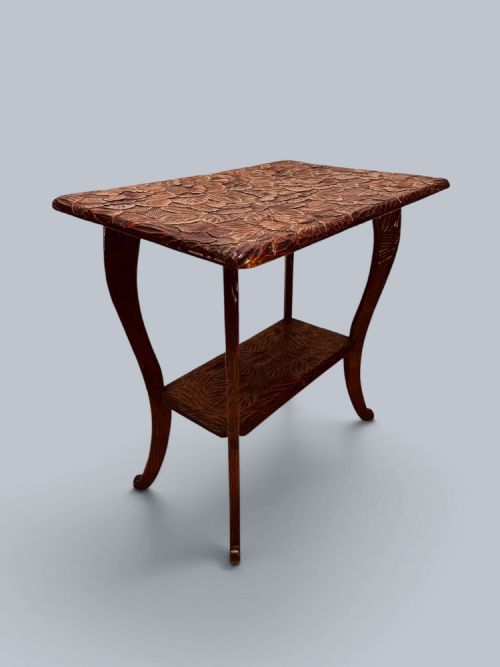
Carving was executed by hand directly into the solid wood elements, particularly on friezes, legs, and stretchers, producing low-relief motifs like hearts, foliage, and geometric patterns. Inlaid details required precise wood-cutting to fit contrasting veneers into prepared recesses on the table tops.
Edwardian Carved Lamp Table Retail Price Guide 2026
Typical asking prices for edwardian carved lamp table among the pieces listed under this phrase on Sellingantiques today, from the lower quarter to the upper quarter. They describe what is for sale here now, not the wider market.
One table turns up sporting carved wooden hearts, proving that early twentieth-century cabinet makers were absolute romantics at heart.
Standards of Manufacture
The distinction between standard commercial output and superior production lies in the crispness of the hand-carving and the selection of timber figures. Better examples exhibit deeply undercut mouldings and carefully matched wood grain across the table top.
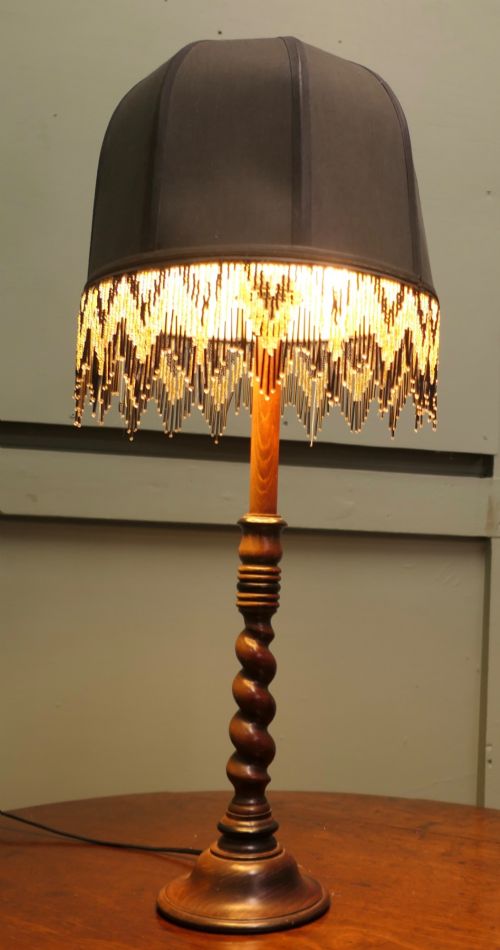
Construction methods also separate grades, as finer pieces utilise solid hardwoods throughout rather than secondary pine or deal linings. Attention to secondary details, such as finely turned barley twist legs or precise inlay work, indicates higher workshop standards.
Liberty and Co·Howard and Sons·Heals·Trevor Page and Co·Shapland and Petter
The Edwardian Carved Lamp Table Glossary
- Marquetry
- Decorative veneer work formed by fitting together small pieces of different coloured wood to create pictorial or geometric designs. This technique embellishes table tops and cabinet fronts.
- Gadrooned
- An ornamental carved moulding consisting of a series of convex curves or rounded bosses in a continuous band. It frequently decorates the outer edges of table tops.
- Stretcher
- A horizontal wooden brace connecting the legs of a table to provide structural rigidity. On these pieces, stretchers often receive decorative turning or carving.
- Cabriole leg
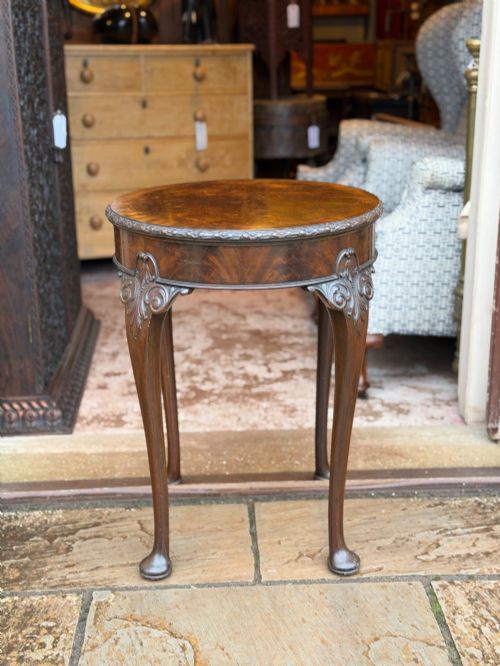
- A furniture leg that curves out gracefully and then tapers down to a foot, mimicking animal limbs. This form appears frequently on walnut and mahogany tables from the period.
Edwardian Carved Lamp Table: Frequently Asked Questions
What is an edwardian carved lamp table used for?
These tables provide a compact surface designed to hold lighting fixtures, books, and small decorative objects within a living space.
Their modest dimensions allow them to fit easily beside armchairs, sofas, or in corners where larger furniture would prove impractical.
Can I use these tables for modern lamps?
The sturdy timber construction and broad top surfaces provide secure support for contemporary table lamps and electrical fittings. Many retain sufficient surface area to accommodate a lamp base alongside everyday items.
Placement should simply take into account the dimensions of the specific table top and the weight of the lighting fixture.
How should I care for a wooden lamp table?
Maintenance requires regular dusting with a soft, dry cloth to prevent the accumulation of particles on carved surfaces and polished timber. Avoiding direct sunlight and maintaining stable room humidity protects the wood and veneer from drying out.
Occasional application of appropriate furniture wax helps nourish the finish and preserve the natural lustre of the mahogany or oak.