

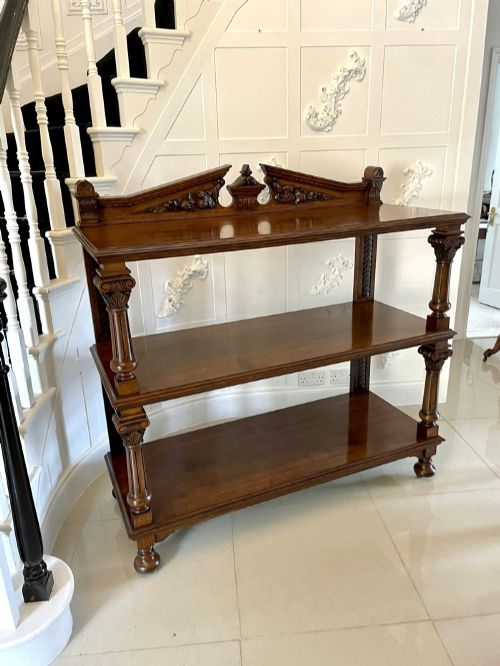
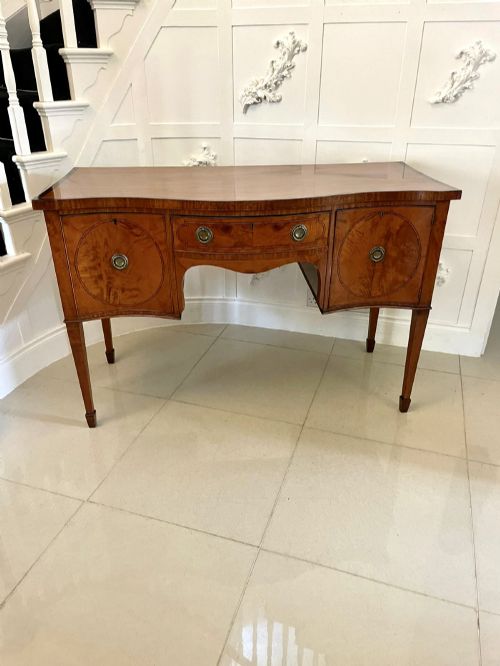
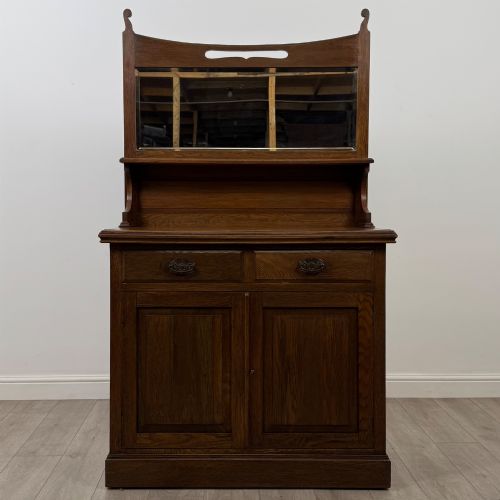
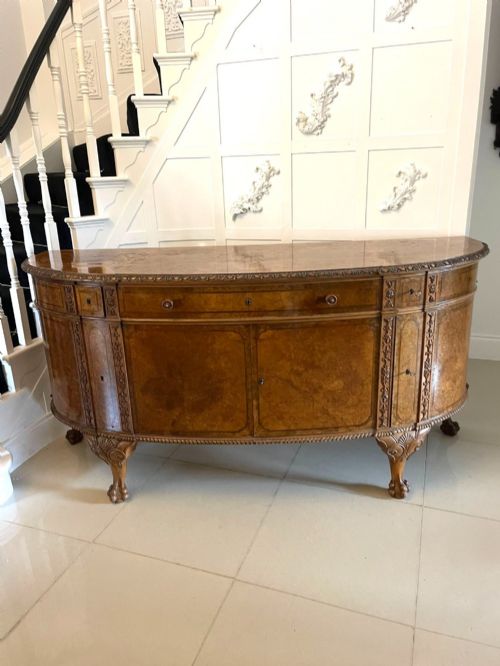
Edwardian Carved Buffet
An edwardian carved buffet brings robust timber and considered relief work into a dining space, offering practical storage with distinct period character.
Edwardian Carved Buffet
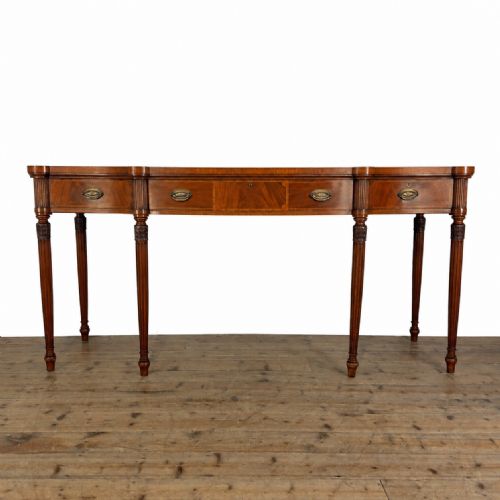
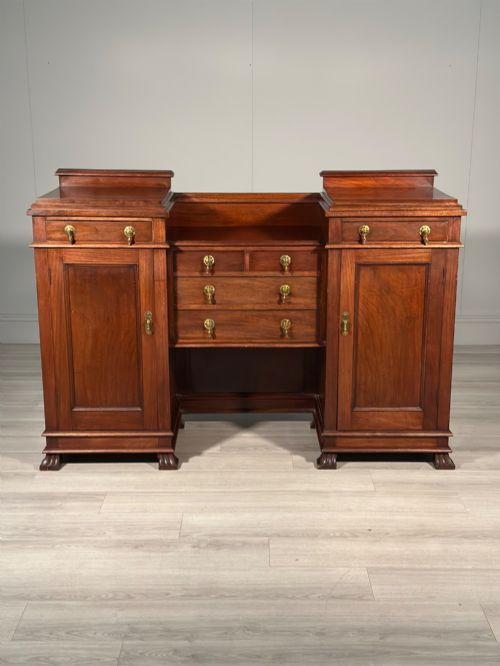
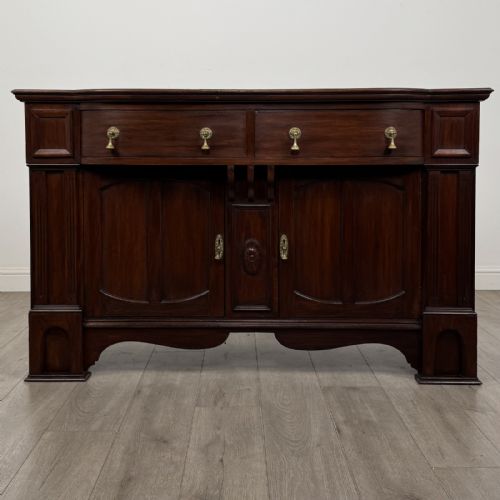
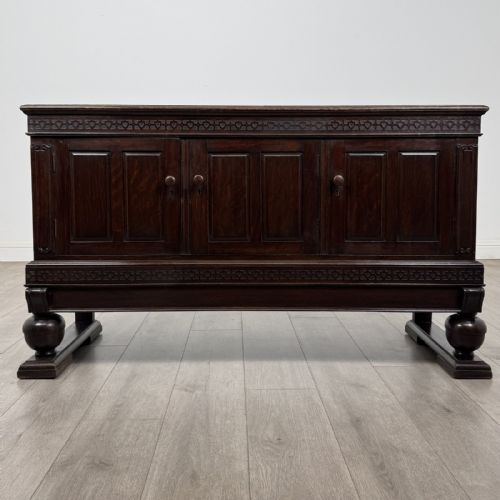
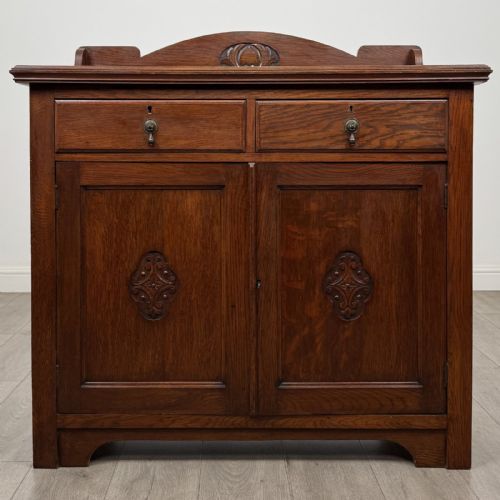
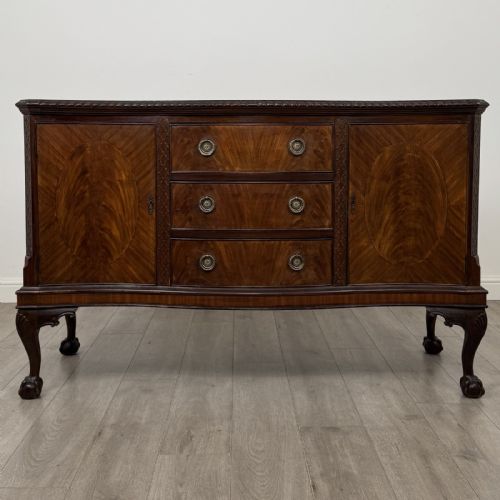
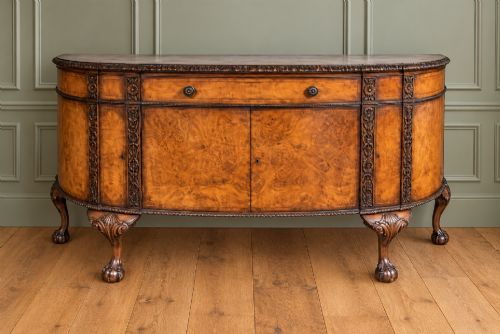
When you search for an edwardian carved buffet, you encounter substantial dining room furniture intended for serving food and storing tableware. These pieces appear primarily from the Edwardian period, alongside related nineteenth-century examples and revival pieces.
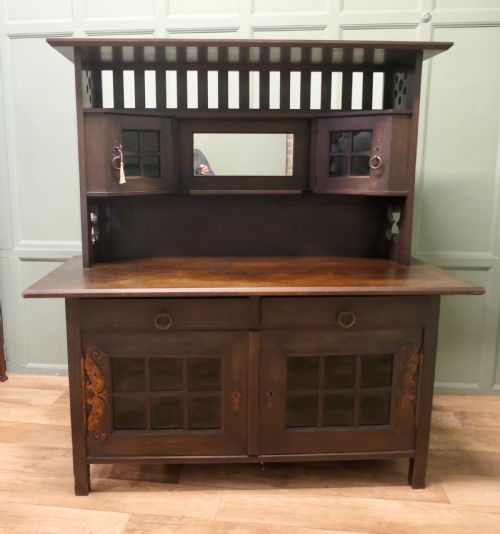
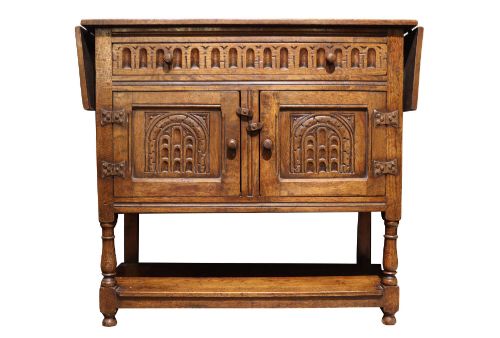
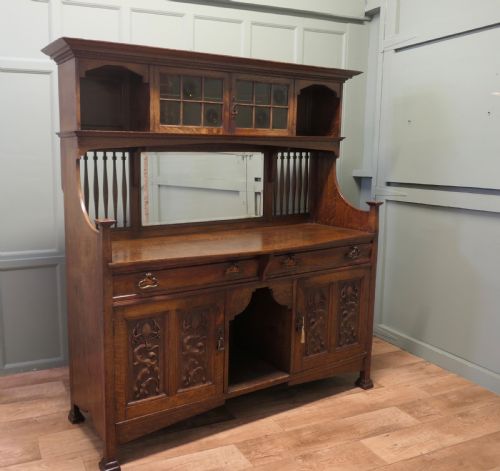
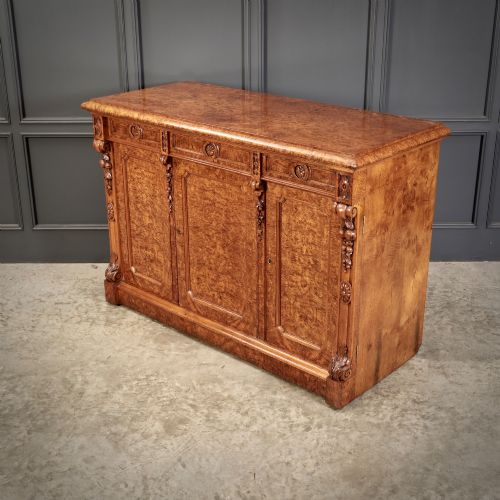
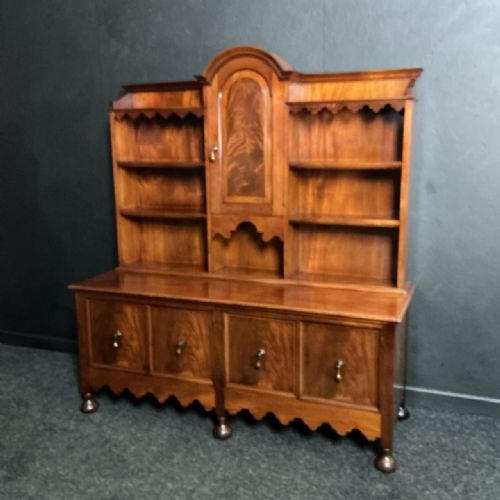
The selections on this page span several forms including sideboards, cupboards, and console tables. Oak and mahogany dominate the construction, often enhanced with carved panels, turned legs, or mirrored backs.
Materials and construction
Cabinetmakers built these items using solid oak and mahogany, occasionally applying flame mahogany veneer, pollard oak, or burr walnut to prominent surfaces. Brass face handles, mirror glass, and iron fittings complete the hardware and detailing.
Carpentry techniques include traditional joinery paired with decorative carving, geometric panels, and turned supports such as barley twist legs. Raised galleries and glazed cupboards further distinguish the construction of these dining room pieces.
Edwardian Carved Buffet Retail Price Guide 2026
Typical asking prices for edwardian carved buffet among the pieces listed under this phrase on Sellingantiques today, from the lower quarter to the upper quarter. They describe what is for sale here now, not the wider market.
Several cupboards manage to hide twelve-piece cutlery sets inside, proving that Victorians took their dining silver very seriously indeed.
Quality variations
The calibre of a piece depends on the depth and crispness of the hand carving, the choice of timber figurations, and the integrity of the original hardware. Superior examples display balanced proportions and refined detailing across secondary woods and interior fittings.
Lesser items may rely on simpler mechanical decoration or show heavy alterations that obscure the original period character.
Leonard Wyburd for Liberty & Co.·Shapland and Petter·Ambrose Heal for Heal & Son·M. D. Miller & Sons
The Edwardian Carved Buffet Glossary
- Barley twist
- A type of turned wooden leg resembling a spiral rope. This decorative feature appears frequently on Edwardian oak furniture.
- Pollard oak
- Timber taken from trees pruned close to the trunk, producing a clustered, knotty grain pattern. Makers utilised this wood for decorative veneer and surface panels.
- Raised gallery
- A low decorative upstand attached to the rear or sides of a cabinet top. It prevents items from sliding off the surface.
- Breakfront
- A piece of furniture with a central section that projects forward from the flanking cupboards or drawers. This configuration adds architectural depth to large sideboards.
Edwardian Carved Buffet: Frequently Asked Questions
Where do you put an edwardian carved buffet?
These pieces suit dining rooms, large hallways, or spacious living areas where they provide both surface space and enclosed storage.
Position them against a principal wall to let the carved details and timber grain form a focal point.
How do you clean the carved wood?
Dust the surfaces regularly with a soft, dry cloth to prevent dirt accumulation within the carved recesses.
Apply a traditional beeswax polish occasionally to nourish the timber without leaving a heavy residue.
What is the difference between a sideboard and a buffet?
While both serve dining rooms, buffets traditionally focus on food service while sideboards accommodate general tableware storage.
In practice, period makers and modern collectors often use the terms interchangeably for similar case pieces.
Are mirror backs original to these pieces?
Many Edwardian and late Victorian pieces incorporate integrated mirrors or mirror backs designed to reflect light and display glassware.
Original mirrors often show faint ageing spots while remaining securely fitted into the wooden frame.